




Table of Contents Show
In the small village of Utriai in Lithuania’s Klaipėda District, Architectural Bureau G. Natkevičius & Partners has transformed the typology of a traditional farm building into a striking piece of contemporary architecture. The Utriai Storage Barn challenges expectations of what an agricultural structure can be, replacing the usual utilitarian shed with a multifunctional, robustly engineered, and unexpectedly inviting hybrid space. Beneath its metallic outer shell lies a dual-purpose environment (part farm equipment warehouse, part human-centered retreat), demonstrating how rural architecture can evolve without abandoning its roots.

Contemporary architectural practice often blurs the boundaries between function and experience. This project embraces that shift wholeheartedly, proving that a barn can be efficient yet beautiful, rugged yet comfortable, industrial yet warm. The building stands as a model for rural diversification, where pragmatic infrastructure coexists seamlessly with hospitality and leisure.

A Dual-Zone Layout Rooted in Flexibility
At the core of the design is flexibility, the architectural theme that organizes both plan and purpose. The barn is divided into two clearly articulated zones under one expansive roof. The eastern portion is dedicated to pure utility: a high-clearance, open-plan space accessed through large sectional doors, perfect for storing agricultural machinery, equipment, and tools. Its generous volume accommodates the changing needs of farm operations throughout the seasons.
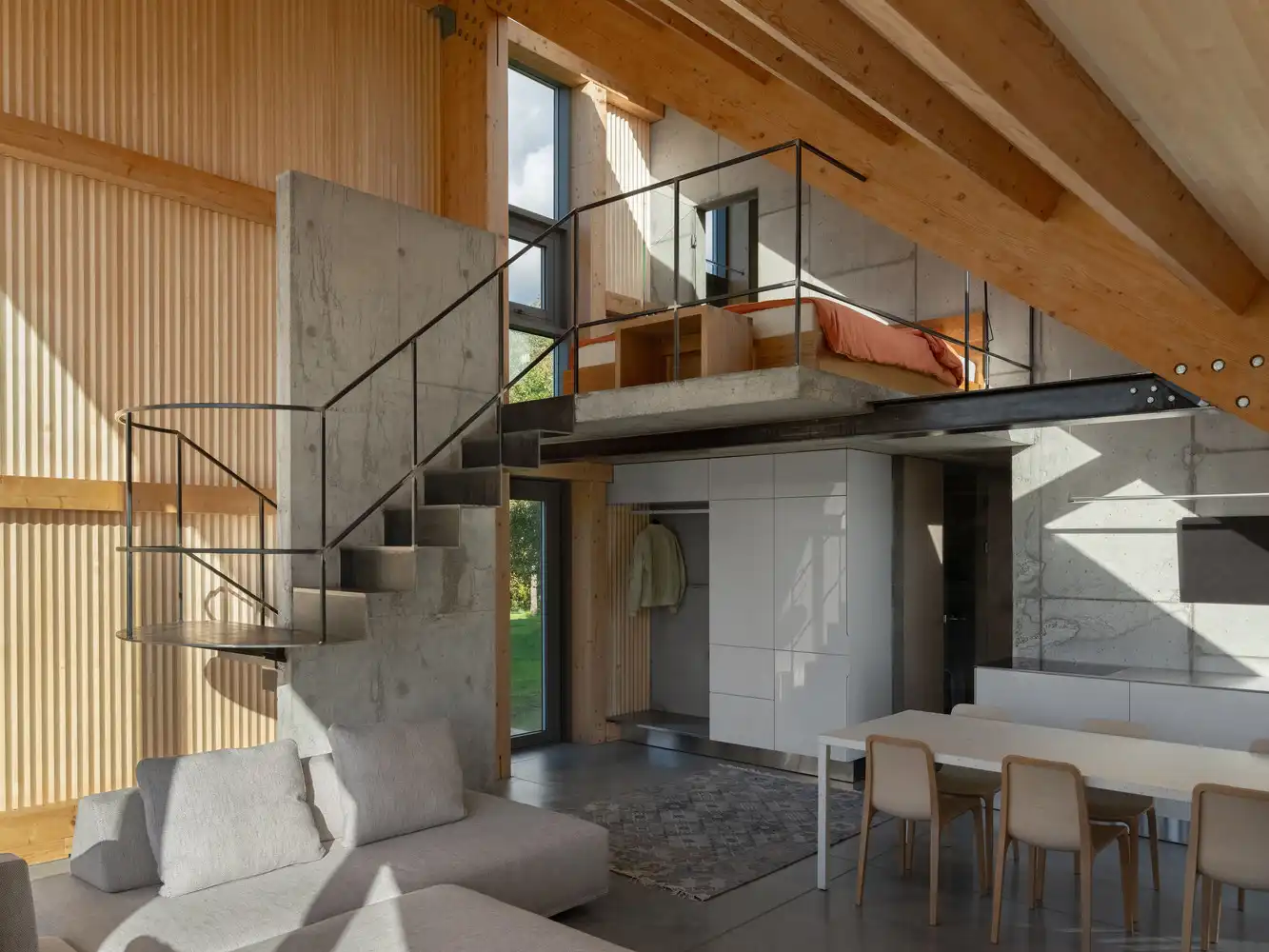
The western side, however, introduces a completely different spatial scenario. Here, the architects scale down the proportions to human comfort, crafting rooms that can shift effortlessly between work, social, and living functions. A dedicated entrance leads visitors into a light-filled auxiliary zone supported by a mezzanine level, creating a truly adaptable interior. By day, it may serve as a workshop, studio, or project room; by evening, it transforms into an intimate guest residence with expansive views over the surrounding landscape. This versatility turns a seemingly simple barn into an architectural instrument capable of hosting both everyday tasks and meaningful gatherings.

Material Warmth and Loft-Like Character
The interior’s unexpected sense of warmth stems from the thoughtful selection of materials. Rather than defaulting to inexpensive industrial finishes, the architects elevate the barn with high-quality components typically found in residential or public buildings. The star element of the interior is the exposed glulam structure (GL28h), a series of sculptural timber frames that introduce rhythm, tactility, and structural clarity. These wooden elements soften the crisp geometry of the building and contrast beautifully with the polished concrete floor.

This combination of mass timber and concrete creates an aesthetic akin to a rural loft: durable enough to withstand agricultural use, yet refined enough for relaxation. Every detail supports a dialogue between endurance and comfort, aligning the design with contemporary trends in adaptive, lifestyle-oriented rural architecture.

Natural Light as a Design Strategy
Light plays a crucial role in transforming the barn into a habitable environment. A large glazed opening on the western façade acts as a cinematic frame for sunsets, filling the mezzanine and lounge areas with warm, natural illumination. The most dramatic move is the skylight that slides down into a vertical window on the northern façade, a gesture that channels daylight deep into the building’s interior. This integrated light scoop ensures that even the farthest corners feel open and airy, making the mezzanine appear more like a lookout pavilion than an attic.

A Protective Metallic Shell
From the outside, the barn maintains a deliberate sense of mystery. Its monolithic, wedge-shaped form is wrapped in stainless steel colored sandwich panels, creating a continuous, armor-like exterior. This minimalist metal skin emphasizes durability, concealment, and low maintenance while establishing a strong identity in the rural landscape. The 35-degree roof pitch enhances the dynamic silhouette and anticipates future energy autonomy by being optimized for solar installations.
The result is a building that expresses strength on the outside and hospitality on the inside, a contrast that defines the project’s architectural message.

A New Rural Paradigm
The Utriai Storage Barn exemplifies how rural architecture can evolve beyond standard functionalism. By merging agricultural utility with comfort-oriented spatial qualities, the project introduces a model of hybrid rural living that responds to shifting social patterns, technological needs, and lifestyle aspirations. It respects the rhythms of farm life while embracing the potential of contemporary rural spaces to host community, creativity, and rest.
Photography: Lukas Mykolaitis


- Adaptive rural spaces
- Agricultural architecture
- Contemporary farm building
- Countryside hospitality design
- Farm building renovation
- G. Natkevičius & Partners
- Glulam structure interior
- Hybrid barn design
- Lithuanian architectural projects
- Lithuanian rural architecture
- Metal-clad barn design
- Minimalist rural architecture
- Modern countryside living
- Multifunctional barn
- Polished concrete flooring
- Rural warehouse conversion
- Skylight architectural feature
- Sustainable barn architecture
- Timber and concrete interior
- Utriai Storage Barn








Leave a comment