


Table of Contents Show
Shapes in architecture are the building blocks of every structure you see. Rectangles frame stability, triangles distribute loads, circles create flowing movement, and organic curves add emotion. Understanding how these geometric and three-dimensional forms work helps architects design buildings that are structurally sound, visually striking, and deeply connected to the people who use them.
What Is Shape in Architecture?
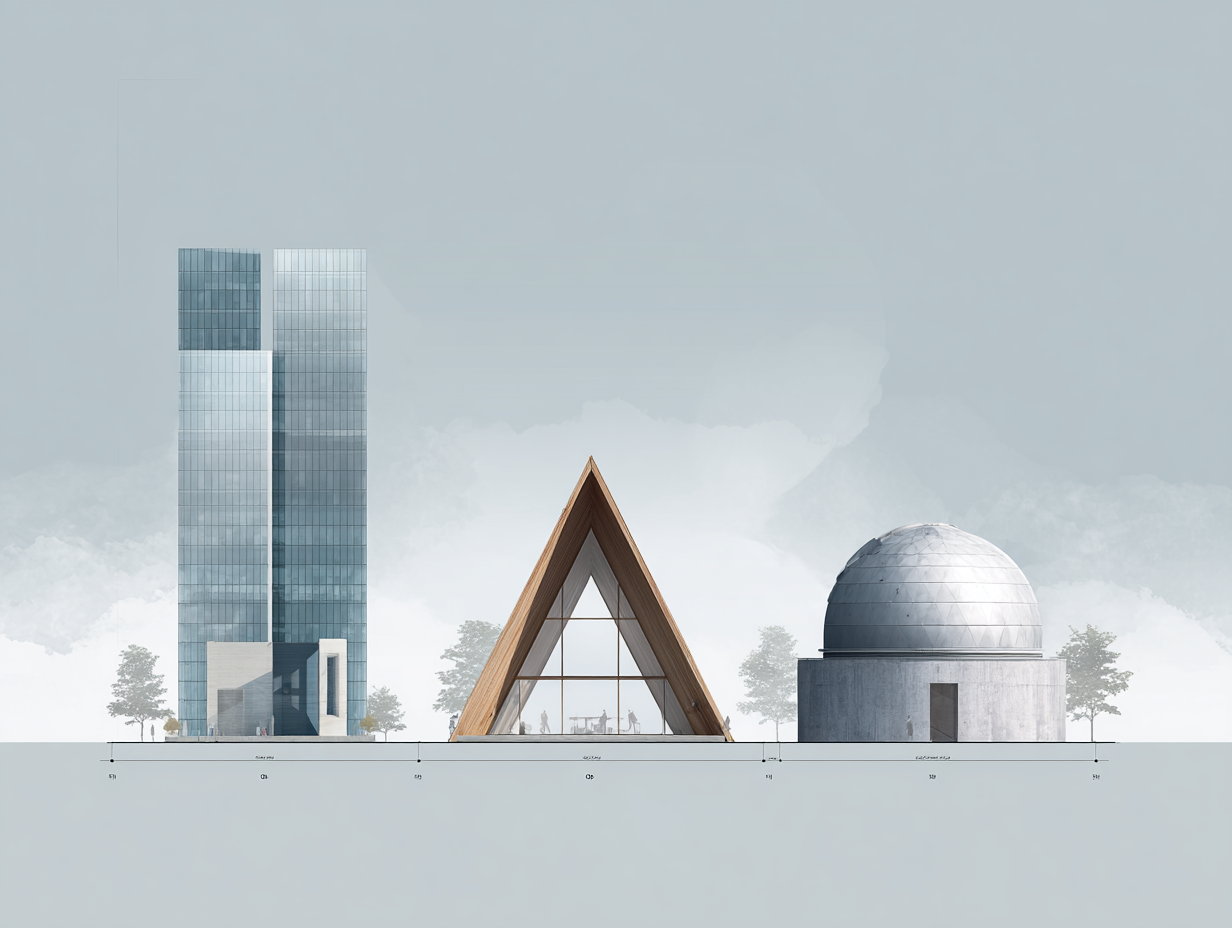
Shape in architecture refers to the two-dimensional outline or contour of a building element, wall, window, or floor plan. It is the most immediate visual quality a structure communicates. Before you register material, color, or texture, you register shape. A pointed arch reads differently from a rounded one, and a hexagonal floor plan creates a different spatial experience than a square room.
Architects distinguish between geometric shapes (circles, squares, triangles, hexagons) and organic shapes (freeform curves, irregular outlines inspired by nature). Geometric shapes tend to communicate order and precision. Organic shapes suggest movement, growth, and fluidity. Most buildings combine both: a rectangular floor plan might sit beneath a curved roof, or a grid of square windows might punctuate a flowing facade. For a broader look at how architects organize visual qualities, the guide to elements of architecture covers line, space, light, and texture alongside shape.
🎓 Expert Insight
“Architecture begins with geometry. Without symmetry and proportion, no temple can have a regular plan.” — Vitruvius, De Architectura (Ten Books on Architecture)
Vitruvius wrote this in the first century BC, but the principle holds. Every structural decision an architect makes starts with choosing a shape and understanding how it behaves under load, in light, and in relation to the human body.
Shape also carries meaning. A dome suggests gathering and protection. A spire suggests aspiration. A cantilevered slab suggests defiance of gravity. The cultural reading of shape in architecture shifts across time and geography, but its structural and emotional effects remain constant. The relationship between a building’s outline and its purpose is what separates architecture from simple construction.
Basic Shapes in Architecture and Their Structural Roles
Every complex building form can be broken down into a handful of basic shapes in architecture. Rectangles, triangles, and circles are the three primary geometries that architects return to repeatedly, each offering distinct structural advantages and spatial qualities.
Rectangles and Squares
The rectangle is the most common shape in the built environment. Its right angles make it easy to construct, stack, and subdivide. Rooms, doors, windows, bricks, and most structural grids are rectangular. This shape maximizes usable floor area because furniture and human activity fit neatly within orthogonal boundaries. When architects design with structural grids, the spacing is almost always rectangular or square, producing predictable load paths and efficient material use.
The structural weakness of a rectangle is its tendency to rack (deform into a parallelogram) under lateral force. That is why rectangular frames rely on diagonal bracing or rigid connections at the corners to resist wind and seismic loads.
Triangles
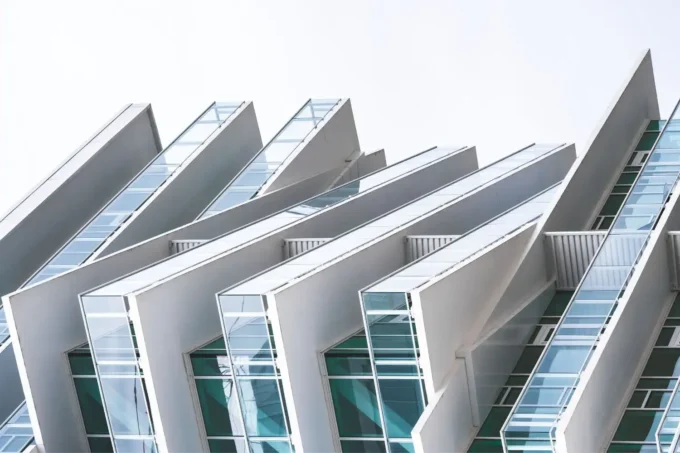
The triangle is the strongest two-dimensional shape. Unlike a rectangle, a triangle cannot deform without changing the length of its sides. This rigidity makes it essential for trusses, geodesic domes, and space frames. Buckminster Fuller’s geodesic dome, first patented in the late 1940s, demonstrated that an entire enclosure could be built from a network of triangles, using less material per unit of enclosed volume than any other structural system.
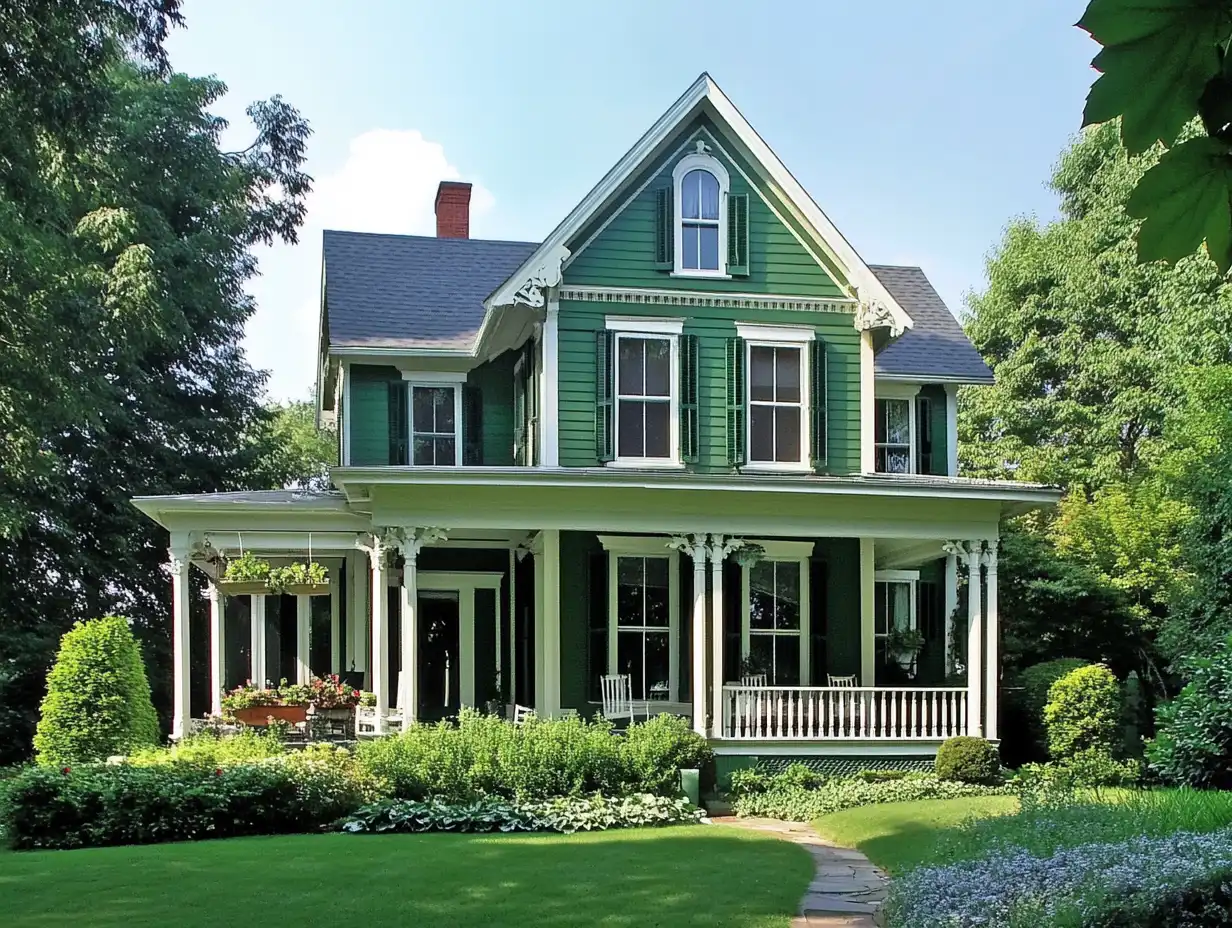
Triangular shapes also appear in roof profiles (gable roofs, A-frame cabins), structural bracing within walls, and even in floor plan arrangements for corner sites.
💡 Pro Tip
When designing a long-span structure on a tight budget, consider triangulated trusses over solid beams. A well-designed steel truss can span 30 meters or more while using roughly 40% less material than an equivalent solid steel section, because the triangular geometry converts bending forces into axial tension and compression.
Circles and Curves
Circles distribute stress evenly across their perimeter, which is why domes, arches, and cylindrical towers have been used for centuries to span large openings without concentrated failure points. The Pantheon in Rome, completed around 125 AD, uses a hemispherical dome with a 43.3-meter diameter. That span was not surpassed for over 1,300 years. The circle’s structural efficiency made it possible.
Curved shapes also influence how people move through space. A circular plan encourages rotation and gathering (think amphitheaters, rotundas, and roundabouts), while a linear plan encourages progression. Proportional systems like the golden ratio often govern how curves relate to straight elements within a composition, ensuring visual harmony.
3D Shapes in Architecture: From Surface to Volume
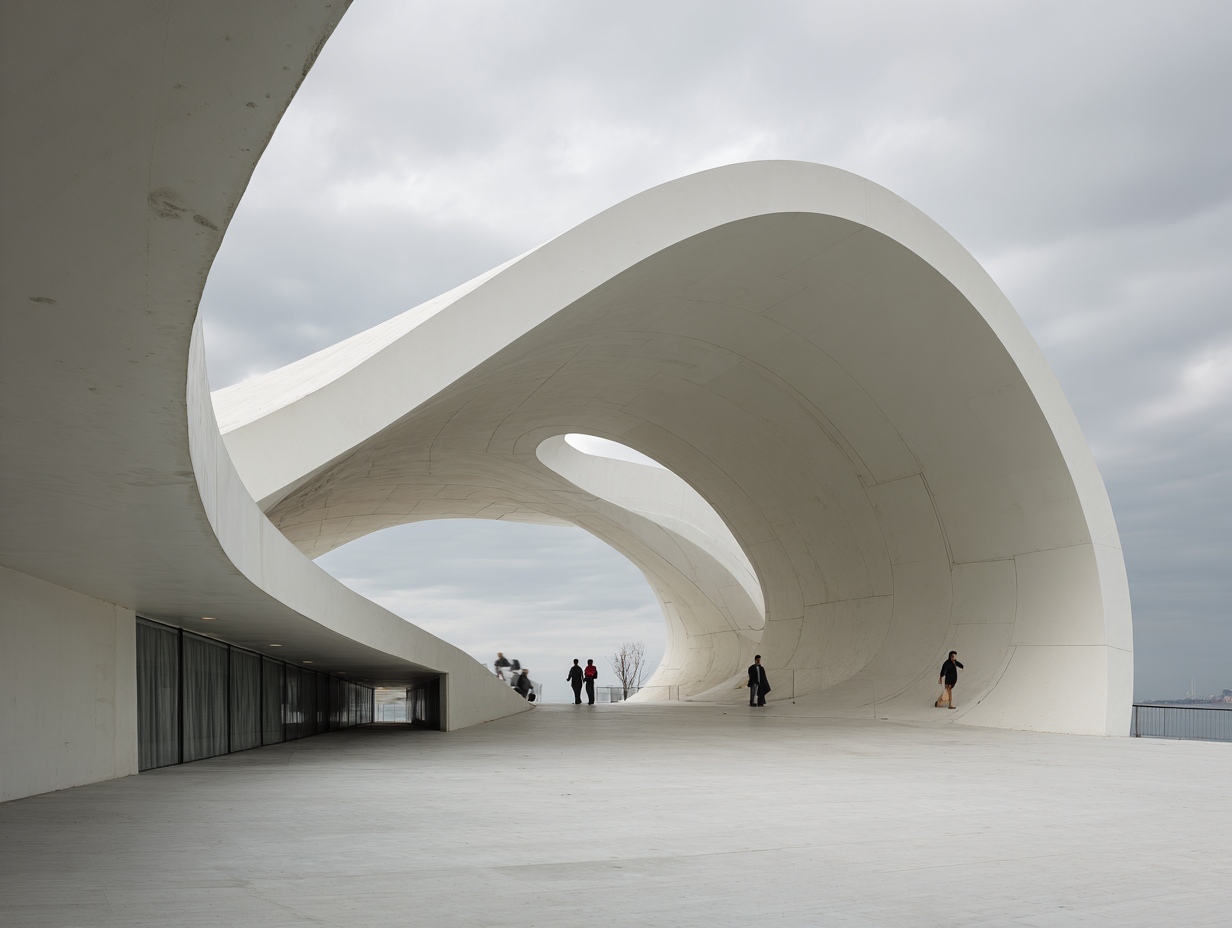
A shape becomes a form when it gains depth. 3D shapes in architecture include cubes, cylinders, cones, pyramids, spheres, and the more complex freeform volumes seen in contemporary design. Where shape describes what you see on a flat elevation drawing, form describes what you experience walking around and through a building.
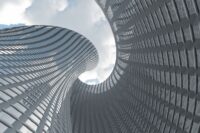
The cube and the rectangular prism dominate commercial and residential construction for the same practical reasons the rectangle dominates plan layouts: efficiency, constructability, and spatial predictability. But some of the most memorable buildings in history break away from the box. The Egyptian pyramids, the cooling towers of power plants (hyperboloid geometry), and the twisted skyscrapers of the 21st century all rely on three-dimensional geometry to solve specific structural or programmatic challenges.
🏗️ Real-World Example
Heydar Aliyev Center (Baku, 2012): Designed by Zaha Hadid Architects, this 57,500-square-meter cultural center uses a continuous curved surface that flows from ground plane to roof without a single sharp corner. The structure relies on a space-frame system with over 12,000 unique steel nodes, each digitally fabricated to a different specification. It is one of the clearest built demonstrations of how organic 3D shapes can replace the box entirely.
Parametric software has accelerated the use of non-standard 3D shapes. Tools like Grasshopper for Rhino allow architects to define a shape through mathematical relationships and then adjust the entire form by changing a single variable. For a closer look at how these tools work, see the guide to parametric architecture. The distinction between organic and parametric design approaches also matters here: organic forms draw on natural precedents, while parametric forms emerge from algorithmic rules, though the results can look similar.
How Shape and Form Work Together in Architecture
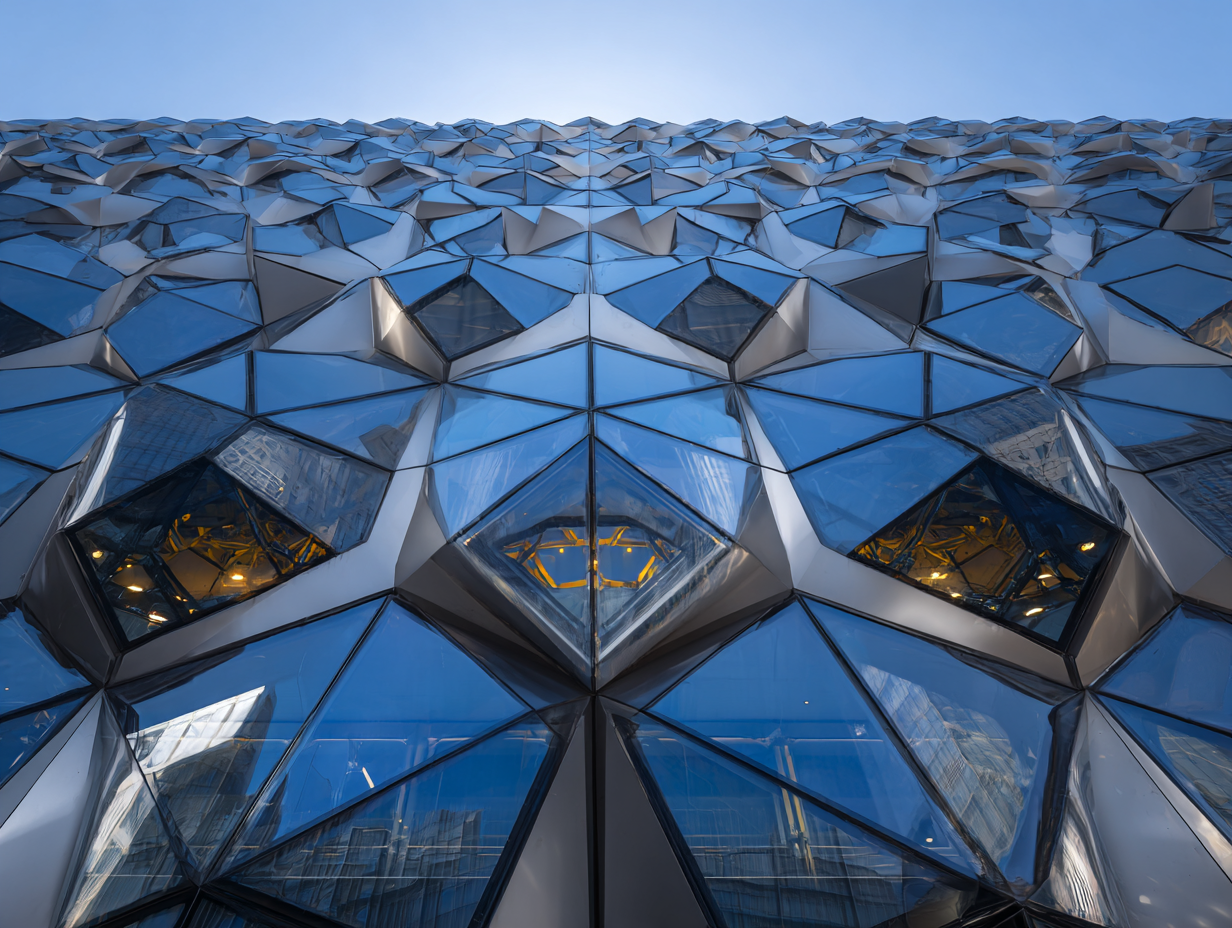
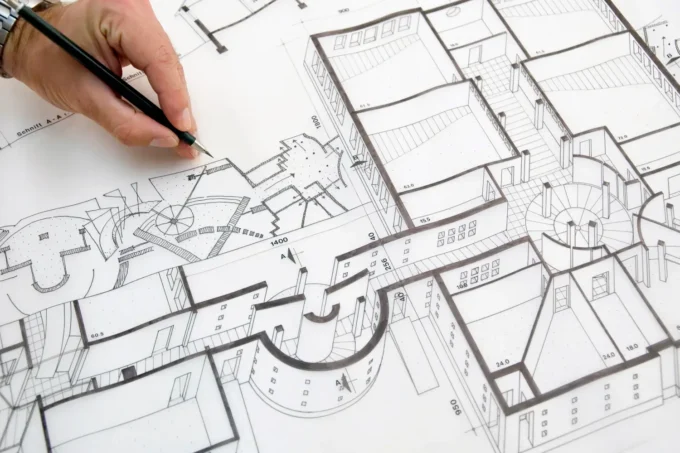
Shape and form in architecture are connected but not identical. Shape is what you draw on paper. Form is what you build in space. A circle on a plan can become a cylinder (if extruded), a cone (if tapered), or a dome (if rotated as a half-sphere). The same 2D shape generates radically different spatial experiences depending on how it is translated into three dimensions.
Comparing 2D Shapes and Their 3D Counterparts
The following table maps common shapes to the forms they produce and the architectural applications where each combination appears most often:
| 2D Shape | 3D Form | Structural Behavior | Common Application |
|---|---|---|---|
| Rectangle | Rectangular prism / Box | Efficient load stacking, easy to brace | High-rise towers, residential blocks |
| Triangle | Tetrahedron / Truss | Rigid under load, resists deformation | Bridges, geodesic domes, roof trusses |
| Circle | Sphere / Dome / Cylinder | Even stress distribution, minimal material | Stadiums, observatories, tanks |
| Hexagon | Honeycomb / Prismatic cell | High compressive strength, space-filling | Facade panels, structural cores |
| Freeform curve | NURBS surface / Shell | Complex load paths, requires digital fabrication | Museums, cultural centers, airports |
This relationship between 2D outline and 3D volume is what makes shape such a powerful design tool. Changing one dimension of a basic shape in architecture can transform the entire character of a building.
Why Geometric Shapes Drive Modern Design
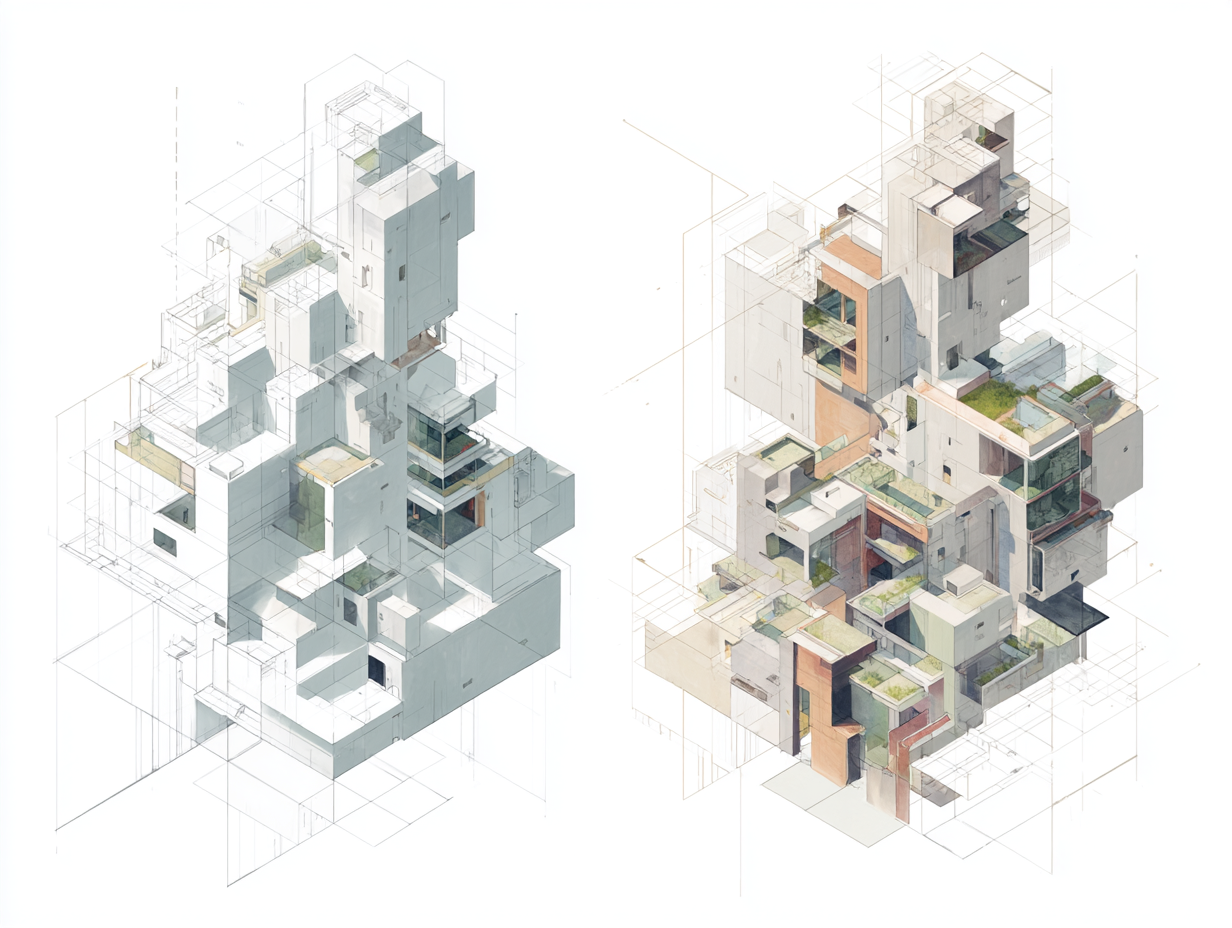
The importance of shapes in architecture goes beyond aesthetics. Geometric shapes in architecture determine structural efficiency, construction cost, environmental performance, and occupant experience. A building shaped to minimize wind resistance uses less energy for climate control. A floor plan shaped around natural light patterns reduces artificial lighting demand. Shape is function as much as it is appearance.
📌 Did You Know?
A sphere encloses the maximum volume for the minimum surface area of any geometric solid. This is why Buckminster Fuller argued that dome-shaped buildings are inherently more energy-efficient than boxes: a hemispherical dome has roughly 30% less surface area than a cube enclosing the same volume, which means less material for the shell and less energy lost through the envelope.
Modern computational tools have expanded what is geometrically possible. Where hand drafting limited architects to shapes they could draw with rulers and compasses, software like Rhino, Revit, and Grasshopper allows the generation of double-curved surfaces, algorithmically optimized lattices, and forms that respond dynamically to site data. Zaha Hadid’s architecture is among the most visible examples of this shift: her buildings replaced straight edges with continuous flowing surfaces, pushing geometric shapes in architecture toward territory that was previously impossible to build.
Yet the fundamentals have not changed. Whether an architect is designing a simple rectangular house or a parametric airport terminal, the logic of shapes in architecture still governs every decision. Triangles still resist lateral loads. Arches still redirect compression. Circles still distribute stress evenly. The tools have changed; the geometry has not. Many of the most striking futuristic buildings already built around the world derive their visual impact directly from how they manipulate basic and complex shapes.
For more on how architectural geometry bridges mathematics and design, the Wikipedia entry on the subject provides a useful starting point. The American Institute of Architects (AIA) also publishes resources on how geometric principles inform professional practice. Projects like the Heydar Aliyev Center are well documented on Zaha Hadid Architects’ official site, where the structural and geometric strategies are explained in detail.
Where to Go From Here
Your Next Step: Pick one building you walk past regularly and sketch its primary shapes on paper: rectangles, triangles, arches, curves. Then ask yourself why each shape is there. Is it structural, spatial, or purely visual? That single exercise trains the eye to read architecture the way designers do, starting with geometry.













Leave a comment