


Table of Contents Show
Biophilic design principles are a set of strategies that bring natural elements, patterns, and processes into the built environment to improve occupant health, mood, and productivity. Rooted in the biophilia hypothesis proposed by biologist Edward O. Wilson in 1984, these principles guide architects and designers in creating spaces that reflect our inherited need to connect with living systems.
What Are Biophilic Design Principles?
The term “biophilia” literally means love of life. Wilson argued that humans carry a genetic predisposition to seek contact with nature, a trait shaped by millennia of evolution spent outdoors. Biophilic design principles translate that instinct into actionable design decisions for buildings, interiors, and urban spaces. Rather than treating greenery as decoration, they position nature as a functional layer of architecture that directly affects how people feel and perform inside a space.
The most widely referenced framework comes from Terrapin Bright Green’s “14 Patterns of Biophilic Design” (2014), developed by William Browning, Catherine Ryan, and Joseph Clancy. This framework organizes biophilic architecture design principles into three broad categories, each addressing a different way humans experience nature in built settings. Stephen Kellert, a Yale University professor who pioneered much of the academic groundwork, had previously identified over 70 mechanisms for creating biophilic experiences, and the 14 Patterns distilled those into a practical tool for designers working with nature-based strategies.
🎓 Expert Insight
“Biophilic design can reduce stress, enhance creativity and clarity of thought, improve our well-being and expedite healing.” — William Browning, Co-founder, Terrapin Bright Green
Browning’s research, compiled across over 500 publications on biophilic responses, helped establish the evidence base that now informs green building standards worldwide.
The Three Categories of Biophilic Design
Terrapin Bright Green’s framework groups the 14 patterns into three categories. Each one captures a distinct aspect of the human-nature relationship and offers specific design strategies architects can apply across building types.
Nature in the Space
This category covers direct, physical contact with natural elements inside a building. It includes patterns such as visual connection with nature (views to plants, water, or animals), non-visual connection (sounds of water, birdsong, scent of flowers), non-rhythmic sensory stimuli (movement of leaves or reflections on water), thermal and airflow variability, the presence of water features, dynamic and diffuse light, and connection with natural systems like seasonal changes. A straightforward example: positioning workstations near windows with views of trees rather than parking lots. Offices that maximize natural daylight and visual access to outdoor landscapes consistently report higher satisfaction among occupants.
Natural Analogues
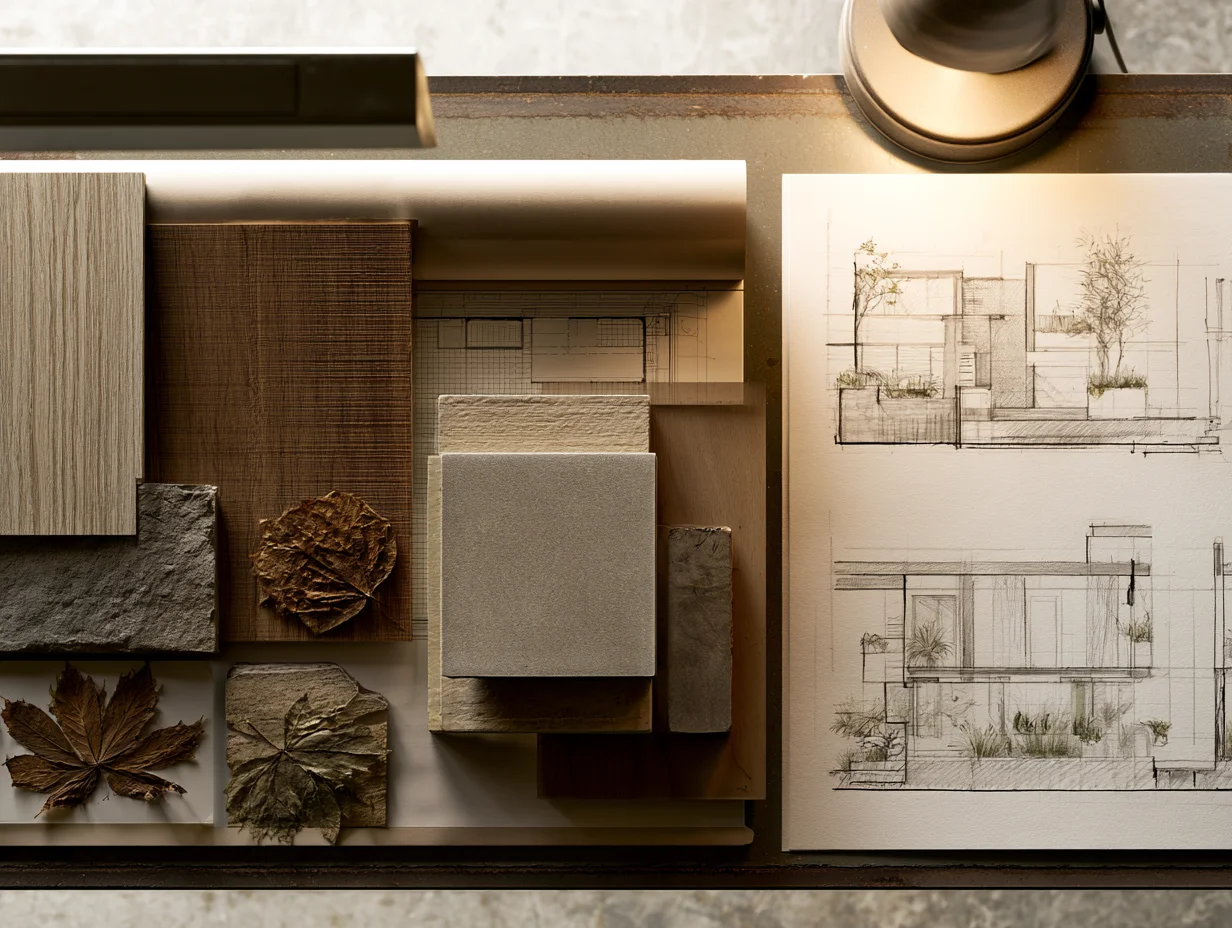
When direct nature isn’t feasible, natural analogues step in. These are organic shapes, materials, textures, and patterns that evoke the natural world without requiring a living element. Wood grain on wall panels, stone flooring, fractal patterns in screen designs, and biomorphic furniture all fall into this category. Research by Dr. Richard Taylor at the University of Oregon has shown that exposure to fractal patterns, the branching, repeating geometries found in trees, rivers, and coastlines, reduces physiological stress by up to 60%. Architects designing biophilic facades often use perforated screens, undulating forms, and textured cladding to create these analogue effects on building exteriors.
Nature of the Space
This third category addresses spatial configurations that mirror environments humans evolved in. It includes prospect (open views, as from a savanna), refuge (enclosed, protected nooks), mystery (partially obscured views that encourage exploration), and risk or peril (safe exposure to height or depth). A double-height atrium with a mezzanine reading nook applies both prospect and refuge simultaneously. These spatial qualities work at a subconscious level, triggering comfort or curiosity without the occupant necessarily identifying why the space feels right.
📌 Did You Know?
The biophilia hypothesis dates back further than Edward O. Wilson. Psychoanalyst Erich Fromm first used the term “biophilia” in 1973, defining it as “the passionate love of life and of all that is alive.” Wilson later reframed it through an evolutionary biology lens, arguing the trait has a genetic basis (source: Wikipedia, Biophilic Design).
How Do Biophilic Design Principles Apply to Homes?
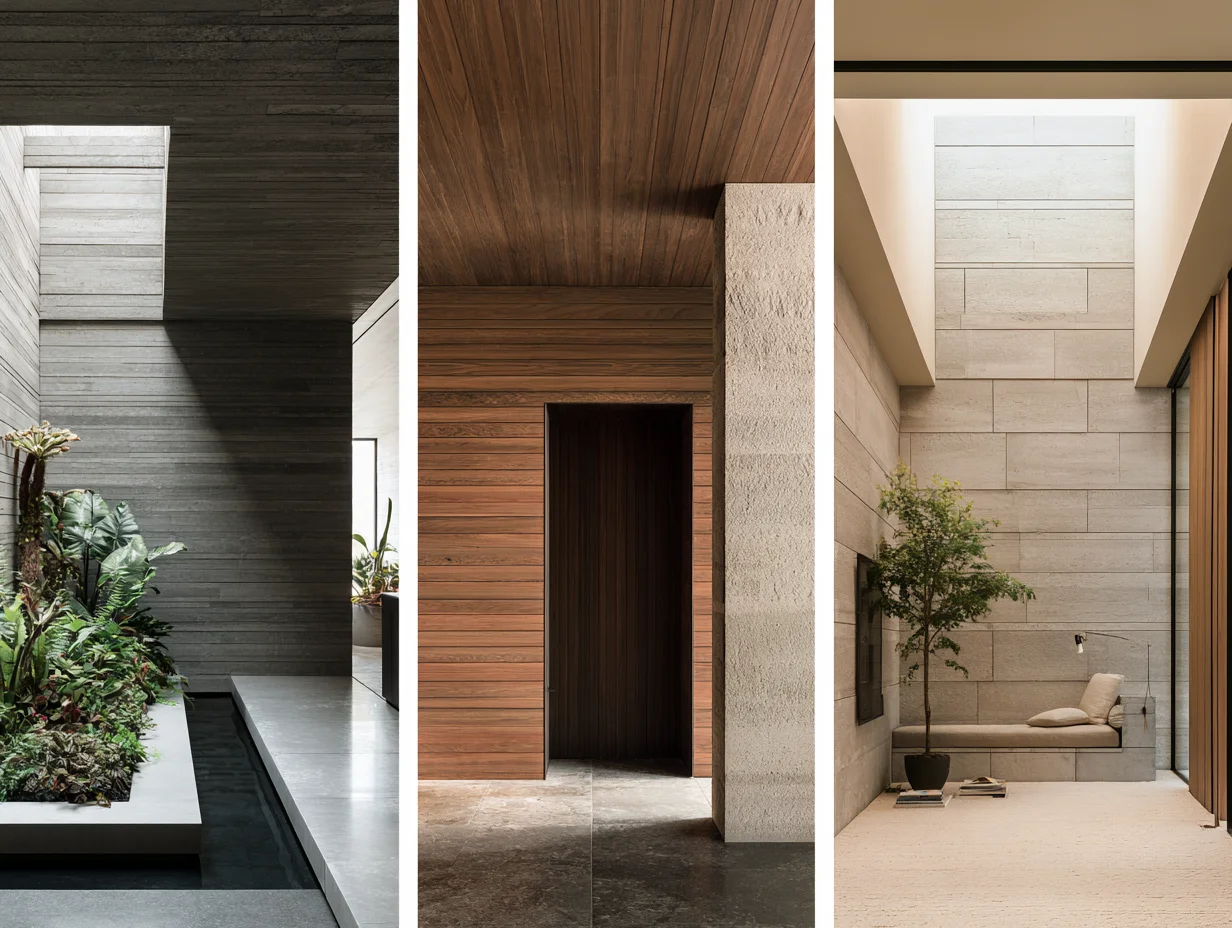
Biophilic design principles for homes don’t require a budget for living walls or rooftop gardens. They start with decisions about orientation, window placement, and material selection. South-facing windows (in the Northern Hemisphere) maximize daylight penetration. Exposed timber framing or reclaimed wood accent walls introduce natural analogues. Indoor planters positioned along circulation routes create non-rhythmic visual stimuli as occupants move through the house.
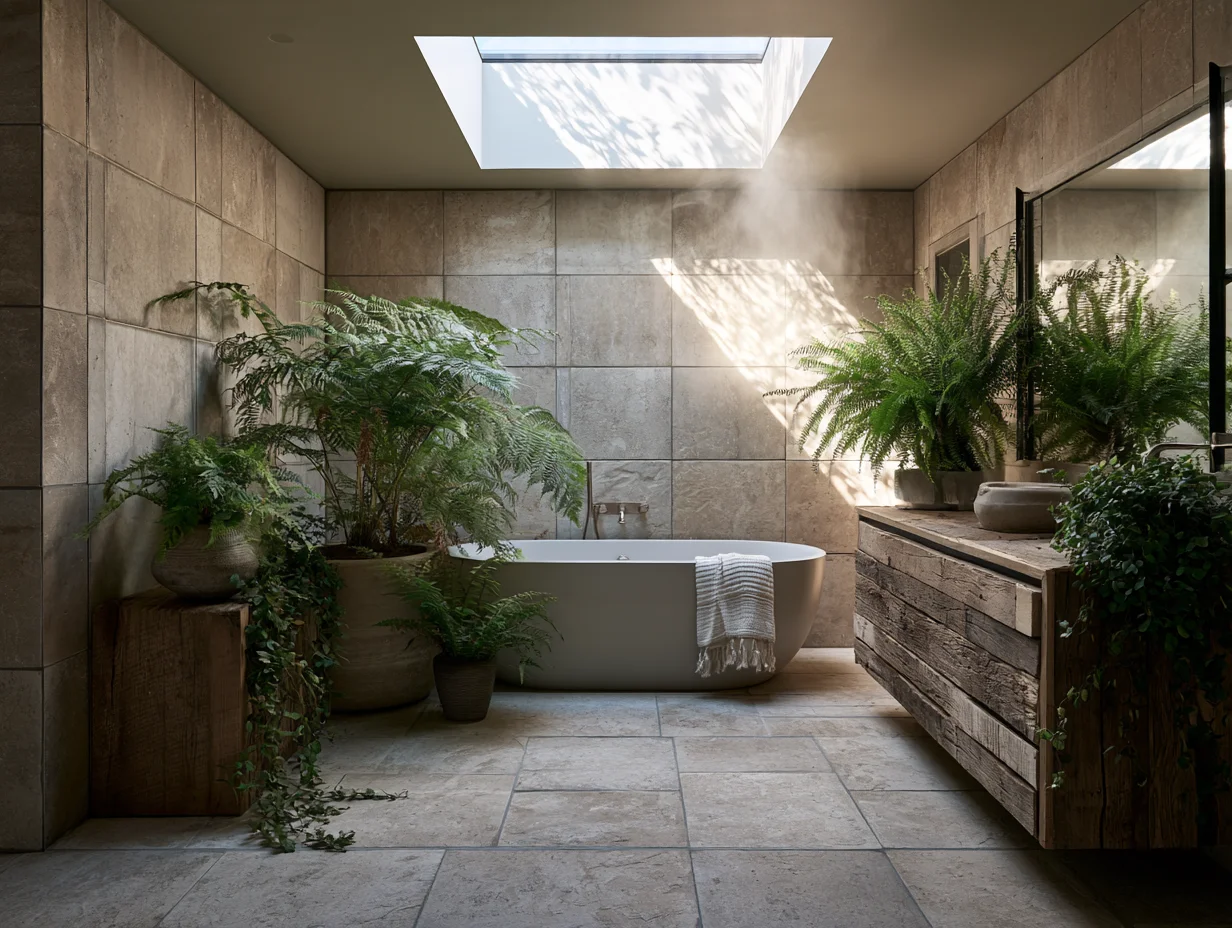
Biophilic bathroom design principles focus on sensory layering: natural stone tile, a skylight for overhead daylight, ventilation that allows airflow variability, and even the sound of running water from a freestanding tub or rainfall showerhead. The goal is to turn a utilitarian room into a space that activates multiple senses simultaneously, which aligns with Kellert’s definition of effective biophilic design as environments that engage people on both a physiological and psychological level.
💡 Pro Tip
When applying biophilic design principles in residential projects, start with the rooms where occupants spend the most waking hours: kitchens, living rooms, and home offices. A single well-placed window with a garden view often delivers more measurable stress reduction than scattering potted plants across every room without a clear sensory strategy.
Residential designers working with biophilic principles also pay attention to transitional spaces. Entryways, hallways, and stairwells benefit from mystery and prospect cues: a partially visible courtyard garden through a frosted glass panel, or a stairwell that opens to a planted lightwell. These small interventions can shift a home’s atmosphere from sterile corridor to a sequence of experiences that feel alive. For more on how architecture shapes wellbeing, spatial flow and material choice are the primary levers.
Why Biophilic Architecture Design Principles Matter for Health
The evidence connecting biophilic design to measurable health outcomes has grown considerably. According to the Global Wellness Institute’s research summary, a 2024 systematic review published in Frontiers of the Built Environment found that biophilic hospital design reduces hospitalization time, patient mortality, pain levels, and staff stress. A 2014 study from the International Journal of Environmental Research and Public Health showed that workers in offices with natural lighting, significant plants, and non-synthetic materials reported improved productivity, reduced stress, and higher workplace satisfaction.
A separate report by the Human Spaces consultancy found that employees in work environments with natural elements are 6% more productive, 15% more creative, and report 15% higher levels of wellbeing compared to those in environments without such features. These numbers explain why companies like Amazon have invested heavily in biophilic workspaces, and why mental health-focused architectural design increasingly draws on biophilic principles as a core strategy.
🏗️ Real-World Example
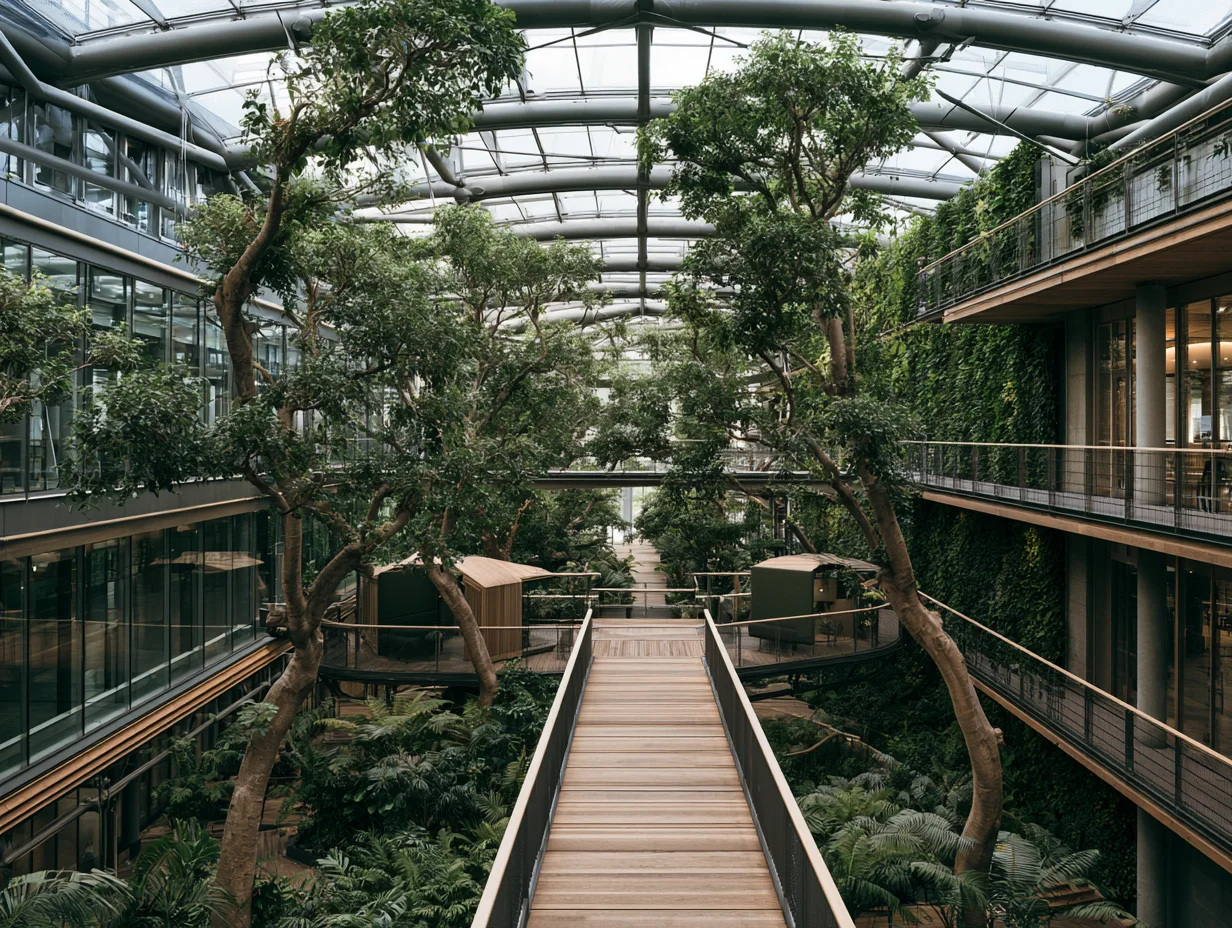
The Spheres, Amazon HQ (Seattle, 2018): Designed by NBBJ, this trio of interconnected glass domes houses over 40,000 plants from more than 1,000 cloud-forest species across 30+ countries. The four-story living wall contains 25,000 plants, and the internal climate maintains 72°F and 60% humidity during the day. Amazon built the Spheres as a workspace where biophilic design principles operate at full scale, giving employees meeting rooms, work areas, and walking paths embedded within a functioning indoor ecosystem.
Putting Biophilic Design into Practice
Applying biophilic architecture design principles doesn’t require starting from scratch. Retrofit projects can introduce biophilic elements through material swaps (replacing laminate with timber veneer), lighting redesigns (switching from uniform fluorescent grids to varied, directional daylight supplemented by warm artificial sources), and programmatic changes (converting unused rooftops into accessible green space). The key is layering multiple patterns from the Terrapin framework rather than relying on a single gesture.
A common misconception is that adding a few potted plants qualifies as biophilic design. The biophilic design definition and principles require more than isolated decorative touches. Effective implementation means establishing sustained, meaningful contact with nature across multiple senses. A living wall paired with natural ventilation, daylight variation, and wood surfaces creates a layered biophilic experience. A single fern on a reception desk does not.
For projects targeting green building certification, biophilic design principles align well with LEED and WELL Building Standard credits. Sustainable architecture strategies increasingly overlap with biophilic goals: maximizing daylight reduces energy consumption while also improving occupant mood. Biomimicry in architecture takes this further by borrowing structural and systems-level strategies from biological organisms, a related but distinct discipline that complements biophilic thinking.
Architects approaching biophilic design for the first time should study real projects that apply multiple patterns simultaneously. The most successful green architecture projects typically score well across all three Terrapin categories, not just one. Offices by firms like those documented on Dezeen provide useful precedents for seeing how water features, material palettes, spatial variety, and planting strategies work together in practice.
Where to Go From Here
Your Next Step: Pick one room or zone in your current project and audit it against Terrapin Bright Green’s three categories: does it offer any direct nature contact, any natural analogues, and any spatial qualities like prospect or refuge? Identifying which category is missing gives you a clear starting point for your first biophilic intervention.
- biophilic architecture design principles
- biophilic architecture design principles explained
- biophilic bathroom design principles
- biophilic design definition and principles
- biophilic design definition principles
- biophilic design definition principles examples
- biophilic design principle
- biophilic design principles
- biophilic design principles architecture
- biophilic design principles for homes
- principles of biophilic design













Leave a comment