


Engineers working in geotechnics say foundation reuse, once a long-standing barrier in construction due to reluctance to build new structures on old foundations, is finally breaking down, driven by carbon targets, cost pressure and a more consistent way of testing whether old piles can be trusted.
Alex Nikolic, director at A-Squared Studio, said that for years the idea of reusing foundations was raised on projects but rarely carried through, even when engineers judged it technically achievable. “Years ago, 99 out of 100 schemes where technically feasibility could be shown, the proposal would fall through due to commercial or liability issues,” he said. “In effect, the question of feasibility was asked so it could be said that it was considered, but without taking it up.”
Why foundation reuse fell out of favour
Building on existing foundations was once routine in cities such as London, where new structures were regularly raised on old footings partly to keep pace with dense urban layouts. That habit faded in the 19th century as engineers moved toward foundations designed specifically for each new building, in part to control uneven settlement.
Nikolic said inconsistency between geotechnical engineers made matters worse, since different specialists assessing the same site could reach different conclusions about whether old foundations were sound. He said the turning point came when industry groups began agreeing common benchmarks and methods for desk-based review of existing foundations, paired with targeted ground investigation, giving clients and insurers more confidence in the results.
The economics and carbon case for reusing old piles
Nikolic argued the financial logic is now hard to ignore. “When a geotechnical investigation is only up to £400k for a £400M project, the order of magnitude of savings from doing that and then reusing piles is clear,” he said.
He pointed to one London building where reuse was less about saving money than necessity: the site already held three generations of piled foundations, the oldest dating to the 1800s. “So looking at a general arrangement plan of foundations like that, and the grid, you just don’t have space for new foundations,” he said, adding that removing old piles in such conditions would have been extremely costly, and reuse became the only workable route, sometimes combined with new foundations added around what already existed.
Carbon savings are increasingly part of the pitch to clients, Nikolic said. “For embodied carbon, this is a no-brainer. There are no machines, no new concrete, no new steel, so it saves a lot of carbon,” he said, noting that some developments now market foundation reuse directly to tenants and buyers as evidence of sustainability credentials, a level of attention geotechnical work rarely attracted in the past.
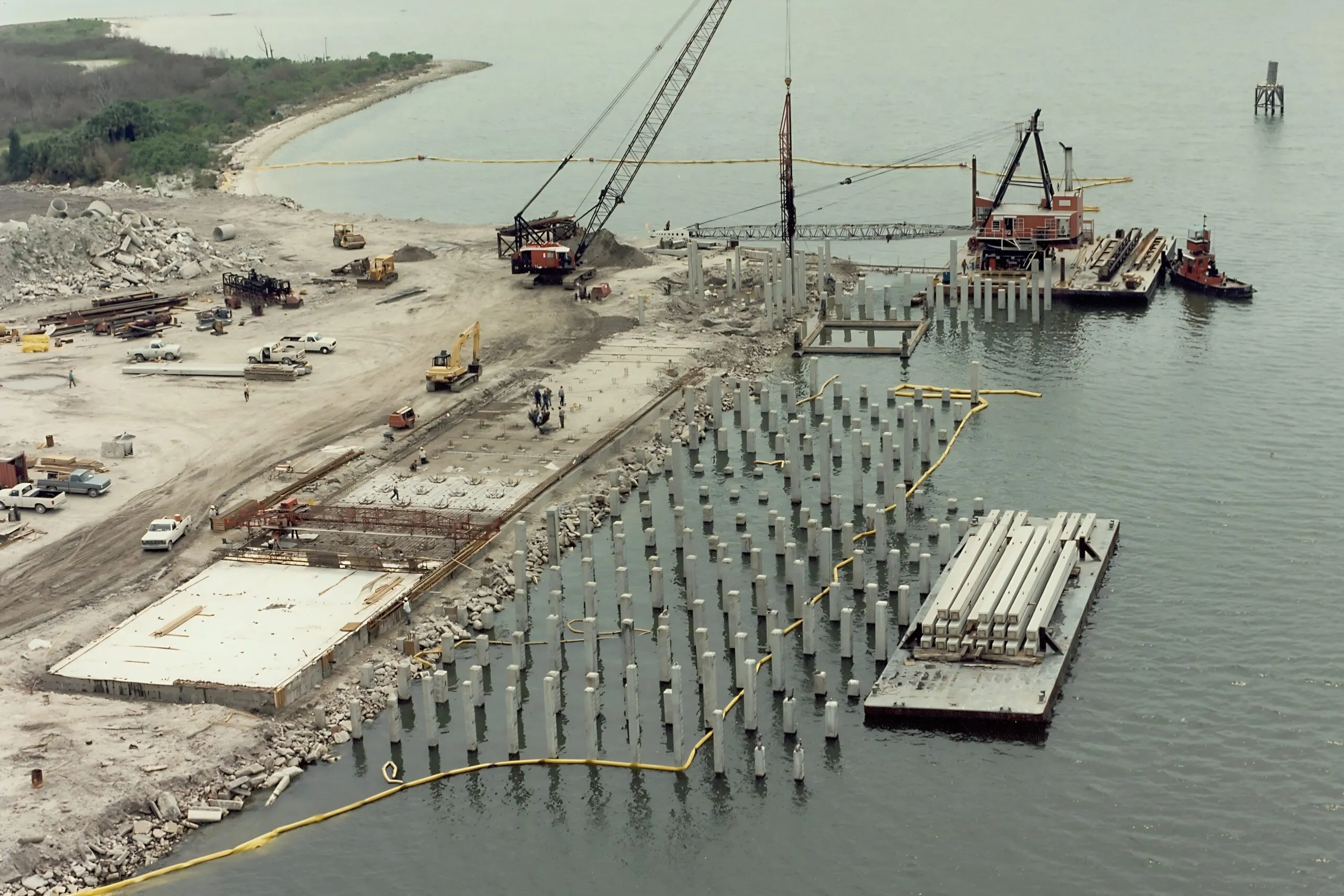
Ports, quays and ageing infrastructure
Engineer Nigel Pye said the same pressures are reshaping decisions in ports and maritime infrastructure, where shutting down a working quay to rebuild it is disruptive and expensive. “It is much more efficient to get more capacity from the existing asset,” he said, describing how operators are increasingly assessed for the potential to add capacity, such as larger vessels or additional storage, to structures built on foundations that cannot easily be inspected directly.
Pye said this depends on close cooperation between geotechnical and structural teams from an early stage, working out how new loads can be safely transferred into existing foundations and what ground movement that might cause. He said clients rarely plan ahead for future reuse when foundations are first built, even though designing for durability upfront could make later redevelopment cheaper and lower risk. “So for long term asset owners, that is perhaps a step still to be taken,” he said.
Pye said the wider industry now needs to treat this kind of reuse as standard practice rather than an exception. “We need a sustainable industry, and a sustainable way to reuse existing structures rather than demolish and rebuild,” he said.
Reusing a foundation keeps the most carbon intensive part of a building in service, the same argument made by the weight of the existing stock. Where the loads are recorded is covered in our site plan guide.











Leave a comment