


A new global building weight study has calculated the mass of more than 600 million buildings across the globe, arriving at a combined weight of 835 billion metric tons. Read alongside the design idea of material memory, the number describes what the existing building stock already holds: a material bank that demolition discards and reuse keeps in service.
The tally comes from a study published in the journal Nature Cities, led by Jinchao Song of the University of Michigan’s School for Environment and Sustainability, working with Gang Liu of Peking University and collaborators in China, Denmark and the Netherlands. The team combined satellite imagery with geospatial and material data to estimate the weight of individual buildings worldwide, a scale of detail previous national and regional studies could not reach.
How the 600 million buildings study maps material stocks
China alone accounts for roughly a quarter of the total weight counted. High-income countries, home to about 16 percent of the world’s population, are responsible for 46 percent of global building material consumption, while the Netherlands and Norway top the rankings for weight per person, even though China and the United States carry the largest totals overall.
The study also found stark inequality in accumulated stock: people in low- and middle-income countries have access to only 14 to 33 percent of the per capita building material available in wealthier nations. Urban form, not just income, shapes how much material a city needs. Dense cities made up of uniformly low buildings proved the most efficient at maximizing floor space per person while minimizing material use. More than 40 percent of such cities are in high-income countries, whereas over 80 percent of sparse, low-rise cities are in low-income ones.
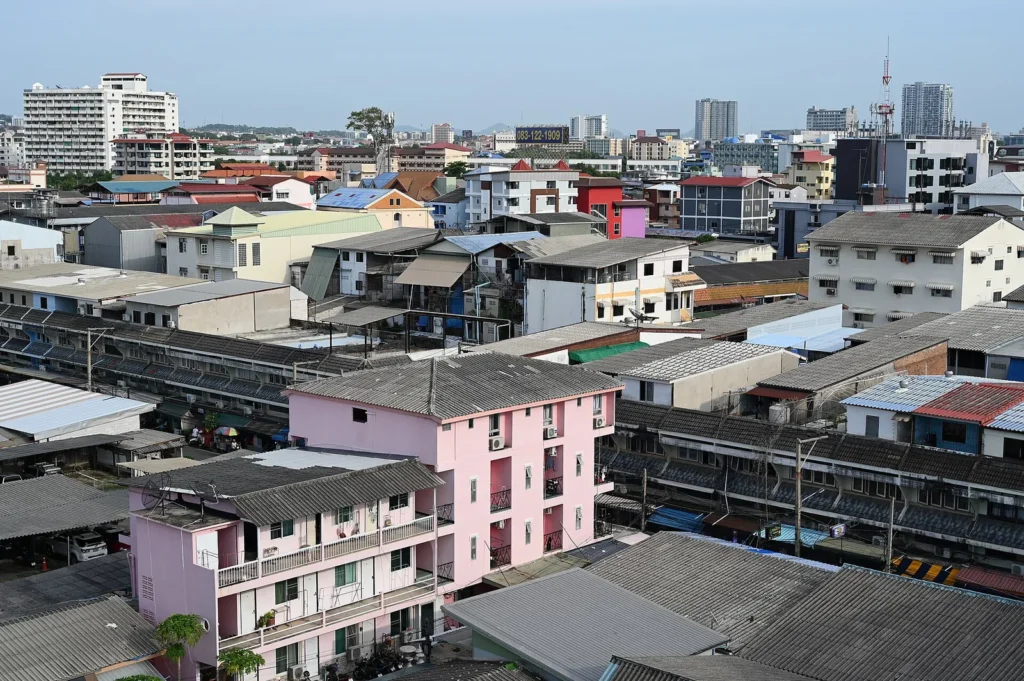
Looking ahead, the researchers project that if fast-urbanizing regions follow the same development paths richer countries once took, global building material stocks could grow by 419 billion metric tons by 2050. Nineteen of the twenty countries expected to have the highest material demand over that period are low- or middle-income; the United States is the sole high-income exception, largely because it is the only wealthy nation still projected to grow in population. The authors estimate that steering new development toward dense, uniformly low urban forms could cut that projected growth by about 30 percent.
“How we plan cities today will shape their material demand for decades,” said Song, the study’s first author. Liu described the approach as a way of grounding urban planning in physical reality: “The weight of buildings provides a complementary, physical angle for us to understand the processes and implications of urbanization.” Co-author Benjamin Goldstein framed the findings as a starting point rather than an answer: “This study provides new insights into what sustainable cities of the future should look like.”
Material memory and the case for adaptive reuse
The idea that existing buildings represent a bank of material, and of the emissions spent making it, is central to a separate concept called material memory, described in an essay for the design publication Parametric Architecture written by Mahshid Motamed. The argument holds that a building’s operational efficiency says nothing about the carbon already locked into its frame, cladding and foundations. “A building can perform efficiently in operation while carrying an enormous historical carbon burden embedded in its concrete frame, steel reinforcement, glass, aluminum, masonry, finishes, foundations, and infrastructure,” Motamed wrote.
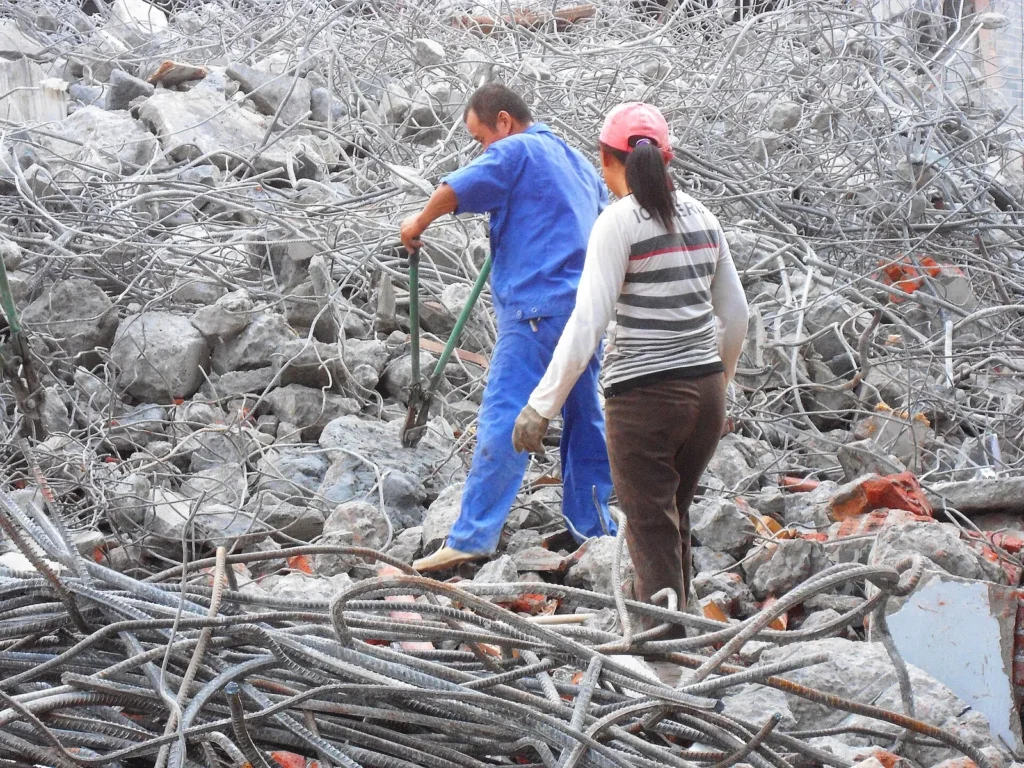
Motamed pointed to a 2025 Swedish pilot study on reused precast concrete elements, which found an 82 percent reduction in embodied carbon compared with an equivalent new build, saving about 120 kilograms of CO2 equivalent per square metre of gross floor area. “Recent research is increasingly supporting this position,” Motamed noted of the trial, adding weight to the case that retention can outperform reconstruction on carbon grounds even when a new building would run more efficiently day to day.

The essay also cited a 2026 Reuters report on retrofit strategies, which described Citigroup’s redevelopment of 25 Canada Square in London as an example of retention paying off: keeping the existing structure was calculated to avoid roughly 100,000 metric tons of embodied carbon that a full rebuild would have released.

Taken together, the two pieces of research point in the same direction: the Nature Cities study measures how much material is already embedded in the world’s cities, and the material memory argument makes the design case for treating that existing stock as an asset rather than an obstacle when planning what to build next.













Leave a comment