


Table of Contents Show
The best architecture portfolio examples share a few traits: clear project selection, consistent visual language, and a layout that guides the viewer without getting in the way. Whether you are preparing for graduate school admissions or your first job interview, studying real student portfolios is one of the fastest ways to sharpen your own presentation.
What Makes a Good Architecture Portfolio?

A good architectural portfolio is not a scrapbook of every project you have touched. It is a focused collection that tells a story about your design thinking, technical ability, and creative identity. The strongest architecture portfolio examples tend to share four qualities: they show range without losing focus, they lead with visuals rather than text, they maintain a consistent grid and typography system, and they adapt to the audience they are built for.
Admissions reviewers at schools like the AA, MIT, or Columbia want to see potential and intellectual curiosity. Firms hiring interns care about software fluency and the ability to produce clear drawings. Understanding that difference before you start assembling pages saves a lot of wasted effort. For a deeper look at tailoring your portfolio to different goals, the architecture portfolio guide on this site breaks down the professional versus academic distinction in detail.
Where to See Real Architecture Portfolios
Before reading about what a good portfolio does, it is worth looking at a few dozen real ones. These six sources publish actual student and graduate portfolios rather than describing them, and all of them are free to browse. Studying twenty portfolios in an evening teaches more about sequencing and page rhythm than any checklist.
- RIBA President’s Medals: the international student award archive, with every submitted project shown as a full set of drawings and images. The closest thing to a curated standard for what top student work looks like, and searchable by year and school.
- Columbia GSAPP Architecture Portfolios: the school publishes its award-winning portfolios alongside a full index of every graduating student. Useful because you can compare the awarded books against the ordinary ones from the same cohort.
- KU Architecture Student Portfolio Awards: a smaller, jury-selected set with the jury’s reasoning attached, which tells you what the people reviewing portfolios actually notice.
- Bespoke Careers employer reviews: four hiring practices commenting on real submitted portfolios. This is the rarest kind of source, because it shows the reader on the other side of the desk.
- Archifolio examples: a curated list where each entry shows both the PDF and the online version of the same portfolio, which is the fastest way to see how one body of work is re-cut for two formats.
- Behance student portfolio projects: the largest volume, and the least filtered. Good for spotting current graphic conventions, less good for judging quality, because nothing here has passed a jury.
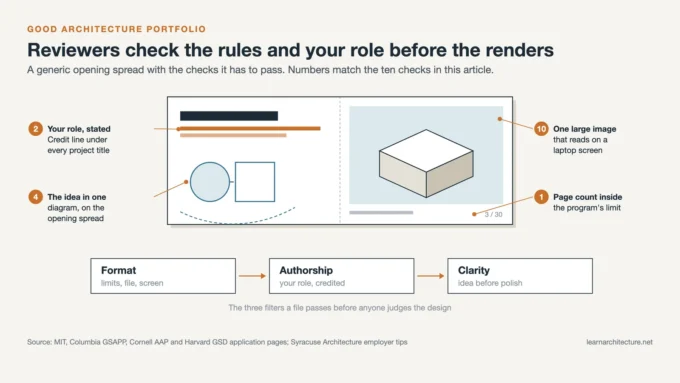
Two habits make this worth the time. Note the first three spreads of every portfolio you open, because that is roughly how long a reviewer spends before deciding whether to keep going. And note which projects are shown at full length and which are compressed to one page, because that editing decision separates a portfolio from an archive.
7 Best Architecture Portfolio Examples from Students and Graduates
Below are seven architectural portfolio examples that stand out for different reasons. Some are minimal, others are rich with process work. Each one offers a lesson you can adapt to your own context.
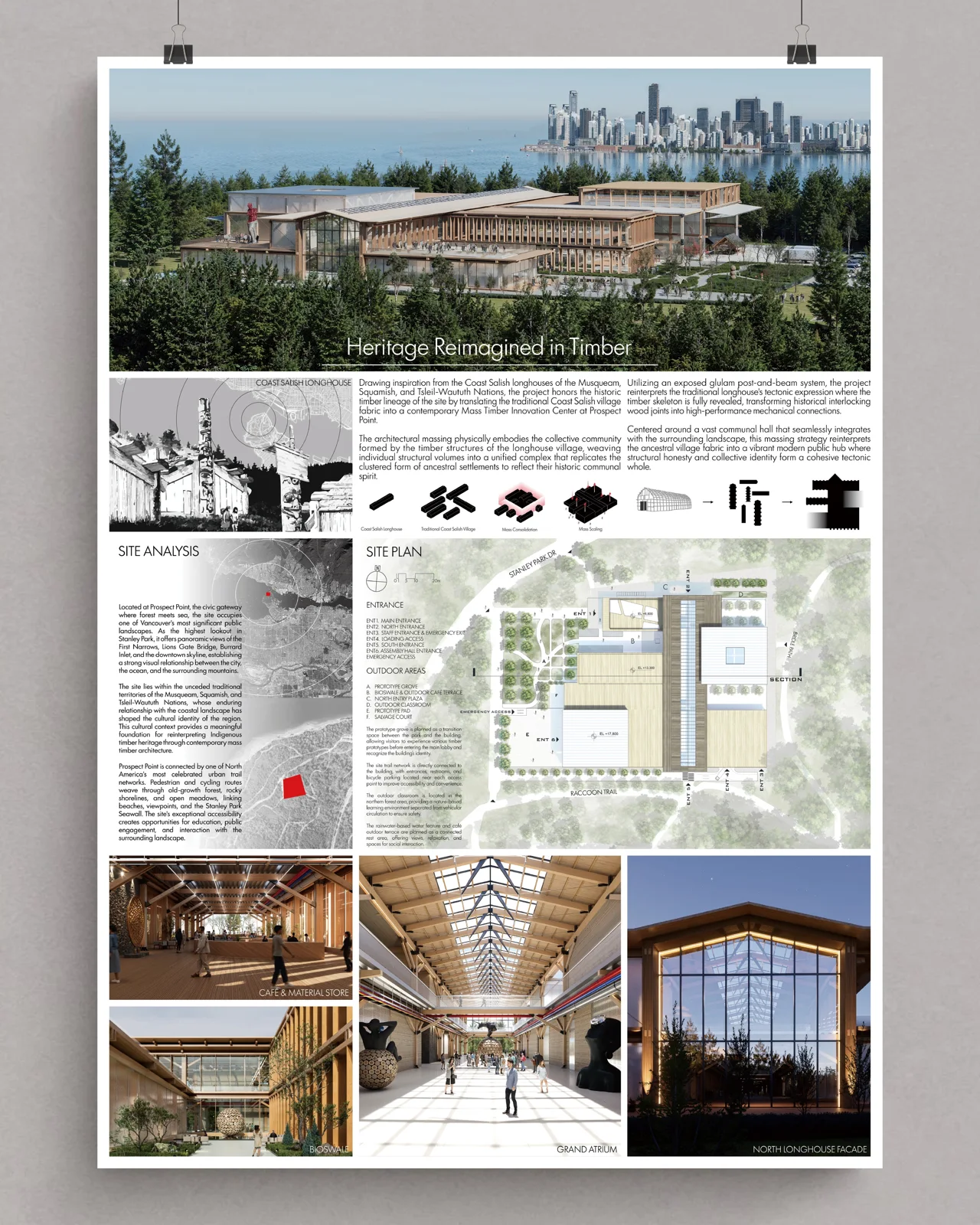
1. The Minimal Monochrome Portfolio

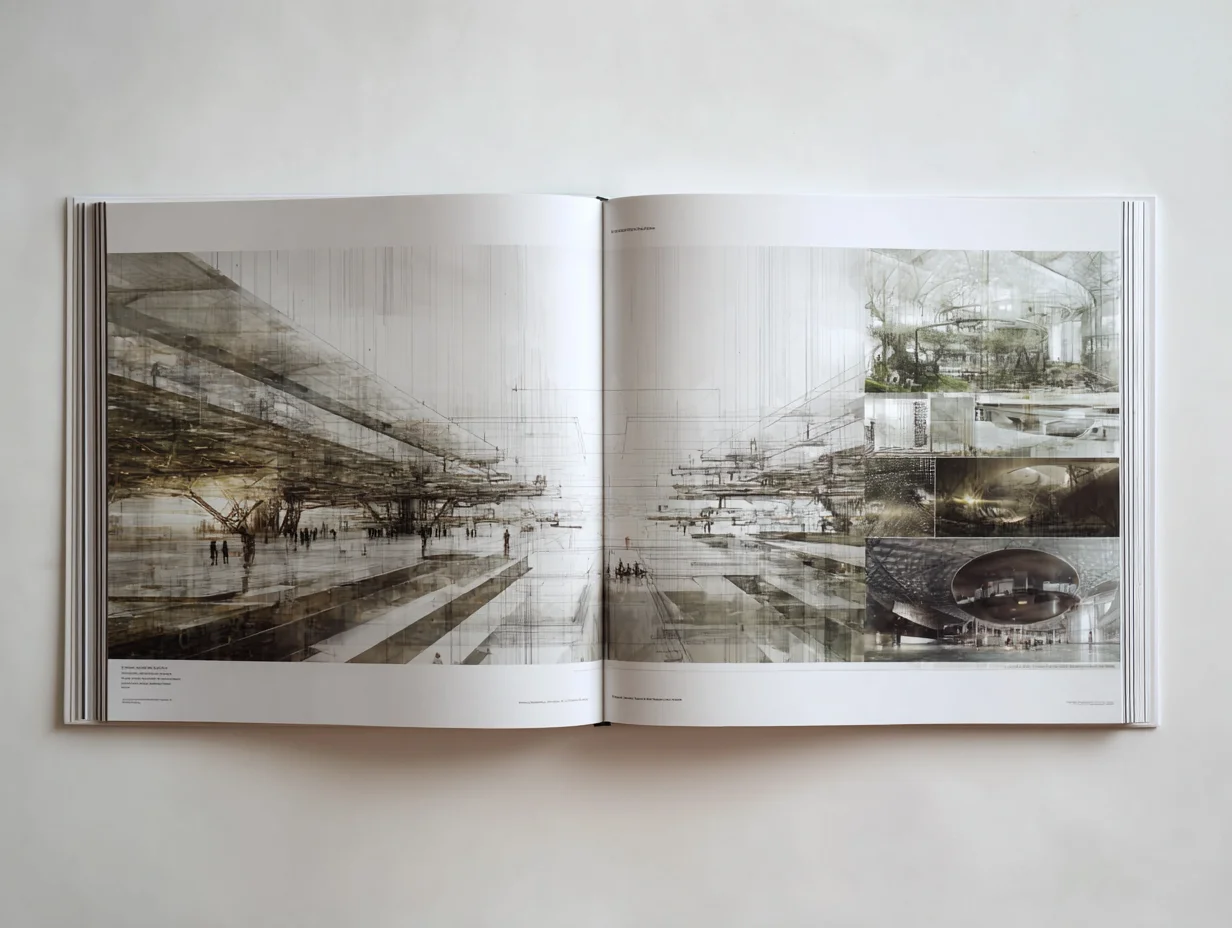
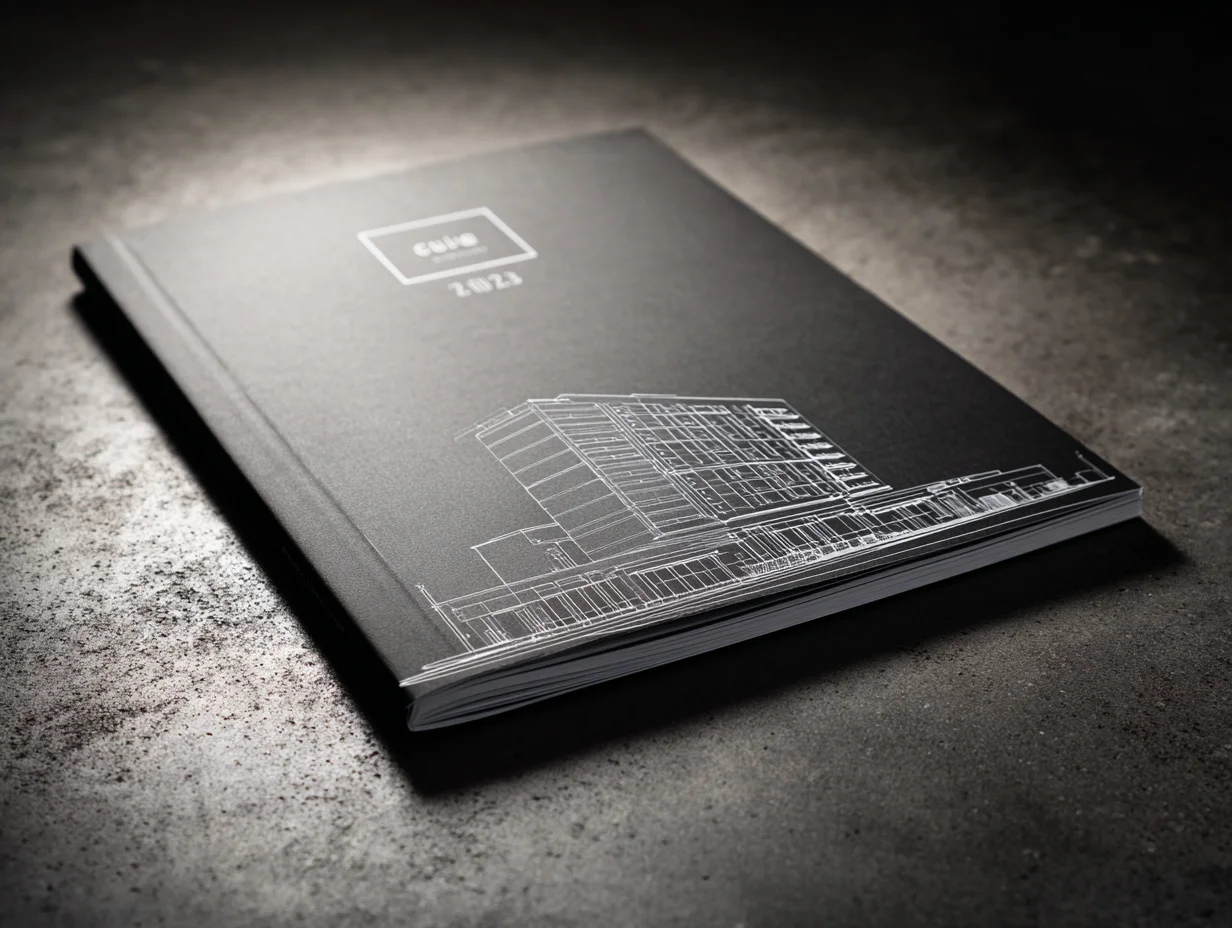
One of the most effective approaches for undergrad students is a clean, black-and-white layout with generous white space. Portfolios in this style typically use a single sans-serif typeface at two or three sizes, full-bleed renders on alternating pages, and brief captions set in a narrow column. The strength here is restraint. By removing color from the layout itself, the architectural work becomes the only visual event on each spread. This approach works especially well for students whose projects involve strong massing or sculptural forms, because nothing competes for attention.
Good cover images for an architectural portfolio in this style are usually a single high-contrast render or a dramatic section drawing set against a white background. The cover sets the tone for everything that follows, so keeping it spare signals confidence.
2. The Process-Heavy Studio Book
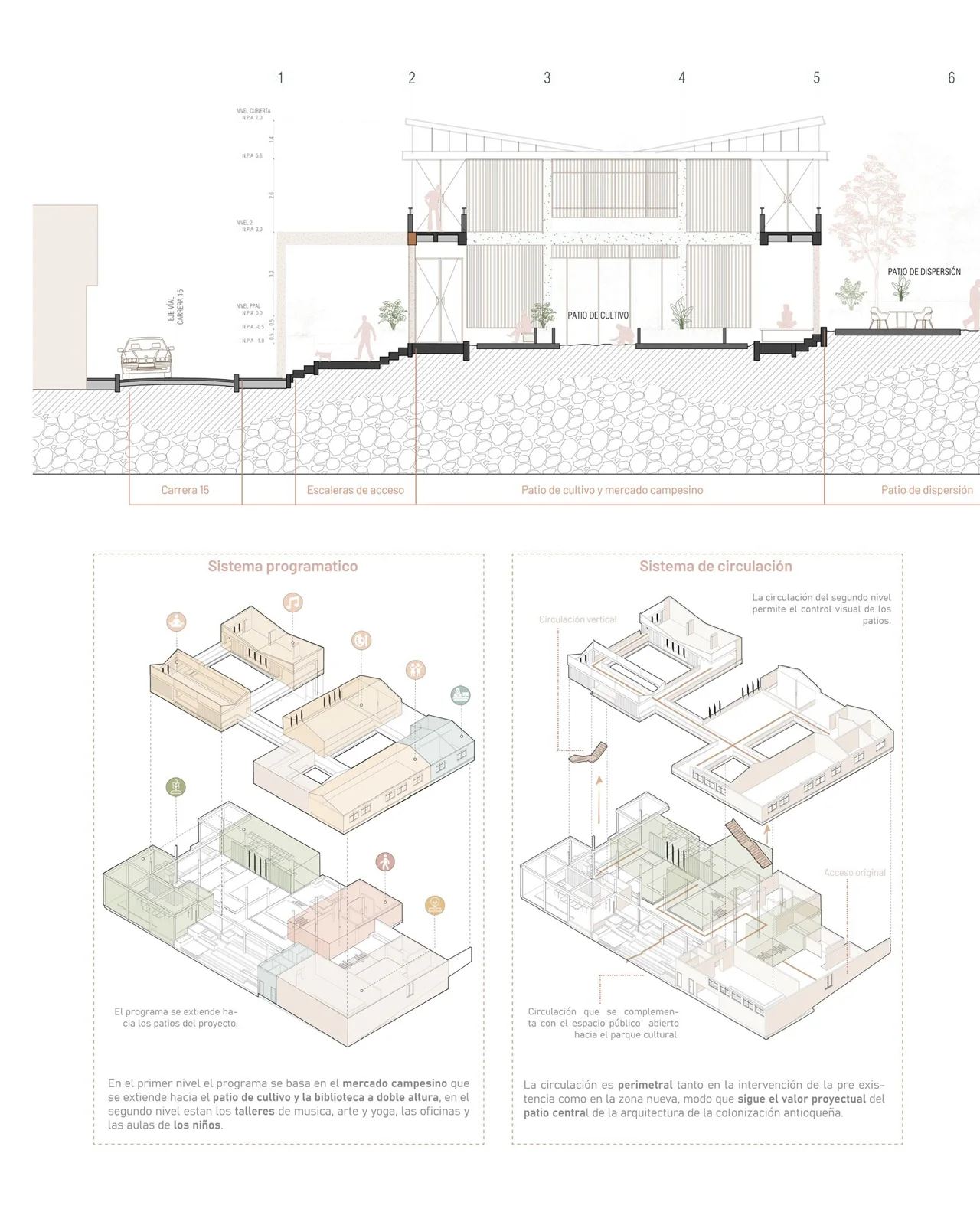
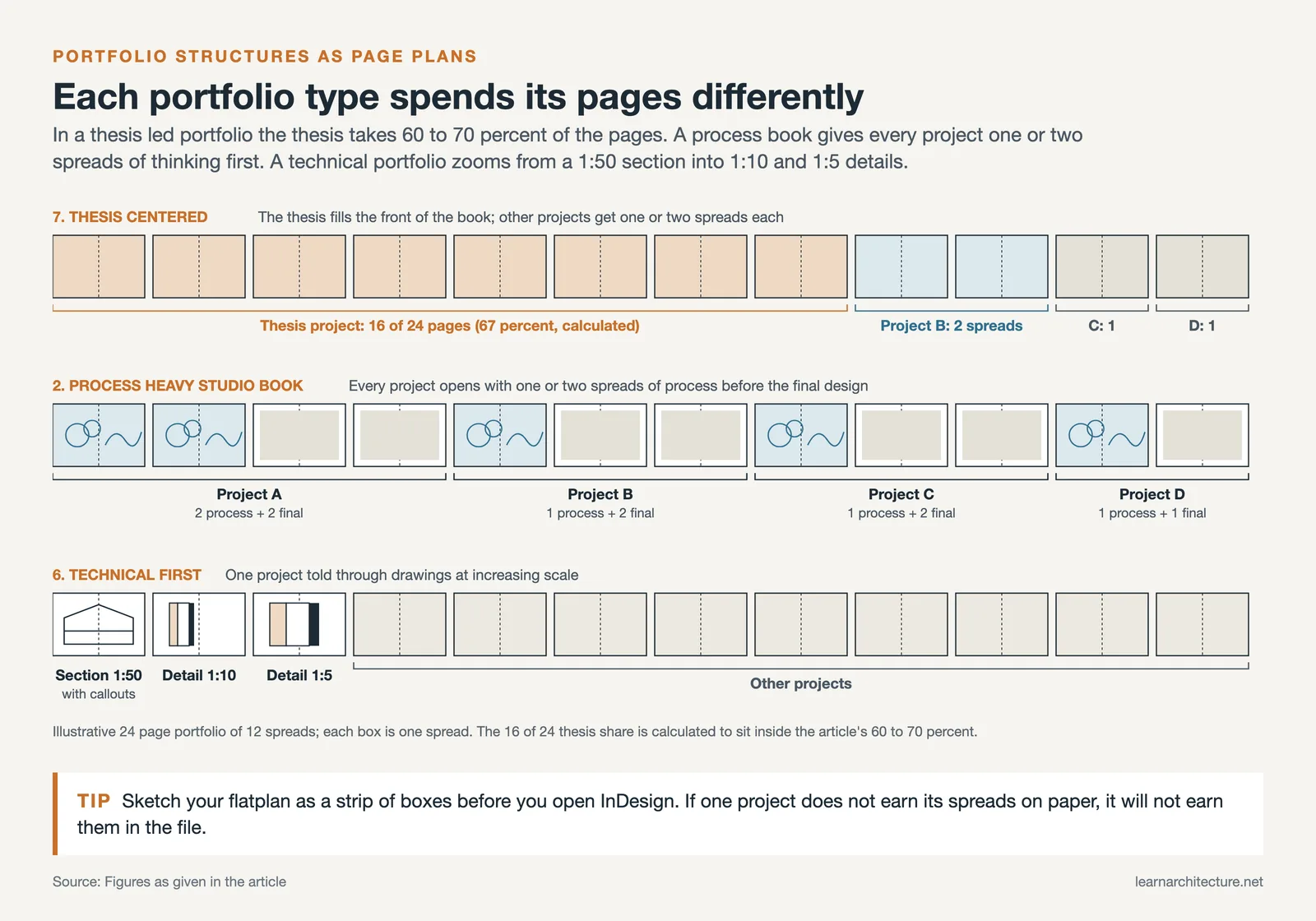
Some of the best architecture portfolio examples lean heavily into process. Rather than jumping straight to final renders, these portfolios open each project with site analysis diagrams, early concept sketches, physical model photographs, and iterative plan studies. The final design appears only after the viewer has followed the designer’s reasoning.
This format is especially useful for graduate school applications, where review panels want evidence of critical thinking rather than polished output alone. If you are choosing which projects to include in a student portfolio, prioritize the ones where your process was strongest, even if the final result is less visually striking than another project.
💡 Pro Tip
Dedicate the first one or two spreads of each project to process work (diagrams, sketches, model photos) before showing the final design. Reviewers at schools like the Bartlett and GSD consistently cite “evidence of design thinking” as a top evaluation criterion, so showing how you arrived at a solution often matters more than the solution itself.
3. The Landscape-Oriented Digital PDF
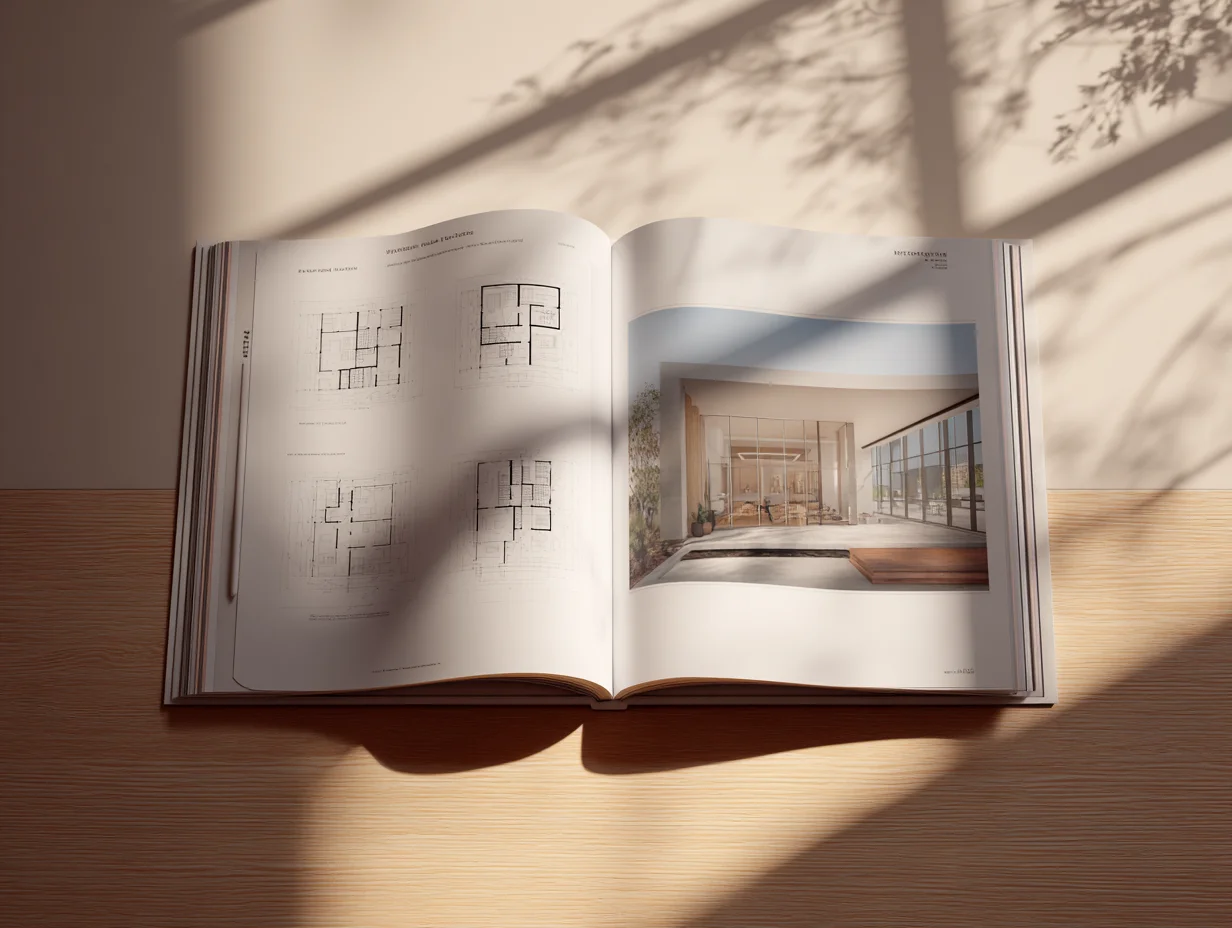
A growing number of students are designing their portfolios in 1920 x 1080 pixel landscape format, treating each page as a screen rather than a printed sheet. This makes sense when most reviewers will open your file on a laptop or tablet. The wider format gives room for side-by-side plan comparisons, panoramic renders, and two-column layouts that would feel cramped on a portrait A4 page.
The trade-off is that landscape PDFs print poorly. If there is any chance your portfolio will be reviewed on paper, prepare a separate portrait version. Keeping a master file in InDesign with versioned copies lets you switch formats without rebuilding from scratch.
4. The Web Portfolio with Case Studies
Some architectural design portfolio examples live entirely online. Rather than a single PDF, these portfolios use a personal website where each project gets its own page with scroll-based storytelling: a hero image at the top, followed by context, drawings, renders, and a closing reflection. Platforms like Issuu, Behance, and personal sites built on Cargo or Squarespace are common choices.
The advantage of a web portfolio is discoverability. Firms sometimes search for candidates online before posting a job, and a well-indexed site can surface your work at the right moment. The risk is that you lose control over how the viewer experiences the sequence. A PDF forces a linear path; a website lets people skip around. Structure your navigation so that even a non-linear reading makes sense.
📌 Did You Know?
Many hiring managers at architecture firms now review portfolios on a screen first, and an initial skim often lasts only a minute or two. That means your first three to four pages carry most of the weight in landing an interview.
5. The Mixed-Media Collage Portfolio
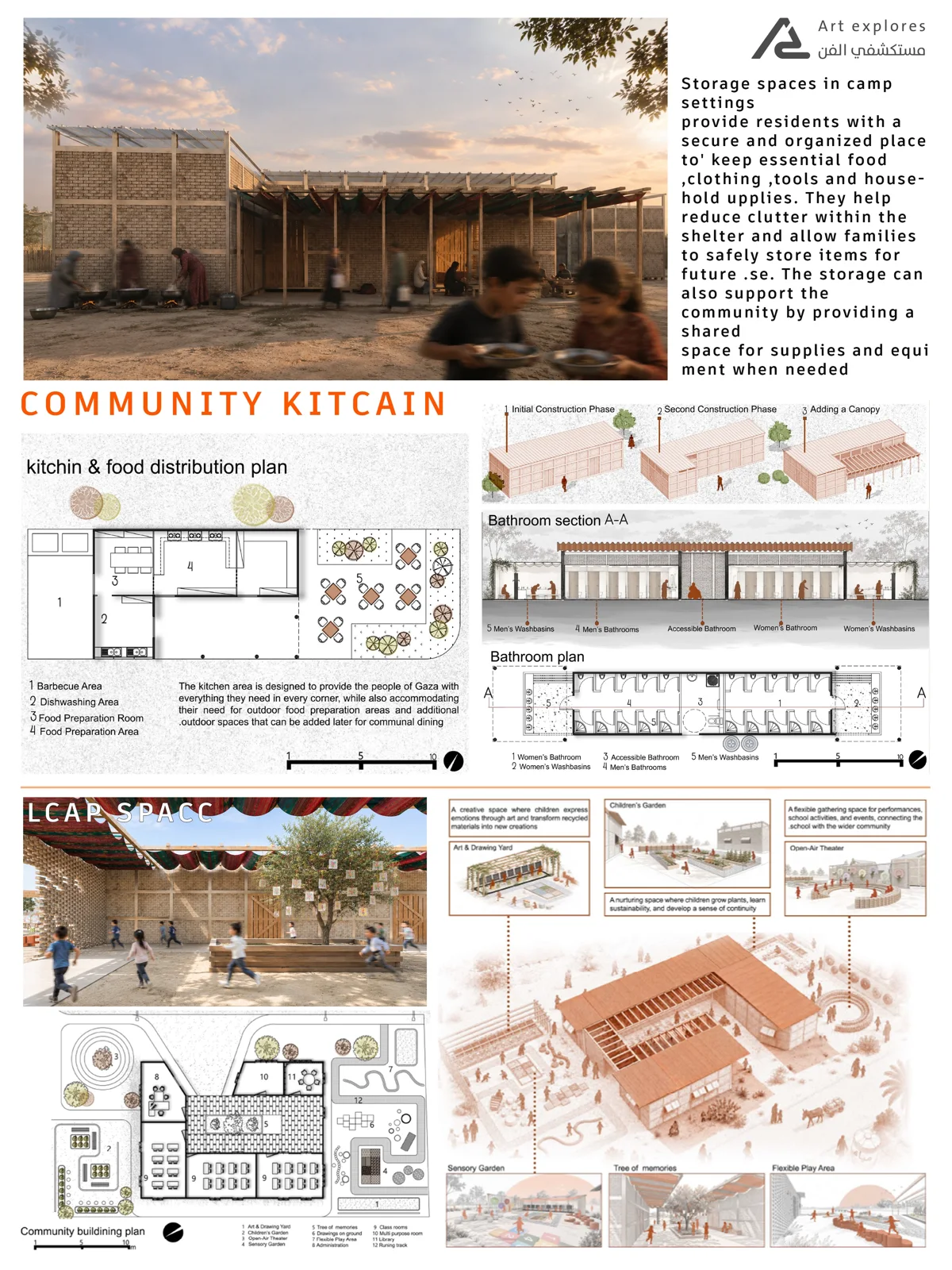
Not every strong portfolio follows a clean grid. Some of the most memorable architecture portfolios use a collage style that layers hand drawings, scanned textures, photographs, and digital renders on a single spread. This approach borrows from graphic design and editorial publishing, and it tends to work best for students whose work already mixes physical and digital media.
The danger with collage layouts is visual chaos. The line between “expressive” and “messy” is thin. If you go this route, anchor every spread with at least one large, dominant image and keep text to a minimum. A consistent color palette across spreads also helps the portfolio feel intentional rather than random.
6. The Technical-First Portfolio
Students applying to firms that value production skills sometimes build portfolios around construction details, wall sections, and coordinated drawing sets rather than conceptual renders. This is less common at the undergraduate level, but it can be extremely effective for internship applications at firms focused on execution and delivery.
An architectural portfolio sample in this category might open with a building section at 1:50 scale, annotated with material callouts and structural logic, followed by enlarged details at 1:5 and 1:10. The visual impact comes from precision and clarity rather than atmosphere. If you plan to build an internship portfolio, consider including at least one project presented this way to demonstrate that you can produce working drawings.
7. The Thesis-Centered Portfolio
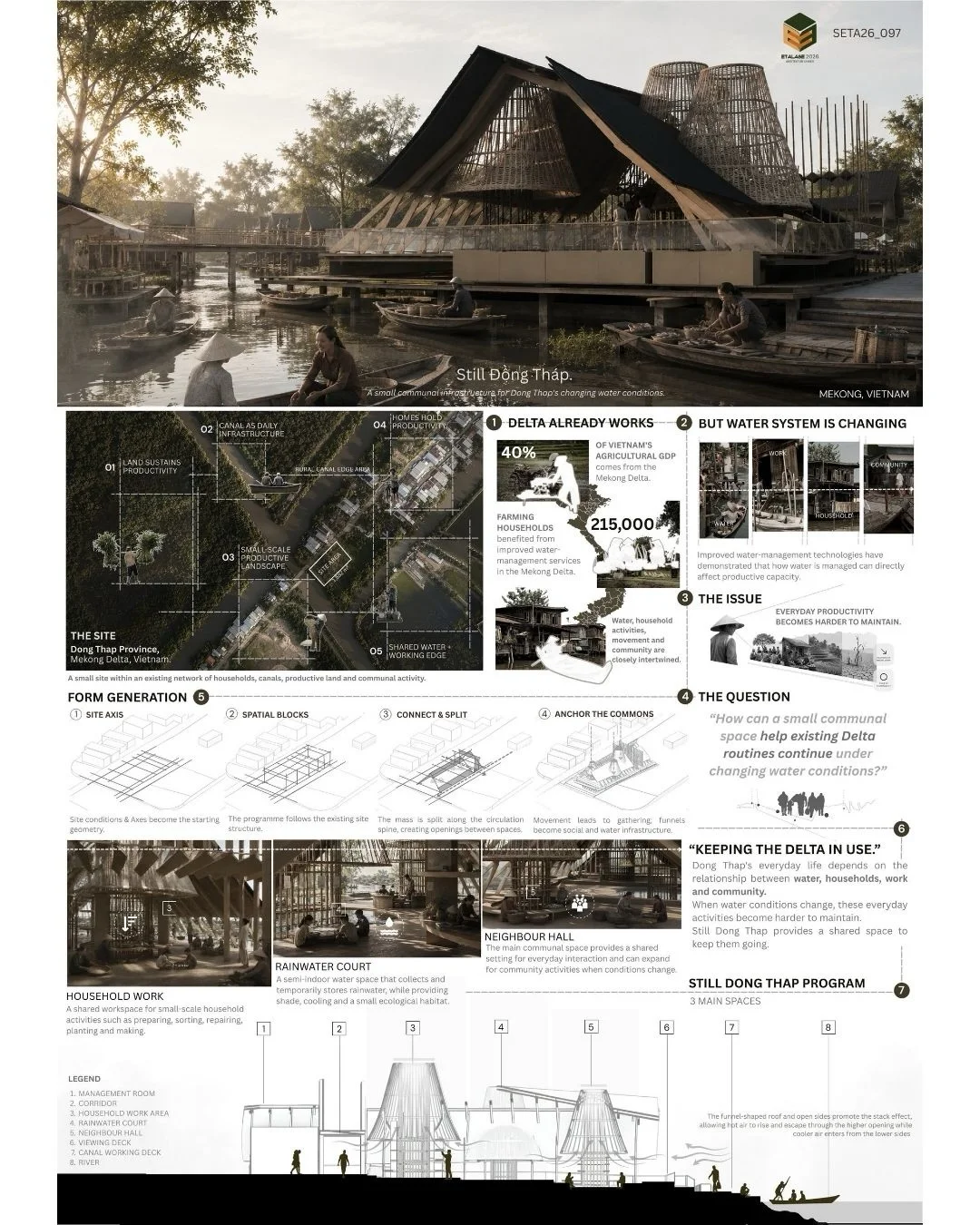
For students whose thesis or final-year project represents their strongest work, structuring the entire portfolio around that single investigation can be powerful. The thesis project occupies the first half of the portfolio (sometimes 60 to 70 percent of the pages), presented almost like a short book with its own narrative arc. Supporting projects follow in a condensed format, each getting only one or two spreads.
This structure works when the thesis is genuinely strong and clearly demonstrates your architectural position. It signals depth over breadth. Graduate programs at the AA, ETH Zurich, and similar schools tend to respond well to this kind of focused presentation. For guidance on structuring your portfolio table of contents around a thesis-led sequence, this resource covers the organizational side in detail.
How to Choose a Good Cover Image for Your Architecture Portfolio
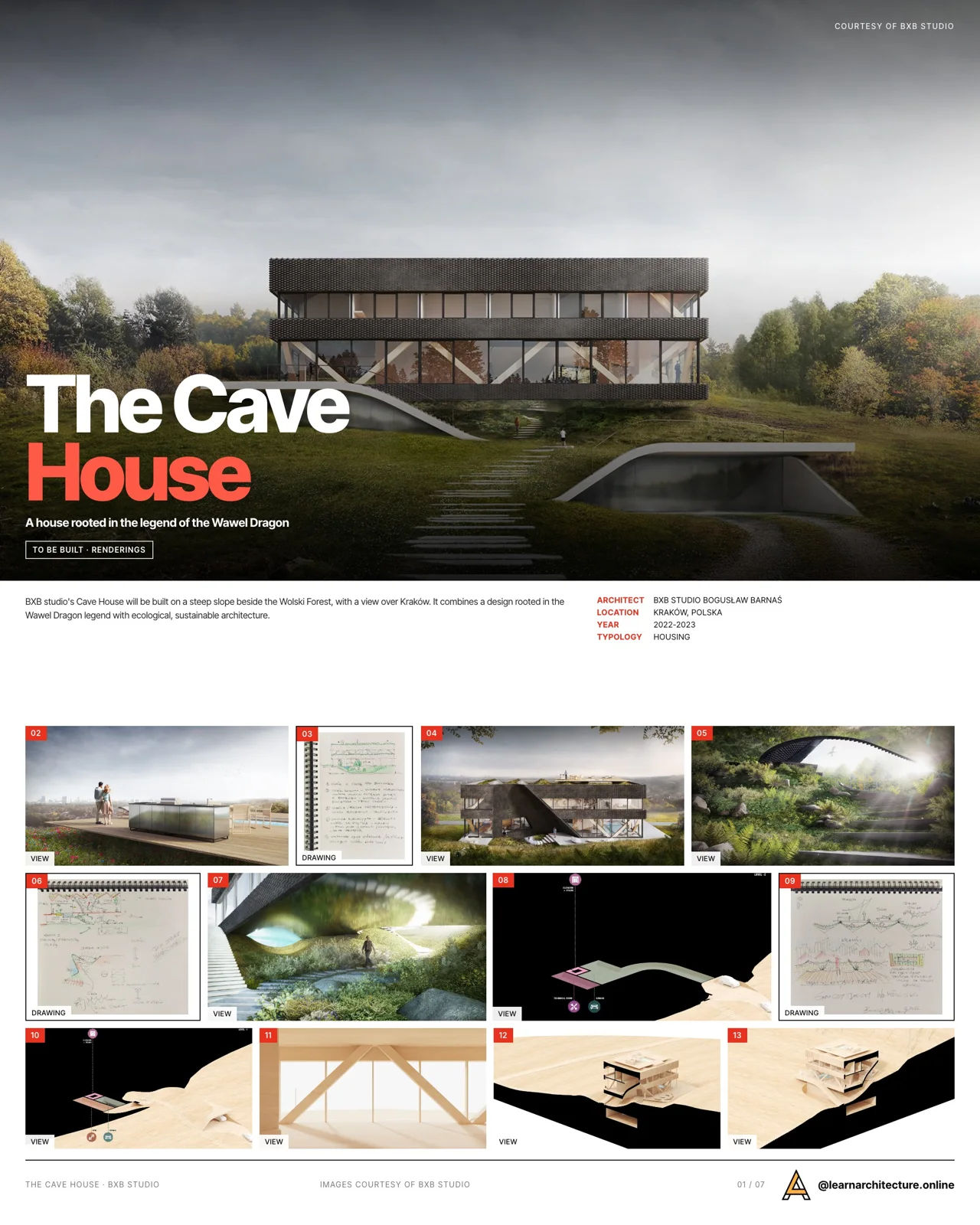
Your cover is the first thing a reviewer sees, and it shapes their expectations before they open the first page. Good cover images for architectural portfolio undergrad submissions share a few principles: they are visually bold, they hint at the design sensibility inside, and they avoid clutter.
A single striking render, an atmospheric section drawing, or a close-up photograph of a physical model all work well. Avoid placing too much text on the cover. Your name, degree program, and year are usually sufficient. Some students add a short tagline or design statement, but this is optional and should only appear if it genuinely adds context.
Think of the cover as a single-image summary of your strongest project. If you cannot decide which image to use, pick the one that would work best as a standalone print on a wall. That instinct usually points to the right choice. More detail on cover design and first impressions can be found in the step-by-step portfolio building guide.
⚠️ Common Mistake to Avoid
Many students use a busy aerial render with dozens of buildings as their cover image, assuming complexity signals skill. In practice, this makes the cover feel generic and hard to read at thumbnail size. Reviewers scrolling through dozens of applications respond better to a single, confident image with clear composition and strong contrast.
Layout Principles That Separate Strong Portfolios from Weak Ones
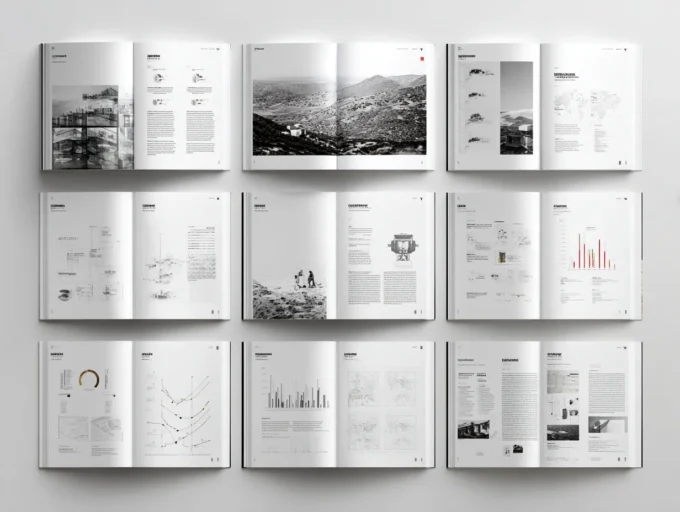
Beyond individual examples, a few layout principles appear again and again in the strongest architecture portfolios. First, typography consistency: pick one typeface family (two at most) and stick with it throughout. Second, a clear grid system that governs where images, text, and white space fall on every page. Third, visual hierarchy within each spread, so the viewer’s eye moves naturally from the main image to supporting drawings to captions.
Spacing matters more than most students realize. Tight margins and cramped text make a portfolio feel rushed. Generous margins and breathing room between elements communicate control and confidence. If you are unsure about your layout, the guide to creating an architectural portfolio walks through grid setup, page sizing, and typographic basics.
Finally, consider the transition between projects. A full-bleed divider page with the project title and a single key image helps the viewer reset mentally before entering a new body of work. Without clear transitions, projects blur into each other and lose individual impact.
Video: Five of the Best Architecture Portfolios Reviewed
This video from Show It Better reviews five real architecture portfolios submitted by students, pointing out what works and what could be improved in each one.
Digital vs. Print: Which Format Should Students Prioritize?
Most students today need both a digital PDF and a printed version, but the priority depends on context. For online applications, graduate school submissions, and email inquiries, a well-compressed PDF (under 10 MB) is the default. For in-person interviews, studio pin-ups, and career fairs, a printed portfolio on quality paper still carries weight.
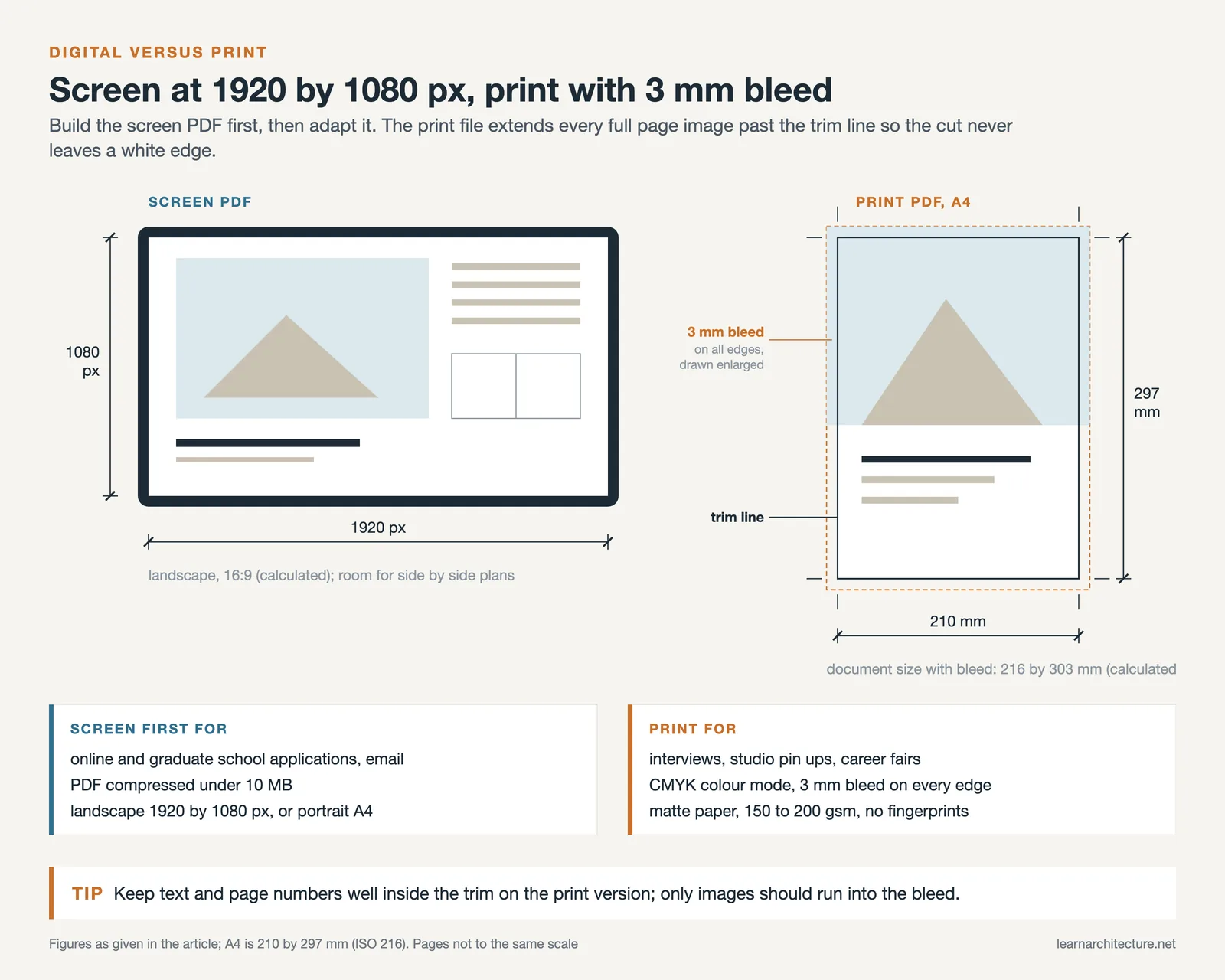
If you can only invest time in one format, start with digital. A landscape PDF at 1920 x 1080 pixels or a portrait PDF at A4 size covers most use cases. Once you have a strong digital version, adapting it for print is relatively straightforward. Set your files to CMYK color mode with 3 mm bleed on all edges, and choose a matte paper stock at 150 to 200 gsm for a professional feel without fingerprint issues. The portfolio printing guide on this site covers paper, binding, and file preparation in depth.
How Professional Practices Present Their Work
Student portfolios and practice portfolios are judged differently, but the second is where the conventions come from, and it is worth seeing what established offices do with the same problem.
Landscape practice EPT Design opens with a full-width slideshow of its strongest work above the fold, so the first impression is made before any navigation happens. That is the same principle as leading with your best project, applied to a website. Adolfo Fonseca takes the opposite route and leans on range, moving across residential, commercial and business work in a consistent, colour-forward visual language, so that variety reads as versatility rather than as an unfocused collection.
Three things carry across from professional work to a student document. Layout does the organising: a full-page image makes a first impression that a grid of thumbnails cannot, and modern, restrained typography keeps the work rather than the graphics in the foreground. Selection signals range: a residential project, a commercial one and a public or institutional one demonstrate different capabilities in a way that three studio houses never will. Accessibility is part of the design: if the portfolio lives online, navigation, mobile behaviour and loading time are being assessed alongside the work, whether or not the reviewer says so.
The one thing professional sites do that students most often skip is tailoring. A practice presenting to a residential client leads with residential work. Do the same: decide who is opening the document, and reorder for them before you send it.
Where to Go From Here
Your Next Step: Open three to five portfolios on Issuu or Behance in your target style, screenshot the spreads you respond to most, and pin them to a reference board. Then build your own layout grid in InDesign or Affinity Publisher using those references as a starting point, before placing a single project image. Getting the structure right first means every project you add later will land in a system that already works.











Leave a comment