


Table of Contents Show
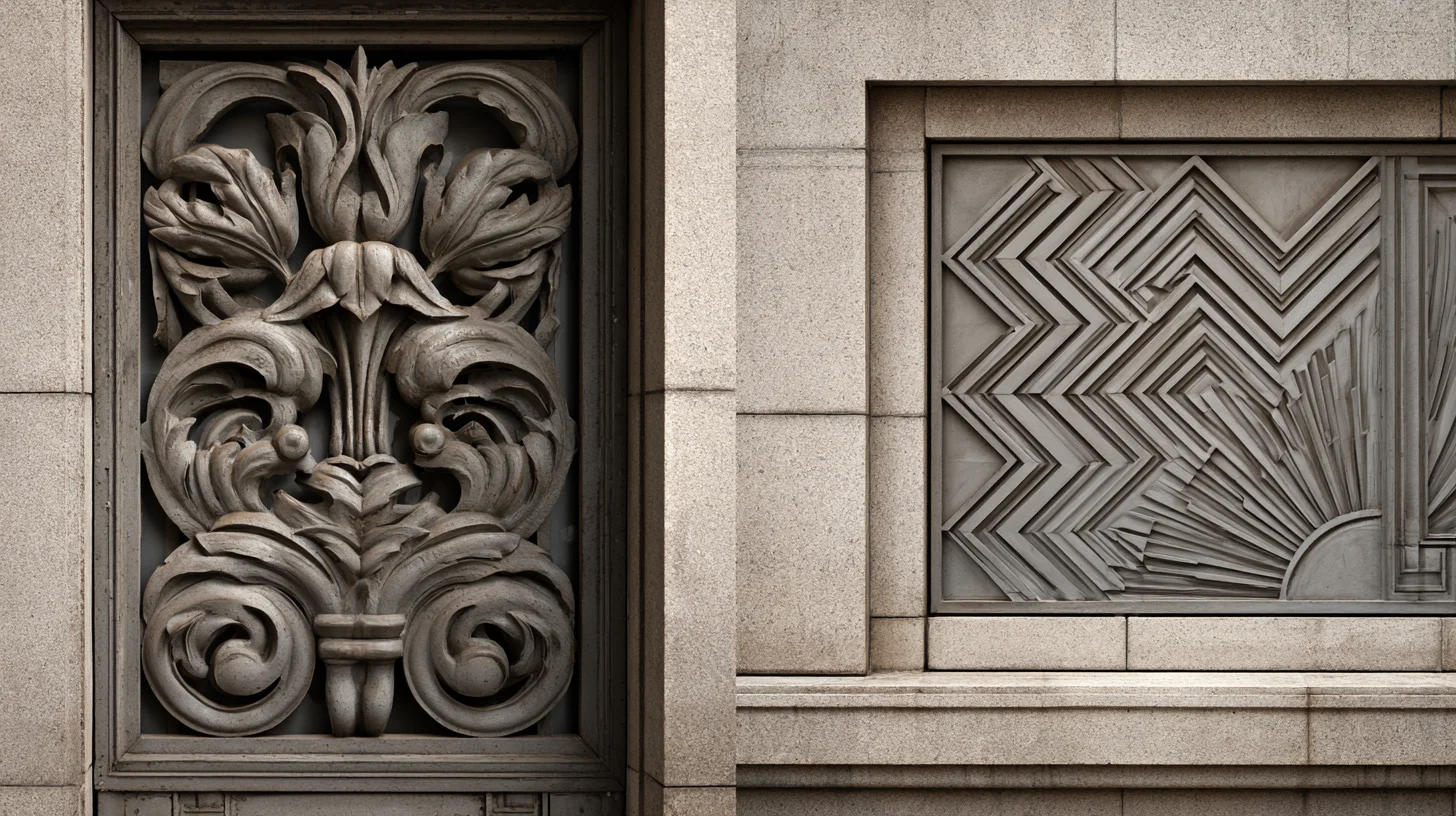
Art deco vs art nouveau comes down to one clear test: nature or the machine. Art nouveau uses flowing, plant-inspired curves and asymmetry, while art deco favors bold geometry, straight lines, and symmetry. Nouveau peaked around 1890 to 1910, and deco rose in the 1920s and 1930s.
People mix these two styles up constantly, and the confusion shows up everywhere from antique furniture listings to the popular art deco vs art nouveau meme comparing a curvy lamp to a stepped skyscraper. Both movements rejected dusty historical revivals, both loved ornament, and both appeared within a few decades of each other. That overlap is exactly why a side-by-side method helps. Once you learn the visual logic behind each style, you can date a building, a chair, or a poster in seconds. The single biggest tell is whether the design grows like a plant or runs like a machine.
What Is the Difference Between Art Nouveau and Art Deco?

The core difference between art nouveau vs art deco is their source of inspiration. Art nouveau looked to the organic world, copying the way vines climb, flowers open, and water ripples. Its signature is the “whiplash” line, a curve that seems to move on its own. The Victoria and Albert Museum describes this as a decorative line with a life of its own, writhing and coiling with energy.
Art deco went the opposite direction. It celebrated the machine age, speed, aviation, and manufactured materials. Where nouveau hid the structure under foliage, deco turned structure into the decoration itself: zigzags, chevrons, sunbursts, and clean stepped forms. According to Britannica, the style matured at the 1925 Exposition Internationale des Arts Decoratifs et Industriels Modernes in Paris, which also gave it its name.
Art Deco vs Art Nouveau: Key Differences at a Glance
The table below sums up the art deco vs art nouveau split across the features that matter most when you are trying to identify a piece. Use it as a quick reference, then read on for how each clue plays out in real buildings and objects.
| Feature | Art Deco | Art Nouveau |
|---|---|---|
| Peak period | 1920s to 1930s | 1890 to 1910 |
| Lines and forms | Bold geometry, angular, symmetrical | Flowing curves, asymmetrical, whiplash lines |
| Main inspiration | Machines, speed, technology, jazz era | Nature, plants, flowers, the human figure |
| Typical materials | Chrome, stainless steel, lacquer, glass | Wrought iron, stained glass, carved wood |
| Color palette | Bright, high-contrast, metallic gold and black | Soft, muted, earthy greens and golds |
| Overall mood | Glamour, luxury, modern optimism | Romantic, dreamy, handcrafted |
| Signature building | Chrysler Building, New York | Casa Batllo, Barcelona |
💡 Pro Tip
Squint at the object and follow its outline. If your eye travels along smooth, looping curves with no clear axis of symmetry, you are almost certainly looking at art nouveau. If the silhouette steps, stacks, or radiates in repeating angular bands, it is art deco. This one trick settles most disputes before you check any other detail.
How to Spot Art Nouveau

Art nouveau wants to feel alive. Look for tendrils, stems, dragonflies, peacock feathers, and long flowing female hair worked into railings, door frames, and glass. Symmetry is rare, since real plants never grow in perfect mirror image. The whiplash curve is your strongest signal, and it appears in everything from Hector Guimard’s Paris Metro entrances to Tiffany lamps.
The architecture leans on materials that bend. Wrought iron twists into vines, stained glass glows in soft organic shapes, and carved wood blurs the line between a column and a tree trunk. Antoni Gaudi pushed this furthest in Barcelona, where facades ripple as if the stone itself were breathing. You can see the same nature-first logic in the Sagrada Familia and Gaudi’s design language, where structure grows from biological forms rather than the drafting board.
Color tends to be gentle. Muted greens, dusty golds, soft lilacs, and warm browns dominate, echoing a garden at dusk rather than a city at night. Several of the world’s great railway halls carry this mood, and you can trace it in these historic train stations and their architecture, where Art Nouveau ironwork meets glass canopies.
🏗️ Real-World Example
Casa Batllo (Barcelona, 1906): Gaudi remodeled this facade with a wavy stone surface, balconies shaped like masks or skulls, and a scaled roof that reads as a dragon’s back. There is barely a straight line in sight, which makes it a textbook lesson in how art nouveau dissolves rigid geometry into living form.
How to Identify Art Deco
Art deco trades vines for vectors. The style is built on repetition and order: stepped setbacks, sunburst fans, chevron zigzags, and strong vertical lines that pull the eye upward. Symmetry is the rule, not the exception. If a design feels controlled, glamorous, and slightly futuristic for its time, deco is the likely answer.
Materials signal the machine age. Polished chrome, stainless steel, black lacquer, exotic veneers, and mirrored glass give surfaces a sleek, manufactured shine. This is the visual language of the great Art Deco skyscrapers that reshaped New York and Chicago skylines in the 1920s and 1930s. The Chrysler Building’s gleaming steel crown is the single most recognized deco image in the world.
Late in its run, art deco slimmed down into a smoother offshoot with rounded corners and horizontal speed lines borrowed from trains, cars, and ocean liners. That evolution is worth knowing, because it bridges classic deco and early modernism, as covered in this look at Streamline Moderne architecture.
🔢 Quick Numbers
- Art nouveau flourished roughly from 1890 to 1910 across Europe and the United States, per Britannica.
- Art deco took its name and reached maturity at the 1925 Paris Exposition Internationale des Arts Decoratifs et Industriels Modernes, per Britannica.
- The Chrysler Building, completed in 1930 at about 319 meters, briefly stood as the tallest structure in the world.
Why the Two Styles Get Confused
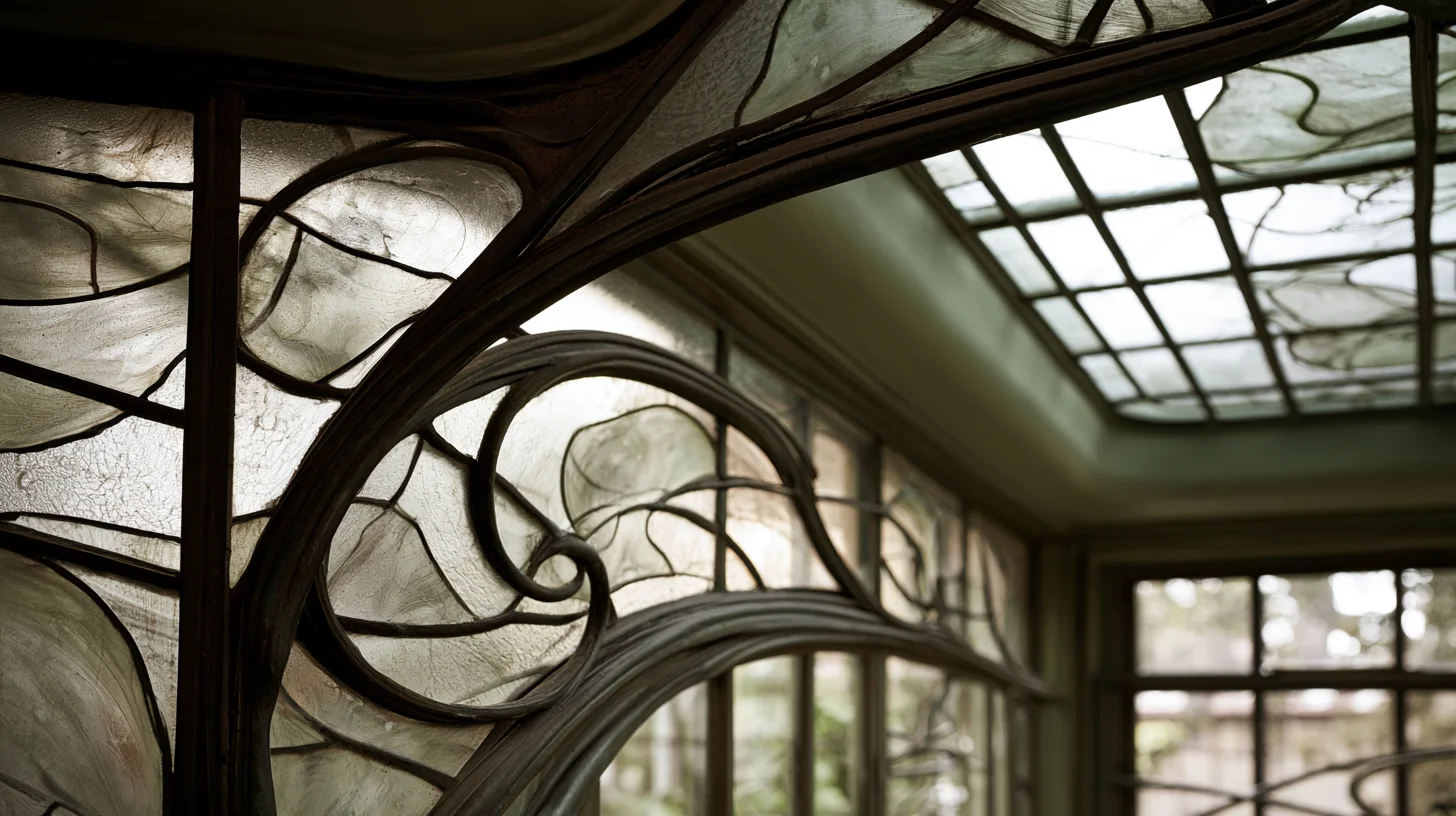
The overlap is real, so the mix-ups are understandable. Both styles arrived as a reaction against heavy Victorian revivalism, both poured energy into decorative detail rather than plain surfaces, and both appealed to a wealthy clientele who wanted something modern for their era. A few buildings even blend the two, since art nouveau was fading just as deco was forming, and some designers carried habits from one into the other.
The trap is treating ornament alone as the clue. Plenty of nouveau and deco pieces are equally lavish, so density of decoration proves nothing. What separates them is the geometry underneath. Nouveau ornament wanders and loops with no fixed center, while deco ornament locks into grids, mirror symmetry, and repeating modules. Train your eye on structure rather than richness, and the difference between art nouveau vs art deco stops being a guessing game.
Art Deco vs Art Nouveau Architecture and Buildings
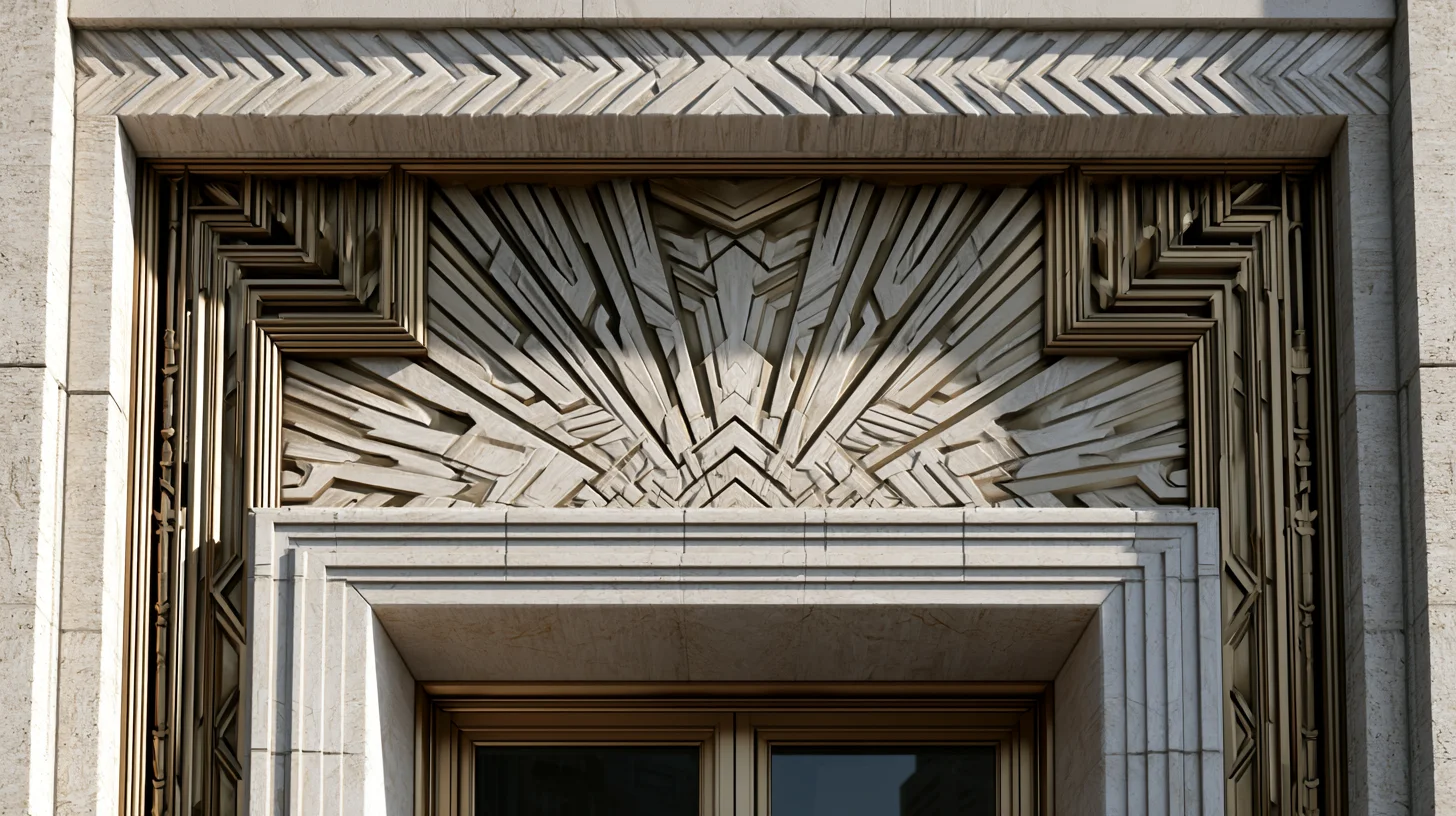
When you compare art nouveau architecture vs art deco on the street, scale and posture tell the story. Nouveau buildings are usually low to mid rise, intimate, and covered in handcrafted detail you can touch at eye level. Deco buildings reach for the sky, using their height and stepped profiles as the main statement.
For clear art deco vs art nouveau buildings to study, set Victor Horta’s Hotel Tassel in Brussels, an icon of nouveau interior ironwork, against the Empire State Building or Rockefeller Center in New York. One pulls you inward toward delicate craft, the other pushes you upward toward bold civic spectacle. Both belong to the wider story told in this guide to European architectural styles, which places each movement in its historical moment.
Art Deco vs Art Nouveau Furniture and Interiors
The art deco vs art nouveau furniture split mirrors the architecture. Nouveau pieces curve and twist, with carved floral motifs, inlaid mother of pearl, and legs that flow like stems into the floor. Nothing feels mass produced, because the whole point was the artisan’s hand.
Deco furniture stands firm and proud. Expect strong symmetrical shapes, glossy lacquered surfaces, geometric inlays, and luxury materials like shagreen, ebony, and chrome. A nouveau cabinet looks like it grew; a deco cabinet looks like it was engineered. These same instincts cross into fashion, graphics, and product design, a crossover explored in this piece on the link between fashion and architecture. For deeper background on the movement’s organic roots, Britannica’s Art Nouveau entry traces how the style spread across glass, jewelry, and interiors.
Putting It All Together
Bottom Line: The fastest way to read art deco vs art nouveau is to ask whether the design imitates nature or the machine. Curving, asymmetrical, plant-like work from around 1900 is art nouveau, while bold, geometric, symmetrical work from the 1920s and 1930s is art deco. Hold those two anchors in mind and the rest of the clues fall into place.









Leave a comment