


Table of Contents Show
Zaha Hadid buildings are known for sweeping curves, fragmented geometry, and a rejection of the straight line. Her most famous works include the Heydar Aliyev Center in Baku, the MAXXI museum in Rome, the Guangzhou Opera House, and the London Aquatics Centre, each built between 1993 and 2019.
Few architects have changed the look of public buildings as completely as Zaha Hadid. Born in Baghdad in 1950 and trained at the Architectural Association in London, she spent years known mostly for radical paintings and unbuilt competition entries before her ideas reached concrete and steel. By the time she died in 2016, her studio had finished cultural centers, stadiums, museums, and transport hubs on four continents. This guide walks through ten of her signature works, where they stand, when they opened, and what each one tells you about her approach.

Who Was Zaha Hadid and Why Her Buildings Matter
Zaha Hadid was an Iraqi born British architect whose practice, Zaha Hadid Architects, grew from a one woman studio into a firm of more than 400 people. Her early career was defined by drawings that looked closer to abstract art than to construction documents, which led many critics to call her a “paper architect” who would never build at scale. That label did not last.
In 2004 she became the first woman to win the Pritzker Prize, often described as the highest honor in the profession. The award marked a turning point, both for her recognition and for how seriously her fluid, computer aided forms were taken across the industry. You can read the full citation on the Pritzker Architecture Prize laureate page.
Her influence reached well beyond her own projects. Hadid helped move an entire generation of designers toward digital tools and flowing geometry, a shift you can trace through the work of other notable architects who excel in parametric design. As one of the few women to reach the top tier of the field, she also became a reference point for a broader story about inspiring women in architecture and the barriers they pushed through.
📌 Did You Know?
Zaha Hadid won the RIBA Stirling Prize, Britain’s top architecture award, in two consecutive years. MAXXI in Rome took the prize in 2010, and the Evelyn Grace Academy in London won it in 2011, making her the first architect to claim the award back to back.

The 10 Most Famous Zaha Hadid Buildings Explained
The list below runs in the order the projects opened, from her first finished structure in Germany to a vast airport terminal completed after her death. The table gives you a quick reference for the famous Zaha Hadid buildings covered here, followed by a closer look at the works that best explain her ideas.
Quick Reference: Key Zaha Hadid Buildings by City and Year
| Building | City | Year |
|---|---|---|
| Vitra Fire Station | Weil am Rhein, Germany | 1993 |
| Bergisel Ski Jump | Innsbruck, Austria | 2002 |
| Rosenthal Center for Contemporary Art | Cincinnati, USA | 2003 |
| Phaeno Science Center | Wolfsburg, Germany | 2005 |
| MAXXI Museum | Rome, Italy | 2010 |
| Guangzhou Opera House | Guangzhou, China | 2010 |
| London Aquatics Centre | London, UK | 2011 |
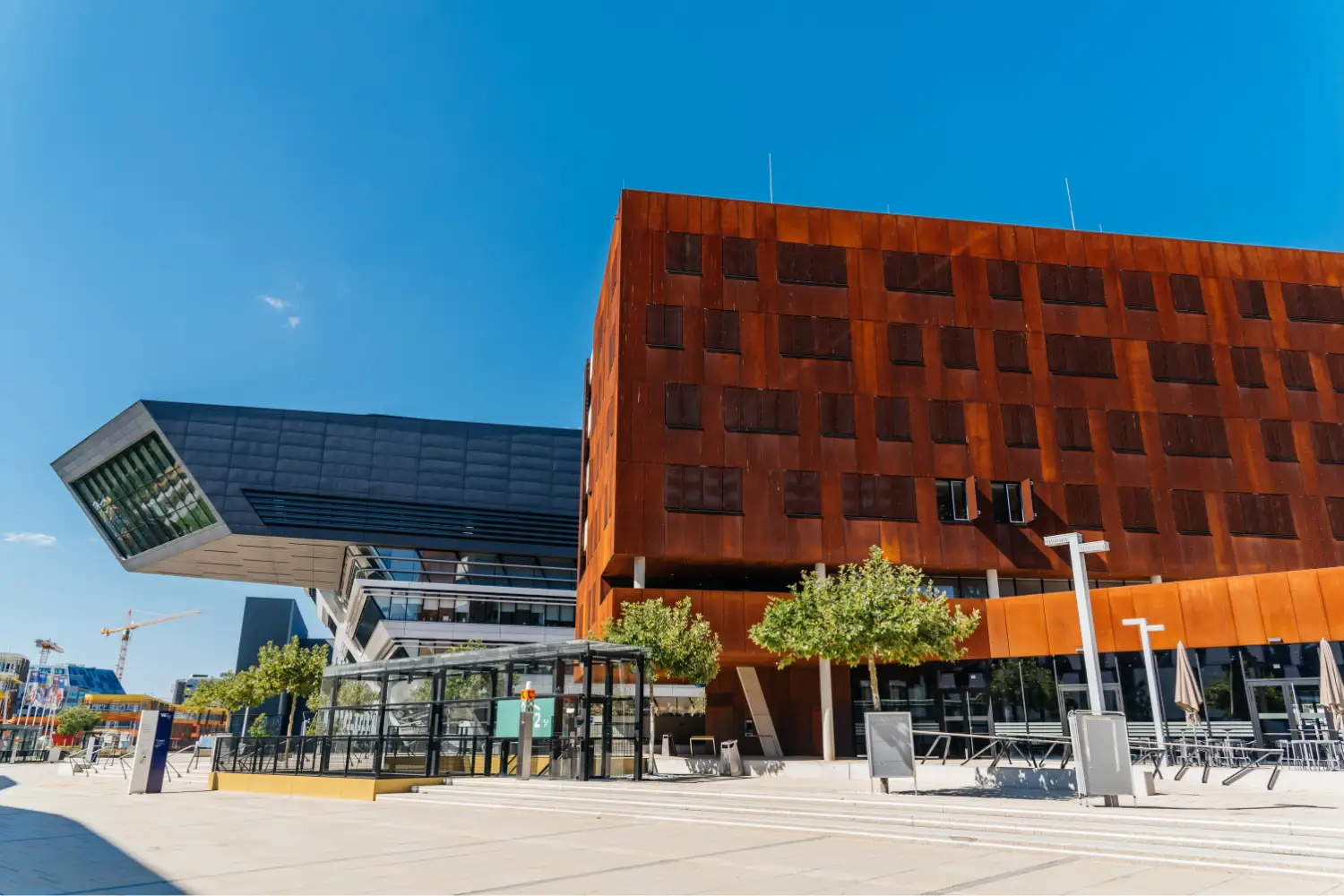
| Heydar Aliyev Center | Baku, Azerbaijan | 2012 |
| Dongdaemun Design Plaza | Seoul, South Korea | 2014 |
| Beijing Daxing International Airport | Beijing, China | 2019 |
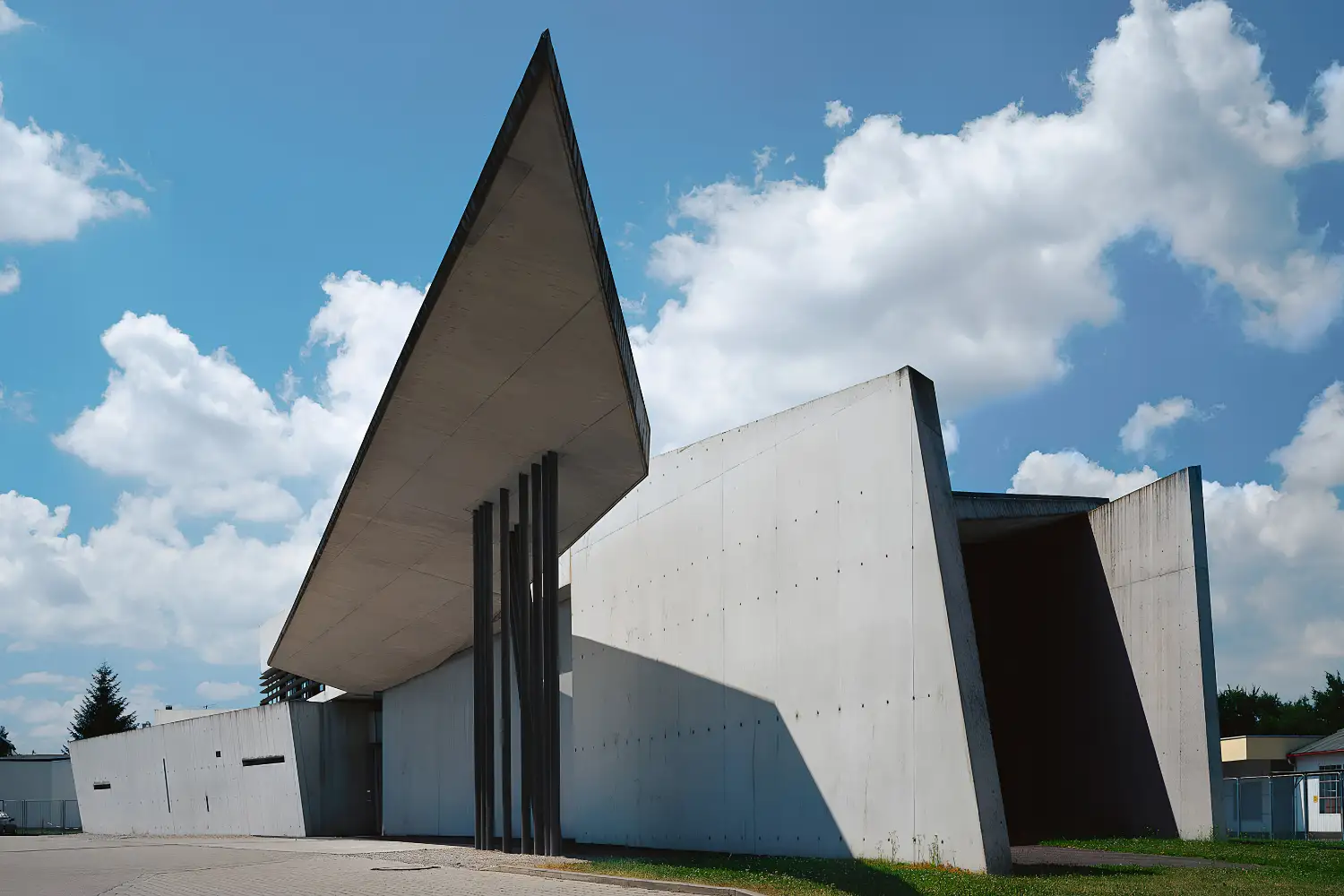
Vitra Fire Station, Weil am Rhein (1993)
This small fire station on the Vitra furniture campus was Hadid’s first completed building. Sharp concrete planes lean and slice past each other, freezing a sense of motion into the structure. The fire crew it was built for found the angled walls hard to use day to day, and the building was soon turned into an event and exhibition space. As a built argument, though, it proved her drawings could stand up in the real world.
Bergisel Ski Jump, Innsbruck (2002)
Perched on a mountain above Innsbruck, this ski jump combines a sports facility with a public cafe and viewing terrace at the top. The tower bends back on itself in a long, leaning curve, part ramp and part lookout. It was an early sign that Hadid could fold function and spectacle into a single sculptural line, and it remains a working competition venue as well as a tourist stop.
Rosenthal Center for Contemporary Art, Cincinnati (2003)
The Rosenthal Center was her first built project in the United States, and her first major museum. Hadid stacked the galleries into shifting boxes that she called a “jigsaw puzzle,” with a dark curving wall that sweeps up from the sidewalk and across the lobby floor. The design drew national attention and helped open the American market to her practice.
Phaeno Science Center, Wolfsburg (2005)
This science museum lifts a heavy concrete mass off the ground on ten sculpted cones, turning the space beneath into a covered public plaza. Inside, the floor and walls flow into a single landscape filled with hands on exhibits. The building shows how Hadid handled raw concrete at large scale years before her white, polished surfaces became her trademark.

MAXXI Museum, Rome (2010)
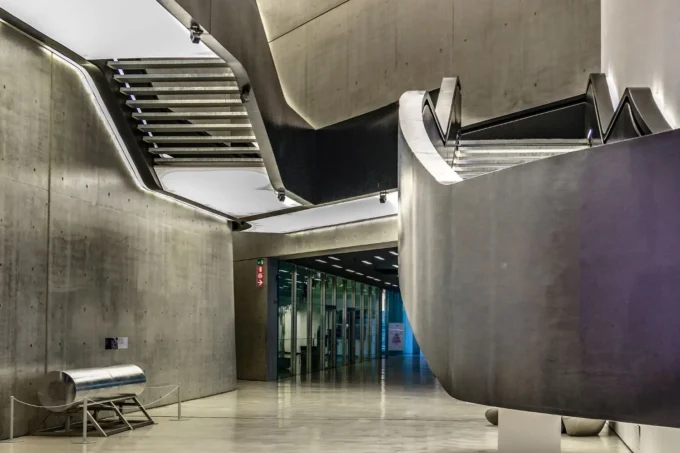
The National Museum of 21st Century Arts reads less like a single object and more like a set of channels for people to move through. Curving concrete galleries overlap and split apart, so visitors choose their own path rather than follow a fixed route. The project won the RIBA Stirling Prize in 2010. You can review plans and photography on the museum’s official MAXXI website.
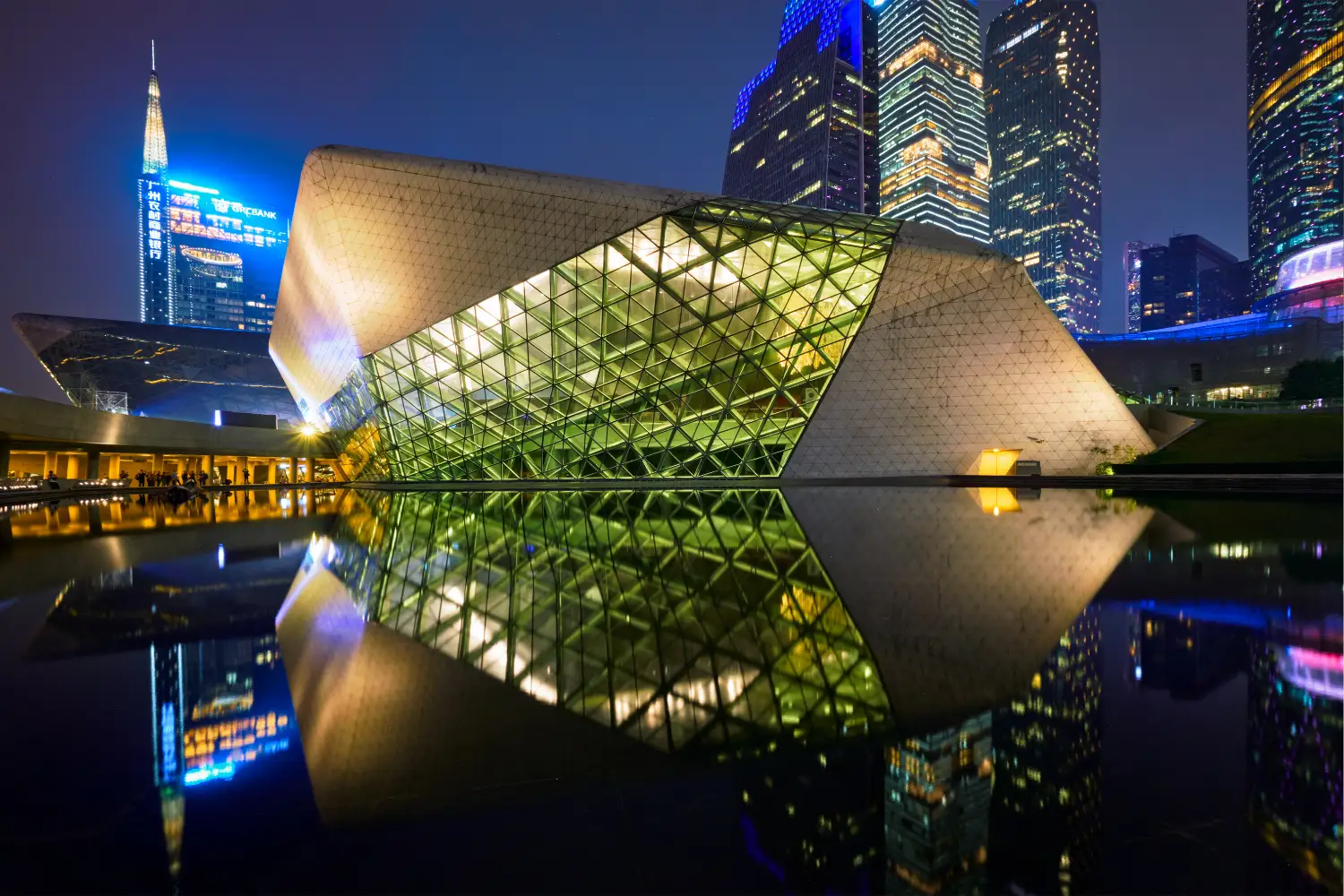
Guangzhou Opera House, China (2010)
Two dark, faceted volumes sit beside the Pearl River like stones smoothed by water, the idea Hadid used to describe the design. The larger volume holds a 1,800 seat auditorium lined with flowing balconies and a ceiling speckled with thousands of small lights. This was the first of many works her firm built in China, a run of projects covered in this look at projects by Zaha Hadid Architects in China.
London Aquatics Centre (2011)
Built for the 2012 London Olympics, the Aquatics Centre is capped by a sweeping roof that arcs over the pools like a wave caught mid break. The roof spans the space with very few supports, giving swimmers and spectators a clear, open hall. After the Games, temporary seating wings were removed to leave the smaller public pool complex you can visit today.
🏗️ Real-World Example
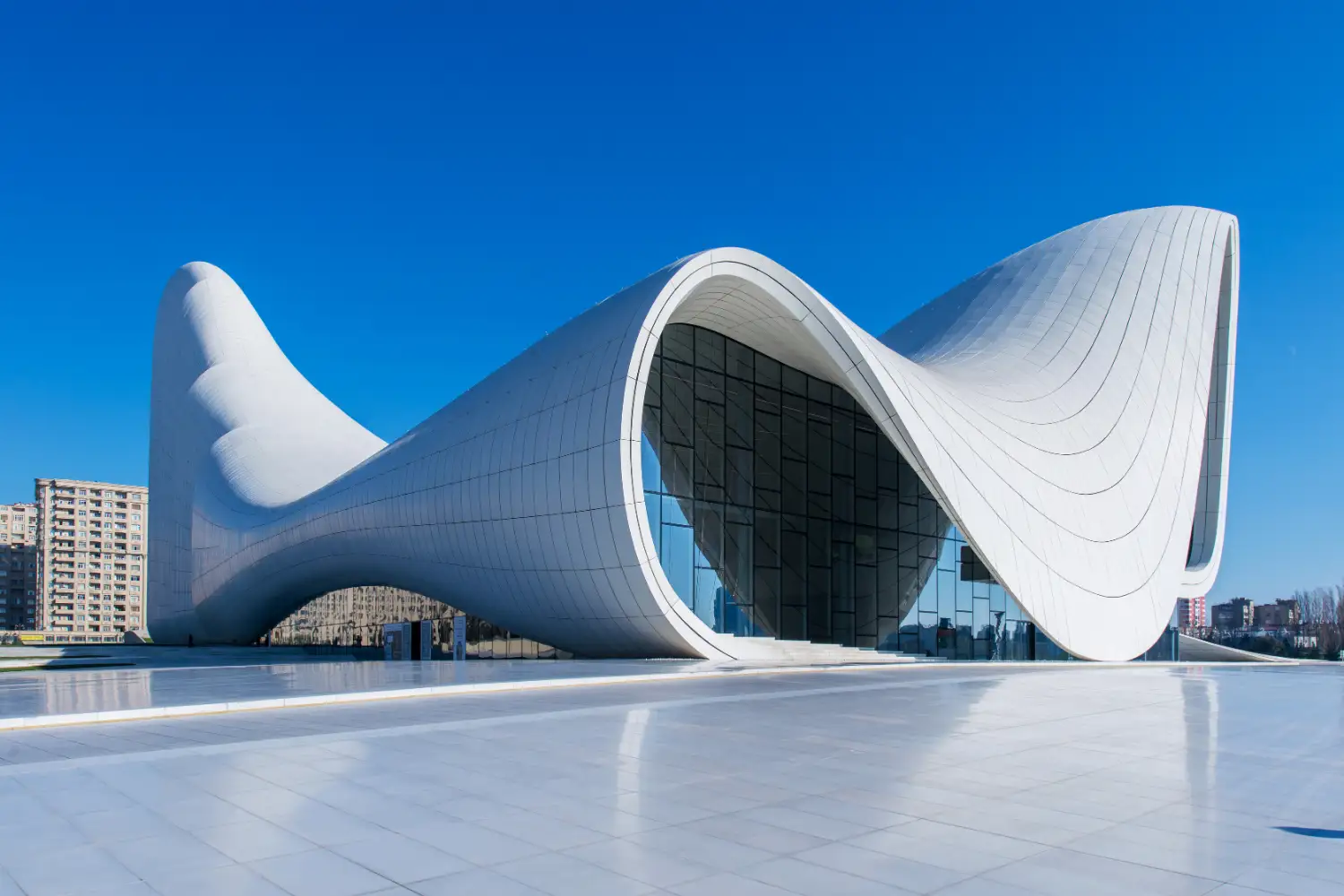
Heydar Aliyev Center (Baku, 2012): The plaza outside the building rises and folds upward to become the roof and walls, so the ground and the structure read as one continuous surface. To keep the interior free of columns, the structural load is carried in the curved envelope itself, which lets the white skin flow without visible breaks.
Heydar Aliyev Center, Baku (2012)
Often treated as the clearest statement of her mature style, this cultural center in Azerbaijan has almost no straight edges. Its white skin ripples up from the plaza into a continuous shell that houses an auditorium, a gallery, and a museum. Zaha Hadid Architects describes the design as a break from the rigid Soviet era buildings nearby, and you can see project drawings on the firm’s site through Zaha Hadid Architects. ArchDaily’s full case study covers the engineering behind the Heydar Aliyev Center in detail.
Dongdaemun Design Plaza, Seoul (2014)
Known locally as the DDP, this silver, shell like complex sits in the center of Seoul as a design museum, event hall, and park rolled together. Its aluminum skin is made of around 45,000 panels, almost all of them a different size and curve, which the team could only fabricate by driving the geometry through digital models. Public ramps and a rooftop park let people walk over and through the building, blurring the line between structure and landscape.
Beijing Daxing International Airport (2019)
Completed three years after Hadid’s death, this airport terminal near Beijing covers roughly 700,000 square meters and fans out into a six armed star plan. The shape keeps walking distances short, since gates branch directly off a central hub rather than stretching down long parallel piers. It stands as one of the largest works her studio carried to completion.
💡 Pro Tip
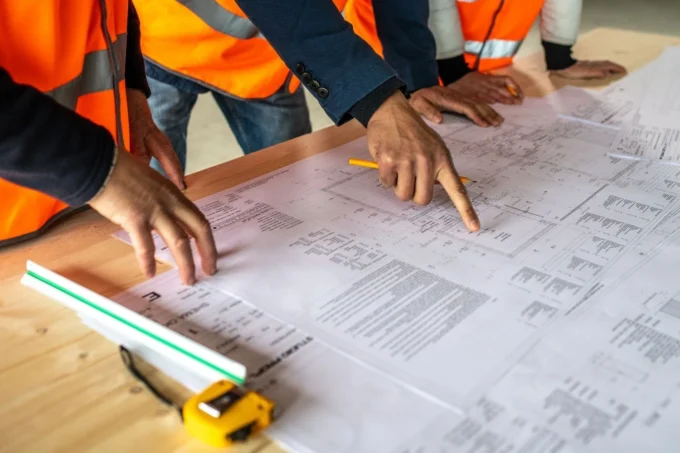
If you plan to visit one of these buildings, study the floor plan before you arrive. Hadid’s interiors are built around movement, so the route you take changes what you see and how the curves line up. Walking a planned loop, rather than wandering, reveals the sightlines she designed on purpose.
What Makes a Zaha Hadid Building Recognizable?
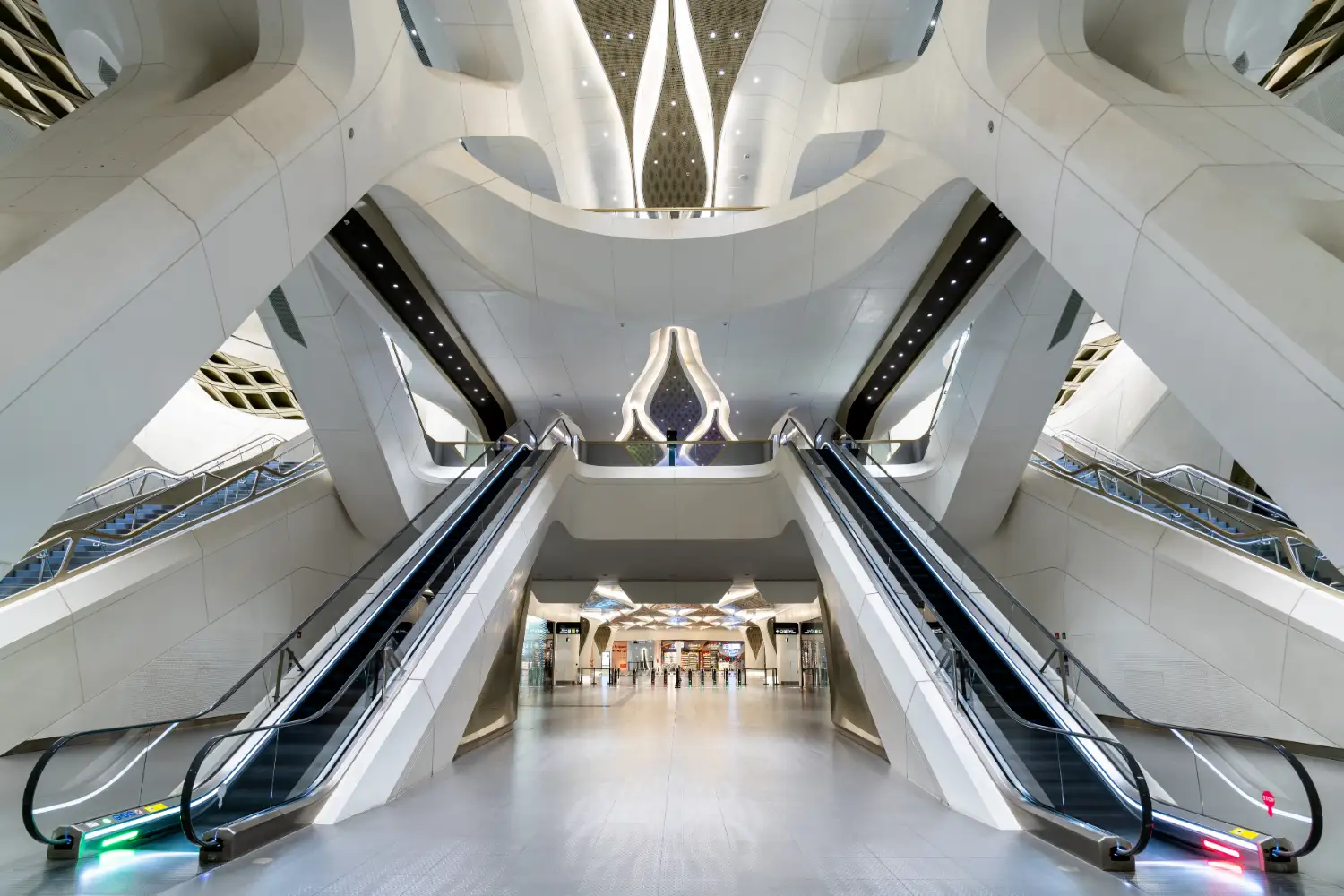
Across these projects, a few traits repeat often enough to act as a signature. Her buildings tend to favor curves over corners, treat floors, walls, and roofs as one flowing surface, and grow from computer models that let complex shapes stay buildable. Hadid called this approach parametricism, a method where forms are driven by adjustable rules and relationships rather than fixed dimensions. Change one input, such as the height of a roof line or the spacing of a structural rib, and the rest of the model updates to match. That logic is what allowed her studio to keep buildings like the Dongdaemun Design Plaza buildable even when almost every panel was a different shape.
She is often grouped with the deconstructivist architects of the 1980s, a connection that traces back to the 1988 Deconstructivist Architecture exhibition at New York’s Museum of Modern Art. Hadid later rejected that label, and the difference is worth understanding if you compare her smooth, continuous forms with the fractured look of that movement, a topic explored in this piece on deconstructivism versus constructivism.
Her fluid style also invites comparison with another master of expressive form, Frank Gehry. Both broke from the boxy buildings around them, yet they arrived there by different routes, one through hand crumpled models and the other through digital geometry, a contrast laid out in this study of Frank Gehry versus Zaha Hadid. For a fuller portrait of her career and the thinking behind these works, the overview of Zaha Hadid architecture and her lasting legacy is a useful next read.
From Radical Paintings to Buildable Form
Hadid’s buildings did not start as floor plans. They began as paintings and exploded axonometric drawings that pulled a site apart and reassembled it at strange angles, a method she carried over from the Russian avant garde she studied early on. For more than a decade these images won competitions and filled gallery walls, yet hardly any of them turned into buildings. Engineers and contractors often said the shapes simply could not be built within a normal budget.
What changed was the arrival of digital design tools through the 1990s and 2000s. Software that could model complex curves and feed exact measurements to fabricators let her team translate those early paintings into steel, concrete, and glass with real tolerances. The shift is clear if you line up the angular concrete of the 1993 Vitra Fire Station against the smooth, computer modeled skin of the 2012 Heydar Aliyev Center. The ambition stayed constant while the means caught up.
Her work has always drawn debate as well as praise. Critics point out that some interiors are hard to furnish, that maintenance of the white surfaces can be costly, and that a few projects ran over budget. Hadid rarely backed away from these tensions. She treated each building as a test of how far form could bend before function broke, and that willingness to push is a large part of why her projects still draw students, photographers, and visitors decades later.
Looking Ahead
Zaha Hadid spent half her career proving that buildings could move the way her drawings did, and the second half building them at full scale around the globe. Her studio still operates under her name, finishing towers, stadiums, and stations she set in motion. Standing inside one of her halls, the real lesson is not the famous silhouette but how a curved wall can change the way you walk, pause, and look up, which is the part no photograph quite captures.














Leave a comment