


Table of Contents Show
Accessibility architecture is the practice of designing buildings and spaces that people of all ages and abilities can use comfortably and independently. It draws on universal design, an approach that builds inclusion in from the start rather than adding ramps or handrails later, so a single environment serves everyone without separate or special accommodations.
For decades, access was treated as a checklist item, a set of minimums to satisfy after the real design work was finished. That thinking is changing. Architects now see access as a creative starting point that shapes better buildings for every user, from a parent with a stroller to an older visitor with reduced mobility. This guide looks at where the idea began, the principles behind it, the barriers that still get in the way, and how built projects put it into practice.
What Is Universal Design in Architecture?
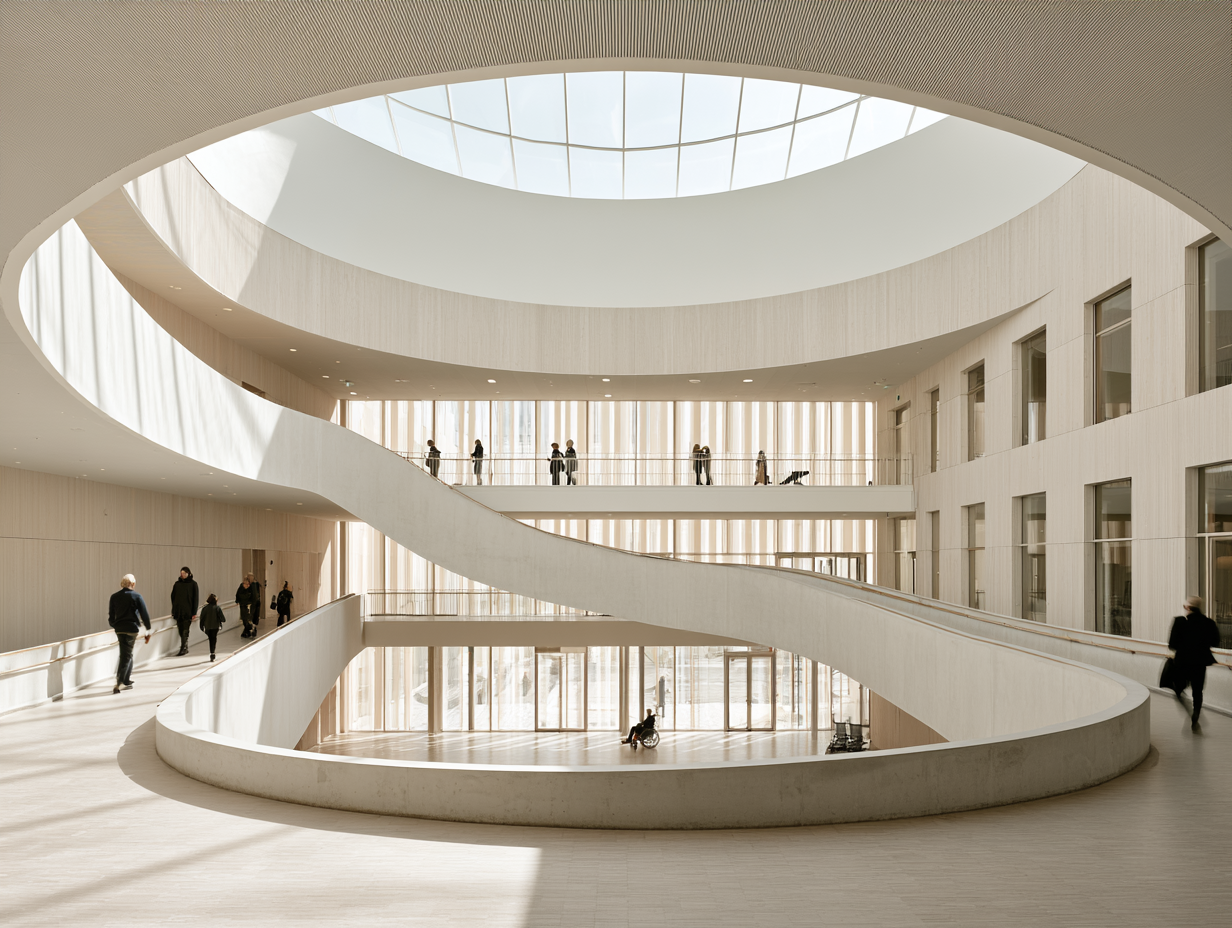
Universal design in architecture is the design of buildings and environments to be usable by the widest possible range of people without adaptation. Instead of creating a standard solution for most users and a separate one for everyone else, it aims for a single design that works well regardless of age, size, or ability.
The term was coined by the American architect Ronald L. Mace, who used a wheelchair for most of his life and founded the Center for Universal Design at North Carolina State University in 1989. His work reframed access as a design quality rather than a medical or legal afterthought. You can read about the origins and current status of the program through the Center for Universal Design at NC State.
🎓 Expert Insight
“The design of products and environments to be usable by all people, to the greatest extent possible, without the need for adaptation or specialized design.”
Ronald L. Mace, FAIA, founder of the Center for Universal Design, set the field’s reference definition. The key phrase is “usable by all people,” which sets a higher bar than meeting a code requirement.
That goal shifts the question a designer asks. Instead of checking whether a building meets the legal minimum, universal design asks whether the same entrance, the same route, and the same fixtures work for as many people as possible.
Accessible Architecture and Design: What the Terms Really Mean
People often use accessibility, universal design, and inclusive design as if they were identical. They overlap, but the accessible architecture and design meaning is more specific. Accessibility usually refers to meeting defined standards so that people with disabilities can use a space, often tied to regulations like the Americans with Disabilities Act in the United States. Universal design is broader, treating that access as a baseline and aiming for environments that feel equally easy for everyone.
Inclusive design sits close by, focusing on the process of involving a diverse range of users in design decisions. In practice, accessible architecture and design works best when all three ideas inform a project together: clear standards as a floor, universal thinking as the ambition, and real user input to keep it grounded. Those decisions reach all the way down to how a plan is organized, which is why access belongs in the earliest sketches of a building layout rather than the final review.
📌 Did You Know?
An estimated 1.3 billion people, around 16 percent of the world’s population or one in six of us, experience significant disability, according to the World Health Organization. Designing only for the so-called average user leaves out a very large number of people.
The Seven Principles of Universal Design
In 1997, a working group of architects, engineers, and designers led by Mace published seven principles that still guide universal design today. They were written to evaluate existing designs and steer new ones. The table below pairs each principle with a building-scale example.
The Seven Principles at a Glance
| Principle | What It Means | Example in a Building |
|---|---|---|
| 1. Equitable Use | Useful to people with diverse abilities, with the same experience for all | A step-free main entrance everyone shares |
| 2. Flexibility in Use | Adapts to different preferences and paces | Lever handles and adjustable-height counters |
| 3. Simple and Intuitive Use | Easy to understand regardless of experience or language | Clear, symbol-based wayfinding |
| 4. Perceptible Information | Communicates to more than one sense | Signs with text, symbols, and tactile lettering |
| 5. Tolerance for Error | Reduces the risk of accidental harm | Slip-resistant floors and guarded level changes |
| 6. Low Physical Effort | Usable efficiently with little fatigue | Automatic doors and gentle ramp grades |
| 7. Size and Space for Approach and Use | Enough room to reach and use regardless of body or mobility | Wide corridors and clear floor space at fixtures |
None of these principles asks for a clinical or institutional look. A gentle entry slope, generous door widths, and good lighting read as quality design to most visitors, who never notice that the same features also remove barriers for someone else.
What Are the Main Accessibility Challenges in Architecture?
The biggest accessibility challenges in architecture are rarely about technical limits. They tend to come from late decisions, tight budgets, and existing buildings that were never designed for access. Retrofitting a historic structure with step-free routes, for instance, can mean working around protected facades and fixed slabs, since the relationship between finished floor levels and accessible thresholds often decides what is possible.
Other common problems include entrances reached only by stairs, corridors too narrow for two-way wheelchair movement, and wayfinding that relies on a single sense. Many of these issues surface in how people move through a building, which is why mapping circulation early makes such a difference. A frequent mistake is treating access as a bolt-on once the layout is fixed, which forces awkward compromises that a few early choices could have prevented.
💡 Pro Tip
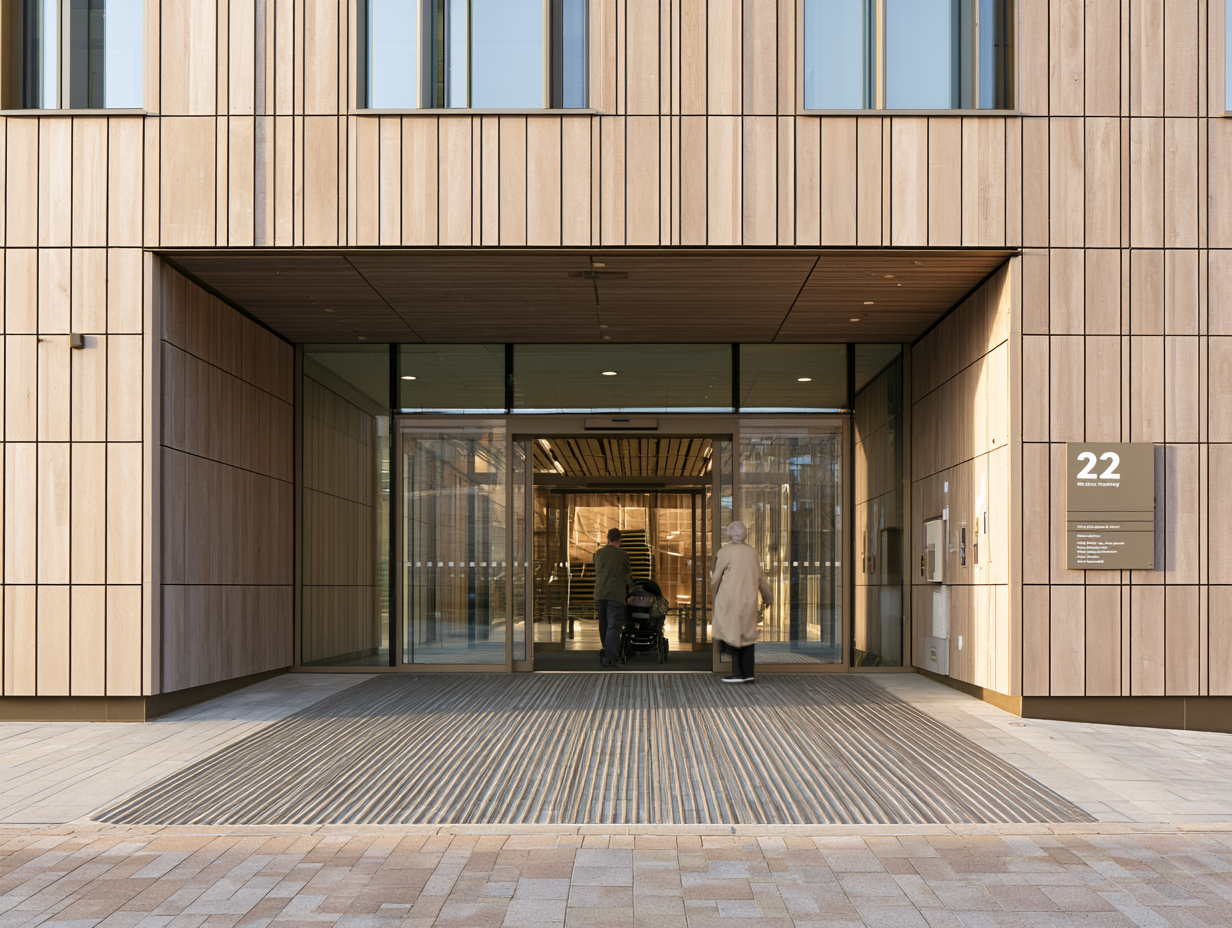
When you plan an accessible entrance, design the step-free route as the main route, not a separate door around the side. One dignified entry that everyone uses avoids the segregated feeling of a back-of-house ramp, and it usually costs less than maintaining two entrances. Confirm slope limits early, since a gentle 1:20 grade needs far more length than a 1:12 ramp with handrails.
Examples of Universal Design in Architecture
Some of the clearest examples of universal design in architecture are buildings where access becomes part of the architectural idea rather than something tucked out of sight.
🏗️ Real-World Example
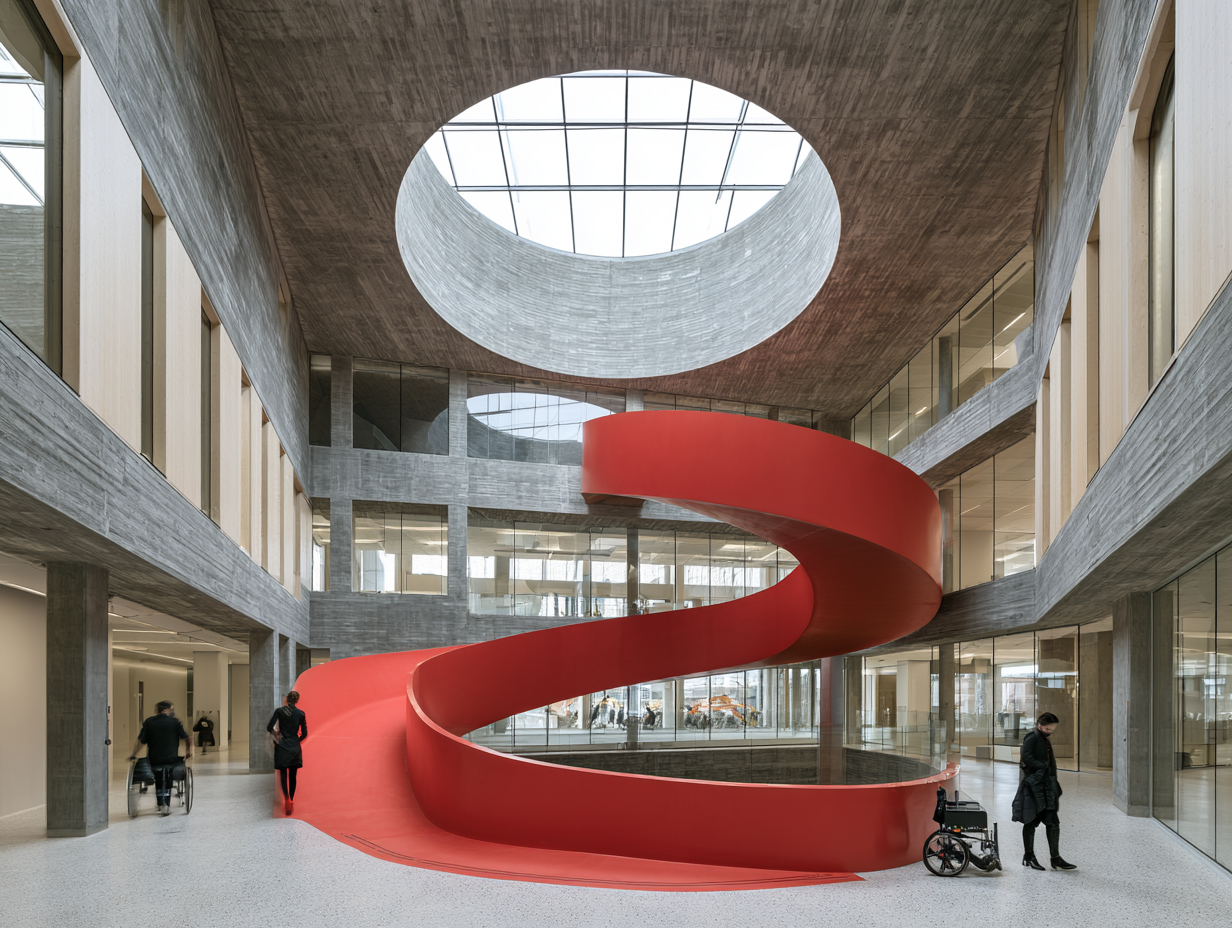
Ed Roberts Campus (Berkeley, 2011): Designed by Leddy Maytum Stacy Architects and named for a disability rights pioneer, the building turns access into its central image. A wide red ramp spirals through the atrium under a circular skylight, giving wheelchair users and walkers the same route between floors. Automatic doors, tactile wayfinding, and elevators that open on both sides extend the idea, and the design goes beyond ADA requirements rather than only meeting them.
The approach scales well past a single landmark. Large venues now plan for inclusive seating and movement, a shift visible across the evolution of modern stadium design. Housing projects use shared routes and step-free cores so residents of every age and ability move through the building the same way, as seen in this community-focused residential complex. The same logic guides accessible public spaces, where clear zoning and easy circulation help everyone. The formal framework behind much of this work is set out in the seven principles published by the Centre for Excellence in Universal Design, and a full account of the Ed Roberts Campus is documented on ArchDaily.
The Bigger Picture
The curb cut is the clearest argument for this whole approach. Cut into sidewalks for wheelchair users, those small ramps now help parents with strollers, travelers with luggage, delivery workers, and cyclists every day. Accessibility architecture works the same way at building scale, where a feature added for one group quietly improves the experience for everyone. Designing for the edges, then, is rarely a limit on good architecture. It is often where the strongest ideas begin.
Building codes and accessibility standards vary by country and jurisdiction. Always confirm current requirements with local authorities and a licensed professional for your specific project.
Frequently Asked Questions
What is the difference between accessibility and universal design?
Accessibility usually means meeting set standards so people with disabilities can use a space, often tied to regulations. Universal design treats that access as the baseline and aims higher, creating one environment that works comfortably for everyone, including people without disabilities. In short, accessibility is the floor and universal design is the ambition.
What are the seven principles of universal design?
They are equitable use, flexibility in use, simple and intuitive use, perceptible information, tolerance for error, low physical effort, and size and space for approach and use. A group led by Ronald Mace published them in 1997 to guide and evaluate inclusive design across buildings, products, and communication.
Is universal design the same as ADA compliance?
No. The Americans with Disabilities Act sets legal minimum requirements in the United States, while universal design is a voluntary design philosophy that often goes well beyond those minimums. A building can meet ADA rules and still feel awkward to use, which is the gap universal design tries to close.
Why is accessibility important in architecture?
Around one in six people lives with a significant disability, and nearly everyone faces reduced mobility at some point through age, injury, or carrying a child. Accessibility architecture lets all of these people use a building independently and with dignity, which is both an ethical goal and a practical one as populations age.
Does universal design cost more to build?
When access is planned from the start, the added cost is usually small, and features like step-free entries and wider doors add little to a new build. Costs rise mainly when access is retrofitted later, which is why early design decisions matter so much.








Leave a comment