


Researchers at Concordia University in Montreal have shown that red mud, the caustic residue left over from aluminium production, can help turn dredged sediment and poor-quality clay into a usable ingredient for lower-carbon cement. Depending on the mix, they estimate the approach could cut greenhouse gas emissions by 25 to 50 percent compared with conventional cement.
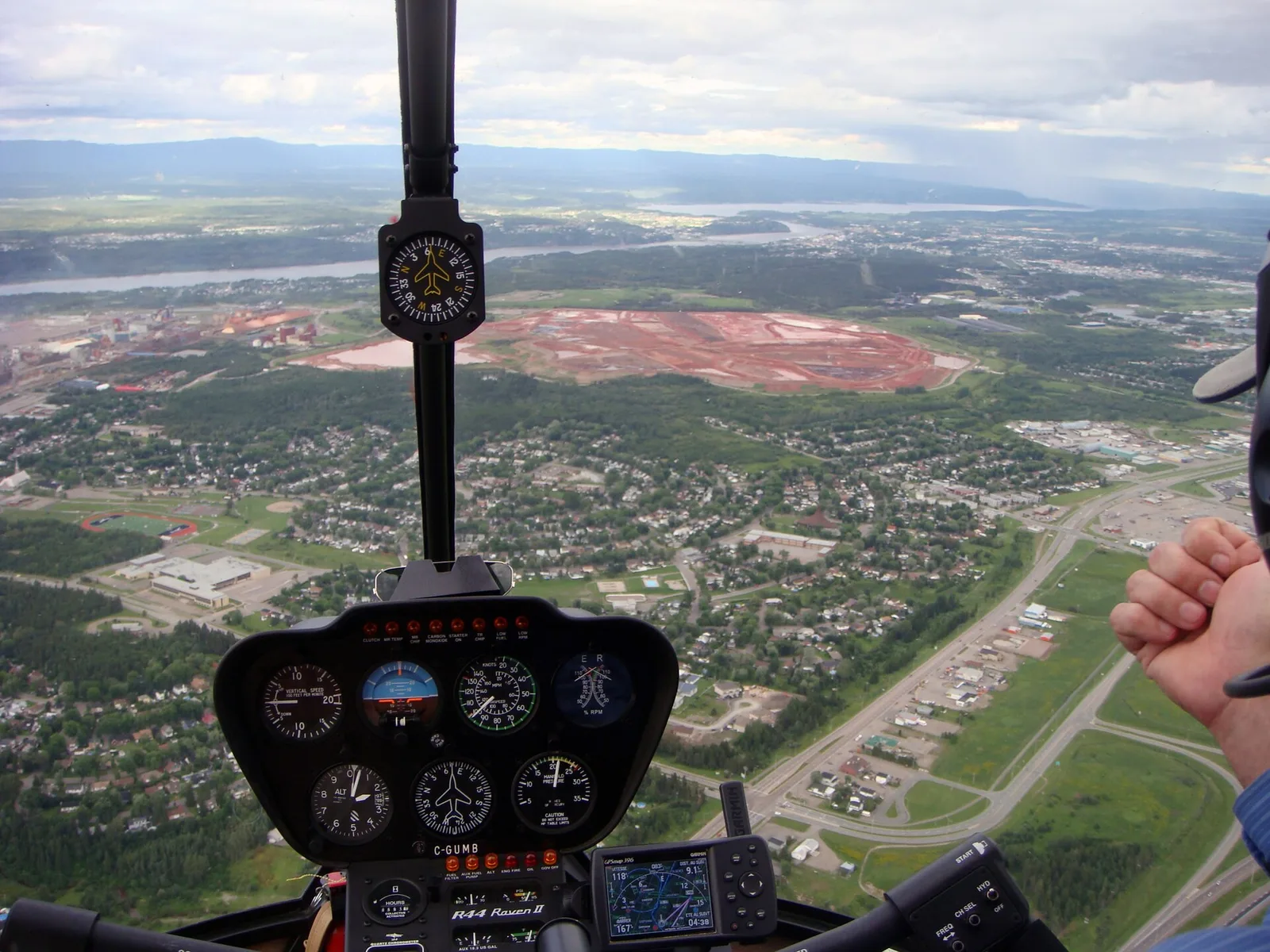
The work, published in Construction and Building Materials under the title “Physico-chemical performance of red mud/dredged-based LC3”, targets two materials that are hard to dispose of. LC3 stands for limestone calcined clay cement, a family of blends that replace part of the clinker in Portland cement with heated clay and limestone. Clinker, made by burning limestone and clay at very high temperature, is responsible for most of cement’s carbon footprint.
How red mud improves dredged sediment
The team first calcined the red mud and the sediment at 800 °C to make them more reactive, and found that an hour of heating gave the best results. They then tested a range of blends. Red mud made up for some of the sediment’s weaknesses by encouraging the formation of the compounds that give cement its strength, and several mixes containing both materials outperformed blends made with sediment alone.
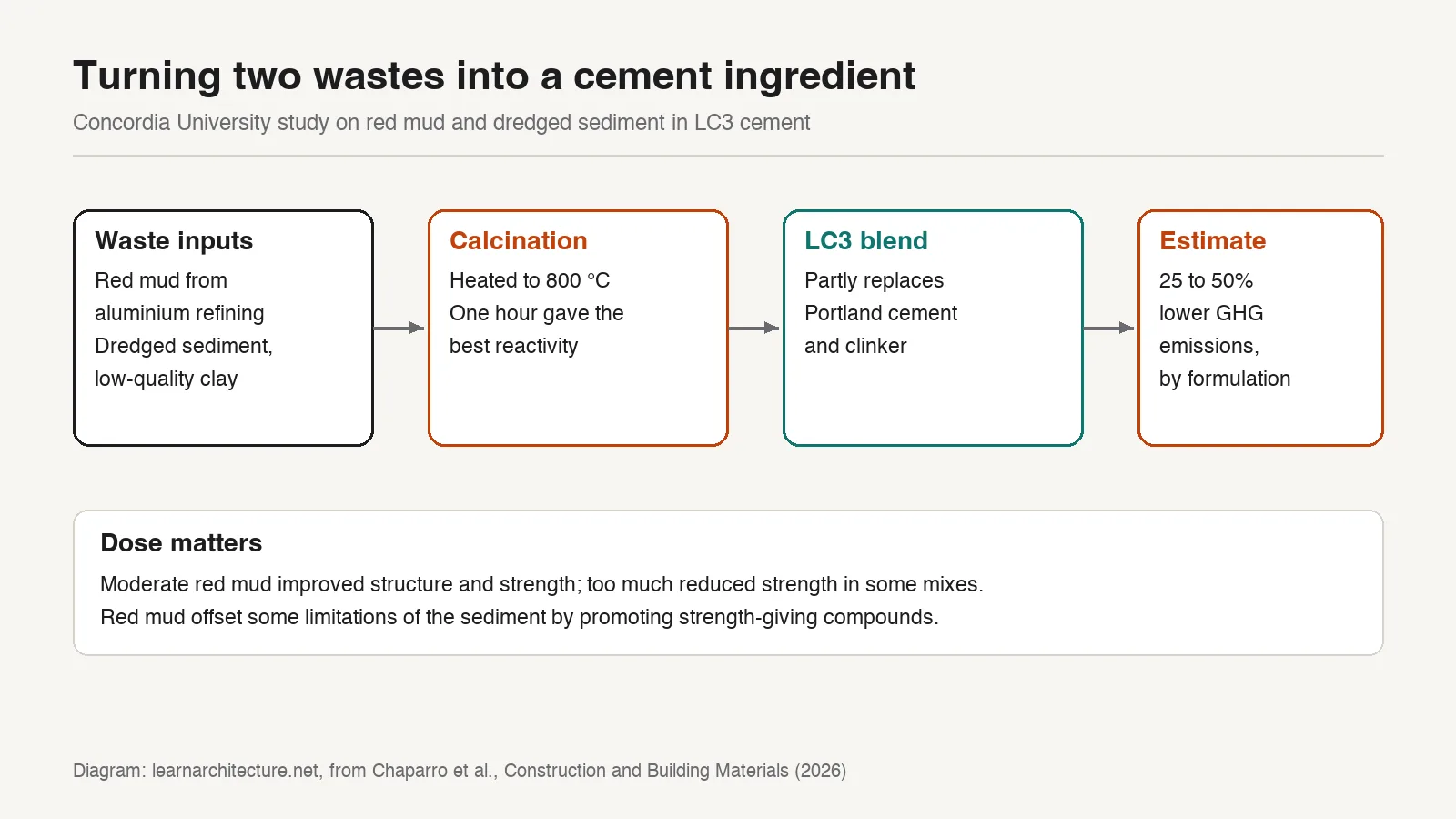
Proportion was critical. Moderate amounts of red mud improved the structure and performance of the material, while too much lowered strength in some mixtures. That sensitivity means any commercial use would depend on careful control of the local waste streams going into the blend.
Why it matters for low-carbon construction
Red mud is produced in very large quantities by alumina refineries and is usually stored in lagoons, while dredged sediment from ports and waterways often has no use at all. Finding a role for both would reduce demand for virgin raw materials as well as clinker. The results so far come from laboratory testing, and the emission figures are the researchers’ estimates rather than measurements from production.

The study was led by Faber Chaparro with Mohamed Osman and Mohammad Almakhadmeh, working with associate professor Ahmed Soliman of Concordia’s civil engineering department. Funding came from Canada’s NSERC, Quebec’s FRQNT research fund and the Canadian Standards Association.




Leave a comment