


Table of Contents Show
Minimalist architecture is a design approach that reduces buildings to their most essential elements, relying on clean geometry, honest materials, and open space rather than ornament or decoration. Rooted in the Bauhaus and De Stijl movements of the early twentieth century, this style continues to shape residential, cultural, and commercial buildings around the world.
So what is minimalist architecture in practical terms? It is not simply about making things look bare. The approach demands rigorous decision-making at every stage, from site planning to material selection. Every wall thickness, window placement, and surface finish carries weight because there is nothing else to distract from it. When a building has no crown molding, no applied texture, and no color variation, the proportions of a room become the entire experience. That is why architects like Ludwig Mies van der Rohe, Tadao Ando, and John Pawson spend months refining a single joint detail or testing how afternoon light crosses a concrete wall. The result, when done well, is a space that feels both calm and intensely deliberate.
Origins of Minimalist Architecture
The roots of minimalistic architecture stretch back to the 1920s, when European artists and designers began stripping visual culture down to its fundamentals. The De Stijl movement in the Netherlands pushed flat planes, primary colors, and right angles as a universal design language. Around the same time, the Bauhaus school in Germany championed the idea that form should emerge directly from function and materials, not from historical styles or handcrafted ornament.
Mies van der Rohe, who served as the final director of the Bauhaus, carried these ideas into built form. His phrase “less is more” became shorthand for an entire philosophy: that stripping away the unnecessary reveals the true character of a structure. Le Corbusier contributed a parallel thread through his five points of architecture, which freed floor plans from load-bearing walls and opened facades to continuous bands of glass. Together, these figures set the stage for what we now recognize as modern architecture minimalist principles.
🎓 Expert Insight
“Architecture is the will of an epoch translated into space.” — Ludwig Mies van der Rohe, Architect and Bauhaus Director
This statement captures why minimalist architecture is not merely an aesthetic preference. Mies argued that buildings should express the structural and cultural reality of their time rather than repeat historical decoration. That conviction drove him to design with exposed steel, plate glass, and open plans decades before they became standard practice.
Japanese architectural tradition also fed into the movement, though through a different channel. Concepts like ma (the value of empty space) and the use of raw wood, paper screens, and diffused light in traditional Japanese architecture resonated with Western modernists searching for an alternative to Victorian excess. Tadao Ando would later merge these Japanese sensibilities with European concrete modernism, creating a distinctly cross-cultural branch of minimalist modern architecture.
Core Principles of Minimalistic Architecture
Minimalist architecture is defined not by a single visual feature but by a set of overlapping design commitments. These principles work together: removing one tends to weaken the rest. Below are the four ideas that run through nearly every minimalist building, from a 1929 pavilion to a house completed last year.
Simplicity in Form and Geometry
Minimalist buildings favor rectangles, cubes, and flat planes. Curves appear occasionally, but they are the exception, and when they do show up, they are usually a single, precisely defined arc rather than a free-form shape. Walls meet at right angles. Rooflines stay flat or gently sloped. The goal is not monotony; it is clarity. A rectangular volume forces the architect to get proportion right because there is no decorative molding or irregular geometry to mask awkward dimensions.
This commitment to simple forms also extends to site planning. Minimalist houses are often positioned as clean volumes set against landscape, allowing the building’s shape to read clearly from a distance. The relationship between solid wall and glazed opening becomes a deliberate composition rather than an afterthought.
Function Over Decoration
In a minimalist building, every element serves a purpose. Door handles are flush-mounted so they do not interrupt the wall plane. Storage is built into walls rather than standing as separate furniture. Kitchen appliances hide behind cabinet panels. The logic is straightforward: if something does not contribute to the function or spatial experience of a room, it should not be there.
This does not mean minimalist spaces are cold or hostile to daily life. The best examples, like those by John Pawson, feel warm precisely because they have been edited down to the elements that matter most. A single wooden bench in a stone hallway can feel more inviting than a cluttered living room because attention is concentrated rather than scattered.
Restrained Material Palettes
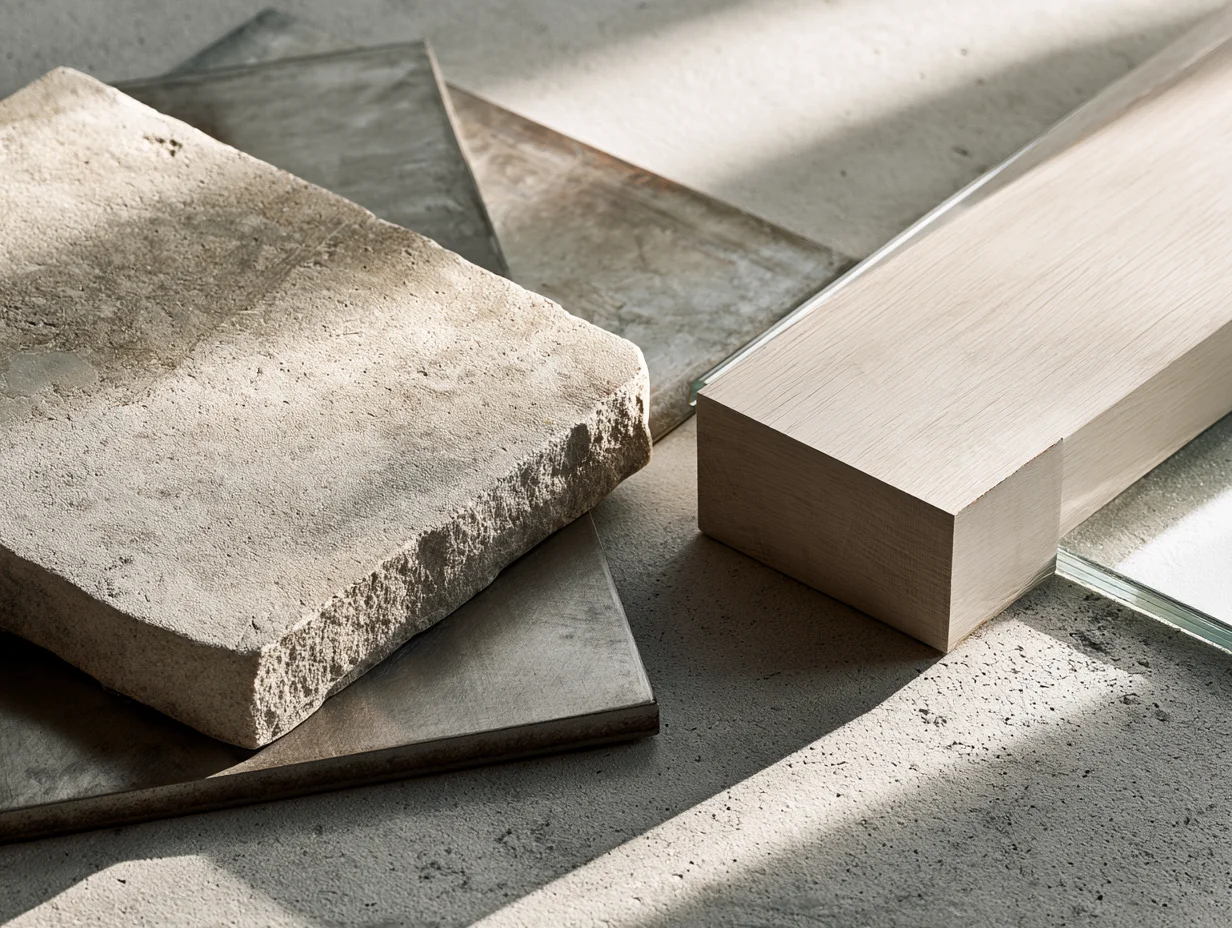
Architecture minimalist projects typically limit themselves to two or three primary materials. Concrete, steel, glass, and natural stone are the most common. Wood appears frequently, especially in Japanese-influenced work. The materials are usually left exposed, without paint or cladding, so their natural texture and color do the visual work.
💡 Pro Tip
If you are designing with exposed concrete, specify the formwork pattern and release agent at the tender stage, not after the contractor has already poured. The bolt-hole spacing, board width, and surface finish of the formwork define the final appearance of the wall. Getting this wrong on a minimalist building is far more visible than on a plastered one, because there is nothing to cover it up.
This restraint has a practical side. Fewer material transitions mean fewer junction details, which reduces potential points of failure. It also makes the interior architecture easier to read: when a floor, wall, and ceiling are all the same poured concrete, the room itself becomes the experience rather than a collection of surfaces competing for attention.
How Does Natural Light Shape Minimalist Spaces?
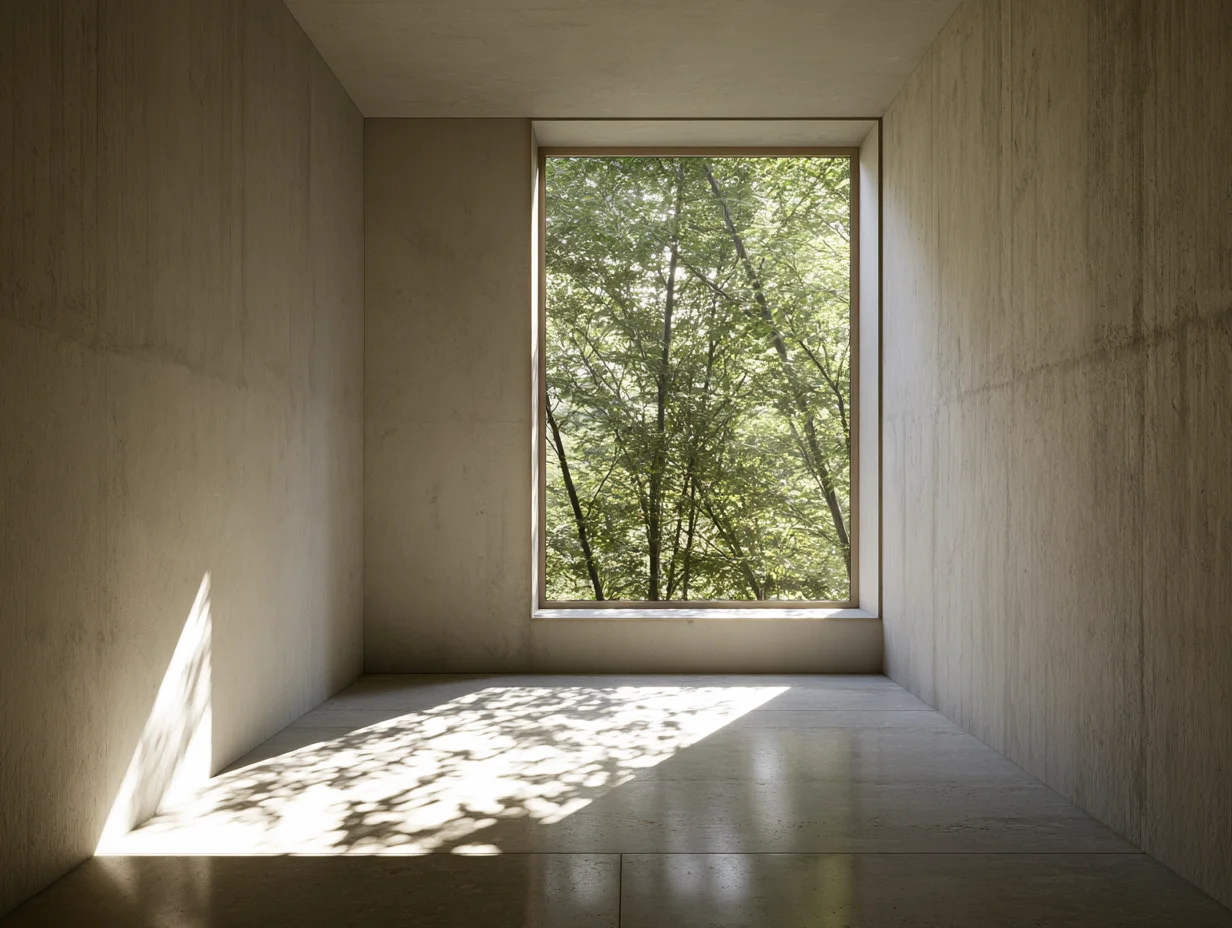
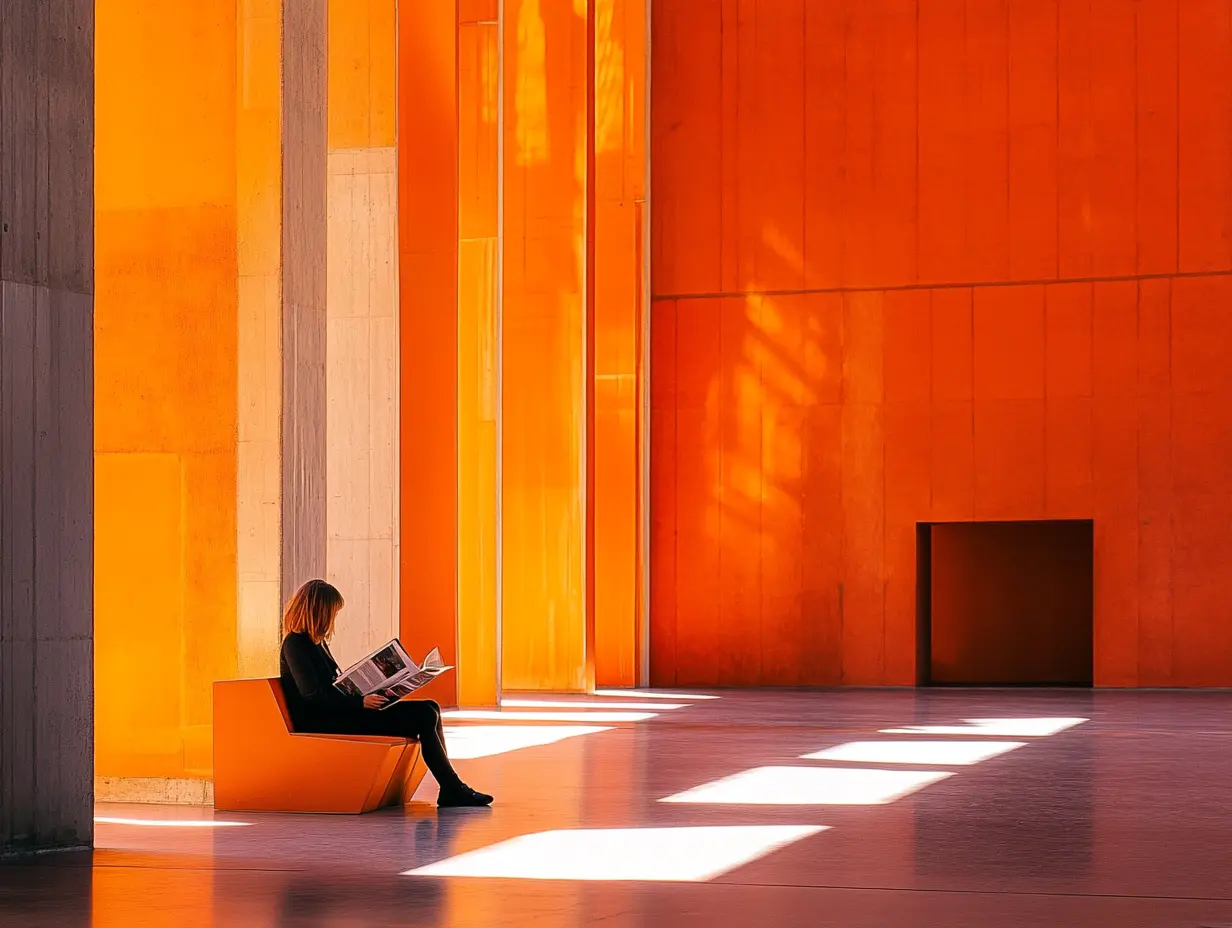
Natural light is the primary decorative element in most minimalist buildings. Because walls are plain and surfaces are neutral, the movement of sunlight across a room becomes the main source of visual change throughout the day. Architects achieve this through large glazed openings, clerestory windows, skylights, and carefully positioned slots cut into thick walls.
Tadao Ando’s approach to light is a good reference point. In his Church of the Light in Ibaraki, Osaka, a cruciform slit in a concrete wall projects daylight into an otherwise dark worship space. The effect changes hour by hour, season by season. The building’s material palette is almost entirely gray concrete, yet it never looks static because the light does all the work. This kind of design treats sunlight as a building material, not just a source of illumination.
Iconic Examples of Modern Minimalist Architecture
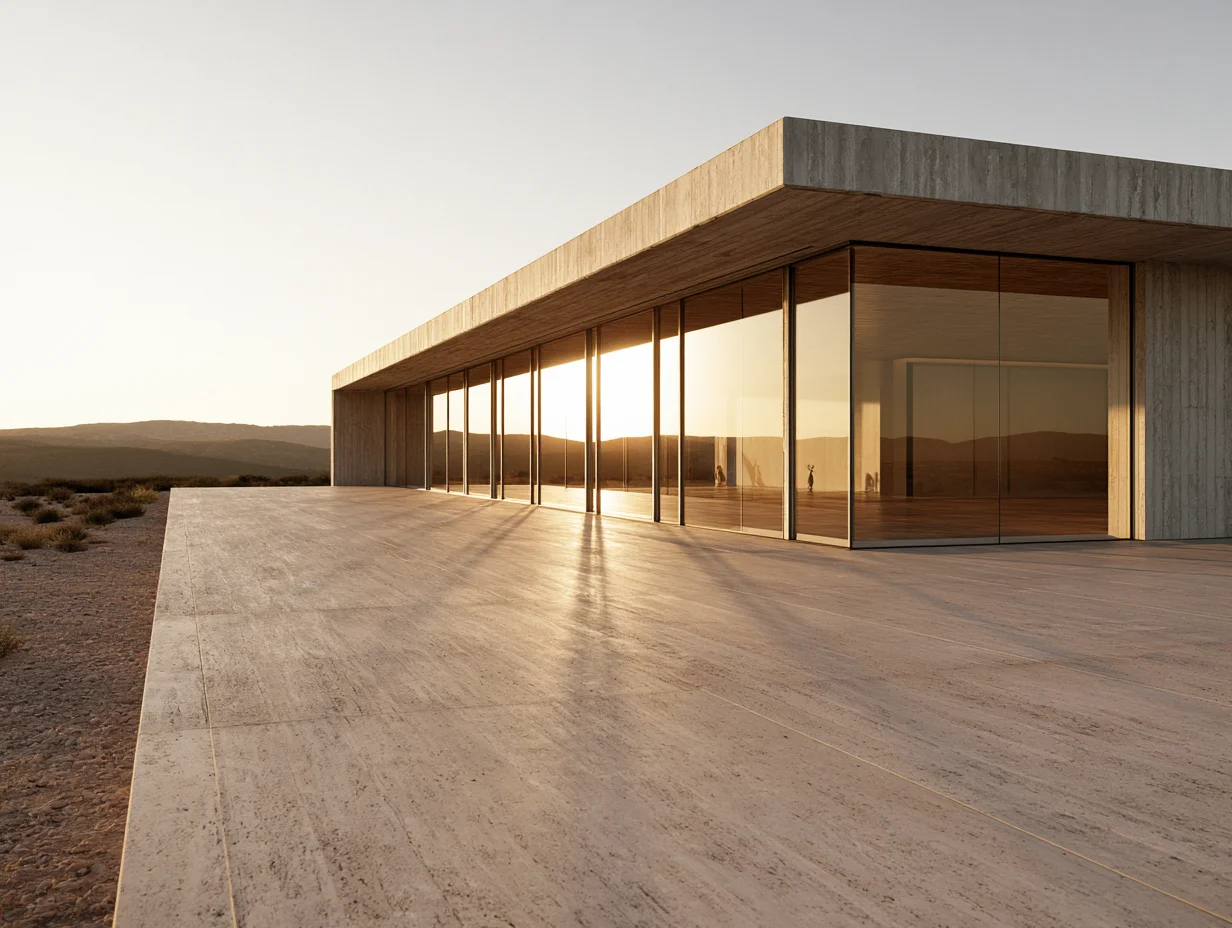
Theory only goes so far. The following buildings show how minimalist principles translate into real structures, each solving different programmatic and climatic challenges while maintaining the core commitment to reduction and clarity.
Barcelona Pavilion (1929)
Designed by Mies van der Rohe for the 1929 International Exposition in Spain, the Barcelona Pavilion is often cited as the starting point of minimalist architecture as a built reality. The pavilion uses just four materials: travertine, green Tinian marble, onyx, and chrome-clad steel columns. Walls slide past each other without touching the roof plane, creating a flowing open plan that was radical for its time. The building was demolished after the exposition and reconstructed in 1986, but its influence on contemporary minimalist architecture has been continuous.
Farnsworth House (1951)
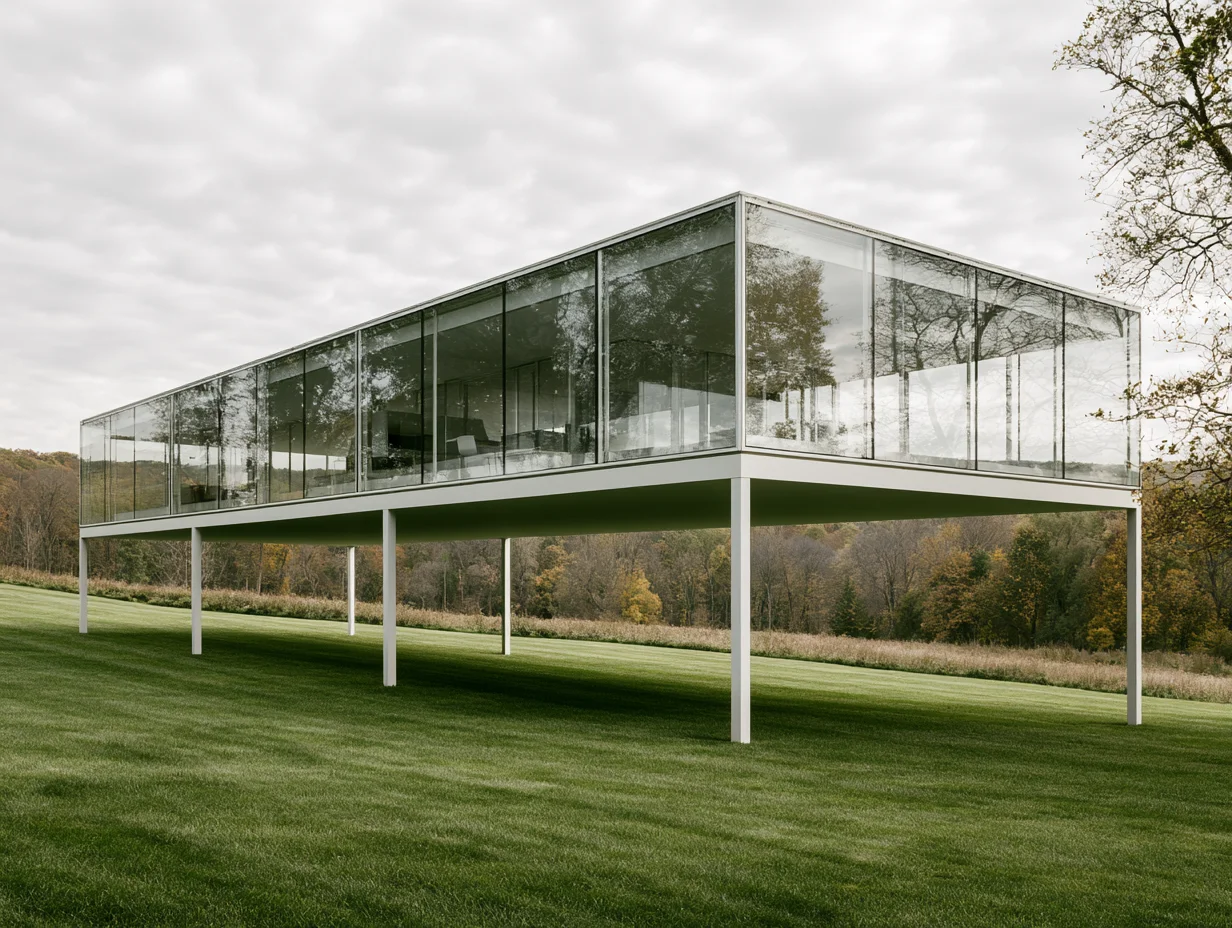
Also by Mies, the Farnsworth House near Plano, Illinois, pushes the idea even further. The entire house is a single glass-walled volume raised on steel columns above a floodplain. Interior divisions are minimal: a central wood-and-steel core contains bathrooms and mechanical services, while the rest of the floor plate is open. The building is a test case for how much you can remove from a house before it stops being livable. Opinions on that question vary, but the design’s influence on modern minimalist architecture is beyond dispute.
Church of the Light (1989)
Tadao Ando’s work shares certain values with Peter Zumthor’s focus on materiality and atmosphere, but Ando’s language is distinctly his own. The Church of the Light in Ibaraki consists of a rectangular concrete box intersected by a freestanding angled wall. A cross-shaped opening in the front wall provides the only significant source of natural light, turning a structural cutout into the building’s most powerful element.
🏗️ Real-World Example
Church of the Light (Ibaraki, 1989): Built for roughly 30 million yen (about $200,000 at the time), this small chapel seats only around 100 people. The congregation originally wanted glass to fill the cruciform opening, but Ando argued for leaving it open to the elements. Budget constraints ultimately left the slots unglazed for years, which Ando considered truer to his intent. The building demonstrates that minimalist architecture does not require a large budget; it requires rigorous editing.
Novy Dvur Monastery (2004)
John Pawson’s renovation of a Baroque-era farm complex in the Czech Republic into a working Cistercian monastery is one of the most compelling examples of contemporary minimalist architecture applied to a religious program. Pawson stripped the interiors to white plaster walls, pale stone floors, and carefully placed openings that frame views of the surrounding farmland. The monks requested silence and simplicity, and the architecture delivers both without sentimentality.
Contemporary Minimalist Architecture Today
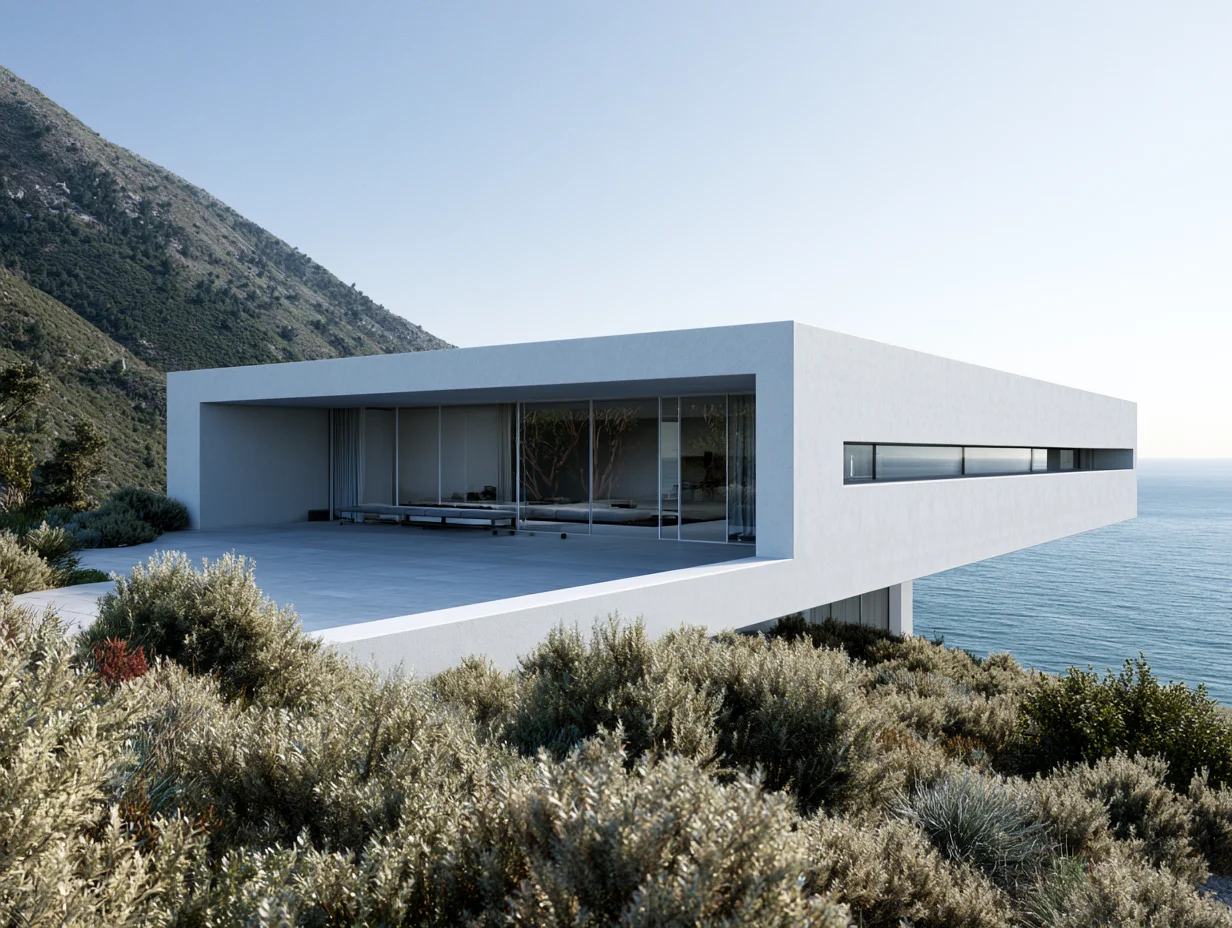
Minimalist modern architecture has not stayed frozen in the mid-twentieth century. Firms in Japan, Scandinavia, Portugal, Mexico, and Australia continue to develop the style in response to local climates, building codes, and cultural expectations. The Portuguese architect Álvaro Siza, for instance, works with white-rendered volumes and carefully sculpted natural light, creating buildings that are minimalist in their restraint but regionally specific in their relationship to the Atlantic coastline.
📌 Did You Know?
The Barcelona Pavilion, widely considered the birthplace of built minimalist architecture, existed for less than a year in its original form. It was constructed in 1929 for the International Exposition and dismantled in 1930. The replica standing in Barcelona today was completed in 1986 by architects Ignasi de Solà-Morales, Cristian Cirici, and Fernando Ramos, working from original photographs and drawings.
Sustainability has also reshaped the conversation. Early minimalist buildings sometimes prioritized visual purity over thermal performance; the Farnsworth House, for example, is famously difficult to heat and cool. Today’s practitioners combine minimalist aesthetics with high-performance envelopes, triple-glazed windows, and passive solar strategies. A minimalist house built in 2026 can achieve near-zero energy consumption while maintaining the clean lines and open plans that define the style. For more on how green architecture intersects with design ambition, that topic deserves its own discussion.
Key Minimalist Buildings at a Glance
The table below summarizes several landmark minimalist buildings, their architects, and the primary materials that define each project:
| Building | Architect | Year | Primary Materials |
|---|---|---|---|
| Barcelona Pavilion | Mies van der Rohe | 1929 | Travertine, marble, onyx, chrome steel |
| Farnsworth House | Mies van der Rohe | 1951 | Steel, glass, travertine |
| Church of the Light | Tadao Ando | 1989 | Exposed concrete, wood |
| Novy Dvur Monastery | John Pawson | 2004 | White plaster, pale stone, glass |
| Therme Vals | Peter Zumthor | 1996 | Quartzite stone, concrete, water |
What connects these buildings across seven decades is not a shared look but a shared discipline. Each architect committed to working with the fewest possible elements and making those elements do the maximum work. That discipline remains the defining feature of contemporary architecture that draws on the minimalist tradition, even as individual projects adapt to wildly different climates, programs, and budgets.
The Bigger Picture
Minimalist architecture is often misread as cold, expensive, or indifferent to human comfort. The strongest examples prove the opposite. A building that has been reduced to its essentials can respond more directly to light, weather, and daily use than one buried under layers of finish material. The real challenge is not adding less; it is knowing exactly what to keep and why. That kind of clarity is harder to achieve than complexity, which is precisely why the best minimalist buildings, old and new, still feel urgent.









Leave a comment