


Table of Contents Show
First year architecture student tips boil down to a handful of habits that separate students who burn out from those who build real momentum. Time management, studio discipline, early software exposure, and honest self-care form the core of surviving (and enjoying) architecture school from the very first semester.
Starting architecture school is exciting and overwhelming in roughly equal measure. The workload looks nothing like what you handled in high school or a general undergraduate program. Studios run late, critiques feel personal, and the sheer number of new skills you need to pick up can feel suffocating. But the students who come out of first year with their motivation intact are rarely the most talented in the class. They are usually the most organized, the most willing to ask questions, and the most deliberate about protecting their energy. This architecture school survival guide covers seven practical strategies you can start using on day one.
Start Every Project Backwards from the Deadline
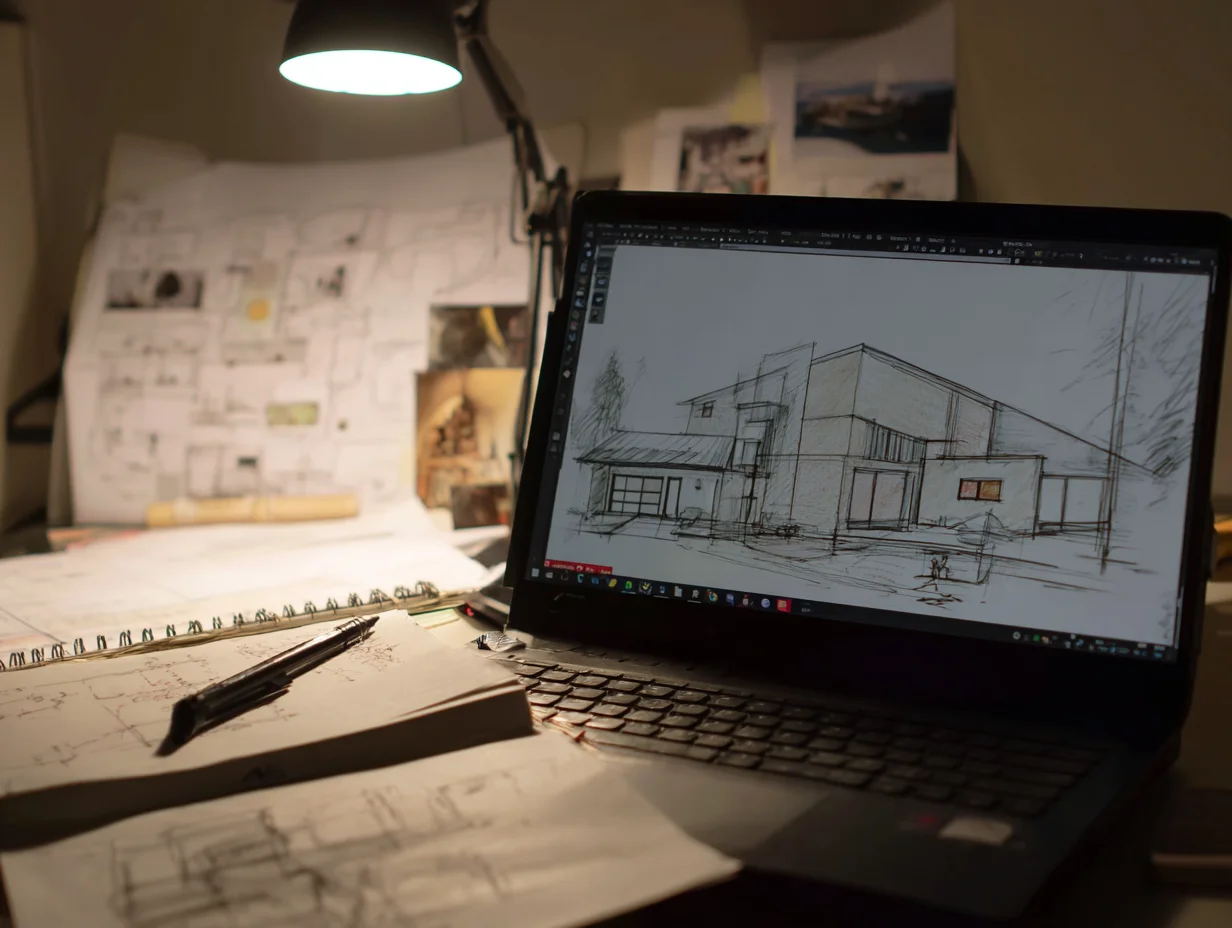
Time management is the single skill that determines whether your first year feels chaotic or manageable. Architecture projects are longer and more layered than anything you have faced before. A single studio assignment can involve site research, concept sketches, physical models, digital drawings, and a final presentation board, all due in the same week.
The trick is to work backwards. Look at your submission date, then map out what needs to be finished at the halfway point and at the quarter mark. If you have an eight-week project, you should have a concept locked by week two and a draft layout by week four. This leaves the final weeks for refinement rather than panic. Tools like Notion, Trello, or even a paper planner taped to your desk can keep these milestones visible. For a broader look at structuring these habits across your entire degree, the architecture education tips guide on learnarchitecture.net covers time management, software, and hands-on experience strategies in depth.
💡 Pro Tip
Set a “no new ideas” cutoff at the 60% mark of every project. First-year students often restart their concept too late, chasing a better idea when they should be developing the one they have. Committing early forces you to solve problems within your design rather than running from them.
Break each project into small, daily tasks instead of thinking in weekly chunks. “Finish site analysis” is vague and easy to postpone. “Draw three section sketches before lunch” is specific and achievable. Small wins compound, and by the time your classmates are pulling their first all-nighter, you will already have a draft pinned to your board.
How to Treat Studio Time Like a Real Job
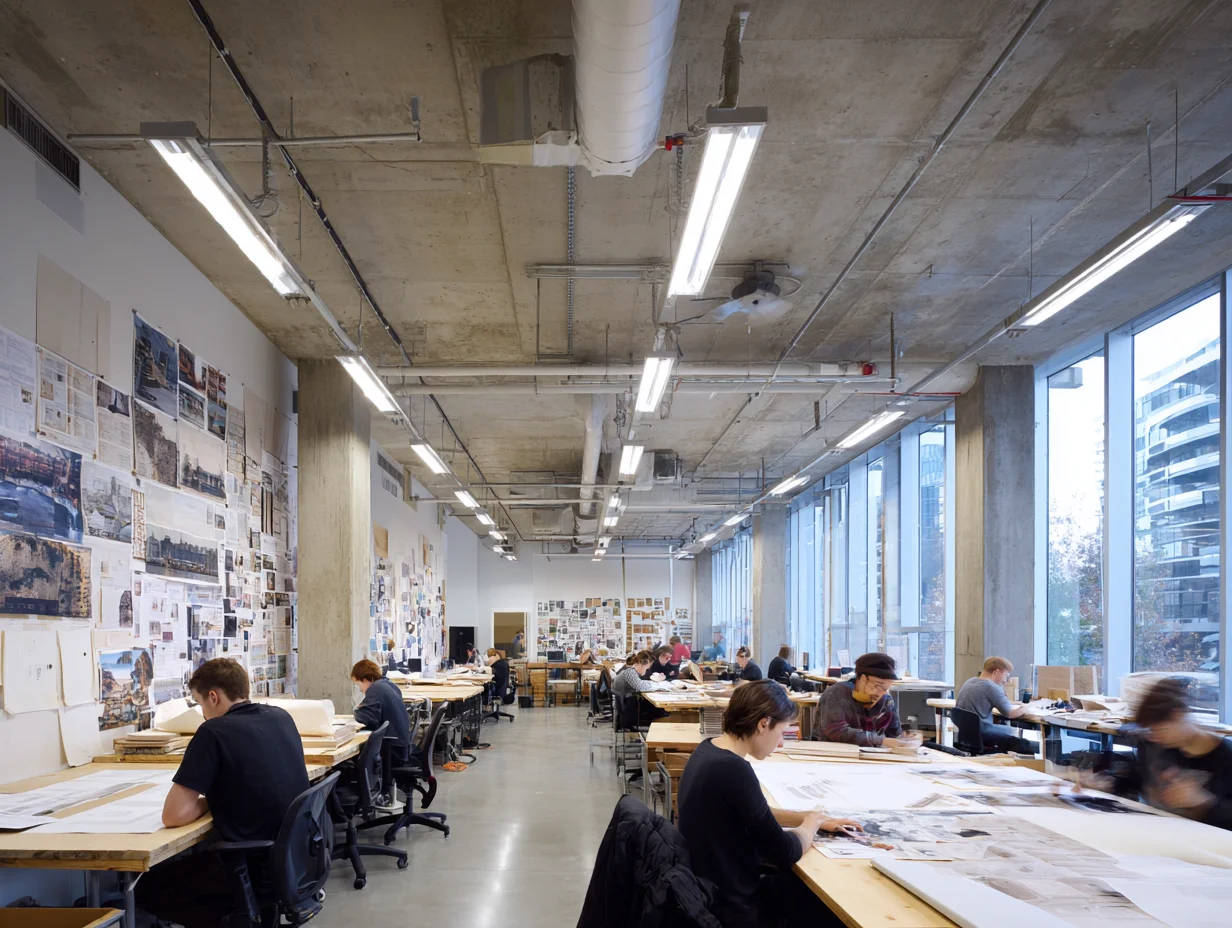
Studio culture in architecture school is unlike any other academic environment. You share a workspace with your peers, work on physical and digital projects side by side, and spend more hours in the studio than in any lecture hall. The students who thrive in this environment treat studio hours like a professional commitment rather than a flexible hangout.
Arrive at a consistent time every day. Set a clear stopping point, and resist the urge to bring unfinished work home every single night. Consistent, focused studio sessions are far more productive than sporadic all-nighters. Staying until 3 a.m. might feel heroic in the moment, but it drains your ability to think clearly the next day. Architecture school is a marathon, not a series of sprints.
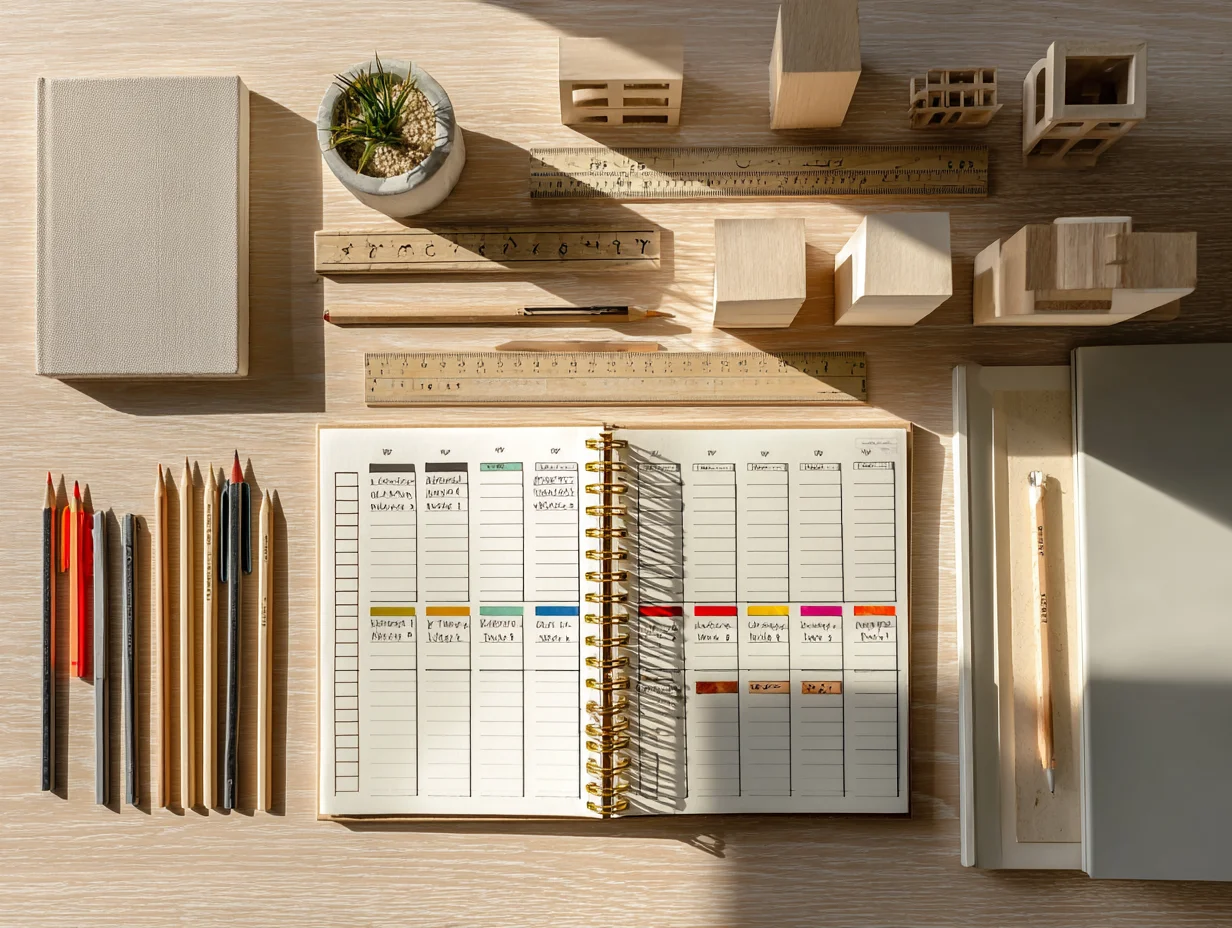
Your physical workspace matters, too. Keep your desk organized enough that you can actually work on it. Have your cutting mat, scale rulers, and drafting supplies within arm’s reach. A cluttered desk slows you down and adds low-level stress you do not need. If your program has strong studio culture, take advantage of it. The informal feedback and peer learning that happen in studio are often more valuable than formal lectures.
Learn to Take Criticism Without Taking It Personally
Design critiques, often called “crits” or “juries,” are one of the most intimidating parts of architecture school for new students. You present your work to professors and sometimes visiting professionals, and they tell you what does not work. The feedback can feel sharp, especially if you have poured days of effort into a design that gets picked apart in fifteen minutes.
The shift you need to make is simple but difficult: separate your identity from your project. When a critic says your circulation does not work, they are not saying you are a bad designer. They are pointing out a solvable problem. Write down every piece of feedback during the review instead of trying to defend your choices on the spot. Some of the most useful comments will not make sense until you sit with them for a day or two.
🎓 Expert Insight
“The best way to improve is to show unfinished work. If you only present polished ideas, you deprive yourself of the most useful feedback.” — Licensed architect with 20+ years of teaching experience
This observation holds particularly true in first year, when your ideas are still forming. Showing rough sketches early invites constructive input before you have committed too many hours to a direction that may not work.
Critiques are also professional rehearsals. Every architect presents work to clients, planning boards, and colleagues throughout their career. Learning to listen, respond calmly, and integrate feedback is a skill you will use for decades. Treat first-year reviews as practice for that reality.
What Software Should First Year Architecture Students Learn?

New architecture students often feel pressure to master every piece of software at once. Revit, Rhino, AutoCAD, SketchUp, Photoshop, InDesign, Illustrator, Grasshopper: the list grows every year, and it can feel like you are already behind before the first lecture starts. The reality is simpler. You do not need all of these tools in year one.
Focus on two categories during your first year. First, learn one 3D modeling tool well enough to produce a basic building form. SketchUp is the most common starting point because it is free in its browser version and has a gentle learning curve. You can go from a blank screen to a recognizable 3D form in under an hour. Second, learn one layout tool for presentation boards. Adobe InDesign is the industry standard, but Canva or even PowerPoint can work in a pinch for first-year submissions.
AutoCAD and Revit will become important later, especially if your program emphasizes BIM (Building Information Modeling). But trying to learn a full BIM platform while also figuring out how to draw a floor plan by hand is a recipe for frustration. Get comfortable with hand sketching and basic drawing techniques first, then layer digital tools on top as your projects demand them.
⚠️ Common Mistake to Avoid
Many first-year students spend entire weekends watching software tutorials instead of actually designing. Tutorials are useful, but they become a form of procrastination when they replace hands-on project work. Learn tools in context: open the software, try to model the building you are actually designing, and look up specific techniques only when you get stuck.
Start Your Portfolio from Day One
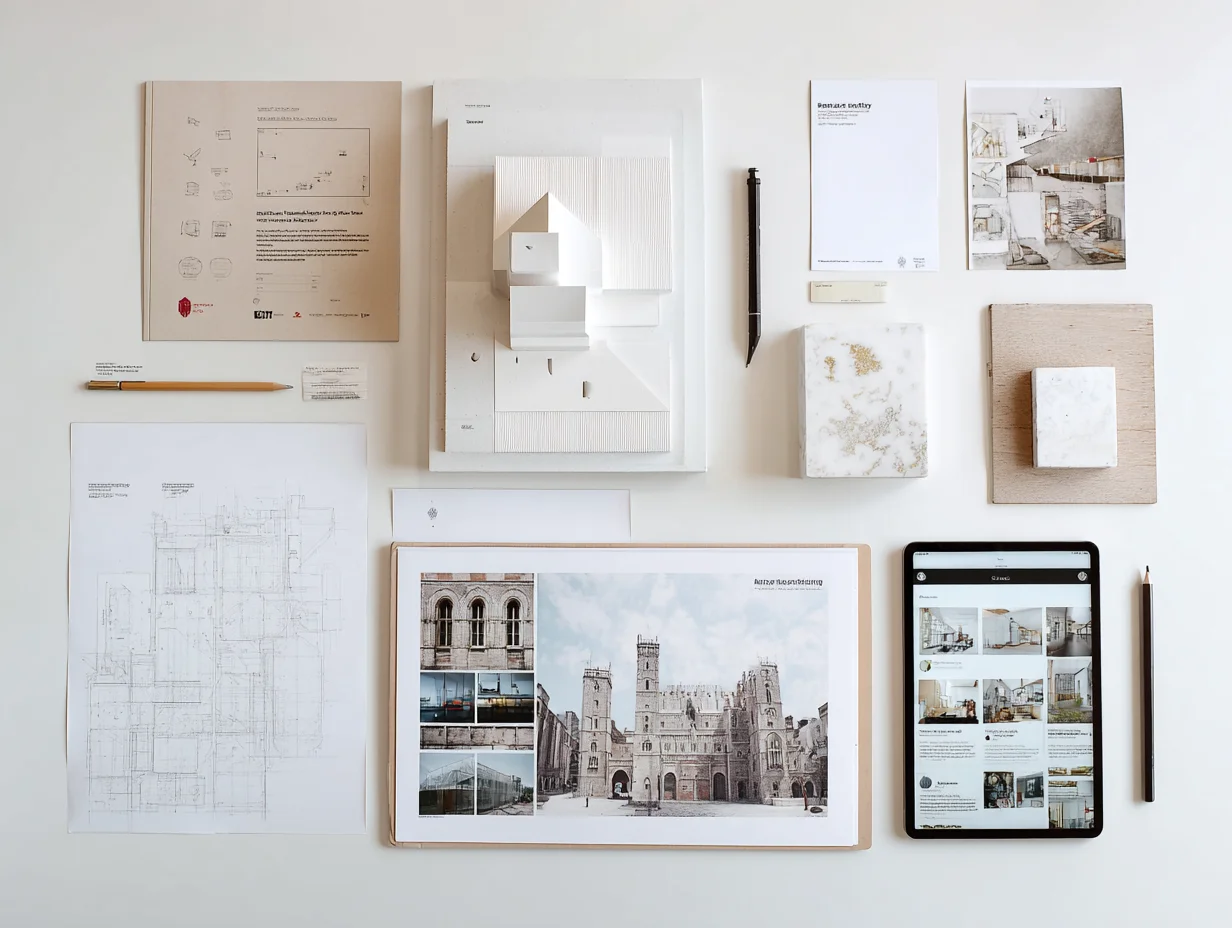
Your architecture portfolio is the most important document you will produce during your education. It will determine whether you get internships, graduate school offers, and your first job. The mistake most students make is waiting until third or fourth year to start building it. By then, they have lost early process work, deleted files, and forgotten the thinking behind their first projects.
Start documenting your work from the very first studio assignment. Photograph your physical models before they get damaged. Save your concept sketches, even the rough ones. Screenshot your digital models at key stages of development. Create a simple folder structure on your computer (by semester, by project, by file type) and stick with it.
You do not need a polished portfolio layout in year one. What you need is raw material. When the time comes to assemble a proper portfolio, having a deep archive of process images, sketches, and iterations will set you apart from students who can only show finished renders. Reviewers at firms and graduate programs want to see how you think through problems, not just what the final product looks like.
Protect Your Mental Health and Physical Energy
Architecture school has a well-documented culture of overwork. Late nights in the studio are treated as badges of honor, and the pressure to “suffer for your art” is deeply embedded in many programs. This is one of the most damaging myths in architectural education, and you should resist it from day one.
Sleep deprivation does not produce better designs. A 2022 report by the Student Organised Network for Architecture (SONA) in Australia found that a significant majority of architecture students reported negative impacts on their mental health directly linked to studio culture and workload expectations. The students who sustain their passion through a five-year program are almost always those who set boundaries early.
💡 Pro Tip
Maintain at least one activity outside of architecture school, whether that is exercise, cooking, a sport, or a hobby that has nothing to do with design. Build relationships with people who are not architecture students. This gives your brain space to recover, and you will often return to studio problems with fresh perspective after stepping away.
If you are struggling, reach out to your university’s counseling services early. Do not wait until you are at a breaking point. Architecture programs are demanding by design, but that does not mean you have to handle everything alone. The tips for surviving architecture school in more detail, including strategies for managing studio deadlines, peer networking, and wellbeing, are covered in a dedicated guide on learnarchitecture.net.
Build Relationships Early
Architecture is a collaborative profession, and the relationships you form in school often last your entire career. The students sitting next to you in first-year studio may become future colleagues, business partners, or the person who recommends you for a job ten years from now.
Help your classmates when you can. Share a technique you figured out in SketchUp. Lend materials when someone runs out before a deadline. Show up to other students’ reviews even when yours is already done. These small acts build a network that pays dividends long after graduation.
Beyond your immediate cohort, make an effort to connect with students in upper years. They have already been through what you are facing, and their advice on specific professors, course requirements, and studio expectations is invaluable. Many programs also offer mentorship through professional organizations like the American Institute of Architects (AIA) or the Royal Institute of British Architects (RIBA), where you can connect with practicing professionals early in your education.
📌 Did You Know?
According to the National Architectural Accrediting Board (NAAB), over 160 universities in the United States alone offer accredited architecture programs. Despite this large number, the architecture profession has one of the highest rates of students leaving before completing their degree. Strong peer networks and early mentorship are consistently cited as key factors that help students stay the course.
Competitions are another excellent way to expand your network and sharpen your skills under pressure. Even if you do not win, the experience of producing a full design package on a tight deadline teaches you more about professional practice than most classroom exercises. Platforms like ArchDaily and Dezeen regularly feature student competition results, and a shortlisted entry adds real weight to your early portfolio.
Video: Practical Tips for Surviving Your First Year in Architecture School
This video from a Bartlett UCL student covers 10 practical survival tips for first-year architecture students, from joining societies and managing studio culture to building confidence during critiques.
✅ Key Takeaways
- Work backwards from every deadline by setting milestones at the quarter and halfway marks to avoid last-minute panic.
- Treat studio hours like a professional job with fixed start and stop times, and resist the urge to pull regular all-nighters.
- Separate your identity from your design work so you can absorb critique constructively and grow faster.
- Focus on one 3D modeling tool and one layout tool in your first year rather than trying to learn every piece of software at once.
- Document every project from day one, including rough sketches and process photos, to build a strong portfolio archive.
- Protect your mental and physical health by maintaining boundaries, keeping activities outside of architecture, and seeking support early when needed.
Final Thoughts
Your first year in architecture school will test your habits, your patience, and your ability to manage competing demands. The advice for new architecture students that actually sticks is rarely about design talent. It is about discipline, organization, and the willingness to ask for help before you need it desperately. Set up systems that work for you early, protect your health, document everything, and lean on the people around you. The skills and relationships you build in this first year will carry you through the rest of your education and into your professional career.
FAQ
How many hours a week do first year architecture students typically work?
Most first-year architecture students report spending 30 to 50 hours per week on coursework, including studio time, lectures, and independent project work. This varies by program and by project deadlines, but the workload is consistently higher than most other undergraduate degrees. Good time management can keep the actual hours closer to the lower end without sacrificing quality.
What supplies do I need for my first year of architecture school?
Basic supplies typically include a scale ruler, a cutting mat, an X-Acto knife, tracing paper, a sketchbook, drafting pencils in several grades, and a good eraser. Your program will likely provide a specific supply list during orientation. Avoid buying expensive tools before you know what your professors actually require.
Is it normal to feel overwhelmed in first year architecture school?
Yes, and nearly every architecture student experiences this. The combination of unfamiliar skills, long studio hours, and subjective feedback creates a steep adjustment period. The feeling typically eases as you develop routines and build confidence in your process. If the overwhelm does not improve after the first few weeks, reach out to academic advisors or counseling services for support.
Should I learn Revit or SketchUp first as a beginner?
SketchUp is the better starting point for most first-year students. It is free in its web version, easy to learn, and lets you produce 3D forms quickly. Revit is a professional BIM platform with a steeper learning curve and is typically introduced in later years when you begin producing construction documents. Starting with SketchUp builds your spatial thinking without the added complexity of BIM data management.
How do I handle a bad critique in architecture school?
Write down the feedback without responding emotionally. Thank the reviewer, and revisit your notes the next day with fresh eyes. Not all critique is equally useful, but most of it contains at least one observation that can strengthen your next iteration. If you feel the feedback was unfair or unclear, schedule office hours with the professor to discuss it privately rather than debating during the public review.












Leave a comment