


Table of Contents Show
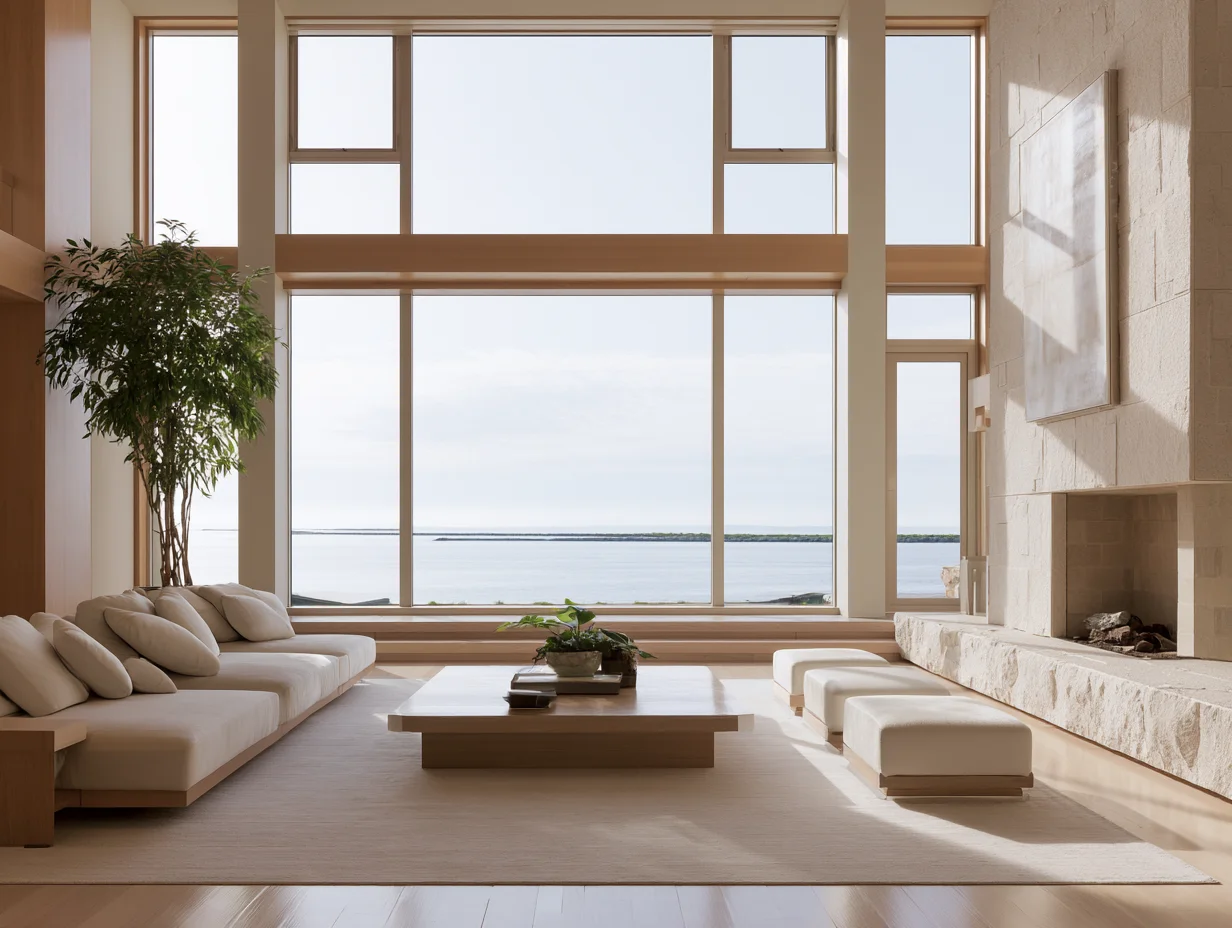
Feng shui principles are guidelines from a centuries-old Chinese tradition that arranges buildings, rooms, and objects to support a smooth flow of energy, known as qi. In architecture, they shape decisions about site orientation, natural light, entrances, and room layout, with the aim of creating spaces that feel calm, balanced, and easy to live in.
Long before energy modeling and daylight studies, builders in China used feng shui to decide where a house should sit, which way it should face, and how its rooms should connect. The practice still carries weight, especially across East and Southeast Asia, where developers and architects consult feng shui experts on major projects. Learning these ideas gives you another way to read a building’s logic, and it links modern concerns about wellbeing and natural light to a tradition that has been asking the same questions for thousands of years. Many of these ideas sit within the broader cultural systems that shape architecture around the world.
What Are the Core Principles of Feng Shui?
Feng shui rests on a few connected ideas: the flow of qi, the balance of yin and yang, the five elements, and the bagua map. Each gives architects a different lens for arranging space. According to Britannica, feng shui is likely the oldest continuing geographic tradition in the world, with roots reaching back to the early Zhou dynasty around 1046 BCE. The name itself means “wind and water.”
Qi: The Flow of Energy
In feng shui tradition, qi is the vital energy that moves through every space, much like air or water. The goal of any feng shui layout is to let it circulate freely rather than rushing through too fast or stagnating in forgotten corners. A long, straight corridor pointing at the front door, for example, is thought to pull energy out of a home too quickly, while a cluttered room lets it stall. In practical terms, this becomes a way of thinking about circulation, sightlines, and how people actually move from one space to the next.
Yin and Yang
Yin and yang describe two opposite but complementary qualities. Yin is soft, dark, quiet, and restful, while yang is bright, active, and energetic. A bedroom leans yin to support sleep, and a kitchen or home office leans yang to support activity. Good feng shui looks for a balance suited to each room’s purpose rather than an even split everywhere, an idea closely tied to how balance and harmony work in interior design more generally.
The Five Elements
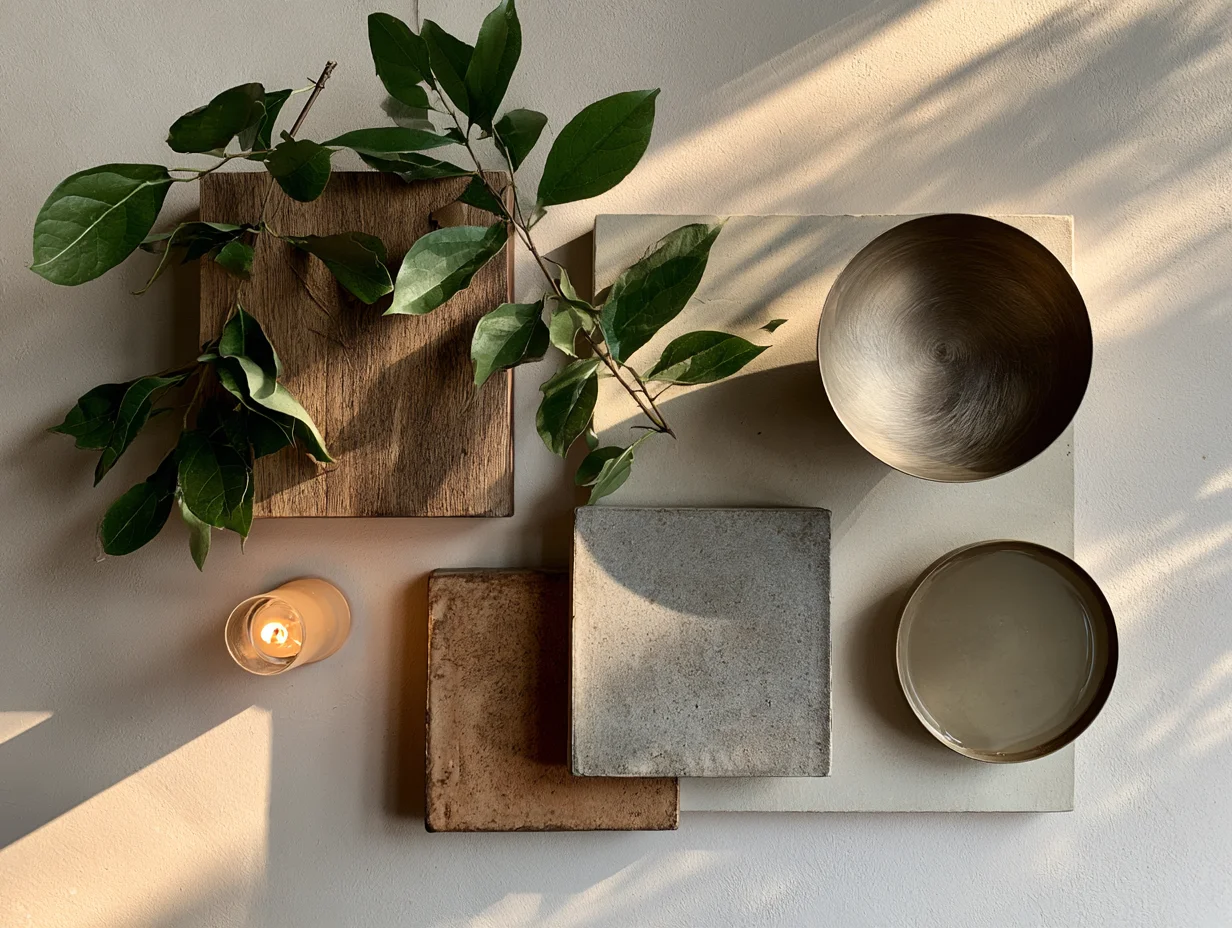
The five elements (wood, fire, earth, metal, and water) are the building blocks practitioners use to balance a space. Each carries its own associations of color, shape, material, and direction, and they interact in cycles that either support or weaken one another. Architects working with feng shui draw on these associations to guide material palettes and color schemes, which connects directly to how color shapes the feel of a room.
How Do the Five Elements Map to Design Choices?
The table below summarizes how each element connects to color, material, and a typical use in a building.
| Element | Colors | Materials and Shapes | Design Use |
|---|---|---|---|
| Wood | Green, brown | Timber, plants, tall columns | Growth and vitality, living areas |
| Fire | Red, orange | Triangular forms, lighting | Energy, social and dining spaces |
| Earth | Yellow, beige, sandy tones | Brick, ceramic, flat squares | Stability, central grounding zones |
| Metal | White, gray, metallic | Steel, round forms | Clarity and focus, work areas |
| Water | Blue, black | Glass, mirrors, flowing shapes | Calm and reflection, entryways |
The Bagua Map
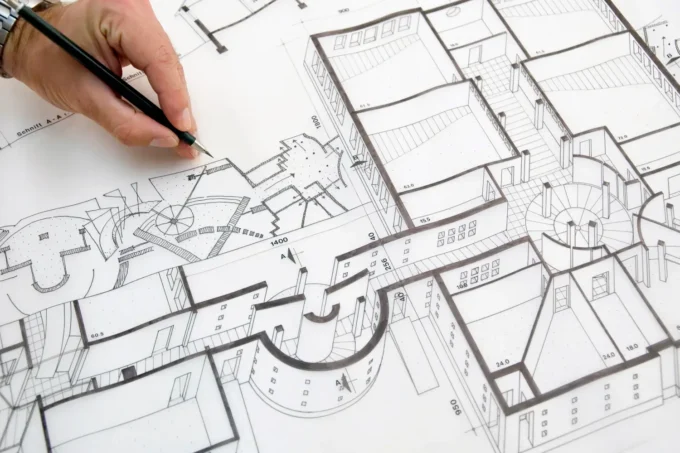
The bagua is an eight-sided grid that practitioners lay over a floor plan, with each section tied to an area of life such as wealth, career, family, or health. By matching rooms and features to these zones, a designer decides where to place key spaces and how to treat any part of the plan that feels weak. Irregular, L-shaped layouts often create “missing” bagua areas, which architects can resolve at the design stage by squaring off the plan or anchoring the corner with landscaping.
📌 Did You Know?
Beijing’s Forbidden City was laid out according to feng shui conventions, with a strict north to south axis and an artificial hill, Jingshan, built to its north for protection. During the Ming and Qing dynasties, the imperial court even employed feng shui specialists alongside astronomers to site palaces and tombs.
This imperial use shows how seriously the tradition was once taken at the scale of an entire city. The documented history of feng shui ties it closely to Chinese governance, where the correct siting of state buildings was read as a sign of a dynasty’s right to rule.
Feng Shui Design Principles in Architecture
At the building scale, feng shui design principles focus on where a structure sits and how it meets its surroundings. The ideal is the commanding position: a site with higher ground or solid support behind it, an open and clear outlook in front, and protection on the sides. You can see the practical sense in it, since a sheltered slope with a view over water is simply a comfortable place to live.
Orientation matters as much as position. Buildings are often turned to capture a favorable view and good light, and a clear, well-lit main entrance is treated as the “mouth of qi,” the point where energy enters. Curved approach paths are preferred over straight ones, since sharp, direct lines are believed to carry harsh energy. These instincts about approach, threshold, and sightline have a lot in common with how architects think when they lay out a floor plan.
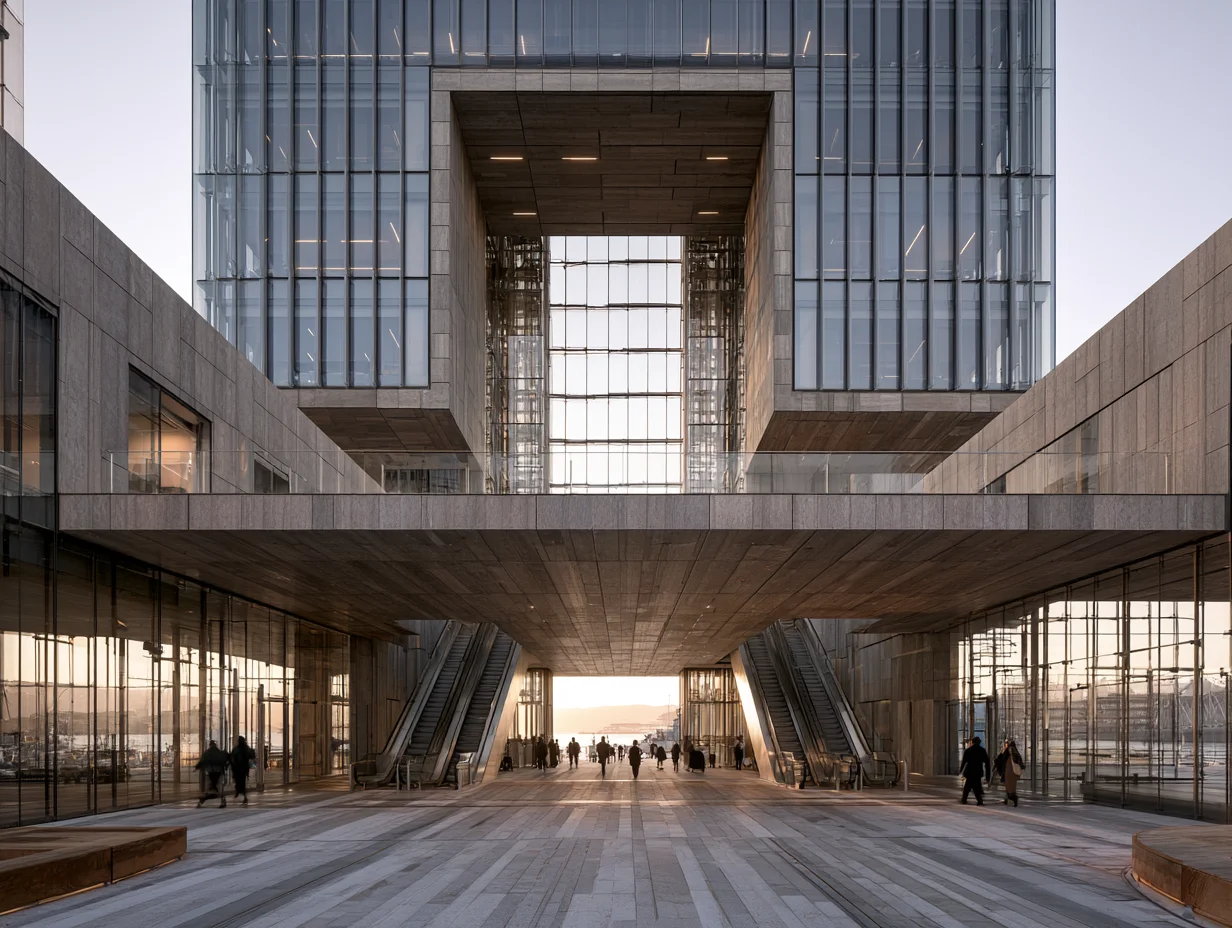
Several famous modern towers in Asia were shaped with feng shui in mind. When Foster + Partners designed the Hongkong and Shanghai Bank Headquarters, the team worked with a feng shui geomancer from the earliest stages, a process documented in ArchDaily’s account of the project. The decision shaped everything from the building’s open base to the angle of its escalators.
🏗️ Real-World Example
HSBC Main Building (Hong Kong, 1985): Norman Foster’s tower keeps an open public plaza at its base so air and energy can pass through, and its escalators sit at an angle on the advice of a feng shui consultant. Its unobstructed view of Victoria Harbour was considered auspicious, since water is linked to prosperity.
Foster’s own practice still lists the feng shui consultation as part of the design story, describing a project that “virtually reinvented the office tower” through this kind of questioning on its official project page.
For a working architect, the lesson is not to copy these gestures literally but to notice what they protect: light, air, a sense of arrival, and a clear relationship between a building and the ground it sits on. Those are sound goals whether you read them through qi or through daylight factors and ventilation rates.
💡 Pro Tip
When placing a bed, desk, or main seating, put it in the commanding position, diagonally across from the door so you can see who enters without being directly in line with it. It is one of the simplest feng shui ideas to apply, and it tends to make a room feel more secure even to people who have never heard of feng shui.
Feng Shui Interior Design Principles for the Home and Bedroom
Inside the home, feng shui interior design principles come down to layout, materials, and keeping qi moving gently through each room. Clutter is treated as the main obstacle, since it blocks flow and weighs on the mind, which is one reason feng shui and the calm of minimalist design tend to point the same way. Beyond clearing space, the approach asks you to balance the five elements through color and texture and to position the most important furniture with care.
Feng Shui Principles for the Bedroom
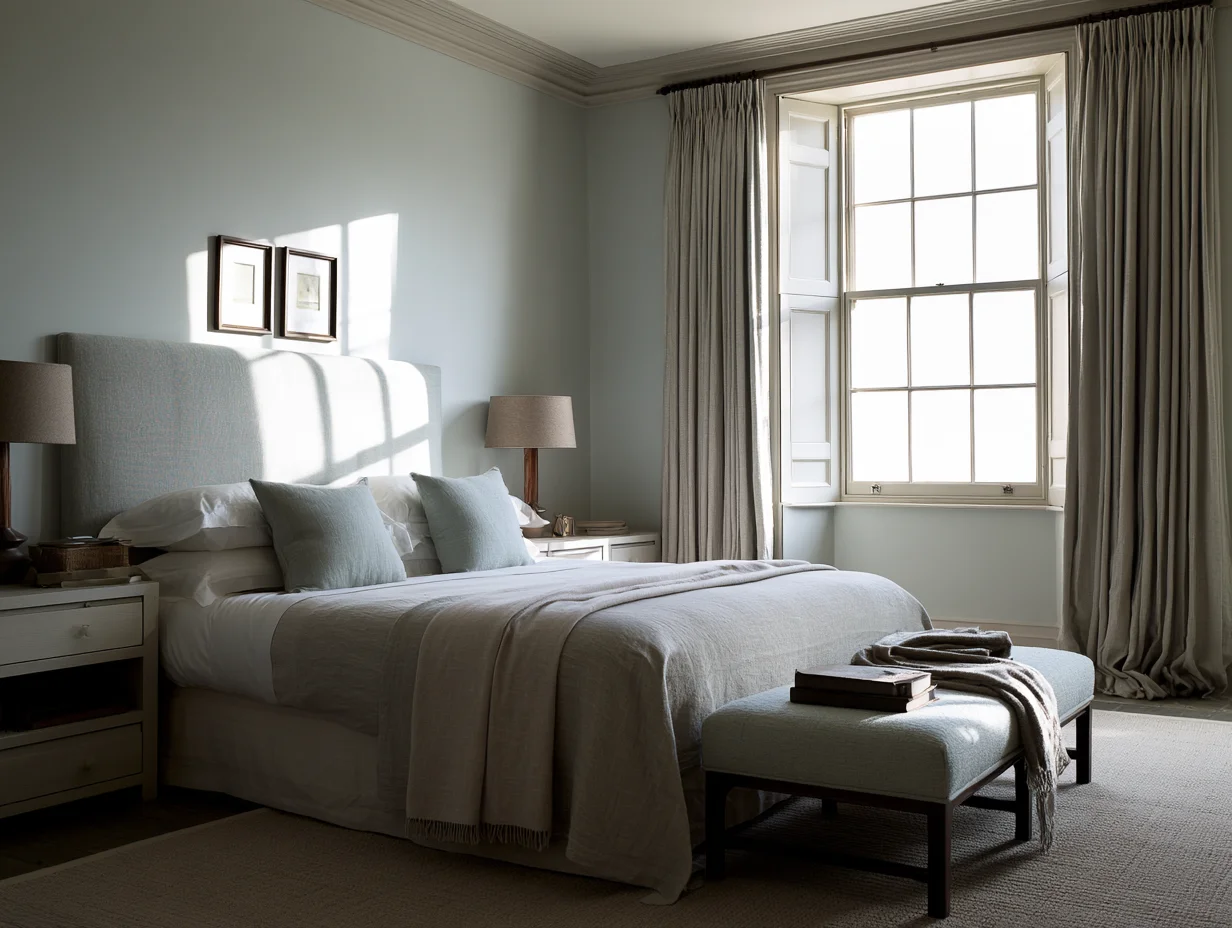
The bedroom is where feng shui principles for the bedroom matter most, since rest depends on a calm, yin-leaning space. Practitioners suggest placing the bed in the commanding position, avoiding a layout where your feet point straight at the door, and limiting work equipment and any mirror that faces the bed. Soft colors, balanced bedside lighting, and a solid headboard for support all reinforce the same goal of a restful room.
Feng Shui Principles for the Home
Across the rest of the home, a few feng shui house design principles recur. The entry should be welcoming and uncluttered, since it sets the tone for energy coming in. The kitchen, seen as the source of nourishment, should be bright and well ventilated. Living areas benefit from a clear center and good natural light, while bathrooms are kept away from the heart of the plan so they do not drain energy. These priorities sit comfortably alongside mainstream ideas about interior architecture and spatial planning.
🎓 Expert Insight
“Most of what clients respond to in a feng shui layout, they would simply call comfort: light, flow, and a place to sit with their back to a wall.” — Licensed architect specializing in residential design
This points to why the tradition has stayed relevant. Many of its instincts about space line up with how people naturally feel safe and at ease in a room.
Why Do Modern Architects Still Use Feng Shui?
Modern architects keep feng shui principles in their toolkit for a mix of cultural and practical reasons. In Hong Kong, Singapore, Taiwan, and mainland China, many buyers and tenants expect it, so developers treat a feng shui review as a routine part of the process, a little like a code check. Skipping it can affect how sellable a building is, which gives the tradition real commercial weight whatever one’s personal view of qi.
There is also a quieter overlap with current design thinking. Feng shui’s emphasis on natural light, fresh air, a connection to nature, and uncluttered, human-scaled space echoes much of what biophilic and wellness-focused design now argue for with research behind them. You do not have to accept every claim about energy to find value in a framework that has spent centuries asking how a building makes people feel. For many designers, it works best as one input among several, sitting alongside the practical fundamentals of good residential design rather than replacing them.
The Bigger Picture
It is easy to file feng shui under superstition and move on, but a more useful reading treats it as one of the oldest written attempts to capture how space affects the people inside it. Strip away the language of dragons and qi, and you are left with questions every architect still asks: where does the light fall, how do people move, and what makes a room feel safe? The tradition does not have to be literally true to work as a sharp set of prompts for better design.
Frequently Asked Questions
What are the five elements of feng shui?
The five elements are wood, fire, earth, metal, and water. Each is linked to specific colors, shapes, and materials, and they interact in cycles that strengthen or weaken one another. In design, they guide color palettes and material choices so a space feels balanced rather than dominated by any single quality.
How do you apply feng shui principles in interior design?
Start by clearing clutter so energy can move freely, then place key furniture such as the bed or main seating in the commanding position, facing the door without sitting directly in line with it. Balance the five elements through color and texture, and keep entries and walkways open. The aim is gentle flow and a sense of calm suited to each room.
Can feng shui principles work in a modern apartment?
Yes. The tradition began with whole buildings and landscapes, but its core ideas scale down well to apartments. You can apply the bagua map to a single floor plan, choose the commanding position for your bed and desk, and use color and lighting to balance the elements, even in a small or rented space.
What is the commanding position in feng shui?
The commanding position is the spot in a room that gives you the clearest view of the door while keeping you out of its direct path, usually a far diagonal corner. Placing your bed, desk, or stove there is thought to put you in control of your space, and in practice it tends to make a room feel more secure.

















Leave a comment