


Table of Contents Show
Architectural representation through collage means building an image from cut, layered, and combined materials, photographs, textures, and drawings, rather than from a single rendered view. Architects use collage techniques to study atmosphere, test material ideas quickly, and communicate intent while a design is still open to change.
Long before software could render a building down to the last reflection, architects were cutting and pasting their way toward ideas. Collage stayed in the toolkit because it does something a polished render struggles with, suggesting a feeling without pretending the design is finished. If you want the bigger picture on how collage shapes the design process, start there, then use the seven techniques below at any stage from first concept to final board.
What Is Collage in Architectural Representation?
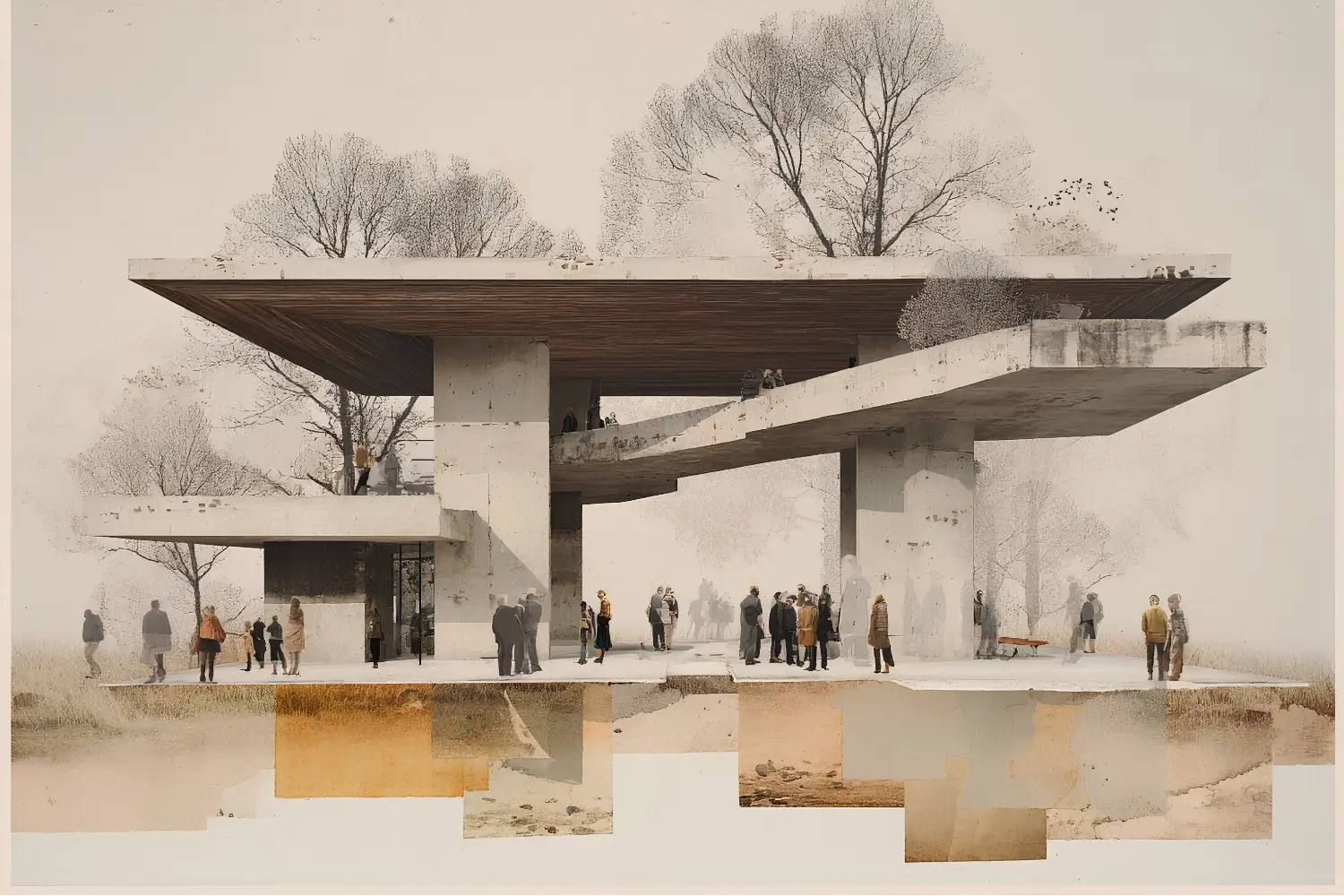
In architecture, collage is a method of representation that builds one image from separate parts: photographs, scanned textures, hand drawings, painted areas, and fragments of other images. Unlike a render that aims for a single believable view, a collage keeps its seams visible, which leaves room for interpretation and keeps the conversation on ideas rather than finishes.
The technique grew out of early twentieth-century art. Pablo Picasso and Georges Braque are credited with turning cutting and pasting into a named art form around 1912, during the phase of Cubism when they began gluing newspaper and patterned paper onto canvas. Architects adopted the approach across the decades that followed, and you can trace its longer history as a medium well beyond the studio. Le Corbusier used collage to test spatial arrangements, and by the 1960s and 70s architects such as Mies van der Rohe were producing spare collages that paired photographic fragments with pen and ink line drawing.
📌 Did You Know?
Collage as a paper technique predates the Cubists by roughly a thousand years. Japanese calligraphers were gluing layered, decorated paper onto surfaces for their poems as early as the 10th century, long before the method became a fine-art form in Europe.
7 Collage Techniques for Architectural Representation
No single collage technique fits every project. Some suit a fast concept sketch, others a finished competition panel. Here are seven approaches worth knowing, from the most basic collage techniques to layered digital work.
1. Texture and Material Collage
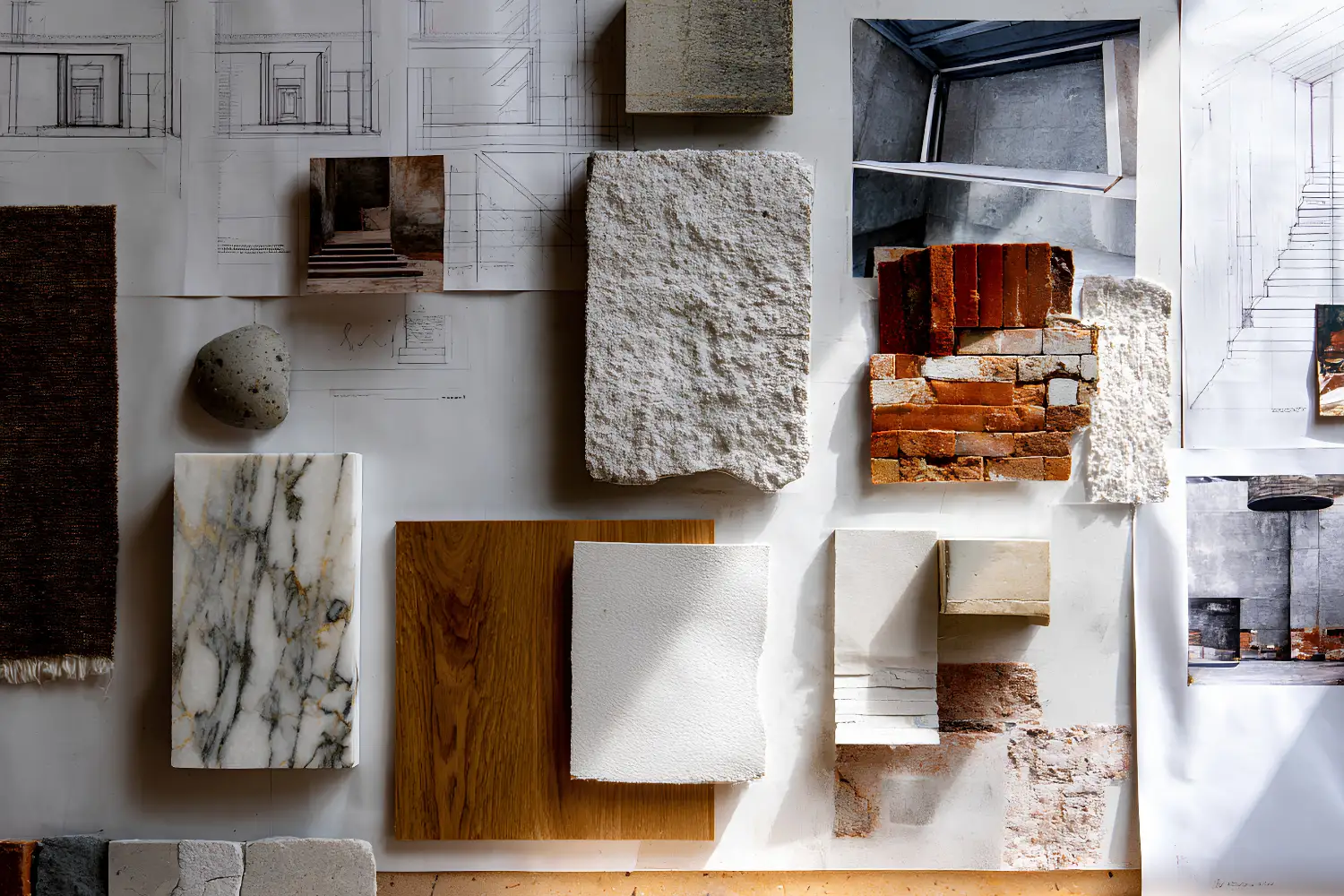
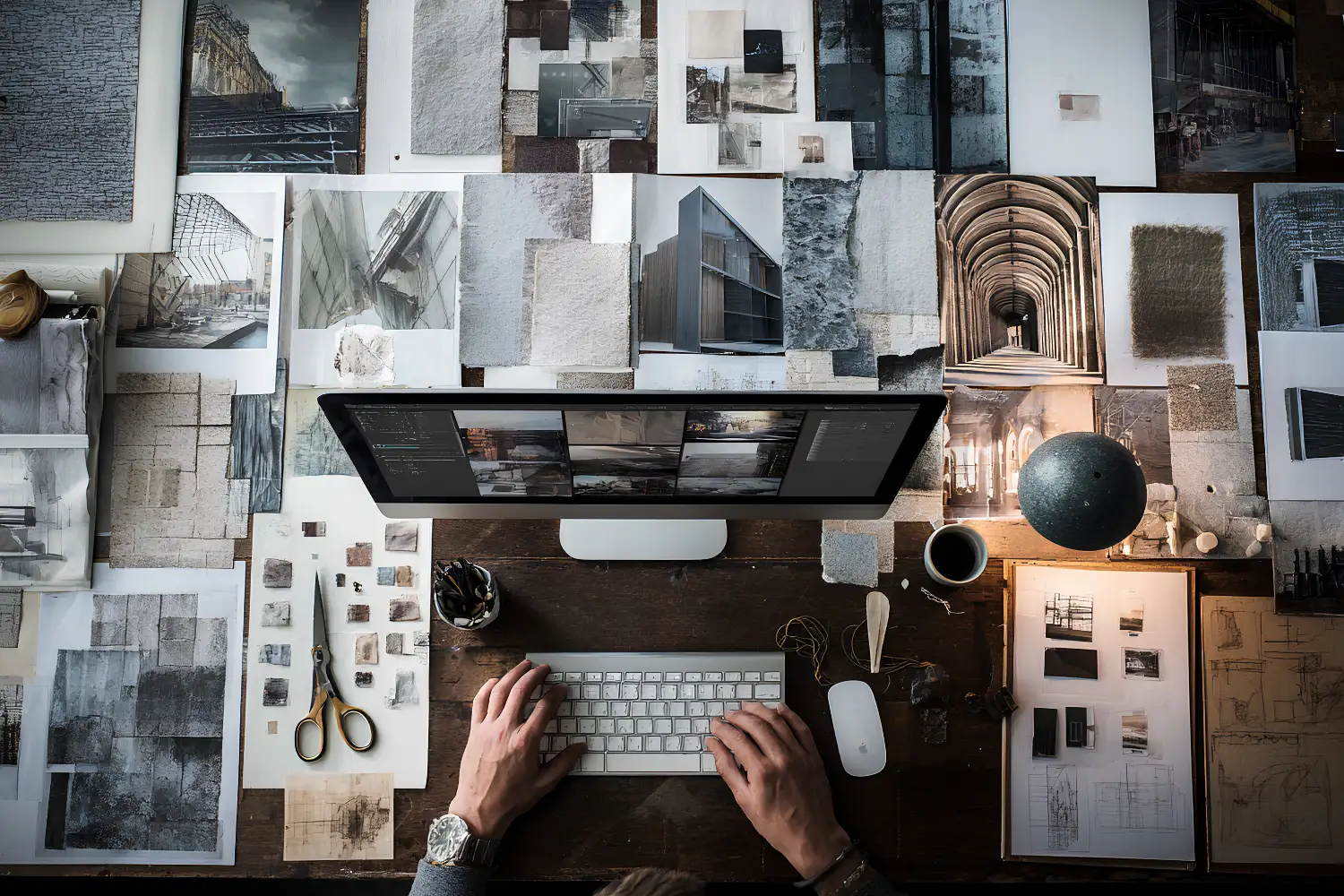
This technique applies real surface samples, concrete, timber grain, brick, or fabric, directly onto a drawing or model photograph. It answers a material question fast: how would this wall read in stone instead of render? Pulling swatches from royalty-free libraries or your own photographs keeps the process quick and sidesteps copyright problems.
2. Entourage and Figure Collage
Entourage means the people, trees, cars, and sky that give a scene scale and life. Cutting these from photographs and dropping them into a flat elevation or section is one of the oldest collage making techniques in the studio. Photographic figures set against a line drawing instantly signal how a space might be used. For sourcing clean cut-outs, the same care that goes into architectural photography pays off here.
3. Mixed-Media Hand and Photo Collage
Combining hand drawing with photographic fragments produces images that feel personal and exploratory. A charcoal or ink base carries the design logic, while collaged photos add material and context. This pairs naturally with early concept sketches, and if your linework needs strengthening first, these sketching and drawing techniques are a useful starting point.
4. Digital Collage in Photoshop
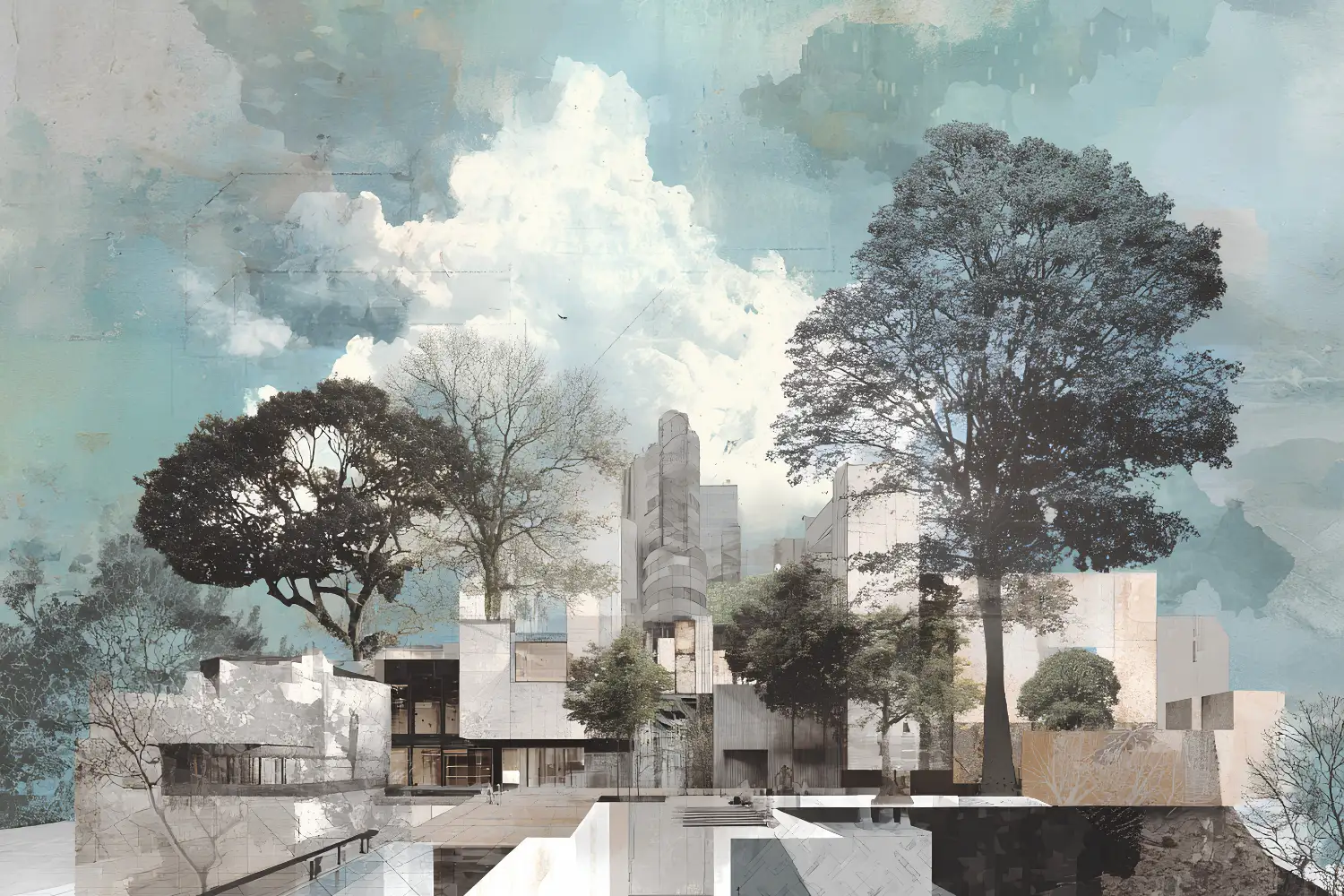
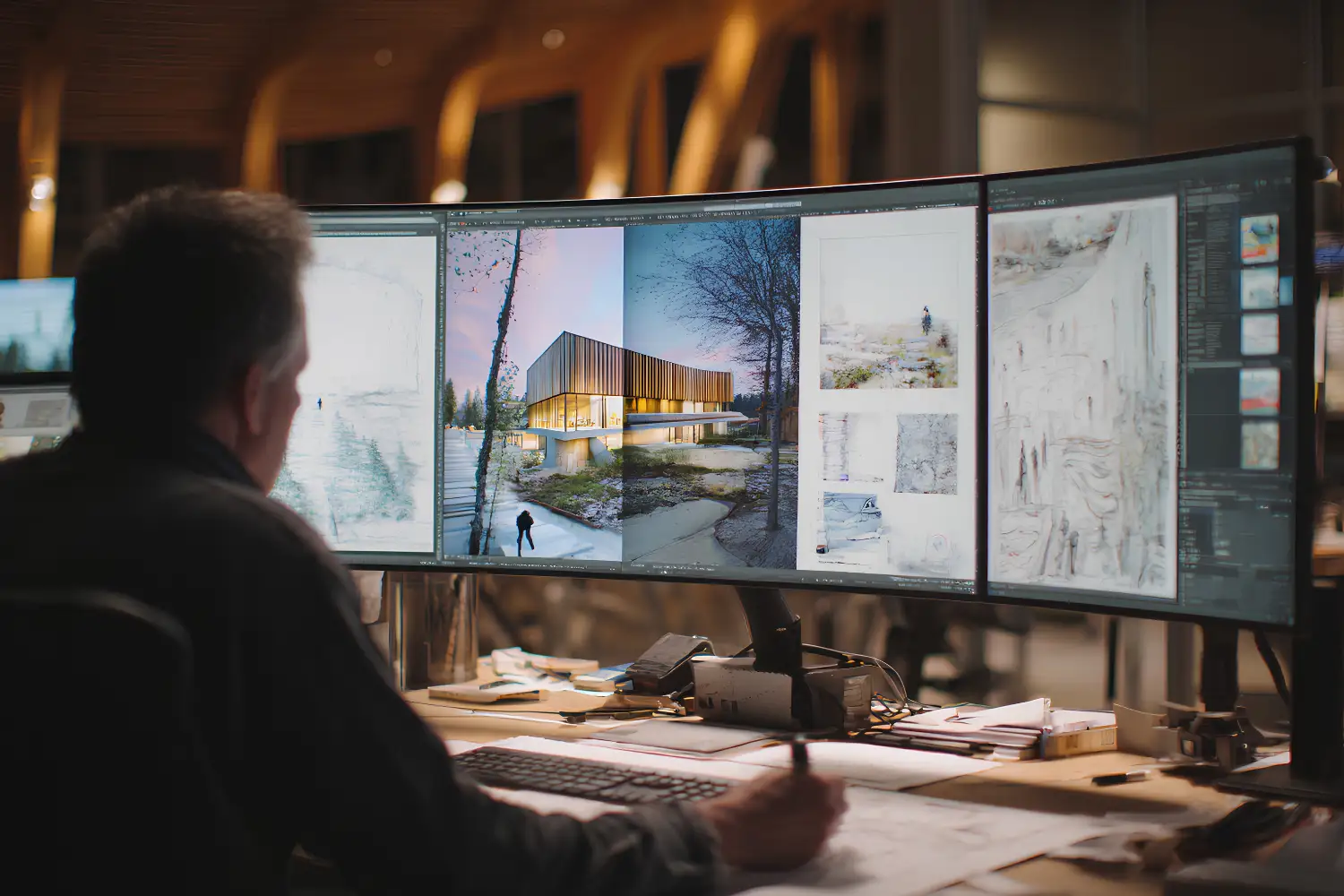
Most digital collage today happens in Adobe Photoshop, where textures, figures, and base renders sit on separate layers you can swap, mask, and recolor in seconds. The output usually keeps flat textures with no realistic shadows or reflections, which is what gives a digital collage its distinct, unfinished look. Portugal’s FALA Atelier has built a recognizable studio identity on exactly this approach.
💡 Pro Tip
Keep every element on its own layer and name them as you go. When a tutor or client asks to see the brick wall in timber instead, a well-organized Photoshop file lets you swap the texture in under a minute rather than rebuilding the whole image.
5. Atmospheric Mood Collage
Here the goal is feeling, not accuracy. Soft color washes, fog, low light, and loosely placed fragments suggest how a space should feel before its geometry is fixed. Architects who want to avoid the false certainty of a hyperrealistic render often reach for this technique, which the architecture press has covered as a deliberate visual stance. For built examples, see ArchDaily’s roundup of offices that build atmosphere through collage.
6. Photomontage
Photomontage composites several photographs into one image, sometimes blended to look continuous, sometimes left openly stitched. It works well for showing a proposal in its real site context, dropping a massing model into a photograph of the actual street. The technique sits close to photography, so a clean source image matters as much as the cutting.
7. Narrative Concept Collage
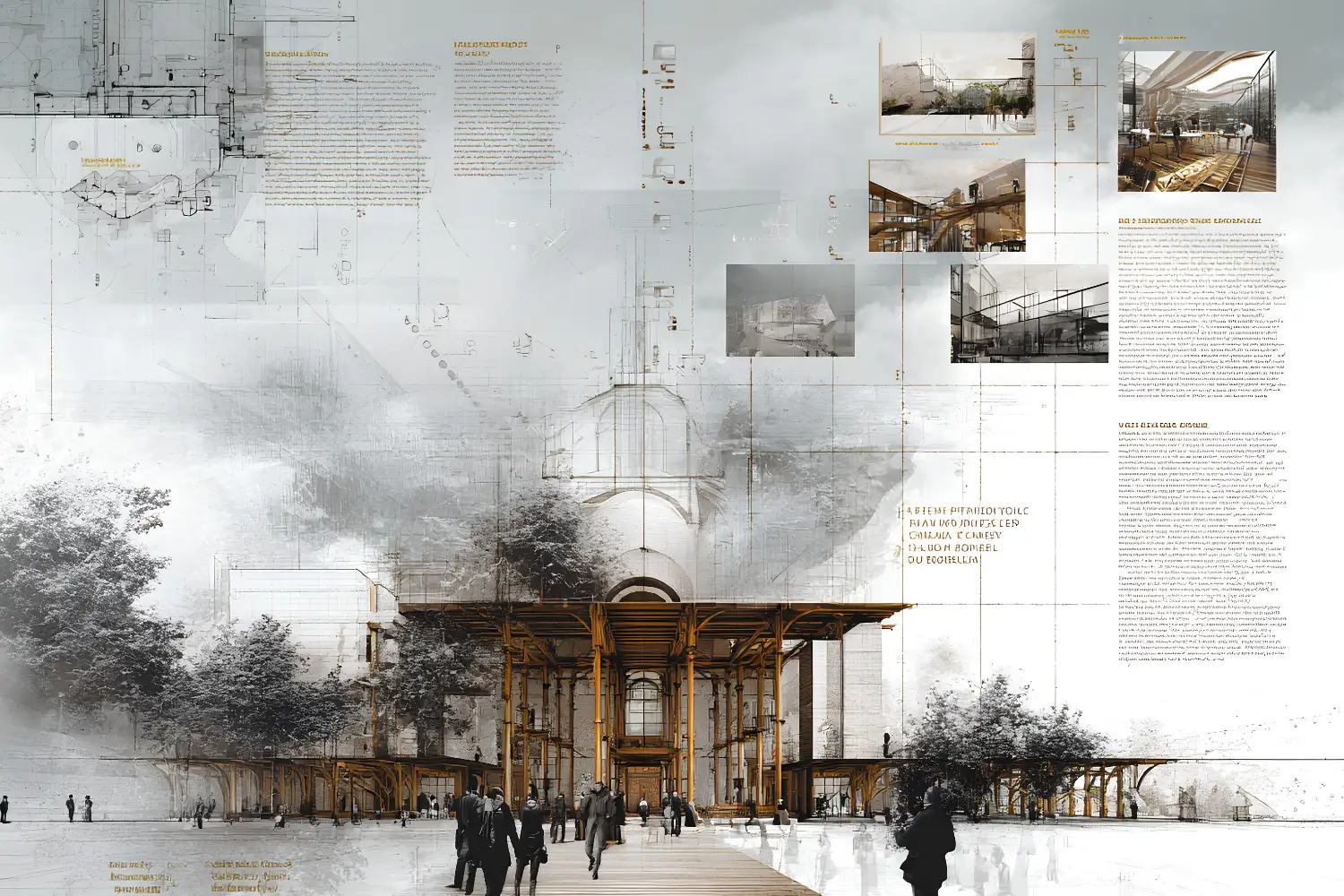
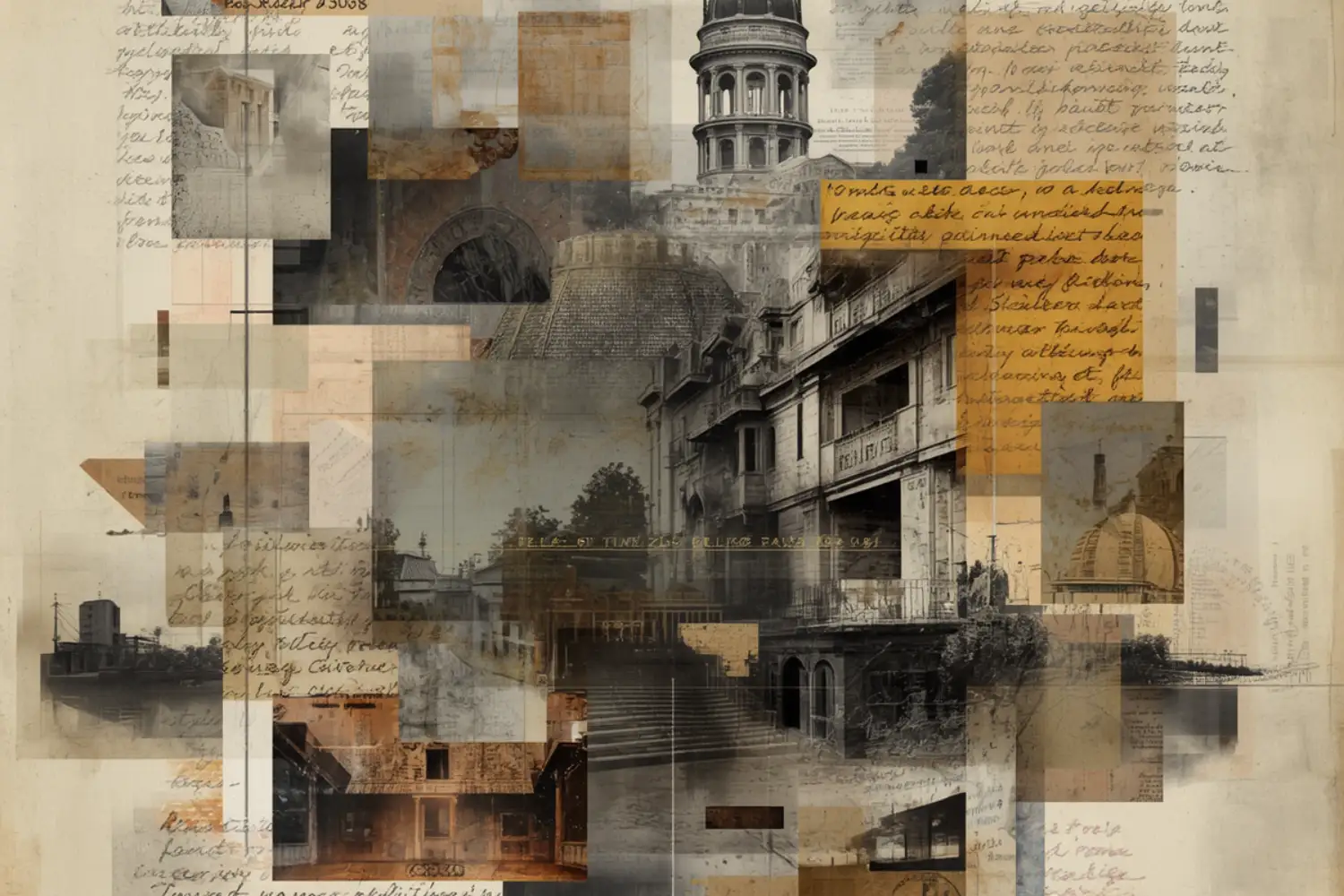
A narrative collage uses imagery to tell the story behind a scheme rather than to depict it literally. References, quotations, and symbolic fragments stand in for the design idea, working much like a diagram. If you think in terms of design logic, it helps to see how this overlaps with other architectural diagrams that communicate intent rather than construction.
Collage Techniques at a Glance
The table below sums up when each technique earns its place:
| Technique | Best For | Typical Medium |
|---|---|---|
| Texture and Material | Testing material options | Analog or digital |
| Entourage and Figure | Adding scale and human life | Photo cut-outs |
| Mixed-Media | Personal, exploratory concepts | Hand drawing plus photos |
| Digital Collage | Fast, editable iterations | Photoshop layers |
| Atmospheric Mood | Conveying feeling early | Color, light, soft fragments |
| Photomontage | Showing a proposal in context | Composited photographs |
| Narrative Concept | Telling the design story | Symbolic imagery, references |
Analog or Digital? Choosing Your Approach
Analog and digital collage are not rivals, and many architects move freely between them. Cut-paper collage is fast, tactile, and free of any learning curve, which makes it ideal for the first hour of an idea. Digital collage trades some of that immediacy for control, letting you duplicate, recolor, and undo without limit. A recent conversation in the architecture press traced this return to collage in a digital era, with several studios explaining why the looser image still serves them better than a render in early design.
📐 Technical Note
For collages headed to print, build your file at 300 DPI at final size and save cut-out elements as PNGs to preserve transparent edges. On-screen presentations can run at 150 DPI, but starting high and scaling down is safer than the reverse.
Whichever route you take, the trap is the same. Because digital tools make polish so easy, it is tempting to keep refining until the collage looks like a render, at which point it loses the very openness that made it useful in the first place.
A simple rule keeps you honest: collage to think, render to confirm. Early on, while you are still deciding what the building wants to be, the speed and ambiguity of collage are assets. Closer to a final presentation, a render or a hybrid image can answer the precise questions a client brings to the table.
⚠️ Common Mistake to Avoid
Over-rendering a collage. Adding realistic shadows, reflections, and depth-of-field defeats the purpose, because the loose, flat quality is exactly what invites discussion and signals that the design is still open. If you want photorealism, build a render instead and let the collage stay loose.
Where to Go From Here
Collage rewards practice more than raw talent. The architects whose collages look effortless have simply made hundreds of them, building an instinct for which fragment belongs where. A strong collage also reads well in a portfolio, where it shows range alongside technical drawings, so it is worth treating as a deliberate skill rather than a happy accident. For more on balancing image types, see what belongs in a strong architecture student portfolio.
Your Next Step: Take one drawing you already have, a section or an elevation, and rebuild it as a collage in under thirty minutes. Add a photographic sky, two or three figures, and one real texture, then stop before it starts looking like a render. The time limit is the point.










Leave a comment