


Cardiff start-up Reclinker has raised £10 million in an oversubscribed Series A round to take its low-carbon cement process from industrial trials to commercial production. The company recovers the cement paste in demolition waste and turns it back into clinker, the active ingredient of cement, inside the electric arc furnaces that steelmakers use to recycle scrap.
Clean Growth Fund and AP Ventures led the round together, joined by the Development Bank of Wales joining existing backers Zero Carbon Capital, Kibo Invest and Cambridge Enterprise. The money will support production at Cardiff towards 120,000 tonnes a year and help Reclinker repeat the model at electric arc furnace sites in Europe and the United States. The company says it has already made its first commercial sales.
How Reclinker turns old concrete into clinker
The process grew out of research at the University of Cambridge, published in Nature. In conventional production, limestone and clay are burned in a fossil-fuelled kiln to make clinker; about 53 percent of those emissions come from the chemical breakdown of limestone and a further 35 percent from the fuel. Reclinker skips both. Recovered cement paste goes into the arc furnace as steel is recycled, and the slag that forms is a cementitious material that can be blended into new cement. No kiln, no quarried limestone and no fossil heat are needed.
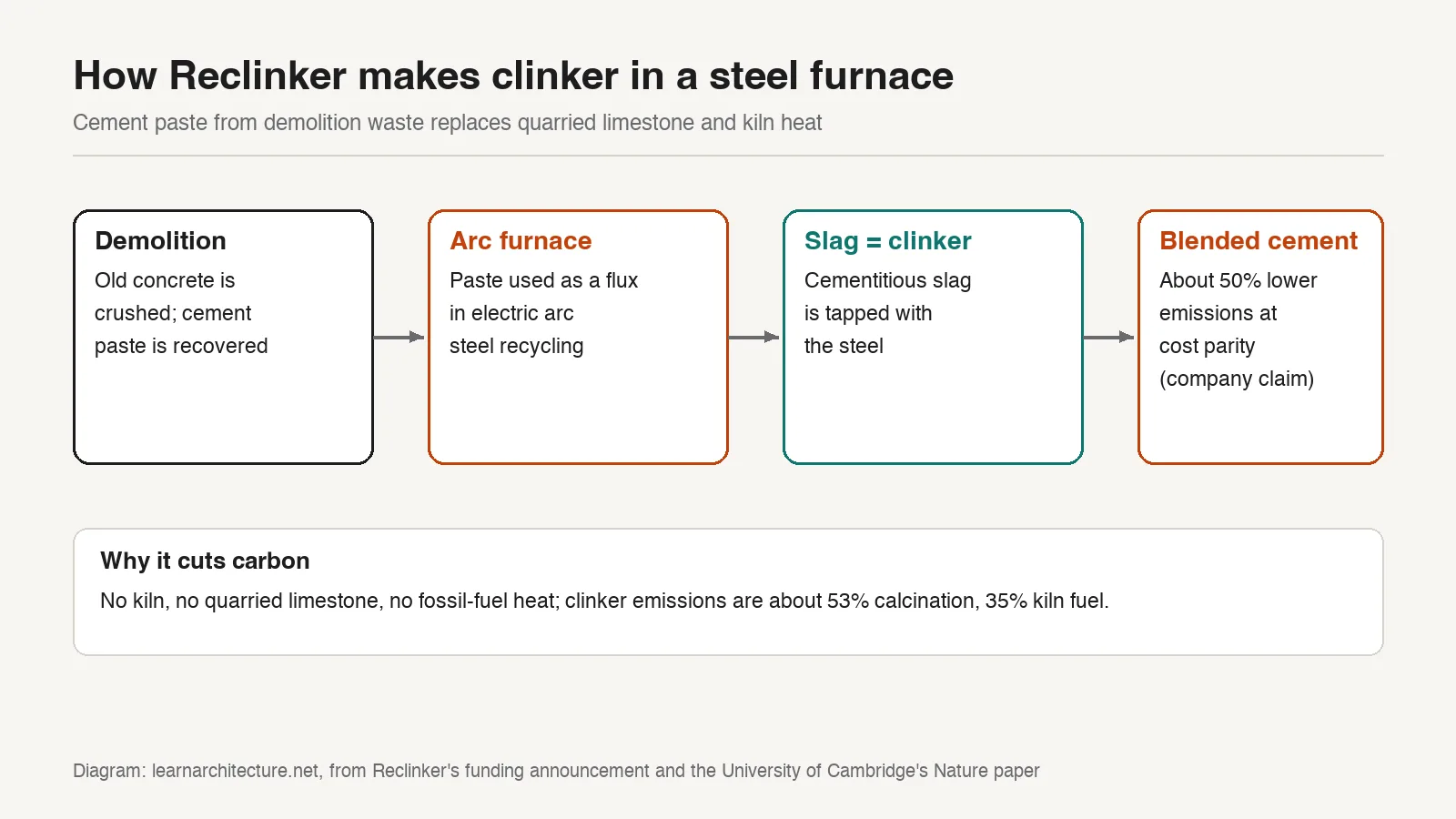
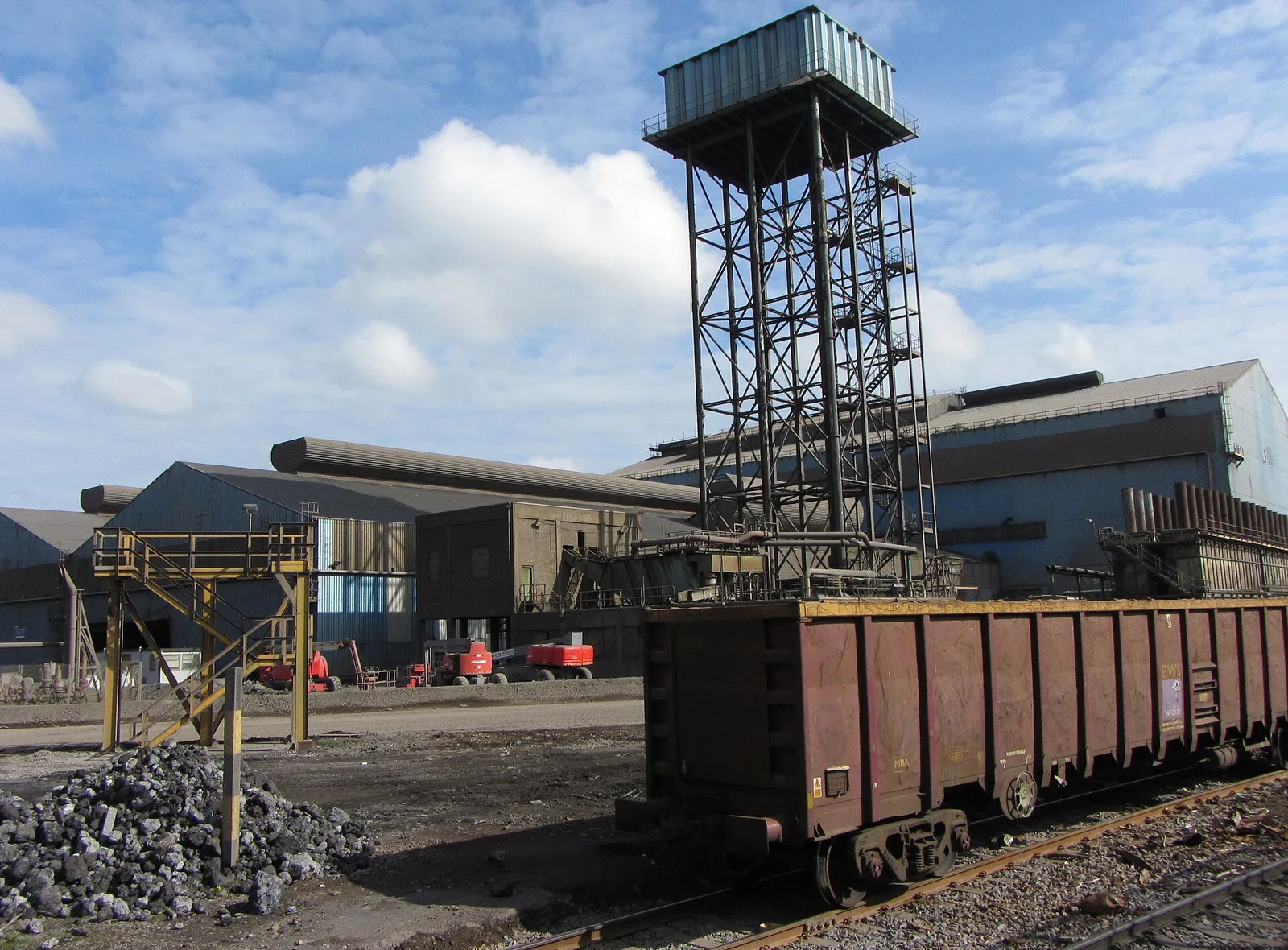
Several industrial-scale trials have been run at 7 Steel UK’s site in Cardiff. Reclinker says blended cements using its slag should cut emissions by about half straight away at the same cost as conventional cement, with deeper cuts as production grows. These are company figures; independent life-cycle data for the commercial product have not yet been published. Demand has been tested through Innovate UK’s Advance Market Commitment, a scheme in which buyers signal they will purchase low-carbon materials.
Steel and cement sharing one furnace
Cement accounts for roughly 7 percent of global CO₂ emissions, which makes it one of the hardest materials for the building industry to decarbonise. Investors in the round point to the appeal of using equipment that already exists. Stephen Price of Clean Growth Fund called the process “a compelling example of how industrial symbiosis can unlock meaningful emissions reductions by leveraging existing infrastructure.”

For architects and specifiers, the approach would draw on a waste stream that every demolition project already produces. Whether the slag-based cements can match the performance and supply reliability of established products at the scale of a national construction market is the next test.










Leave a comment