


Table of Contents Show
Architectural design classes in Europe set the global standard for architectural training, with The Bartlett at UCL, TU Delft, and ETH Zurich consistently leading the QS World University Rankings. These programs combine rigorous studio teaching, advanced research, and access to some of the world’s most influential architectural cultures.
Choosing where to study shapes how you draw, think, and build for the next four decades. The five schools below each have a distinct teaching philosophy, accreditation path, and cost profile. This guide covers the best architectural design classes in Europe with current admission requirements, tuition figures, and what makes each school worth applying to.

How to Choose the Right Architectural Design Class in Europe
Three factors carry most of the weight: accreditation, studio culture, and faculty access. Accreditation determines whether your degree leads to a license. In the UK that means ARB and RIBA recognition, and in the EU it means alignment with the Professional Qualifications Directive.
Studio culture is harder to measure but more important than rankings. The best programs operate as small design units, typically 12 to 14 students with one or two tutors who are practicing architects. The AA School in London uses this model, as does The Bartlett. Faculty access is the third factor: at top European schools, you may be taught by partners from Foster + Partners or Zaha Hadid Architects.

1. The Bartlett School of Architecture (UCL), London, UK
The Bartlett School of Architecture at University College London has been ranked first in the world for Architecture and the Built Environment for multiple consecutive years in the QS World University Rankings, with the 2026 edition keeping it at the top.
The flagship architectural design class is the Architecture MArch (Part 2), a two-year professionally accredited program leading toward registration with the Architects Registration Board. More than half of the course is delivered through Design Units, vertically structured studios that mix fourth and fifth year students under tutors who are practicing architects.
Admission requires a minimum upper second-class undergraduate degree in architecture, plus at least one year of professional work experience. Bartlett graduates achieved a 93.9% employment or further study rate within 15 months of graduation between 2017 and 2022, with top employers including Foster + Partners, Zaha Hadid Architects, and Heatherwick Studio.
2. ETH Zurich, Switzerland
ETH Zurich, the Swiss Federal Institute of Technology, runs one of the most rigorous architectural design classes in Europe. It sits in fourth place in the 2026 QS Architecture rankings and is widely considered the most technically demanding program on the continent. About 1,060 students enroll in architecture programs at ETH each year.
The Master of Architecture (MSc ETH Arch) is a two-year program with 120 ECTS credits. Entry is only possible in the autumn semester. The official language is German, but classes and examinations are offered in both German and English.
From the autumn semester 2025, ETH Zurich introduced a two-tier tuition system. Students with Swiss or Liechtenstein residence at the time of their university entrance qualification, plus certain EU/EFTA students with eligible Swiss permits, pay the simple rate. Other foreign students pay a threefold rate.
🎓 Expert Insight
“Architecture should speak of its time and place, but yearn for timelessness.” (Frank Gehry)
This idea sits close to how ETH structures its master program. The school engages with the technical realities of a specific moment (digital fabrication, structural innovation, sustainability standards) while training students to design buildings that hold up beyond fashion cycles.

3. TU Delft, Netherlands
Delft University of Technology hosts the largest faculty of architecture in the Netherlands and one of the largest in Europe, with over 3,300 students. TU Delft holds third place in the 2026 QS rankings.
The architectural design classes at TU Delft are organized within the MSc Architecture, Urbanism and Building Sciences, a two-year, 120 ECTS program with five tracks: Architecture, Urbanism, Building Technology, Management in the Built Environment, and Landscape Architecture. The Architecture, Landscape Architecture, and Urbanism tracks lead to registration as a professional in the Netherlands after a required period of post-graduation work experience.
The standard application deadline for the September 2026 intake was 15 January 2026 for non-Dutch BSc applicants. Tuition for non-EU/EEA students is approximately €22,290 per year, and the full master program is taught in English.
4. Politecnico di Milano, Italy
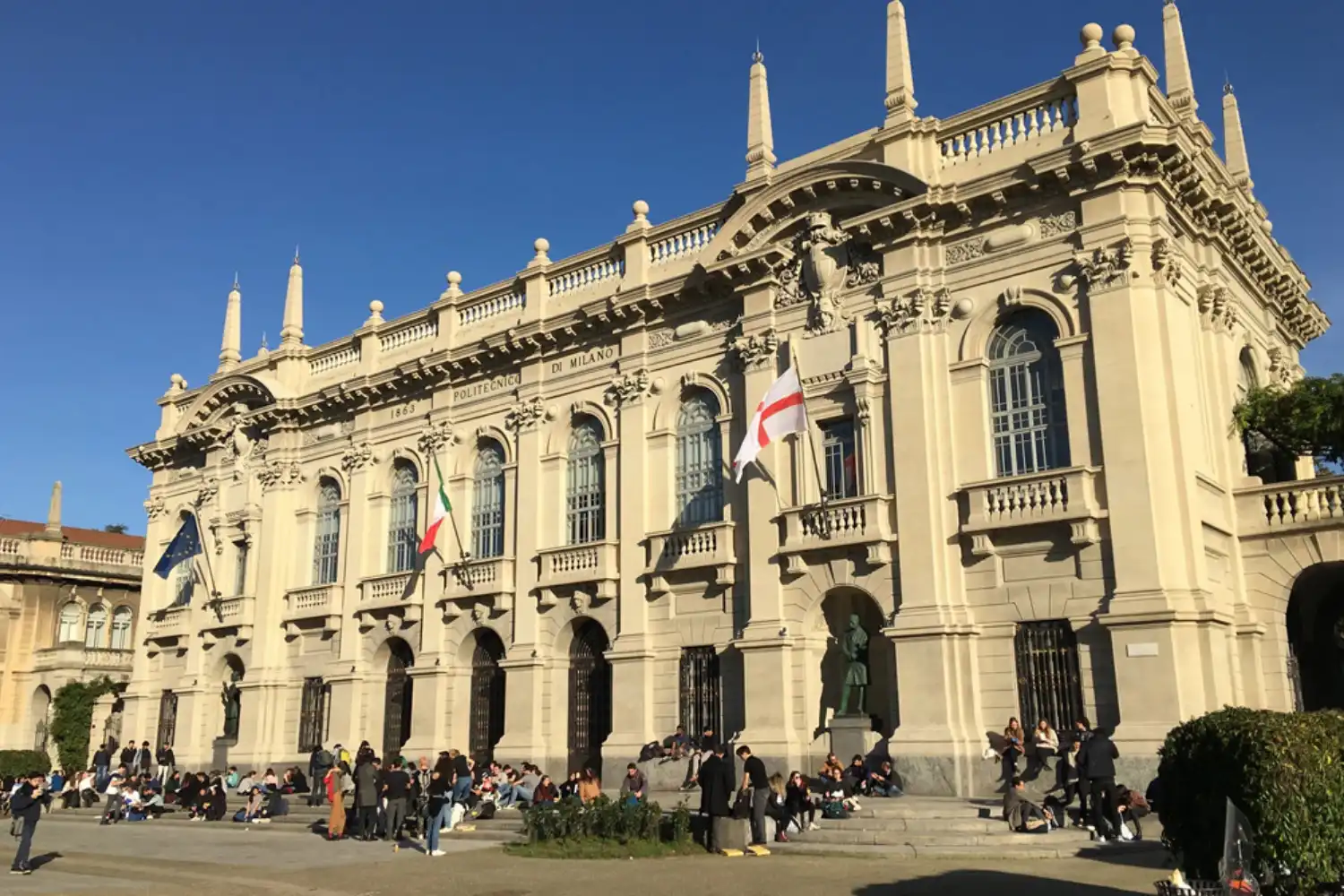
Politecnico di Milano sits at sixth place in the 2026 QS rankings for Architecture and Built Environment, having moved up from a tied seventh in 2025. Founded in 1863, it is the largest technical university in Italy with around 48,300 students.
The Master of Science in Architecture is a two-year Laurea Magistrale program offered in both Italian and English, with the Architecture and Urban Design track being a strong entry point for international students. Annual tuition ranges from €900 to about €3,900 depending on family income (ISEE), for both EU and non-EU students. Alumni include Pritzker laureates Renzo Piano and Aldo Rossi.
💡 Pro Tip
Before applying, ask each admissions office for the current list of design unit tutors and look up their practices. A school’s reputation is built year by year on tutor quality. A famous school with a weak tutor cohort in your year can be a worse experience than a less prestigious school with strong unit leaders.
5. Architectural Association School (AA), London, UK
The Architectural Association School of Architecture, almost universally referred to as the AA, is the oldest independent school of architecture in the United Kingdom. Founded in 1847 and based at 36 Bedford Square in central London, it is an independent Higher Education Institution, ARB and RIBA accredited.
About 65% of students in 2024-25 were international, with 79 nationalities represented across 877 students total. The acceptance rate is approximately 10%. The flagship architectural design class is the Diploma Programme (MArch), a two-year full-time program leading to the AA Final Examination, recognized as RIBA Part 2. The school runs a unit system where students work in design studios of about 12 students with one to three unit tutors, each setting their own brief and theoretical orientation each year.
🏗️ Real-World Example
The AA Diploma Unit Tradition (London, 1847-present): Many of the most influential architects of the late 20th and early 21st centuries passed through AA design units, including Zaha Hadid, Rem Koolhaas, and Richard Rogers. The school’s approach of letting tutors define their own design agendas has produced architects who lead internationally recognized firms.
How Do These European Architectural Design Classes Compare?
The five schools differ on cost, language, and pedagogical model. The table summarizes the key differences.
Comparison of Top 5 European Architectural Design Programs
| School | Country | 2026 QS Rank | Main Master Program | Language | Approx. Annual Tuition |
|---|---|---|---|---|---|
| The Bartlett (UCL) | United Kingdom | 1 | Architecture MArch (Part 2) | English | £35,000+ (international) |
| TU Delft | Netherlands | 3 | MSc Architecture, Urbanism, Building Sciences | English | €22,290 (non-EU/EEA) |
| ETH Zurich | Switzerland | 4 | MSc ETH in Architecture | German / English | CHF 1,460 to threefold rate |
| Politecnico di Milano | Italy | 6 | Master of Science in Architecture | Italian / English | €900 to €3,900 (income-based) |
| AA School | United Kingdom | N/A (independent) | Diploma Programme (MArch) | English | £30,000+ (full-time) |
Tuition figures are approximate and vary by year, residency status, and program track. Always verify current fees directly with each school before applying.
How to Strengthen Your Application
For all five schools, the portfolio is the central element of any application. Admissions committees look for conceptual depth, original thinking, and a clear design argument across multiple projects.
If you are still developing your application materials, the step-by-step student and graduate portfolio guide covers project selection and presentation for academic admissions. The companion piece on best projects to include in an architecture student portfolio goes deeper on which work types reviewers respond to most. The 2026 architecture scholarships funding guide covers regional opportunities including DAAD, Campus France, and RIBA-listed bursaries.
✅ Key Takeaways
- The Bartlett at UCL holds the top spot in the QS 2026 rankings, followed by TU Delft and ETH Zurich.
- Studio culture and unit system structure matter more than overall school reputation.
- Tuition varies dramatically, from €900 minimum at Politecnico di Milano to over £35,000 at top UK programs.
- Portfolio quality outweighs GPA at this level, so a coherent body of design work pays off more than incremental academic improvements.
- Confirm whether a program leads to registration with ARB, RIBA, or an EU-recognized professional title before applying.

Final Thoughts on Architectural Design Classes in Europe
Each of these five schools rewards a different kind of student. Technical applicants thrive at ETH and TU Delft, while conceptual students often do their best work at the AA or The Bartlett. Politecnico sits between with a strong polytechnic foundation and accessible cost. The article on getting success in architectural graduate programs covers practical decisions after admission. Research the current design unit lineup and post-graduation outcomes before applying.
Tuition fees, deadlines, and admission requirements change every academic year. Always verify current details directly with each institution’s admissions office before applying.












Leave a comment