


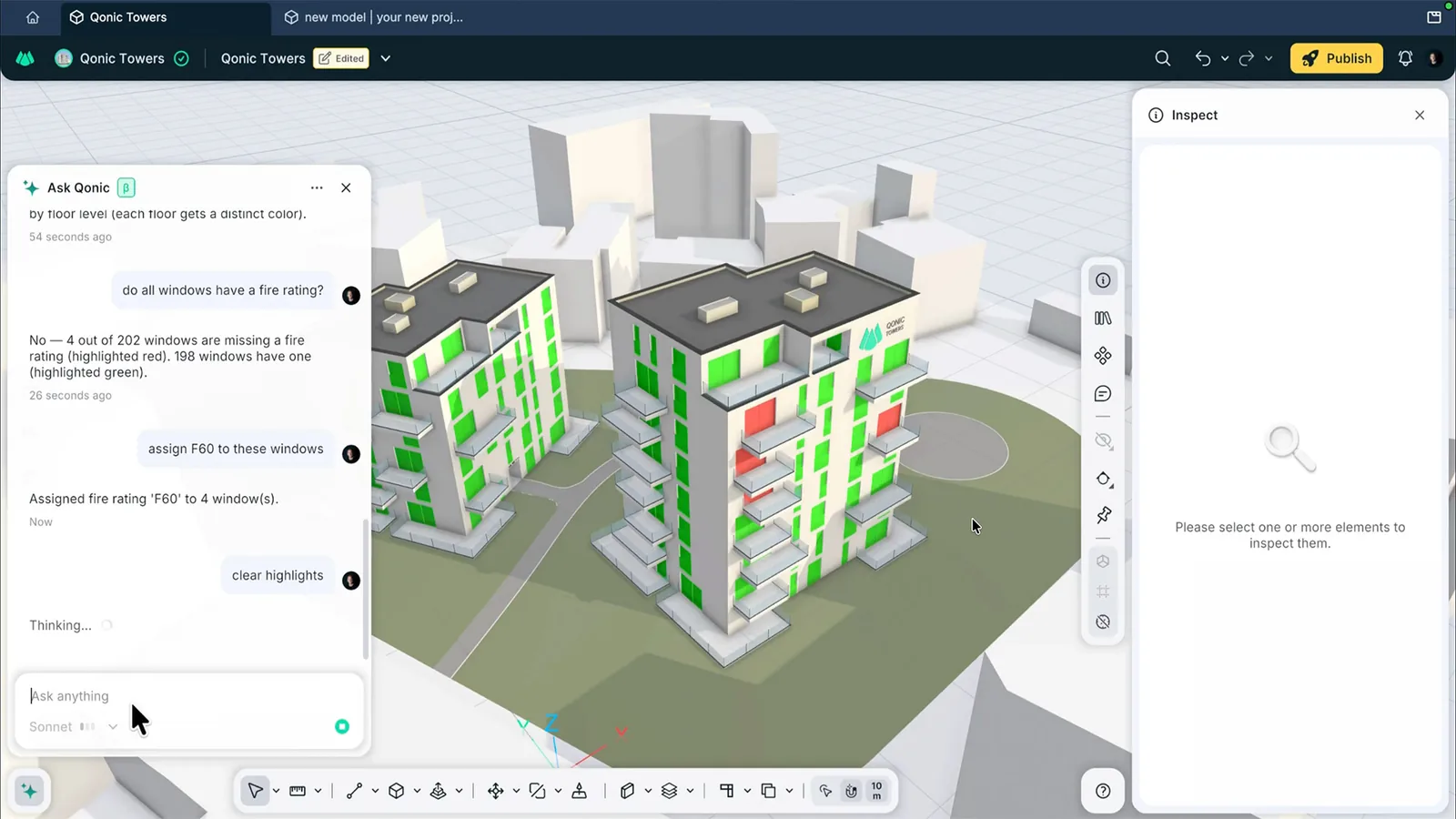
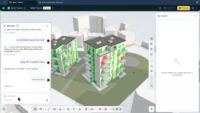
Qonic, the cloud-based BIM modelling and coordination platform that runs in a web browser, has launched Qonic AI, a group of AI agents that operate inside the model rather than in a separate window. Users type requests in plain language into a chat panel called Ask Qonic, and the agents use the platform’s own tools to find, check and change elements. Qonic has also released an MCP server so that outside AI assistants can work with its models, AEC Magazine reports.
 V-Ray 7 Update 5 Adds an AI Assistant, MCP Servers and Image-to-3D Assets
 Birmingham City University’s Head of Architecture Leaves After 15 Months Amid Cuts
 Hawkins\Brown Fails to Stop £7.35m Defects Claim Over Islington’s Wenlock Building
 Urban Splash Ordered to Pay £46.5m Towards Fire Safety Repairs at Seven Manchester Blocks
What Qonic AI can do in a model
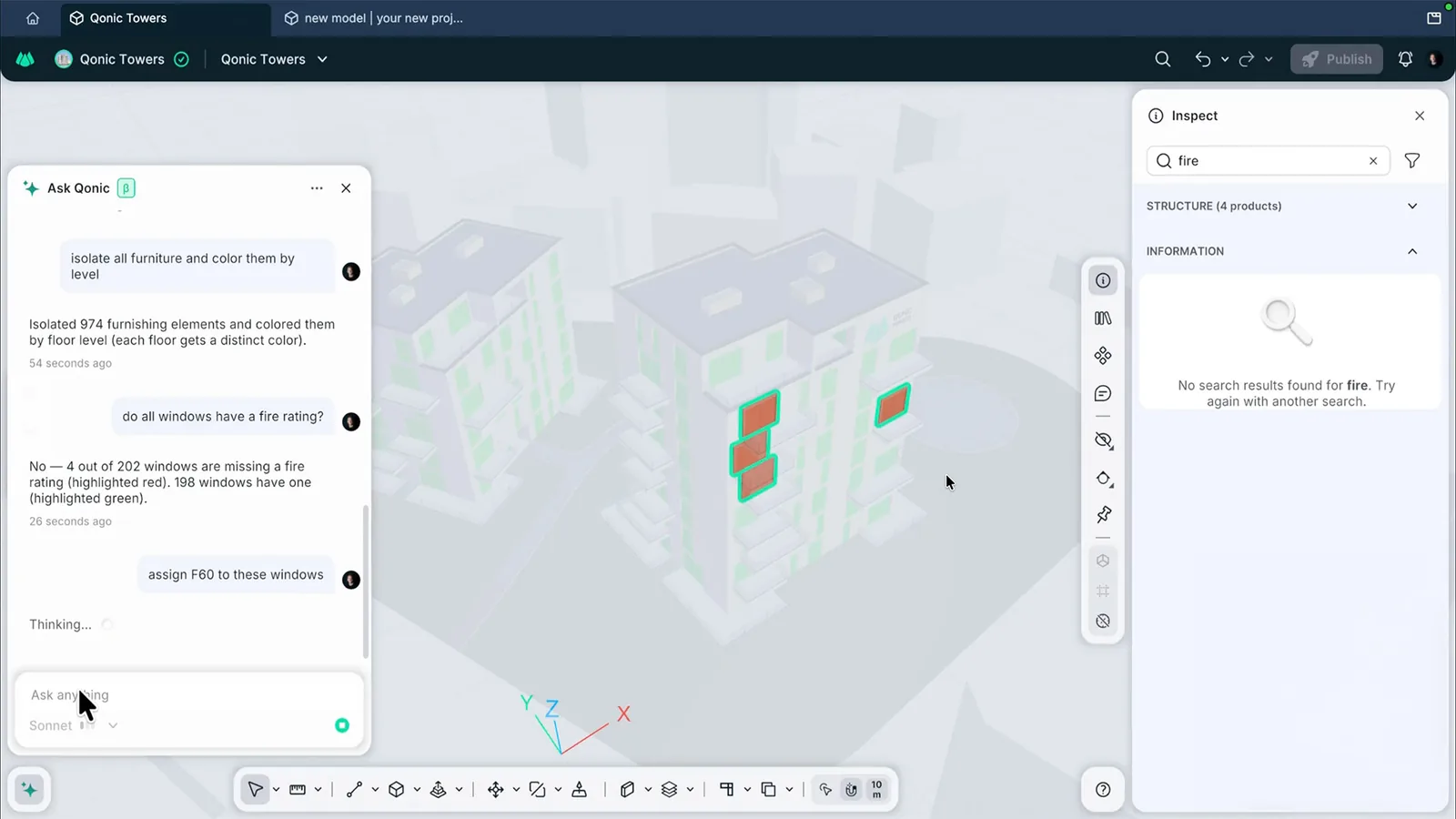
The examples Qonic has shown are everyday BIM chores. A user can ask the agents to isolate all furniture and colour it by level in one step. Asked whether every window has a fire rating, Qonic AI reports the ones missing a value and selects them; a follow-up request to give those windows an F60 rating finds the right property and fills it in. It can also set up reports, such as a concrete quality schedule grouped by building and concrete type, which users can then refine by hand or with another prompt.
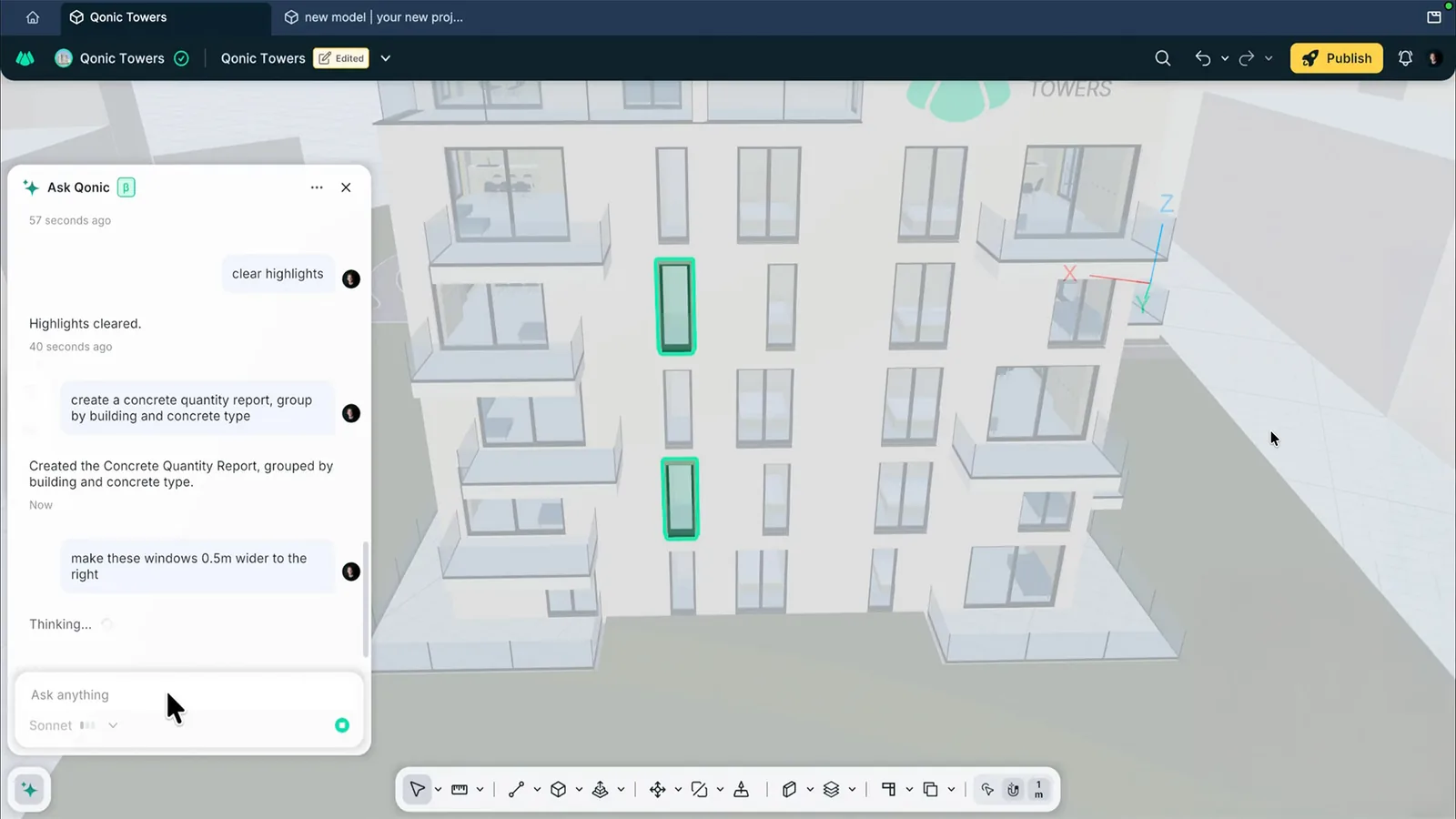
Geometry is in scope too. Selected windows can be widened by a stated amount, with the agent reading the user’s viewpoint and selection before applying the stretch tool, and a building or facade can be modelled from prompts and reference images. “Anything you can do in Qonic in terms of geometry and data creation, editing, and manipulation can be done through prompting,” said Qonic’s Jacob De Sutter.
Control, models and cost
Qonic stresses that people stay in charge. The agents can only edit models the user already has permission to change, and their edits can be undone like any manual step. Users also decide which language model handles a request, with Sonnet, Opus and Astra on offer for tasks that need lighter or heavier reasoning. Qonic describes its platform as fully IFC-native, able to open and combine Revit, Rhino and IFC models.
Usage is charged in tokens. Paid plans include a monthly allowance, while free plan users can buy a one-off pack starting at 50 euros; purchased tokens do not expire.
An MCP server for outside assistants
The new MCP server lets assistants such as Claude, Codex or Mistral Le Chat connect to Qonic. Through it they can look up projects and models, query elements, calculate quantities, export IFC files, change elements and manage library items. For architects and BIM coordinators, the practical test will be whether such agents can be trusted with the repetitive data checks that slow down model handover, and how clearly each automated edit can be reviewed before it is published to the team.

















Leave a comment