


Table of Contents Show
Brutalist architecture is a style rooted in post-war Europe, defined by raw concrete surfaces, angular geometric massing, and an honest expression of structure and materials. Emerging in the 1950s from the work of Le Corbusier and British architects Alison and Peter Smithson, the movement shaped public buildings, housing estates, and civic institutions across the world before falling from favor in the 1980s, only to gain renewed appreciation in the 21st century.
What Is Brutalist Architecture?

The term “brutalism” comes from the French phrase béton brut, meaning raw concrete. British architectural critic Reyner Banham popularized the term in his 1966 book The New Brutalism: Ethic or Aesthetic?, framing the movement not just as a visual style but as an ethical stance toward materials and construction. Brutalist buildings do not hide their structure behind decorative finishes. Instead, they put concrete, steel, and glass on full display, treating the building itself as both structure and ornament.
The roots of the brutalist architecture style sit firmly in modernism. Le Corbusier’s Unité d’Habitation in Marseille (1952) is often cited as the building that launched the movement. Its massive concrete frame, internal “streets,” and sculptural rooftop playground showed that reinforced concrete could produce spaces that were both functional and visually powerful. The Smithsons’ Hunstanton School in Norfolk (1954) brought a similar honesty to British soil, exposing every pipe, beam, and brick rather than concealing them behind plaster.
🎓 Expert Insight
“Brutalism tries to face up to a mass-production society, and drag a rough poetry out of the confused and powerful forces which are at work.”
Alison and Peter Smithson, Architectural Design, 1957
The Smithsons saw brutalism as an ethical commitment rather than a decorative choice. Their language captures the movement’s central tension: making beauty from industrial materials and processes without pretending they are something they are not.
Defining Characteristics of the Brutalist Style

Brutalist style architecture is recognizable at a glance, but its visual identity comes from a set of deliberate design decisions rather than accident. Several features appear across brutalist buildings regardless of geography or program.
Exposed Concrete (Béton Brut)
The signature material of brutalism is reinforced concrete left unfinished after the formwork is removed. Board-marked textures from the wooden molds become part of the final surface. Unlike polished or painted concrete, béton brut shows every pour line, aggregate pattern, and imperfection. This was intentional: the process of making the building remains visible in the finished product.
Monumental Scale and Geometric Massing
Brutalist buildings tend to be large. Heavy cantilevers, stacked volumes, and deep overhangs create dramatic shadows that change throughout the day. Architects like Ernő Goldfinger and Paul Rudolph used projecting floor slabs and recessed windows to give their facades a sculptural depth that flat-skinned modernist buildings lacked.
Repetition and Modularity
Many brutalist structures, especially housing blocks, rely on repeated modular units. Habitat 67 in Montreal stacks 354 prefabricated concrete boxes into a hillside of interlocking apartments. The Barbican Estate in London repeats a vocabulary of towers, terraces, and podium blocks across an entire neighborhood. This modular logic kept construction costs lower while producing complex spatial configurations.
Truth to Materials
Beyond concrete, brutalist architects often left brick, steel, glass, and timber exposed and untreated. Electrical conduits ran along ceilings rather than inside walls. Water pipes stayed visible. The idea was that concealing structure and services was a form of dishonesty, and that buildings should express how they were made.
💡 Pro Tip
If you are studying brutalist buildings in person, pay attention to the formwork patterns pressed into the concrete. Vertical board marks suggest traditional timber shuttering, while smoother panels indicate steel or plywood forms. These textures were often a conscious design choice, not a construction shortcut.
Soviet and Russian Brutalist Architecture
The Soviet Union adopted brutalism on an enormous scale during the 1960s and 1970s. Soviet brutalist architecture served the state’s need for rapid, affordable construction across a vast territory, and its monumental character aligned with official ideas about collective power and socialist progress.
Moscow’s Russian State Library annex, the Druzhba Sanatorium in Yalta (1984), and the Ministry of Highway Construction in Tbilisi (1975) are among the most photographed examples of Russian brutalist architecture. Georgian architect George Chakhava designed the Tbilisi ministry as a series of interlocking horizontal blocks cantilevered over a highway, creating a building that appears to defy gravity. In the Baltic states, architects produced civic halls, bus stations, and memorial complexes in poured concrete that combined local craft traditions with the Soviet industrial palette.
What sets Soviet examples apart from Western brutalism is scale and repetition. Entire city districts, from Minsk to Almaty, were built using standardized concrete panel systems. The aesthetic was less about individual expression and more about producing a uniform urban environment at speed. Today, many of these buildings face demolition or neglect, though a growing preservation movement, documented by organizations like the Soviet Heritage Foundation, is working to record and protect the most significant structures.
📌 Did You Know?
The Druzhba (Friendship) Sanatorium in Yalta, designed by Igor Vasilevsky in 1984, is shaped like a massive concrete disc supported on legs above a forested hillside. It was built as a vacation retreat for Soviet workers and is still partially operational today.
Notable Brutalist Architecture Examples

Brutalist architecture examples span every continent and building type. Below are some of the movement’s most significant structures, each demonstrating a different approach to the style.
Barbican Centre, London (1982)
Designed by Chamberlin, Powell and Bon, the Barbican is a mixed-use arts and residential complex built on a site bombed during World War II. Its towers, terraces, conservatory, and cultural venues form a self-contained neighborhood above street level, connected by elevated walkways. The concrete surfaces are bush-hammered to a rough texture that catches London’s grey light.
Habitat 67, Montreal (1967)
Moshe Safdie’s graduate thesis turned real building remains one of the most recognizable brutalist projects ever built. The 354 prefabricated concrete modules, stacked and rotated to create 158 apartments, each with its own garden terrace, proved that iconic brutalist buildings could reimagine high-density living without sacrificing privacy or outdoor space.
Boston City Hall (1968)
Kallmann, McKinnell and Knowles designed Boston’s City Hall as an inverted ziggurat, with the mayor’s office and council chamber projecting outward in heavy concrete volumes above a vast public plaza. It is one of the most debated brutalist buildings in the United States, repeatedly threatened with demolition yet now recognized as historically significant.
National Theatre, London (1976)
Denys Lasdun’s National Theatre on the South Bank stacks its three auditoriums within layered concrete terraces that step down toward the Thames. Prince Charles famously compared it to a nuclear power station, but the building has since become one of London’s most loved cultural landmarks.
🏗️ Real-World Example
Geisel Library, San Diego (1970): William Pereira designed the University of California San Diego’s central library as a stack of cantilevered concrete floors supported by a glass-walled base, creating a form that resembles a hovering spacecraft. The building houses over 7 million items and draws architecture visitors from around the world, proving that brutalist design can produce structures that are visually striking and functionally effective decades after completion.
Brutalist Architecture in Westchester, NY
The suburbs of New York are not typically associated with brutalism, but several notable examples of brutalist architecture Westchester NY exist. Government buildings, university structures, and civic facilities from the 1960s and 1970s in the Westchester County area feature exposed aggregate panels, heavy overhangs, and the angular massing characteristic of the movement. Many of these structures now face renovation debates as communities decide whether to preserve or replace their mid-century civic architecture.
Brutalist Architecture Interior Design
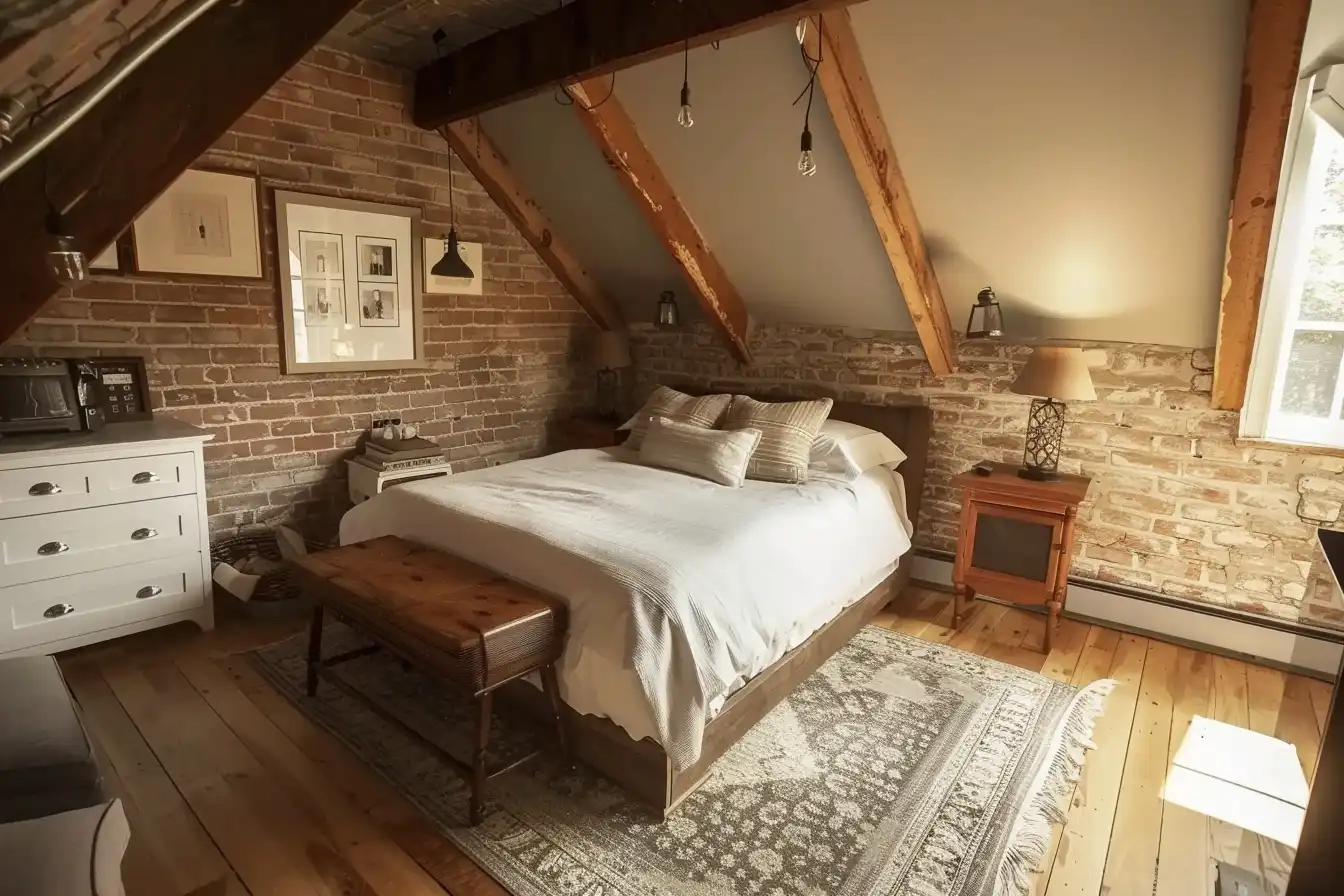
The brutalist approach extends beyond the exterior shell. Brutalist architecture interior spaces share the same commitment to exposed materials and honest construction that defines the outside of these buildings. Concrete ceilings with visible formwork marks, exposed ductwork, raw timber joinery, and industrial steel fixtures are common features.
Interiors in brutalist buildings often rely on spatial drama rather than surface decoration. Double-height living rooms, sunken conversation pits, and split-level floor plans create variety within the concrete framework. Light plays a critical role: deep-set windows cast sharp shadows across textured walls, and skylights introduce overhead illumination that shifts throughout the day. Tadao Ando’s concrete interiors, while technically a later evolution, draw directly on brutalist principles of material honesty and the careful control of natural light.
Contemporary designers working with brutalist interiors often soften the rawness by introducing warm materials like wood, leather, and woven textiles alongside the concrete. Polished concrete floors paired with walnut cabinetry, for example, balance the industrial quality of the space without concealing it. The key principle remains the same: let the structure show.
Why Did Brutalism Fall Out of Favor?

By the late 1970s, brutalism faced intense criticism from both the public and the architecture profession. Concrete surfaces weathered poorly in damp northern climates, developing stains, moss, and rust streaks from exposed reinforcing steel. Housing estates built cheaply in the brutalist style became associated with crime, poverty, and social isolation, even though the architecture itself was rarely the primary cause of these problems.
Postmodern architects like Robert Venturi and Michael Graves rejected brutalism’s seriousness, arguing for buildings that communicated through historical references, color, and ornament. By the 1990s, high-profile demolitions of brutalist buildings, including the Smithsons’ Robin Hood Gardens in London (demolished 2017), seemed to confirm the movement’s cultural irrelevance. A detailed comparison of how Bauhaus and Brutalism differ in philosophy and reception helps clarify why one movement aged more gracefully than the other in public perception.
The Modern Revival of Brutalist Architecture
Despite decades of hostility, brutalist architecture has experienced a significant cultural comeback since roughly 2010. Social media, particularly Instagram, turned photogenic concrete buildings into viral content. Accounts dedicated to brutalist photography now reach millions of followers, and books like Atlas of Brutalist Architecture by Phaidon have sold well globally.
Several factors drive the revival. First, a generation with no memory of 1970s housing failures sees the style fresh, appreciating its sculptural boldness and material honesty. Second, growing concern about demolition waste and embodied carbon has made architects and planners reconsider whether tearing down a concrete building and replacing it with glass and steel actually produces a better outcome. Third, the eco-brutalism movement blends raw concrete forms with green roofs, passive ventilation, and energy-efficient systems, proving that the aesthetic can adapt to contemporary performance standards.
Heritage organizations have responded. The Royal Institute of British Architects (RIBA) and the Docomomo International network now actively campaign for the protection of significant brutalist structures. In 2023, the Barbican Estate received Grade II listed status in the UK, and several Eastern European countries have begun cataloging their Soviet-era concrete heritage. The broader arc of architectural styles in history shows that movements often cycle from rejection to renewed appreciation within a generation or two, and brutalism appears to be following exactly that pattern.
Characteristics of Brutalist and Neo-Brutalist Architecture
The following table summarizes key differences between the original movement and its contemporary reinterpretation:
| Feature | Classic Brutalism (1950s-1970s) | Neo-Brutalism (2010s-Present) |
|---|---|---|
| Primary Material | Poured-in-place reinforced concrete | Concrete mixed with timber, corten steel, recycled aggregates |
| Surface Finish | Board-marked béton brut, often uncoated | Sealed or coated concrete with controlled texture |
| Sustainability | Rarely considered | Green roofs, passive ventilation, low-carbon concrete mixes |
| Scale | Monumental civic and housing projects | Smaller cultural venues, private residences, mixed-use buildings |
| Public Reception | Initially admired, later widely disliked | Niche enthusiasm growing into mainstream appreciation |
The Bigger Picture
Brutalist architecture asks a question that remains relevant: should buildings tell the truth about how they are made, or should they perform a more comfortable fiction? The raw concrete surfaces that provoked anger in the 1980s now read as refreshingly honest in a built environment dominated by glass curtain walls and decorative cladding. As cities grapple with carbon budgets and material waste, the argument for keeping, repairing, and learning from these massive concrete structures only grows stronger. The most interesting new architecture may not reject brutalism or copy it, but absorb its core principle, that structure and surface can be the same thing, and apply it with materials and methods the original movement never imagined.













Leave a comment