


Will AI replace architects? Autodesk chief executive Andrew Anagnost told the audience at Autodesk University 2026 in Las Vegas that it will not, while also suggesting that firms could hire fewer people. His remarks were reported by Architectural Record senior editor Patrick Templeton in a piece published on 7 October. learnarchitecture.net did not attend the keynote; the quotes here are as Architectural Record reported them.
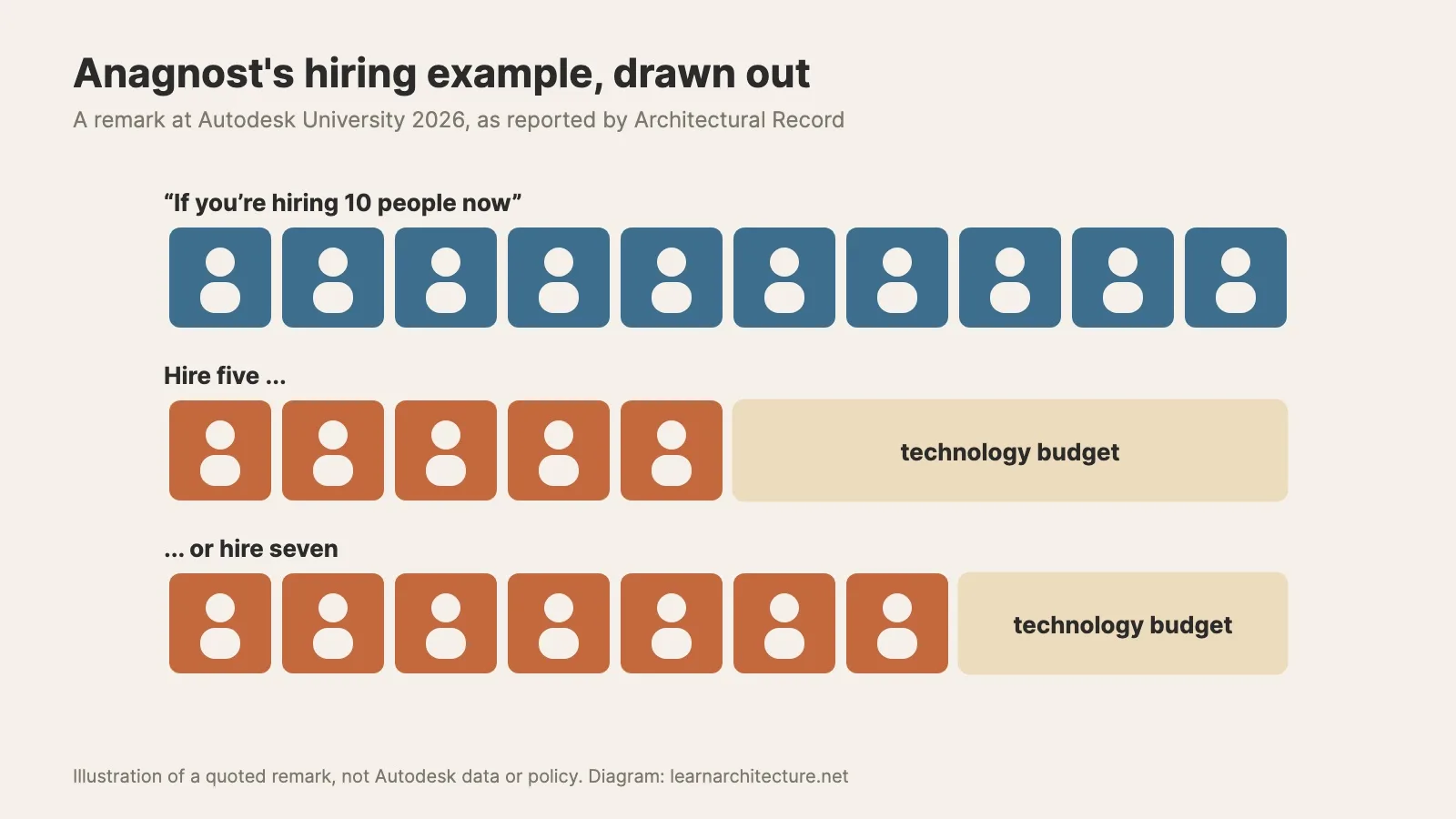
According to that account, Anagnost said AI would make work more productive and let people focus on higher value decisions, reminding attendees: “Intelligence alone doesn’t build the world around us; you do.” He then described how adoption might look inside a practice: “If you’re hiring 10 people now, maybe you should hire five or seven and create a budget for technology.” Templeton pointed out that the two messages pull in different directions.
Autodesk Assistant arrives in 2027
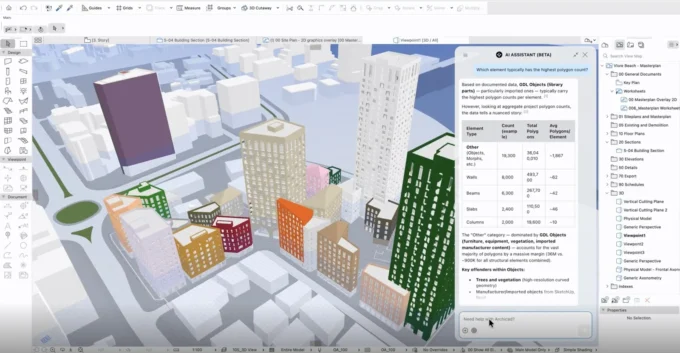
The conference opened on 15 September at the Venetian Expo with about 12,000 attendees, and almost every announcement involved AI. The biggest was Autodesk Assistant, a standalone agent able to carry out complex tasks on its own, which the company plans to start rolling out in 2027. Autodesk Forma gains project intelligence that can summarise client requests, flag submittal issues and track cost and schedule; Building Layout Explorer configures apartments across a whole building; and an Orchestrator chooses which AI model suits a given task. We covered another tool shown at the same event, Autodesk’s Drawing Compliance Review, earlier this month.
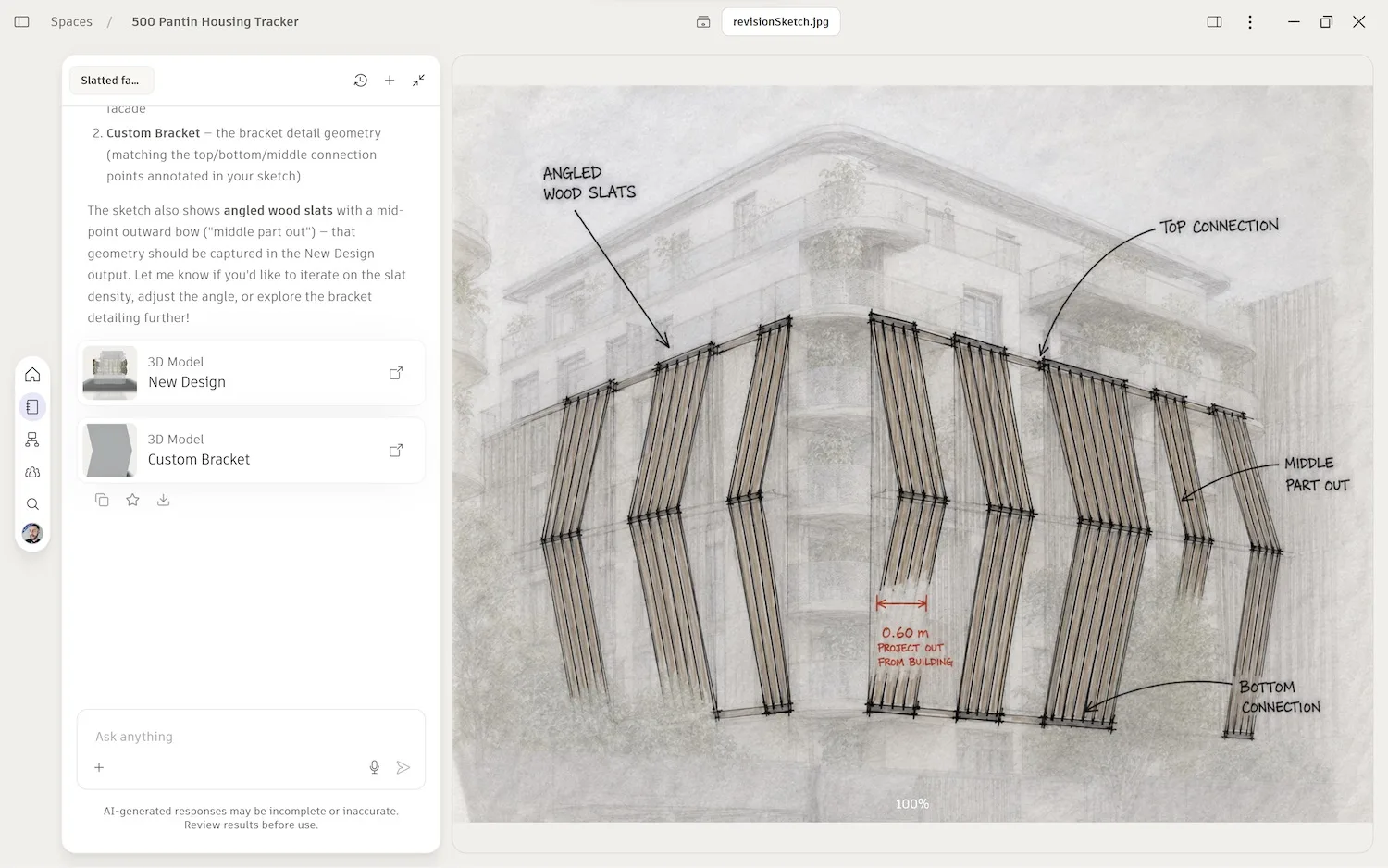
In one live demo, Autodesk Assistant turned a sketch of a slatted facade into a timber rainscreen model and picked a metal bracket to give the louvres a slight bend, a detail the sketch never specified. Asked about AI making design calls of this kind, Anagnost said “the user has to stay in control” and can override the choice. Architectural Record read the demo as a sign that architects may end up auditing AI output. Anagnost’s own summary was that “we’re all going to become managers of agents.”
Will AI replace architects, or will firms just hire fewer?
A more cautious voice came from London. Speaking at the Building the Future conference on 7 October, Carol Davidson, head of people development at consultant Gleeds, said the effect of AI on staffing levels in construction was still a big unknown, but she did not expect it to change the number of graduates joining the industry. “Maybe [that] question will be more relevant in five years’ time,” she said, as reported by Building. She argued that clear career routes for newcomers matter, because without them there will be no one ready to step into senior roles later.
Neither statement is a forecast backed by data. Anagnost’s numbers were an illustration in a keynote, and Davidson described her view as an early judgement. Taken together they show how open the question remains for students and graduates entering practice.










Leave a comment