


Table of Contents Show
Quick Answer
The carbon neutral vs net zero difference comes down to how much you cut before you compensate. Carbon neutral, as ISO 14068 defines it, means reducing a footprint and then counterbalancing what remains with offsets. Net zero, under the SBTi standard, means deep cuts first, typically at least 90%, with only residual emissions neutralized by permanent carbon removal.
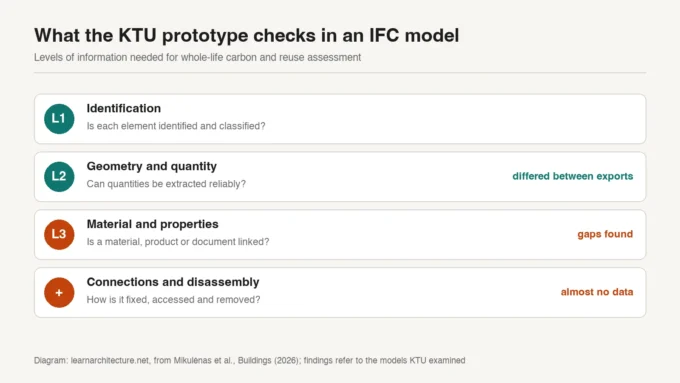
 KTU Tool Checks Whether BIM Models Hold Enough Data for EU Whole-Life Carbon Rules
 Should All New Buildings Be Net Zero Energy? Exploring the Future of Sustainable Construction
 Passivhaus Design Guide: What the Standard Requires and How to Meet It
 Sustainable Building Certifications: LEED, BREEAM, and WELL Compared
Brochures use the two phrases as if they were synonyms. Standards bodies do not. A building can be called carbon neutral this year by buying credits for most of its emissions, while a net zero claim made under the Science Based Targets initiative has to show that emissions were cut across the value chain before any balancing starts. For architects, the distinction decides what goes into the brief: an offset budget, or a redesigned structure, envelope and energy system.
Below you will find the official definitions, how each one treats operational and embodied carbon, the role of offsets, and the building certifications that sit on either side of the line.
What Does Carbon Neutral Mean?
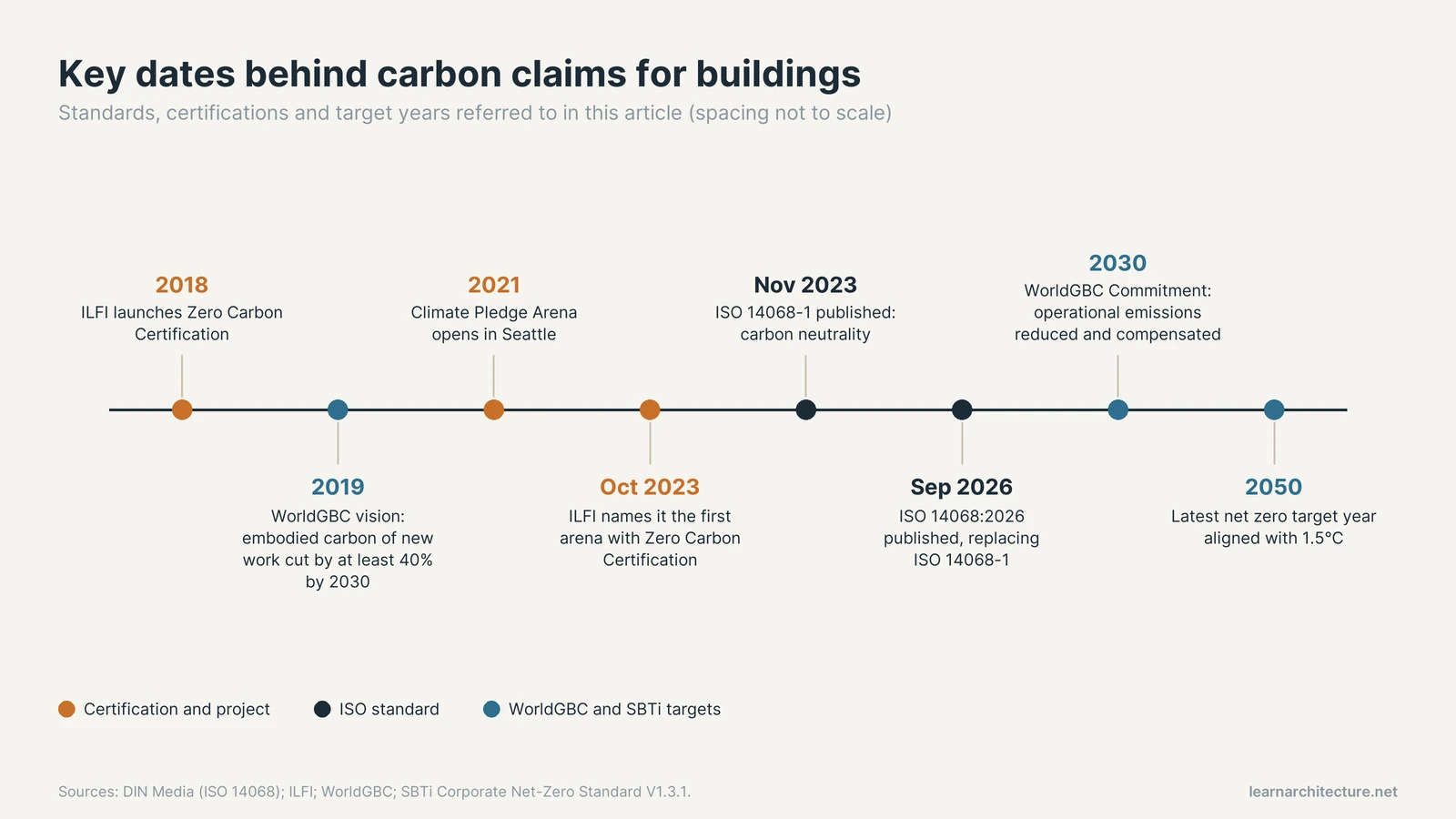
The international reference for carbon neutrality is ISO 14068. Its first version, ISO 14068-1, was published in November 2023, and according to the DIN Media listing for ISO 14068:2026, a new edition titled “Climate change management: Carbon neutrality” was published in September 2026 and replaces it.
The 2023 text defines carbon neutral as a condition, over a specified period, in which a carbon footprint has been reduced through emission reductions or removal enhancements and, if still above zero, is then counterbalanced by offsetting. It applies the word “carbon” to all greenhouse gases, and it lists buildings and events among the products it can be applied to. The standard sets a hierarchy: reductions and removals within the value chain come first, offsets only cover what is left.
The weak point is that the standard does not set a minimum reduction. ISO describes carbon neutrality as a pathway of continual improvement in which the need for offsetting decreases over time. A project can therefore reach a carbon neutral claim early and lean heavily on credits, as long as it follows the management plan and reporting rules.
What Does Net Zero Mean?
For organizations, the most cited definition comes from the SBTi Corporate Net-Zero Standard. Version 1.3.1 defines corporate net zero in two parts: reducing scope 1, 2 and 3 emissions to zero or to a residual level consistent with 1.5°C pathways, and permanently neutralizing any residual emissions at the target year and after it.
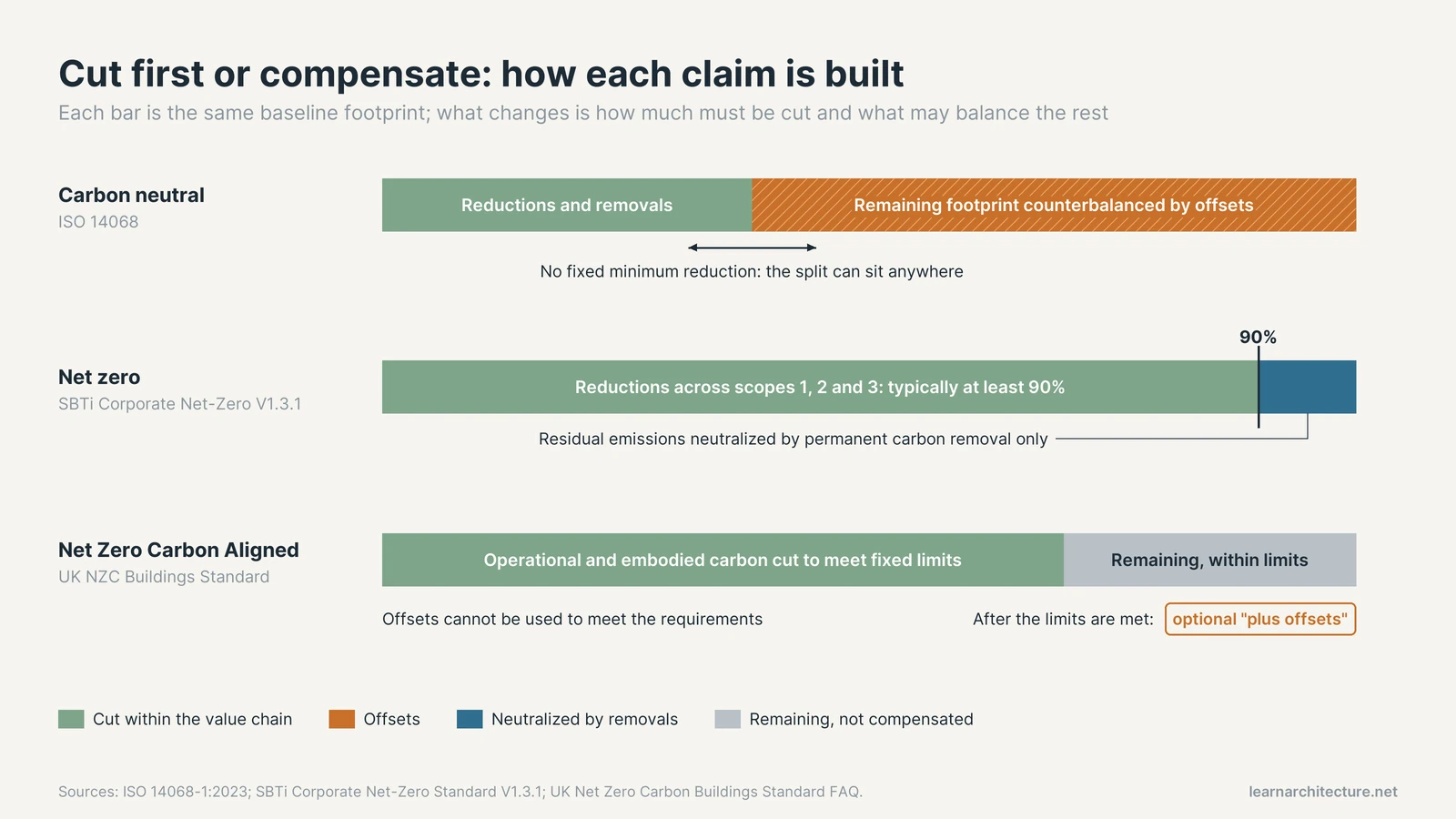
Two details make this stricter than carbon neutrality. First, the reduction is quantified: the standard expects most companies to cut emissions by at least 90% through their long-term targets. Second, carbon credits do not count as reductions. They may only be used to neutralize residual emissions or to fund mitigation beyond the company’s own targets, and the company cannot claim net zero until it has met its long-term target across all scopes.
ISO itself draws the same line. The introduction to ISO 14068-1 notes that, for organizations, net zero is commonly taken to mean emissions reduced until only residuals remain, with offsetting restricted to removal credits. It also states that the carbon neutrality standard does not set requirements for net zero.
Net Zero at Building Scale
SBTi works at company level. For individual assets, building-sector definitions take over. The UK Net Zero Carbon Buildings Standard, a voluntary standard for new buildings, existing buildings and retrofits, describes a Net Zero Carbon Aligned building as one whose operational and embodied carbon performance stays within limits derived from the UK built environment’s share of the remaining carbon budget for 1.5°C. Its FAQ is explicit that offsets cannot be used to meet the requirements. Only after the limits are met can approved offsets, including renewable procurement, earn an optional “plus offsets” recognition.
🔢 Quick Numbers
- 39%: share of global energy related carbon emissions from buildings, split into 28% operational and 11% from materials and construction (WorldGBC)
- 40%: minimum cut in embodied carbon for all new buildings, infrastructure and renovations by 2030 in WorldGBC’s Bringing Embodied Carbon Upfront vision (2019)
- 90%: the absolute reduction most companies are expected to reach through long-term targets under the SBTi Corporate Net-Zero Standard V1.3.1
Operational vs Embodied Carbon: Where the Terms Diverge
Any claim about a building has to say which emissions it covers. Operational carbon comes from the energy used to heat, cool, light and power a building over its life. Embodied carbon comes from extracting and making materials, transporting them, constructing the building, maintaining it and eventually taking it apart. Upfront carbon is the slice of embodied carbon released before the building is used.
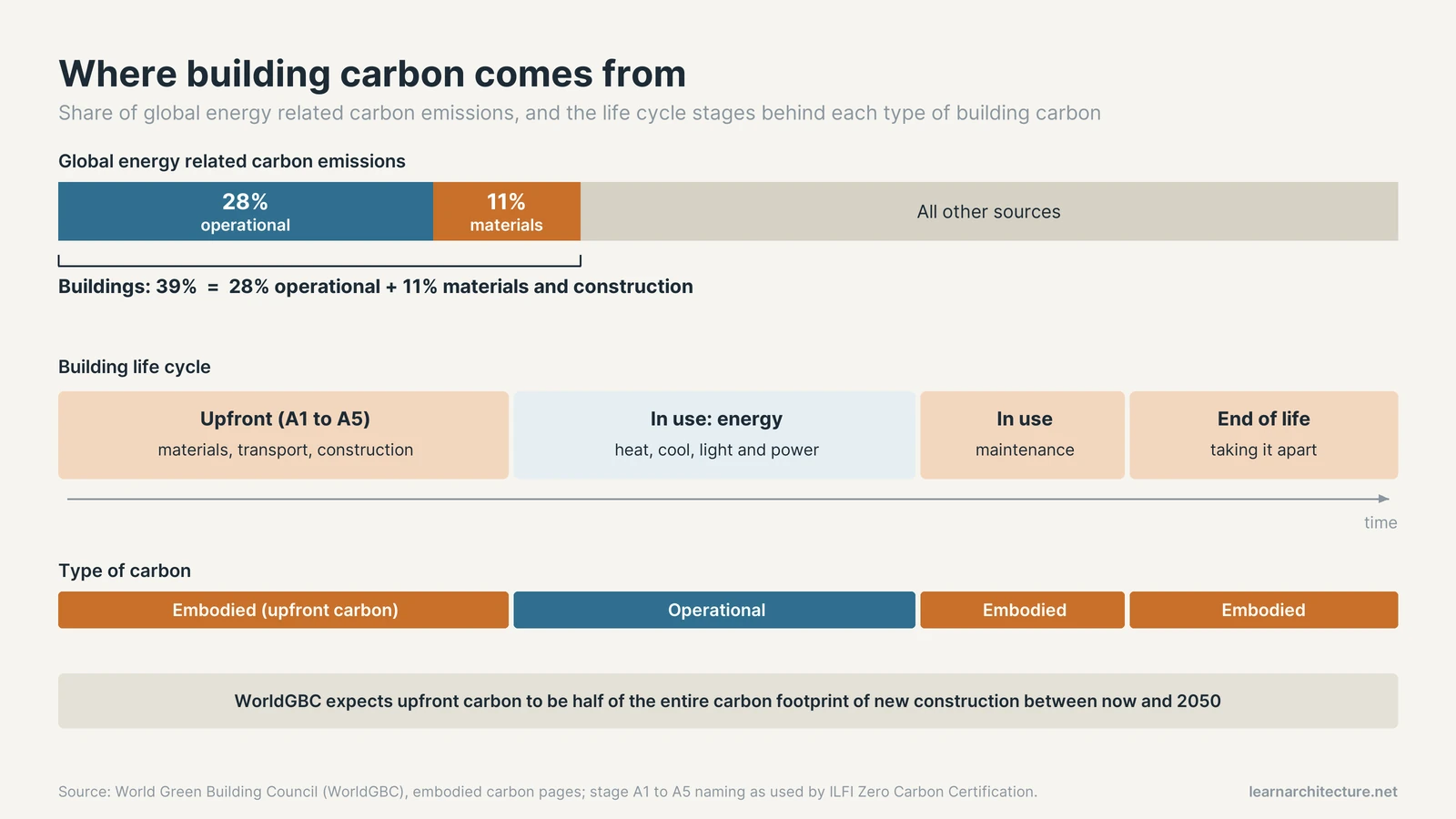
According to the World Green Building Council, buildings account for 39% of global energy related carbon emissions, of which 28% is operational and 11% comes from materials and construction. WorldGBC also expects upfront carbon to be responsible for half of the entire carbon footprint of new construction between now and 2050, as the global building stock grows.
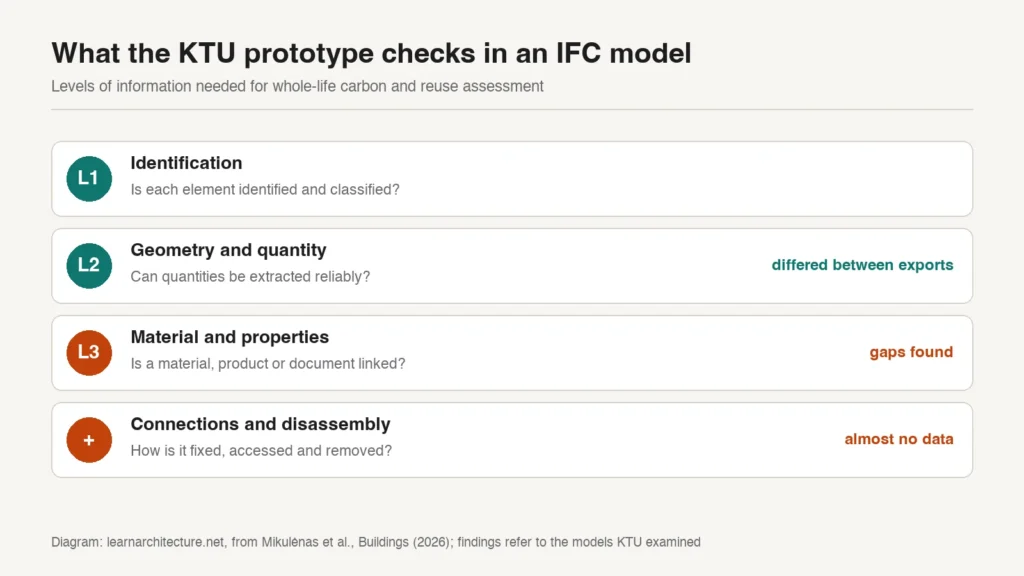
Older “carbon neutral building” claims often covered operational energy only. Newer frameworks bring embodied carbon in. The WorldGBC Net Zero Carbon Buildings Commitment asks signatories to reduce and compensate operational emissions of assets under their control by 2030, and to reduce embodied carbon in new developments and major renovations, compensating residual upfront emissions. Whole-life rules are also arriving in regulation, which is why tools that check whether a BIM model carries enough data for EU whole-life carbon reporting are getting attention.
Where Energy Efficiency Fits
Net zero energy and net zero carbon are different targets again. A net zero energy building balances the energy it uses against renewable energy produced over a year; it says nothing about embodied carbon. That debate is covered in our piece on whether all new buildings should be net zero energy. Demand reduction comes first in every framework, and an envelope designed to a standard such as the one in our Passivhaus design guide shrinks the residual that renewables or offsets have to cover.

💡 Pro Tip
When a client asks for a “net zero building”, write down in the brief which standard, which emissions (operational, embodied or both), which life cycle stages and which year the claim refers to. Those four answers determine whether you are designing an offset strategy or changing the structural material, glazing ratio and heating system.
The Role of Offsets
The sharpest practical difference lies in what each term lets offsets do.
- Carbon neutral (ISO 14068): offsets counterbalance whatever footprint remains after reductions, with criteria set for the carbon credits used. No fixed reduction share is required before offsetting.
- Net zero (SBTi): credits are not reductions. Only permanent removals may neutralize residual emissions, after the long-term target is met.
- Net Zero Carbon Aligned (UK standard): offsets cannot be used to meet any requirement; they only add an optional label after the limits are achieved.
Offsets also differ in kind. Avoidance credits pay for emissions not to happen elsewhere, for example by funding renewable generation. Removal credits pay for carbon to be taken out of the atmosphere and stored. The SBTi standard describes neutralization as removing carbon from the atmosphere and storing it permanently, which narrows the eligible pool considerably.
Certification Frameworks for Buildings
Several certifications put these definitions into practice. They differ in scope, in whether they require real reductions, and in how they use renewable energy and offsets. Our overview of LEED, BREEAM and WELL covers the broader rating systems; the programs below target carbon specifically.
ILFI Zero Carbon Certification
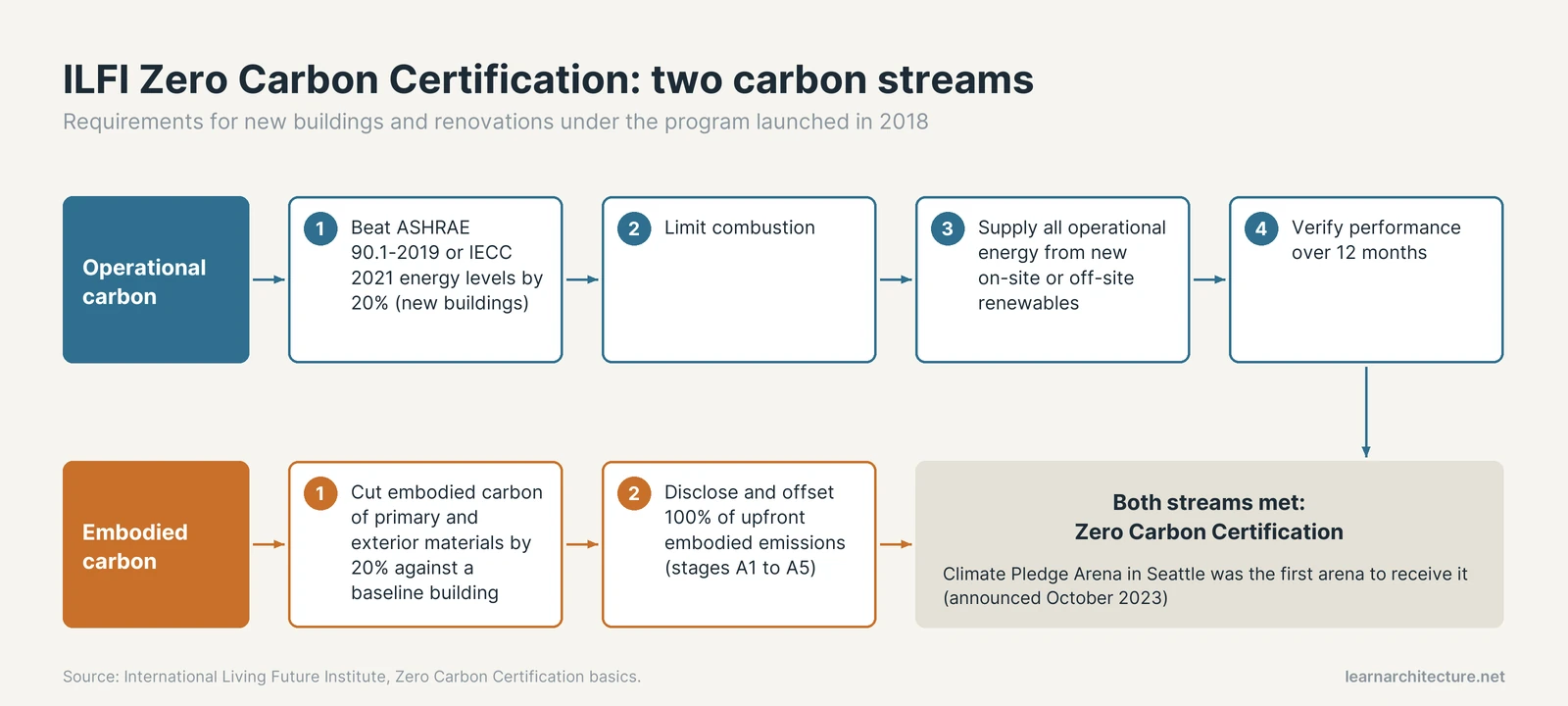
The International Living Future Institute launched Zero Carbon Certification in 2018. It covers both carbon streams. New buildings and renovations must show a 20% cut in embodied carbon of primary and exterior materials against a baseline building, then disclose and offset 100% of upfront embodied emissions (life cycle stages A1 to A5). On the operational side, a new building must beat ASHRAE 90.1-2019 or IECC 2021 energy levels by 20%, limit combustion, and supply all operational energy from new on-site or off-site renewables, verified over 12 months.
LEED Zero Carbon
USGBC’s LEED Zero program is a complement to LEED for existing buildings. LEED Zero Carbon recognizes net zero carbon emissions from energy consumption, through emissions avoided or offset, over a 12-month period. USGBC lists separate LEED Zero Energy, Water and Waste tracks, and a draft update to LEED Zero Carbon adds requirements on on-site combustion, refrigerants, embodied carbon and transportation. A LEED Zero certification is valid for three years.
UK Net Zero Carbon Buildings Standard
The UK standard sets limits and targets for embodied carbon, operational energy, fossil fuel free operation and on-site renewables, plus mandatory reporting for metrics without limits, such as operational water use. Only buildings verified under it may call themselves Net Zero Carbon Aligned, and claims can be checked on the standard’s Buildings Register.
🏗️ Real-World Example
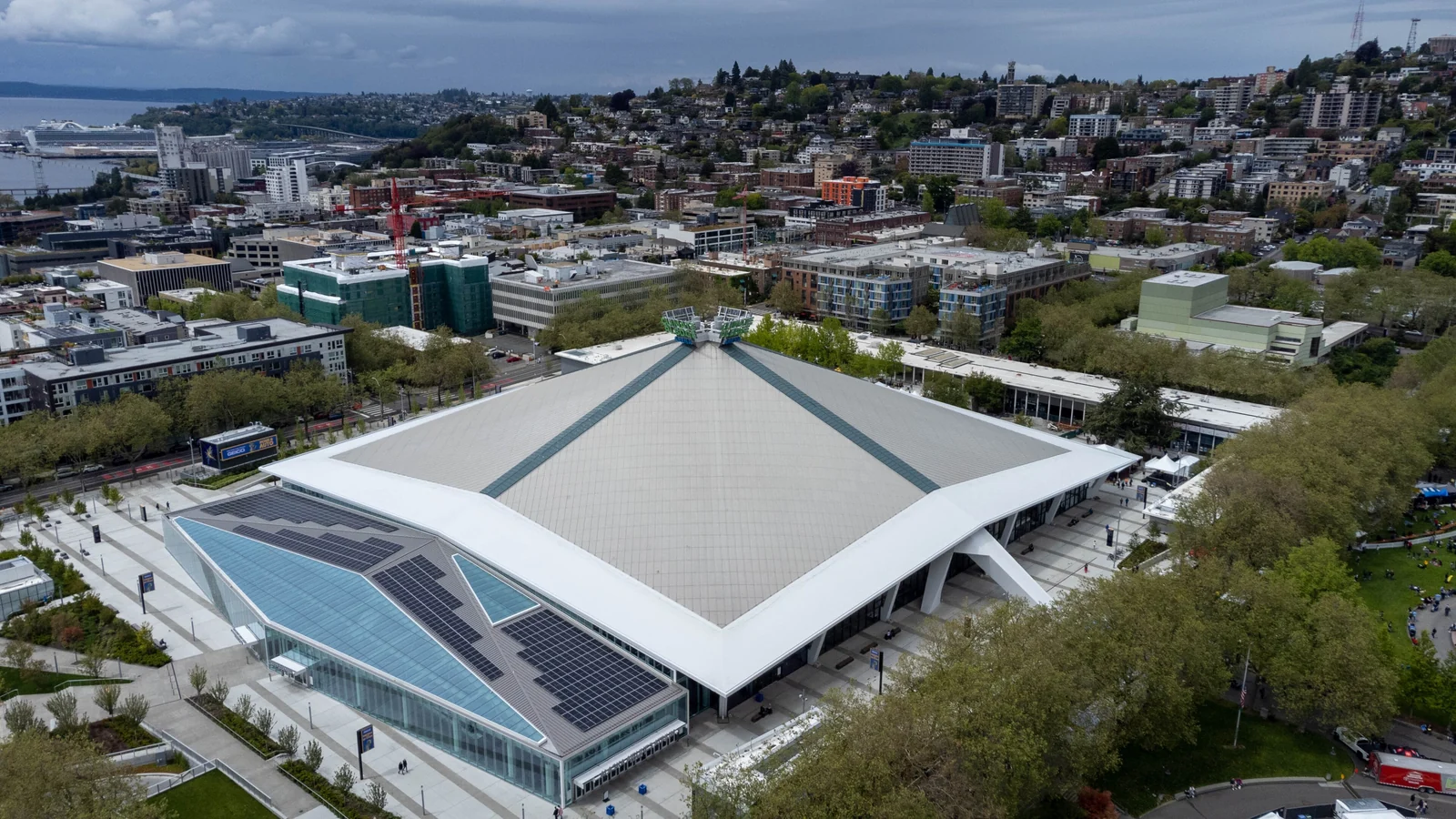
Climate Pledge Arena (Seattle, opened 2021): ILFI announced in October 2023 that the redeveloped arena was the first in the world to receive Zero Carbon Certification, after twelve consecutive months of performance data. Planned natural gas uses were converted to electric, solar panels were added on the atrium roof and parking garage, and the arena and Amazon retired more than 100,000 MWh of renewable energy certificates. The partners called it a net zero carbon arena, while ILFI describes the program as carbon neutrality, a good illustration of how loosely the terms travel.
Carbon Neutral vs Net Zero: Comparison Table
The table sets the main definitions side by side.
| Aspect | Carbon neutral | Net zero |
|---|---|---|
| Main reference | ISO 14068 (2023, revised 2026) | SBTi Corporate Net-Zero Standard; UK NZC Buildings Standard |
| Applies to | Organizations and products, including buildings | Companies (SBTi); individual buildings (UK standard) |
| Required reduction | Reductions first, no fixed minimum | Typically at least 90% (SBTi); fixed limits (UK) |
| Offsets | Counterbalance the remaining footprint | Permanent removals for residuals only (SBTi); not allowed for compliance (UK) |
| Time frame | A specified period, renewed over time | Target year aligned with 1.5°C, 2050 at the latest |
| Emissions scope | The defined carbon footprint of the subject | Scopes 1, 2 and 3 (SBTi); operational and embodied (UK) |
| Building certification examples | ILFI Zero Carbon Certification | UK Net Zero Carbon Aligned; LEED Zero Carbon (operational energy) |
Read the last row with care: names do not map neatly onto definitions. ILFI calls its program zero carbon while describing it as carbon neutrality, and LEED Zero Carbon uses “net zero” language but covers emissions from energy consumption and allows offsets. The test is always the same: what was cut, what was compensated, and with which kind of credit.
Environmental definitions and certification requirements change between versions. Check the current edition of each standard before making a public claim.
The Bigger Picture
The cleanest way to settle the carbon neutral vs net zero debate on a project is to stop treating either label as the goal. A building’s real contribution is the tonnes it never emits: the concrete not poured, the gas boiler not installed, the facade that keeps heat in for decades. Labels arrive at the end and describe how the remainder was handled. If the design team keeps that remainder small, almost any honest claim becomes easy to defend.












Leave a comment