


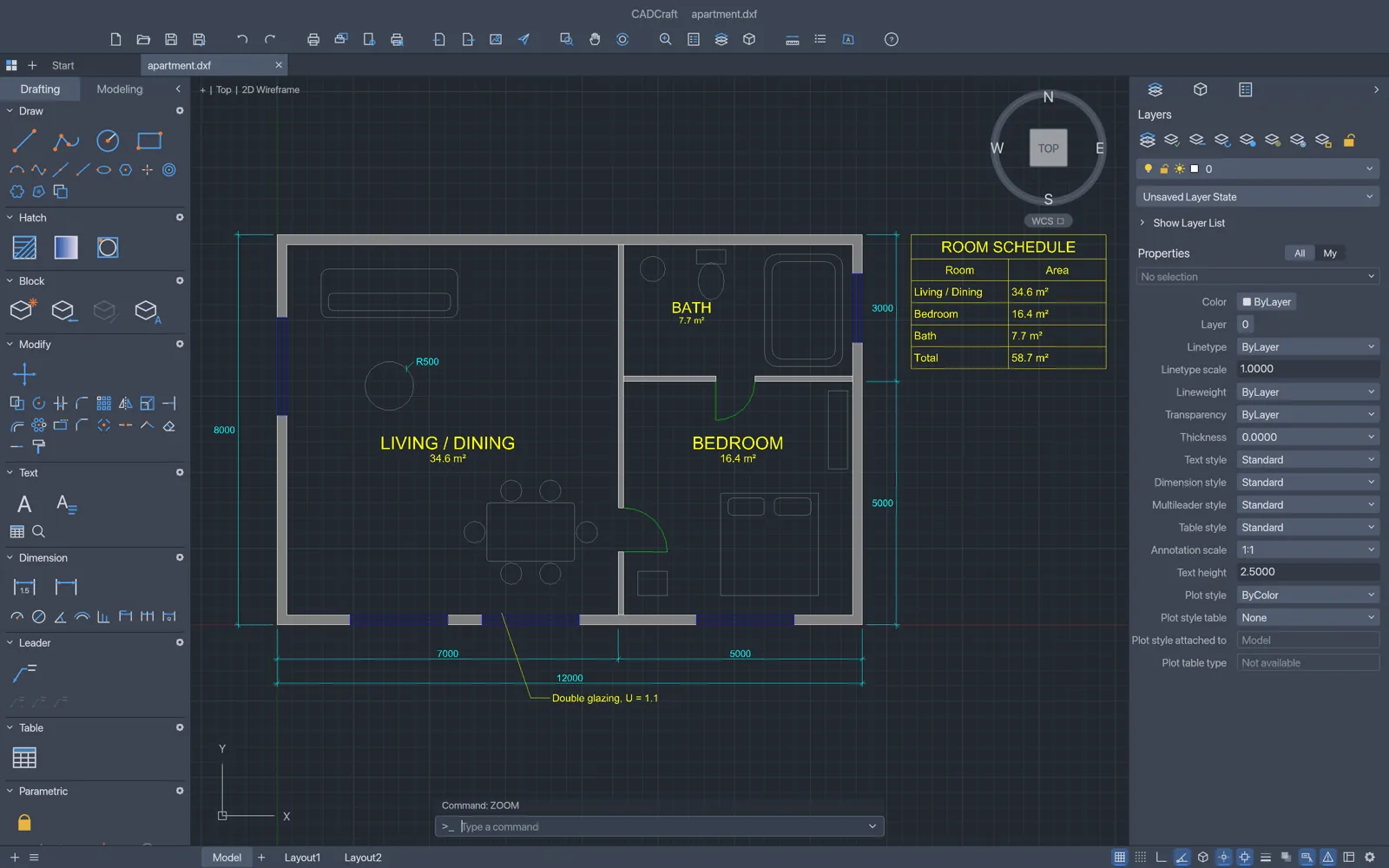
CADCraft is a free, open-source 2D drafting application that mirrors the way AutoCAD works, from the command line to object snaps, and its developers built it around AI coding agents. The project, from the ArtCraft team, describes itself as a clean-room reimplementation written in pure Rust and is released under the MIT or Apache 2.0 licence. Its own documentation calls it early and fast-moving.
3D Printing Industry reported on the project on 19 October together with SolidCraft, a parametric 3D modeller by a separate developer that follows the same conventions. At the time of that report, CADCraft had around 4,300 stars and 2,000 forks on GitHub.
What CADCraft can open and draw
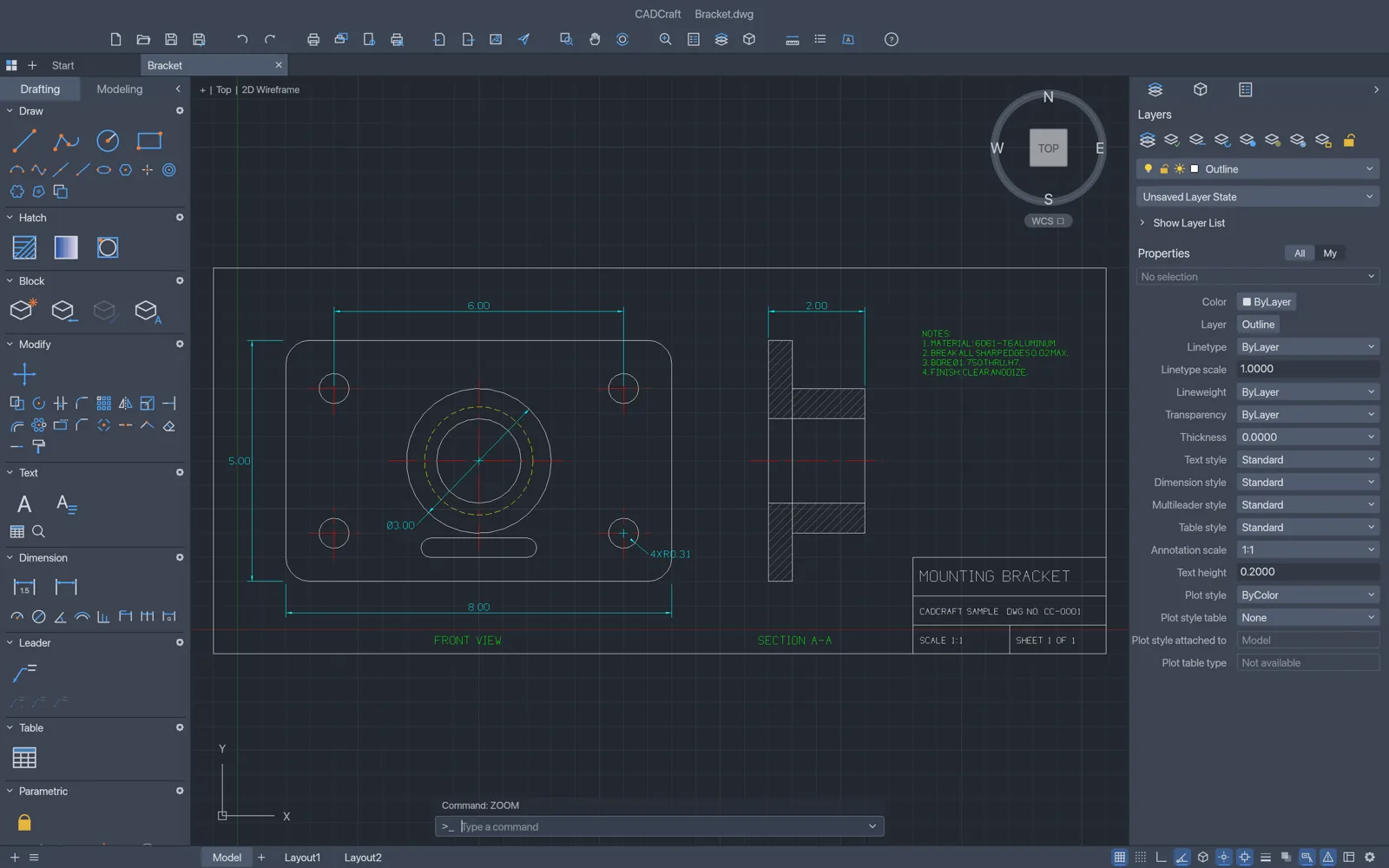
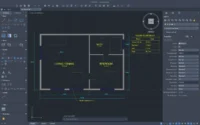
The interface follows familiar drafting habits: commands such as LINE and OFFSET are typed at a command line with prompts and AutoComplete, and polar tracking, ortho, window selection and grips behave as AutoCAD users would expect. DXF files from R12 to 2018 open and are saved as R2000, while DWG files are read and written as R2000 through the open-source acadrust library. The app also handles paper-space layouts with viewports, PDF plotting, hatching, blocks, dimension styles and parametric constraints.
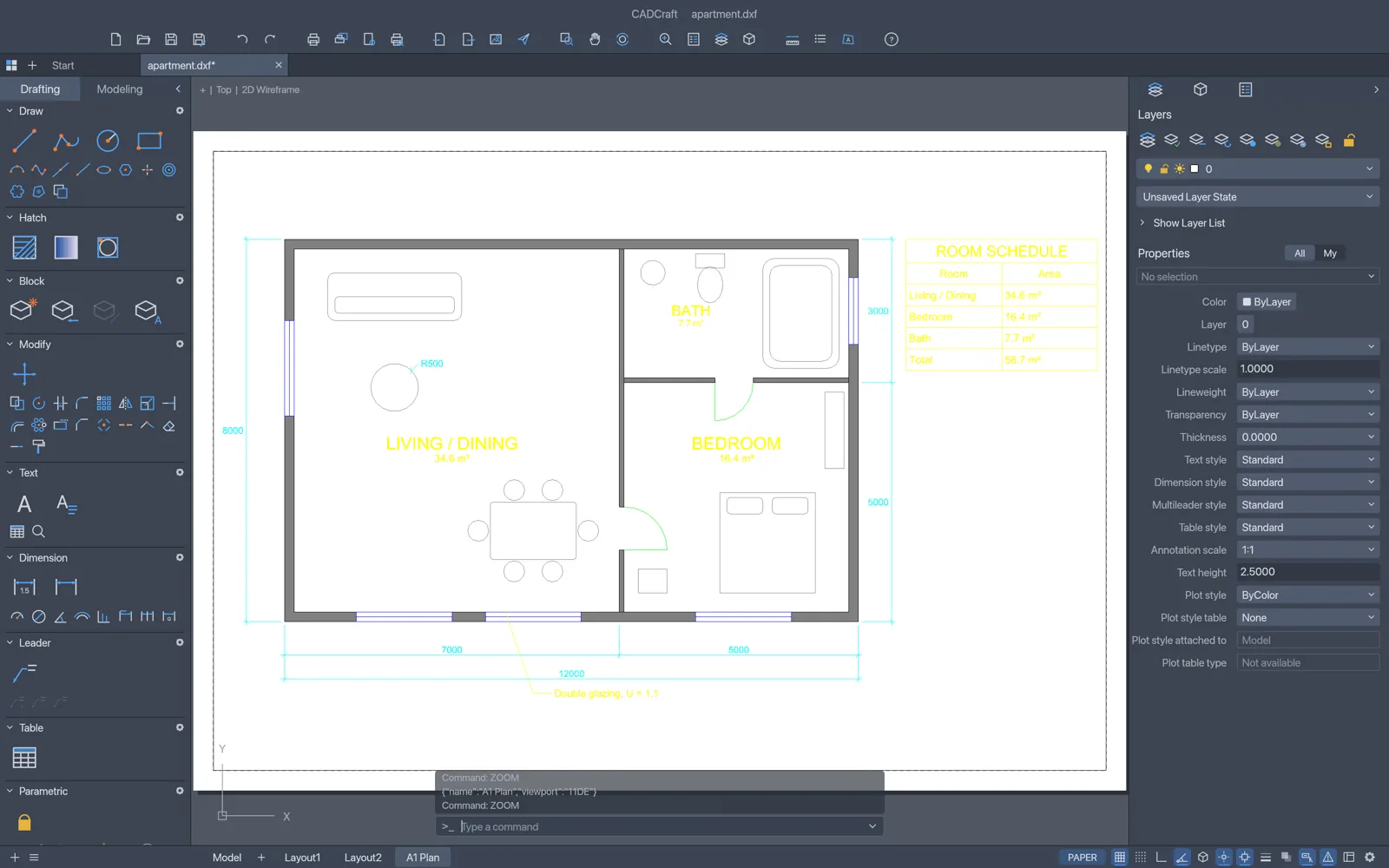
The limits are stated plainly. Entities CADCraft does not yet model are lost when a file is saved, and the project says compatibility with AutoCAD itself has not been confirmed yet. Its roadmap rates weighted parity with AutoCAD at roughly 29%, rising to 55% for 2D drafting alone; 3D modelling stands at 0%.
How the app was built with agents
Neither CADCraft nor SolidCraft says how much of its code was written by AI, but both repositories contain a CLAUDE.md file of instructions for agents, telling them to work autonomously and to stop only for decisions reserved for the project owner. CADCraft’s roadmap measures the work left in model time, estimating about 50 hours of Claude Opus 5.5 work to reach an alpha release, which would take between 15 and 20 hours of real time if three or four agents work in parallel.
To keep the work clean-room, developers can only watch AutoCAD as a black box running on their own computer, and every file format has to be implemented from published specifications. Every crash fix has to ship with a regression test. The app is also made for agents to operate: every menu item and tool is a command that can be called over MCP, a JSON control channel or a command-line tool, and an agent can inspect and render the drawing to check what it has done.
3D Printing Industry concludes that open geometry kernels and agent interfaces are making CAD software cheaper to build, while showing that it gives dependable results is still the difficult part. For architects tempted to try CADCraft on live work, data dropped on save and unconfirmed AutoCAD round-trips are the main points to watch.











Leave a comment