


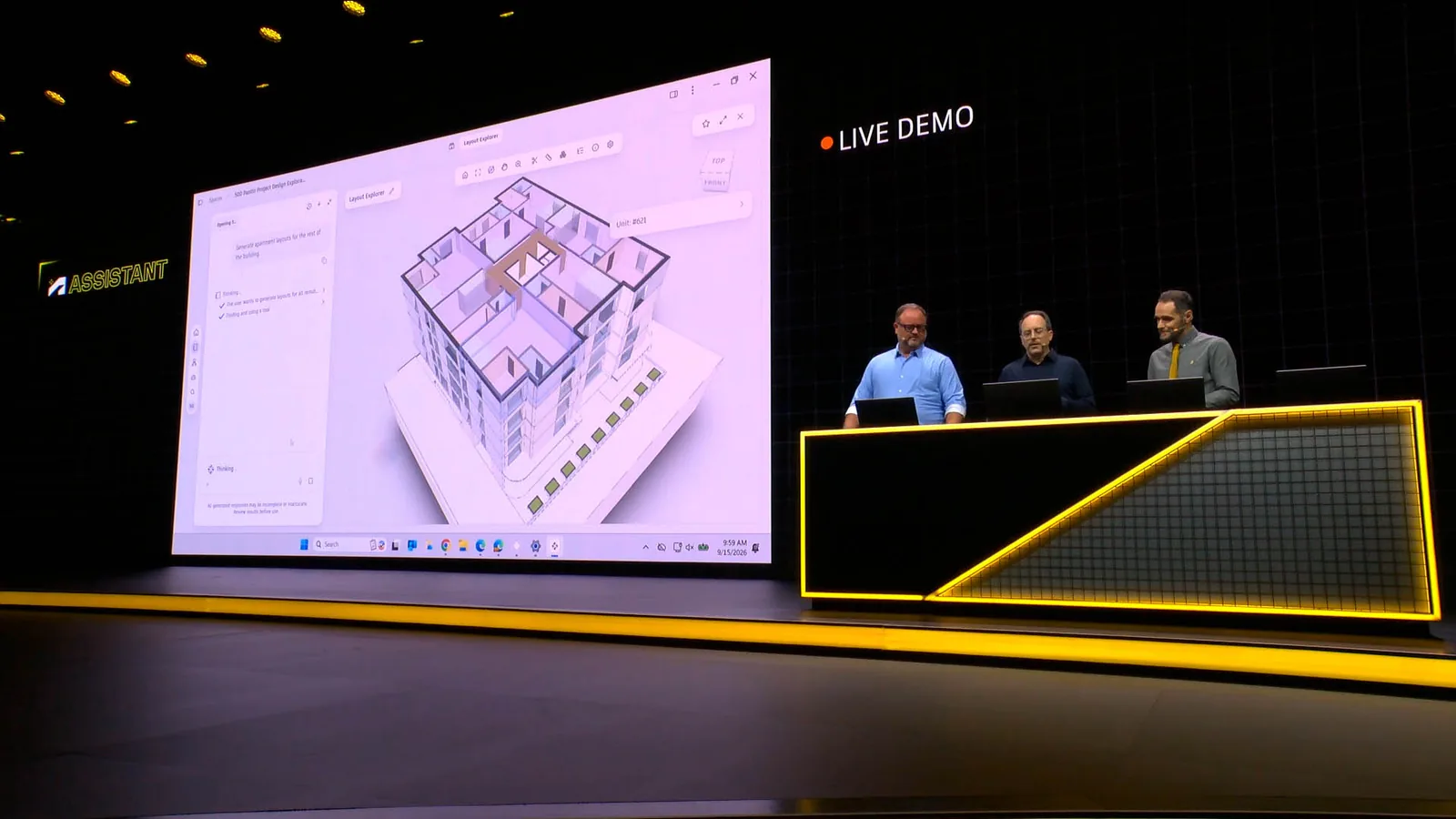
Autodesk Assistant, the AI helper already built into Revit, AutoCAD, Fusion and other Autodesk products, is set to gain a standalone version that works across the company’s software rather than inside a single program. Chief executive Andrew Anagnost described it at Autodesk University 2026 as a “standalone agent-first experience, one that reaches across products,” according to a detailed report by Greg Corke in AEC Magazine. The software is still in development and is expected to launch next year.
Mike Haley, Autodesk’s senior vice president of research, said the standalone tool is meant “for work that doesn’t fit neatly inside a product like Revit or AutoCAD or Fusion.” Amy Bunszel, executive vice president for AEC solutions, confirmed that the assistants inside individual products will keep growing alongside it. The event also brought Autodesk’s Drawing Compliance Review, which we covered in October.
What Autodesk Assistant did in the stage demo
The keynote demonstration was framed as a look at how the tool might work in future, not as a shipping feature. A project manager on a residential scheme asked how moving a wall by three feet, to give the client more rentable area, would affect the programme, and the Assistant replied with a Gantt chart that marked schedule hotspots. An architect then requested an LoD 300 apartment with walls and doors; the Assistant used Building Layout Explorer to stream a 3D model and fit room layouts into every unit shape in the building, which Autodesk presented as minutes of work rather than a day.
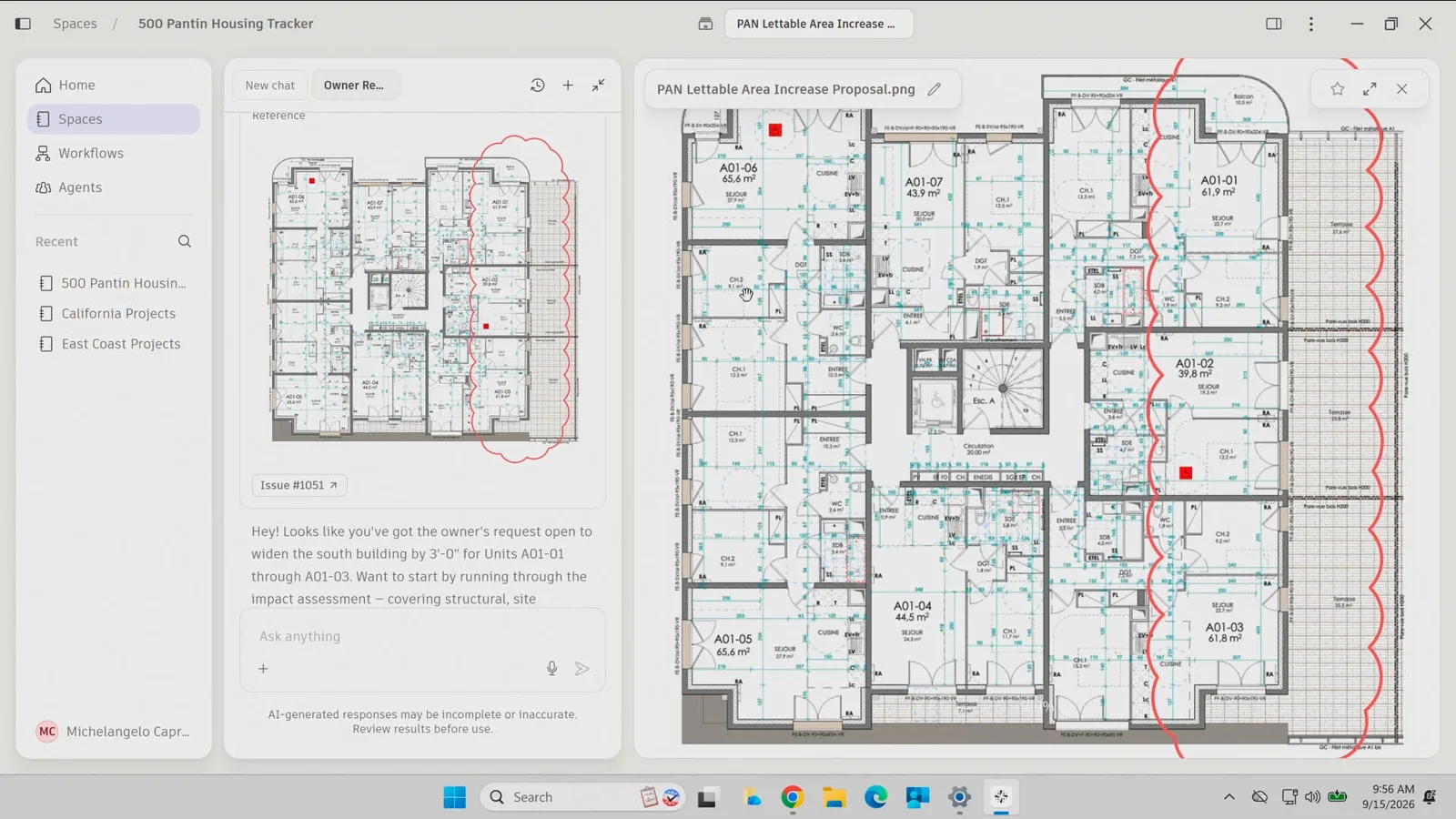
In a final step, a slatted facade workflow read dimensions from a sketch, generated metal brackets for the timber slats and passed the specification to a design engineer in Fusion. There the Assistant found a similar bracket in the archive, updated it and produced more than a thousand fascia options from images before sending the package back to the architect. Autodesk has not published pricing or a precise release date for these capabilities.
Context, Assistant Builder and the model orchestrator
Several new layers sit behind the demo. Autodesk Context, introduced by chief technology officer Raji Arasu, is meant to record not only what changed in a project but why, along with the constraints and people involved when each decision was made. Assistant Builder lets firms connect their own AI systems and those of partners. In a worked example with the Danish engineering firm Artelia, the Assistant drew on NTI’s sustainability platform and on Artelia’s historic cost data through MCP servers while a structural engineer stayed inside Revit.
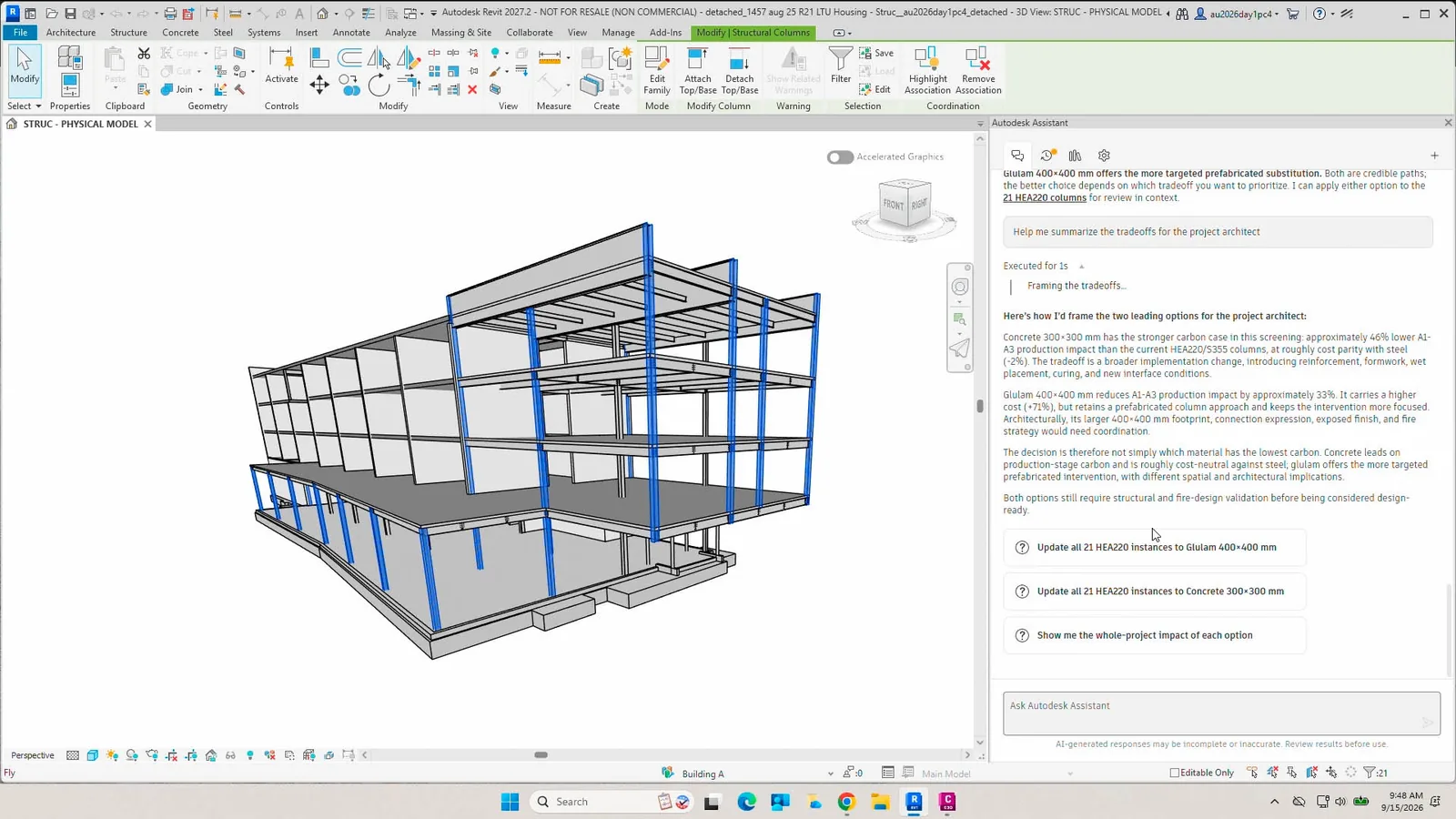
Underneath, an AI Orchestrator picks the model for each task according to accuracy, speed, security and cost. Its pool currently spans Autodesk’s own models, Claude, OpenAI models and open-weight models. Anagnost argued that Autodesk’s narrower models are much cheaper to run than large general models, putting the difference at “pennies relative to dollars.”
Pricing, data and the future of Revit
How AI use will be charged is not settled. Anagnost said the plan is to average costs across customers, while Bunszel told AEC Magazine that expensive features will “probably” come with a rate table and that routine AI should be part of the subscription. Some advanced features can be switched off, but customers who opt out cannot use them.
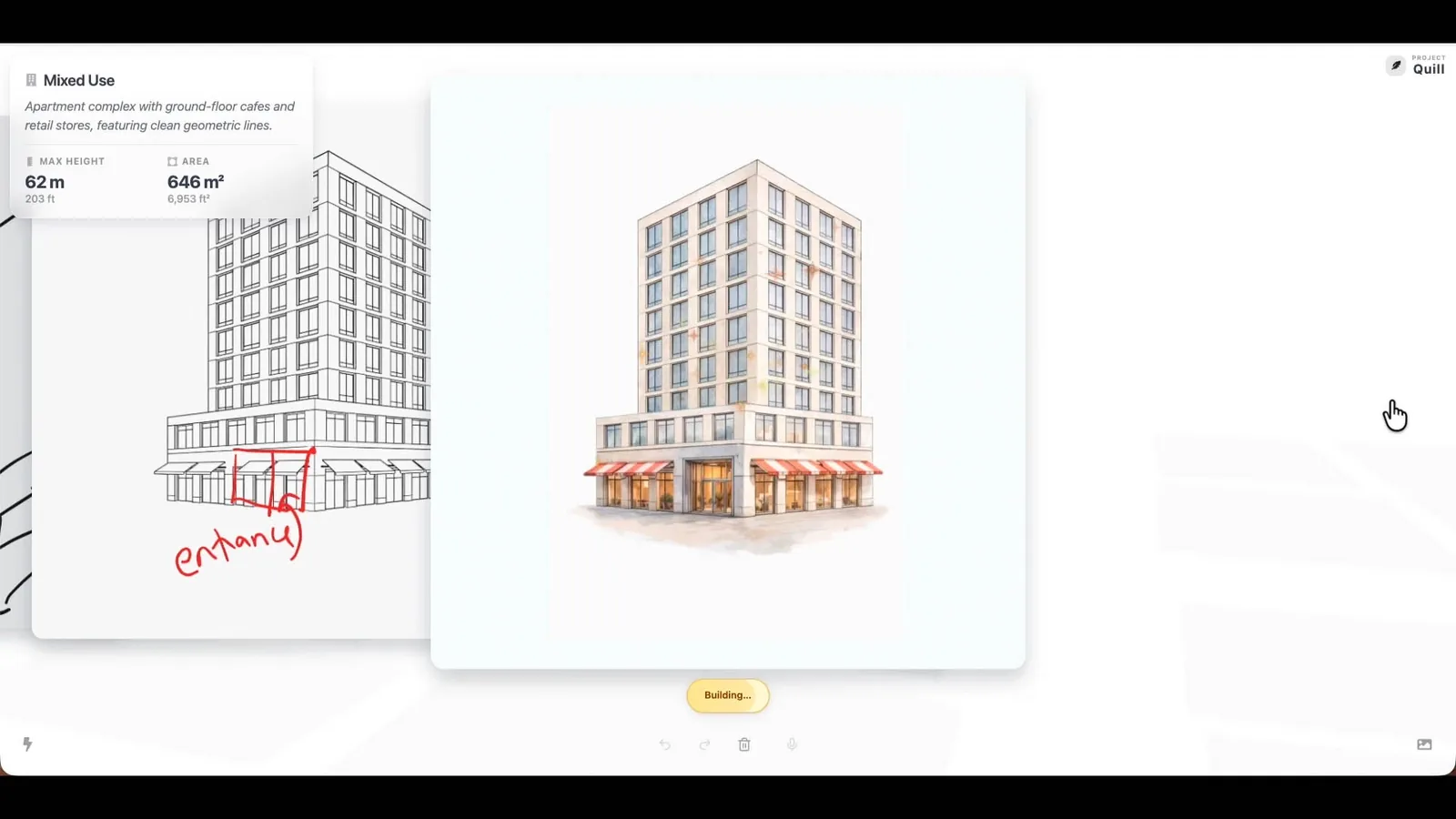
Autodesk also confirmed at the event that “Forma will replace Revit over time,” while saying Revit will keep receiving investment. One new Revit feature lets the built-in Assistant reposition every annotation tag in a view for the user to review. Separately, Autodesk is testing Project Quill, a research prototype that combines sketching, speech and AI to turn a rough drawing into a 3D object.
AEC Magazine points out that Autodesk is chasing this against frontier models that have quickly become capable 3D modellers, and against firms that run open-weight models on their own hardware. Workstation makers showed such local setups at the show, including an HP laptop running Revit, an MCP server and an open-weight language model on one machine.










Leave a comment