


Table of Contents Show
Mid-century modern architecture is a postwar design movement, roughly from 1945 to the late 1960s, known for clean lines, flat or low rooflines, open floor plans, and large panes of glass that blur the line between inside and out. It favors honest materials and simple form over applied decoration.
Few design styles have aged as gracefully. Mid-century modern architecture shaped homes, offices, and furniture across the postwar decades, faded for a while, and returned as one of the most in-demand looks in design. Here is where it came from, what defines it, and the architects who gave it shape.

What Is Mid-Century Modern Architecture?
Mid-century modern architecture is the built side of a wider mid-century modern movement that ran across interiors, product design, and graphic design after the Second World War. It reached its peak in the United States and Europe, and it reads as an optimistic, forward-looking style: geometry over ornament, light over mass, and a home that opens toward the garden instead of shutting it out.
The look sits inside the wider history of architectural styles as a distinct chapter of the modernist era. Where earlier modernism could feel severe and industrial, the mid-century modern architectural style softened the formula with warmer materials and a friendlier scale, aimed squarely at everyday living rather than grand statements.
📌 Did You Know?
The name arrived later than the movement itself. The term was popularized by writer Cara Greenberg in her 1984 book Mid-Century Modern: Furniture of the 1950s, decades after the style’s postwar peak. Much of the movement was, in effect, named in hindsight.
The Origins of the Mid-Century Modern Style
The style grew out of the years after 1945. Returning soldiers, young families, and a booming economy created enormous demand for new housing, and architects responded with homes that were quick to build, affordable, and modern in spirit. The American version drew directly on the International Style and the German Bauhaus school, then absorbed the warmth of Scandinavian design, where light wood and soft curves were already popular.
One project did more than most to define the movement: the Case Study House program. Sponsored by Arts & Architecture magazine and its editor John Entenza, the program ran from the mid-1940s into the 1960s and challenged architects to design low-cost, forward-thinking homes for real Southern California families. The experiments that came out of it, many built in steel and glass, became the images most people picture when they think of the era. Their influence still shows up when people mix mid-century and modern furniture in their own homes today.
🎓 Expert Insight
“The details are not the details. They make the design.”
Charles Eames
This idea sits at the heart of the style. With ornament stripped away, the structure itself, the exposed beam, the steel frame, the join between glass and wood, becomes the decoration.
Key Characteristics of Mid-Century Modern Architecture
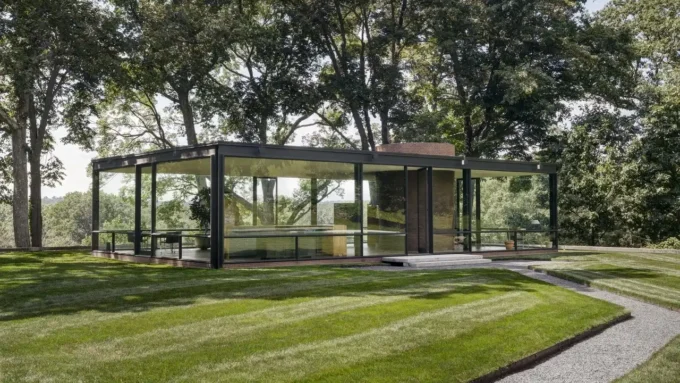
A few features show up again and again. Open floor plans replaced small, closed-off rooms, so kitchens, dining areas, and living spaces flow into one another. Roofs are flat or gently pitched, and walls often give way to floor-to-ceiling glass. Split levels and short runs of stairs connect spaces without heavy doors or corridors, and exposed beams are left on show rather than boxed in.
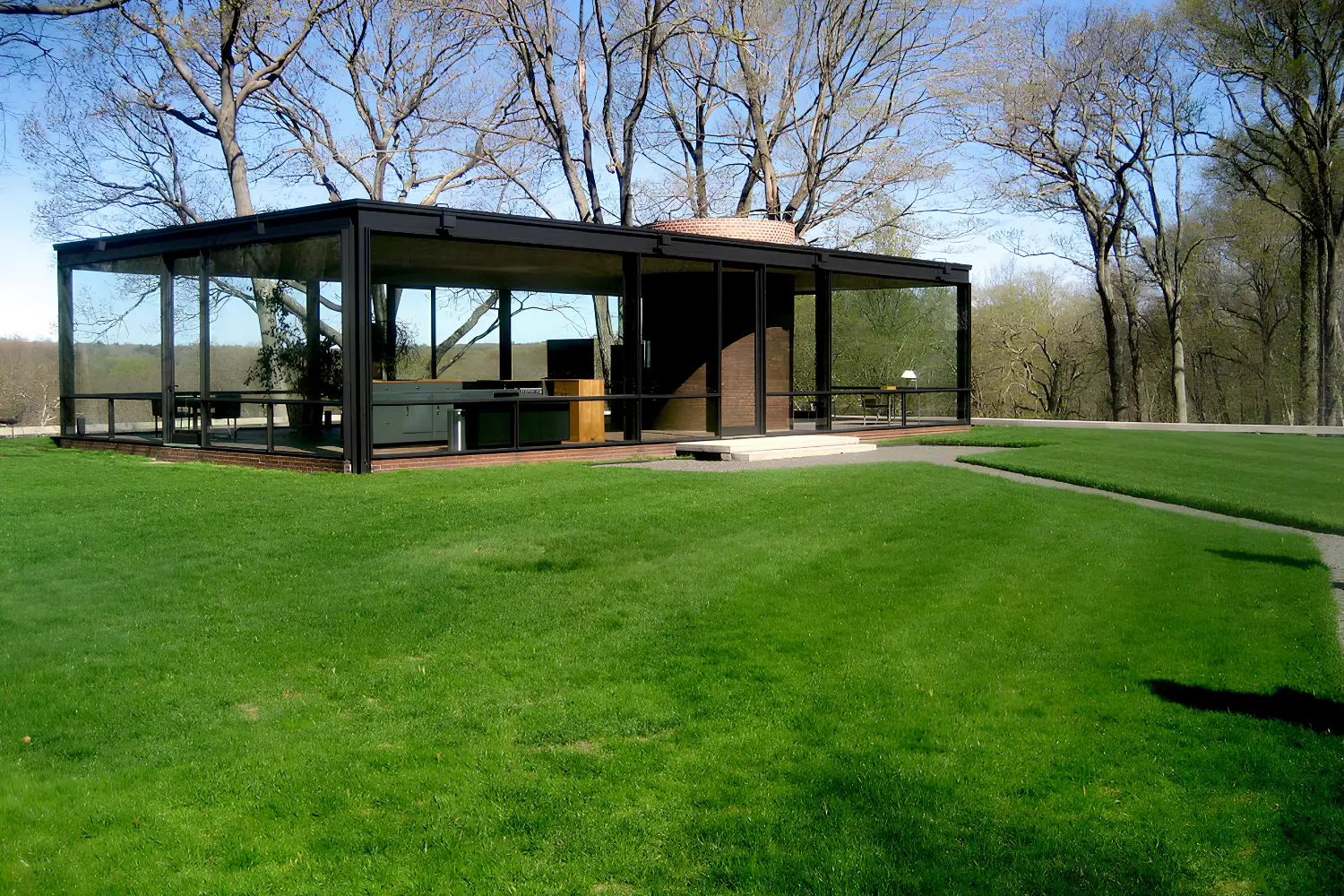
Material choice matters just as much. Steel, glass, and concrete carry the structure, while wood, brick, and stone add warmth, so the buildings never feel cold. Above all, the style aims at indoor-outdoor living: wide glazing, sliding doors, and low horizontal lines pull the landscape inside and treat the garden as another room. These same principles carry over into mid-century modern interiors, where the furniture and the architecture were often designed to speak the same language. The result is closely tied to the relaxed feel of modern home interiors that stay popular now.
💡 Pro Tip
When replacing glazing in a mid-century house, look for slim-profile insulated units rather than standard bulky double glazing. The original steel or timber frames were built for single panes, and heavy modern units thicken the sightlines that give the style its lightness.
If you want to see these ideas in motion, the short film below walks through the difference between modern and mid-century modern using well-known buildings from Palm Springs to Brasília.
Modern vs. Mid-Century Modern: What’s the Difference?
The two terms get mixed up often, and the reason is simple: mid-century modern is a branch of modern architecture, not a separate tree. Modern architecture is the broad movement that began in the early twentieth century and pushed for function, simplicity, and new materials. Mid-century modern is the specific postwar stretch of that story, generally warmer, more organic, and more focused on the family home than the earlier International Style. Museums treat both as part of the same lineage, and the Museum of Modern Art holds work from across it, including the archive of Ludwig Mies van der Rohe.
Famous Mid-Century Modern Architecture and Architects
The clearest way to understand famous mid-century modern architecture is through the people and buildings that defined it. The style was never limited to the United States, either. Alvar Aalto brought a softer, timber-led version to Finland, while Oscar Niemeyer gave Brazil its sweeping concrete curves. For a broader survey of the movement’s furniture and buildings, Dezeen’s guide to mid-century modern design is a useful starting point.
Key Mid-Century Modern Architects and Their Landmark Works
The table below groups a few of the architects most closely tied to the style with a signature building from each.
| Architect | Landmark Work | Location | Year |
|---|---|---|---|
| Charles & Ray Eames | Eames House (Case Study House #8) | Los Angeles, USA | 1949 |
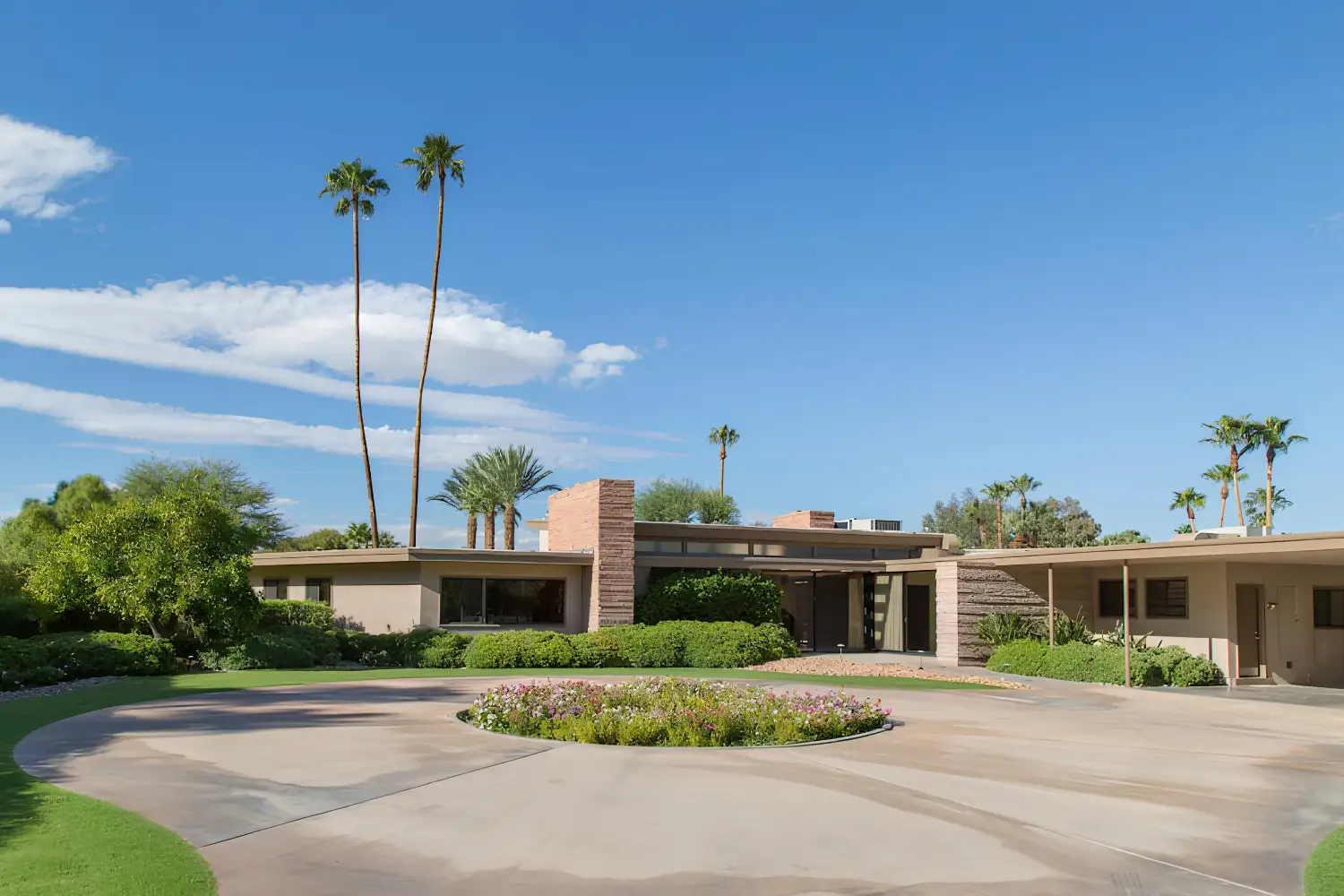
| Richard Neutra | Kaufmann Desert House | Palm Springs, USA | 1946 |
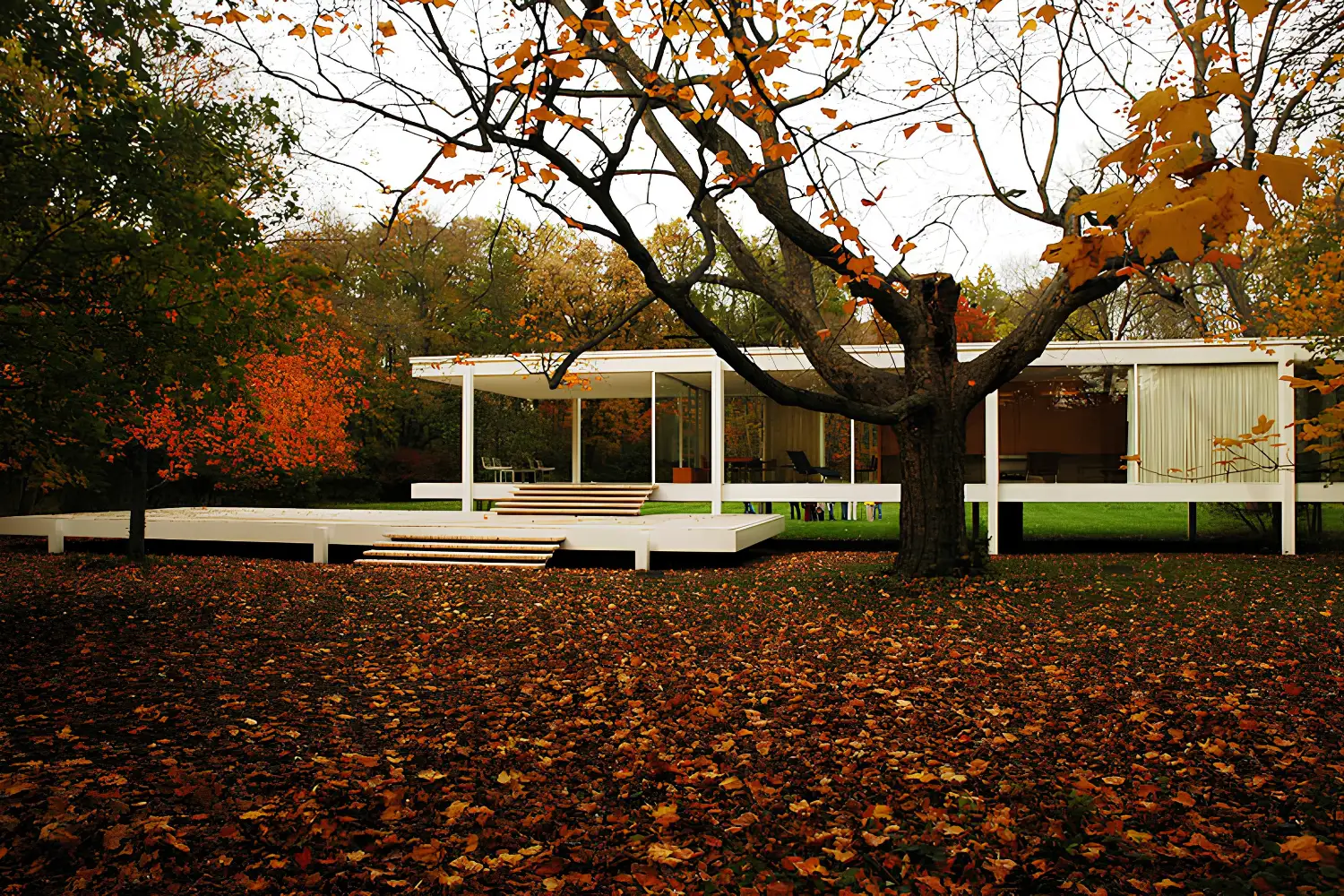
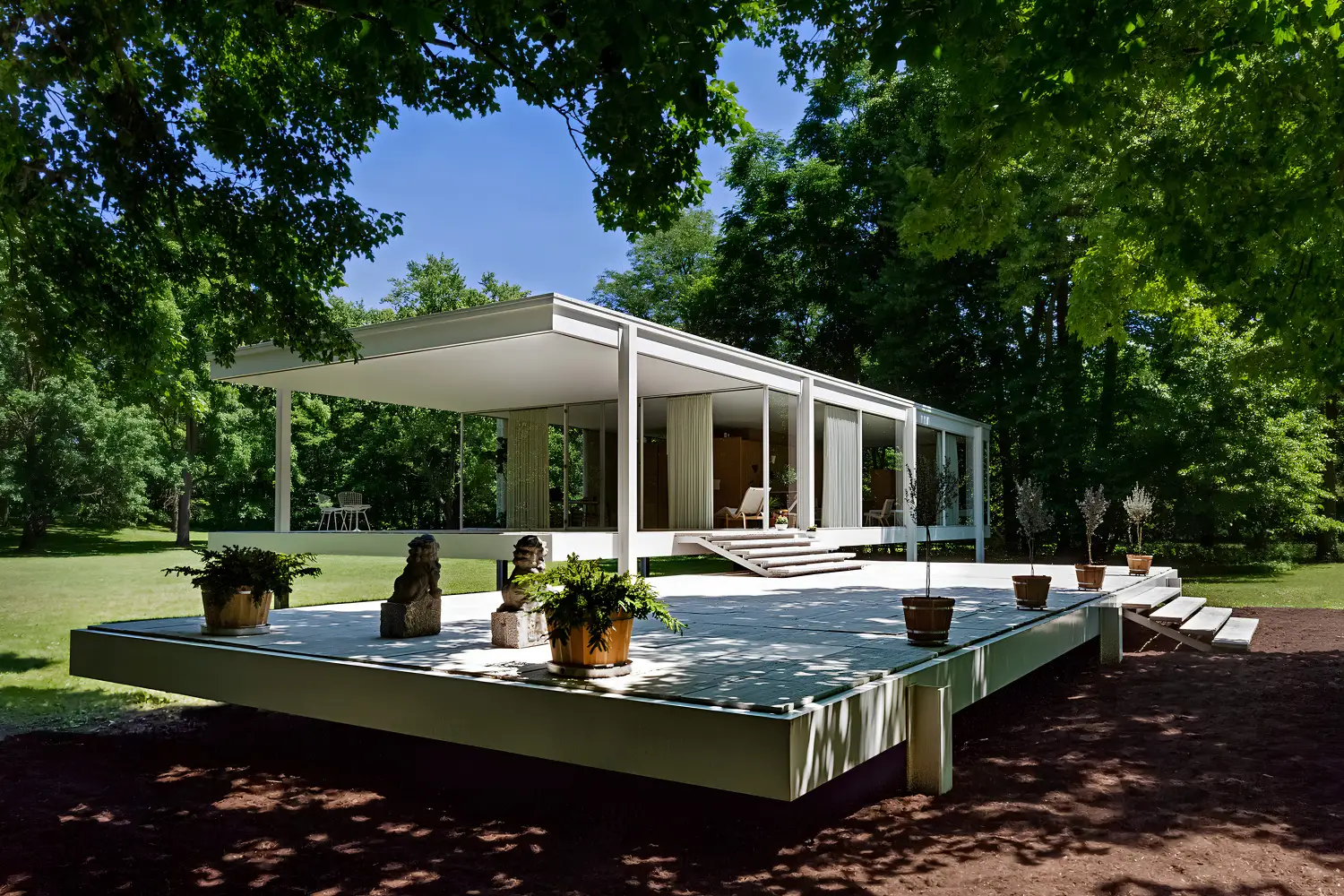
| Ludwig Mies van der Rohe | Farnsworth House | Plano, USA | 1951 |
| Pierre Koenig | Stahl House (Case Study House #22) | Los Angeles, USA | 1959 |
| Eero Saarinen | TWA Flight Center | New York, USA | 1962 |
| Oscar Niemeyer | Brasília civic buildings | Brasília, Brazil | 1960 |
These architects also reshaped how people lived day to day, from the layout of the plan down to the chairs in the room. That crossover between building and object is a big part of why the movement still influences modern house design in the US and beyond.
🏗️ Real-World Example
Eames House (Los Angeles, 1949): Charles and Ray Eames built Case Study House #8 as their own home and studio using steel and glass parts ordered straight from industrial catalogs. It sits lightly in a meadow above the Pacific and is now a National Historic Landmark cared for by the Eames Foundation.
The Bigger Picture
Here is the twist. Mid-century modern set out to be democratic, affordable homes and furniture that ordinary families could actually buy, built from mass-produced parts. Today the original houses and chairs are among the most expensive things on the market. The style that aimed to be within everyone’s reach has become one of the hardest to own, which says a lot about how completely it won people over.
Frequently Asked Questions
What are the key characteristics of mid-century modern architecture?
Flat or low-slung rooflines, open floor plans, and large expanses of glass are the core traits. Interiors connect closely to the outdoors, and materials like steel, wood, and stone are left exposed rather than hidden behind ornament. The overall feel is simple, horizontal, and light.
What years are considered mid-century modern?
The movement runs roughly from 1945 to the late 1960s, tied to the years after the Second World War. Its influence carried into the 1970s, and interest revived strongly from the late 1990s onward, helped along by film and television set in the era.
What is the difference between modern and mid-century modern architecture?
Modern architecture is the broad movement that began in the early twentieth century. Mid-century modern is a specific postwar chapter of it, generally warmer and more organic than the earlier International Style, with a stronger link to home life and the surrounding landscape.
Who are the most famous mid-century modern architects?
Names most often linked to the style include Charles and Ray Eames, Richard Neutra, Eero Saarinen, Ludwig Mies van der Rohe, and Pierre Koenig in the United States, along with Oscar Niemeyer in Brazil and Alvar Aalto in Finland. Their furniture design is often as celebrated as their buildings.
- architecture mid century modern
- examples of mid century modern architecture
- famous mid century modern architecture
- mid century modern architectural plans
- mid century modern architectural style
- mid century modern architecture floor plans
- mid century modern architecture homes
- mid modern century architecture
- Mid-century modern architecture












Leave a comment