


A new geological analysis has pinpointed where the builders of the Devil’s Arrows, the towering stone row near Boroughbridge in North Yorkshire, got their raw material: Brimham Rocks, a rugged gritstone outcrop roughly 18 kilometers (11 miles) away. The finding, published in the Proceedings of the Royal Society A, overturns decades of assumption that the stones came from Plumpton Rocks, a source much closer to the monument.
The three surviving pillars, thought to have been raised around 2000 B.C. during the Late Neolithic or Early Bronze Age, rank among the tallest prehistoric standing stones in Britain, with the largest reported at either 6.85 meters (22.5 feet) or close to 7 meters (23 feet) depending on the source. Each block is estimated to weigh about 25 tonnes, or roughly 55,000 pounds.
How researchers matched the Devil’s Arrows to their source
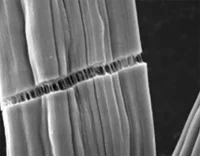
The team, led by geochemist Anthony Clarke of Curtin University working with Jim Leary of the University of York, used a sampling method designed not to damage the monument. Strips of adhesive tape were pressed against inconspicuous, lichen free patches of stone to lift microscopic mineral grains, which were then freed from the tape using mineral turpentine. After removing coarse magnetic material and common minerals like quartz and feldspar, the remaining grains, chiefly zircon and apatite, were examined under a field emission scanning electron microscope and dated isotopically to produce an age signature unique to their parent rock.

That signature was then compared against samples from candidate quarries. The results pointed away from Plumpton Rocks and toward Brimham Rocks, a source that lay well beyond the nearest available stone. Regional reconstructions of past ice flow were also examined and ruled out any glacial pathway that might have carried the rock naturally, leaving human transport as the only viable explanation.
Moving 25 tonne stones across Neolithic Yorkshire
For Clarke, the distance involved is the real story. “Our research shows these stones weren’t simply taken from the nearest available source, they were deliberately chosen from a challenging landscape 18 kilometers away,” he said. He added that shifting stones of that mass “would have required incredible planning, coordination, and engineering skill,” and argued the choice reflects more than practicality: “the location the stones came from likely held meaning for them.”
Leary framed the result as evidence of intent rather than convenience. “These results show that ancient communities were making deliberate and meaningful choices about where their stones came from,” he said, adding that it points to shared belief systems behind the physical effort of hauling and erecting the pillars. In earlier remarks about the site generally, Leary noted that monuments like the Devil’s Arrows have drawn far less scholarly attention than sites in southern England and Scotland despite their scale.
A landscape with a longer story
A 2025 geophysical survey had already found magnetic anomalies suggesting former stone positions near the row, along with possible sockets indicating the alignment once extended north, perhaps as a marker along an old route. Historical accounts describe a fourth standing stone recorded in the mid-16th century that had fallen by the following century; an account from 1687 describes locals breaking up a fallen stone, using part of it in Peg Bridge over the River Tutt and carrying another portion to Aldborough manor.
The 19th century antiquarian J.R. Walbran had proposed that a stone cross in Aldborough, commemorating a 1322 battle, was carved from another fallen Arrow before being moved to its current site in 1852. The new mineral analysis supports that theory, confirming the cross is built from one of the missing Devil’s Arrows pillars. The study’s authors describe such reuse as adding new chapters to a stone’s history rather than erasing its original meaning.
Justin Scully, National Trust general manager for Fountains Abbey and Studley Royal, which includes Brimham Rocks, welcomed the discovery. “We’re incredibly grateful to the researchers for helping us uncover this new chapter in the stones’ story and deepen our understanding of the people who shaped this landscape thousands of years ago,” he said.
Clarke has said the team intends to apply the same tape based sampling technique to other standing stones whose origins remain unknown, and hopes to carry out excavations at both the Devil’s Arrows and Brimham Rocks to establish more precisely when and how the stones were moved.










Leave a comment