


Table of Contents Show
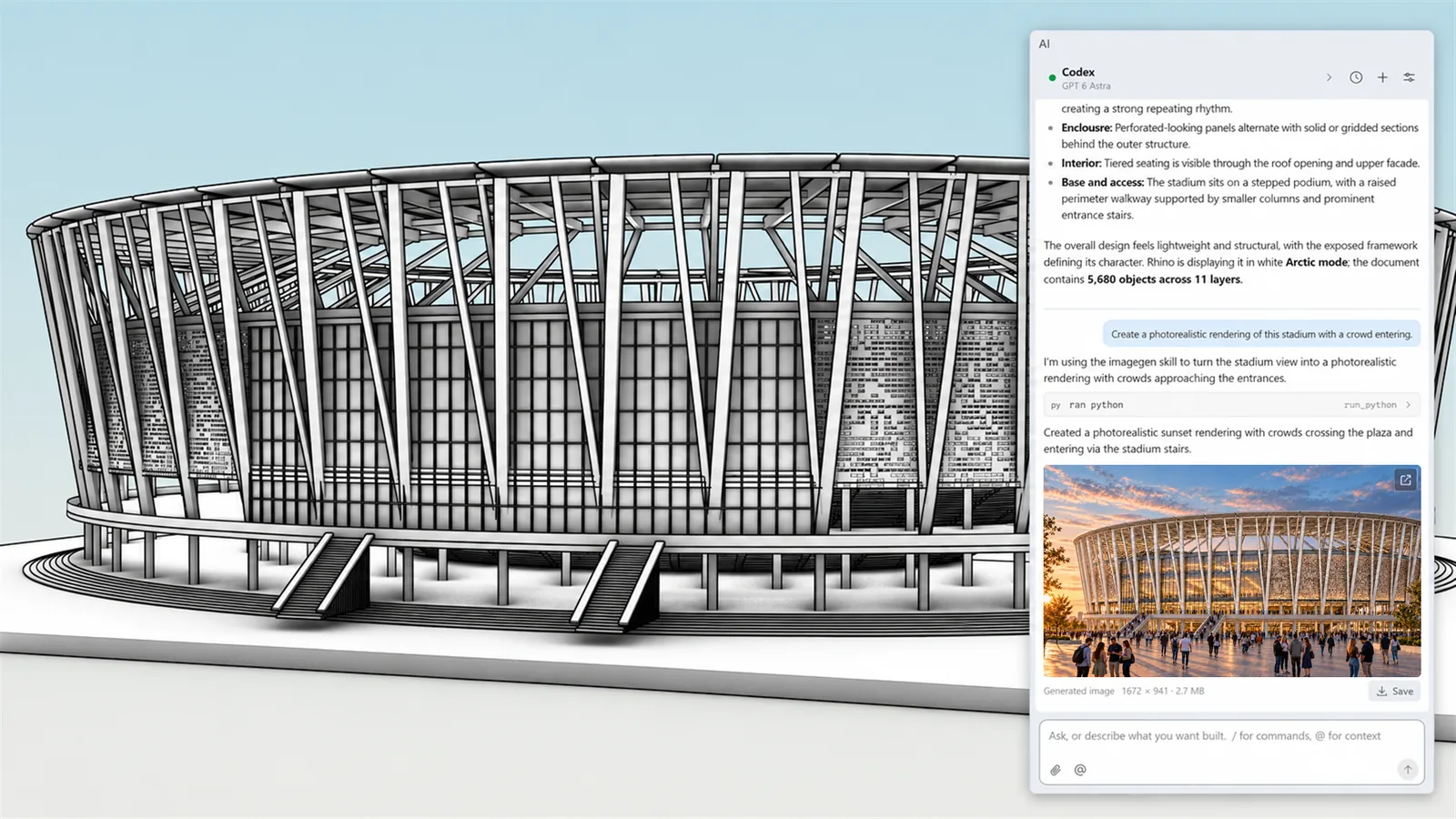
McNeel has opened its doors to artificial intelligence. At Rhino World 2026, held from 21 to 23 October in Castelldefels near Barcelona, the company explained how AI tools have changed the way its developers work, and its staff demonstrated RhinoAI, an open-source plug-in that lets AI agents read and edit a live Rhino model. Rhino 9 followed on 28 October, AEC Magazine reports. Founder Bob McNeel told the audience of around 330 that the old habit of waiting for new technology to settle no longer works: “We have to pay attention every day, every week.”
 AI Data Brokers Are Offering Architects Six Figures for Old CAD Files, Raising Questions of Ownership
 Trimble Agent Studio Lets Construction Teams Turn In-House Know-How Into Custom AI Agents
 Blender 5.3 Adds Native Gaussian Splats, Opening a New Route From Site Scans to Architectural Visualisation
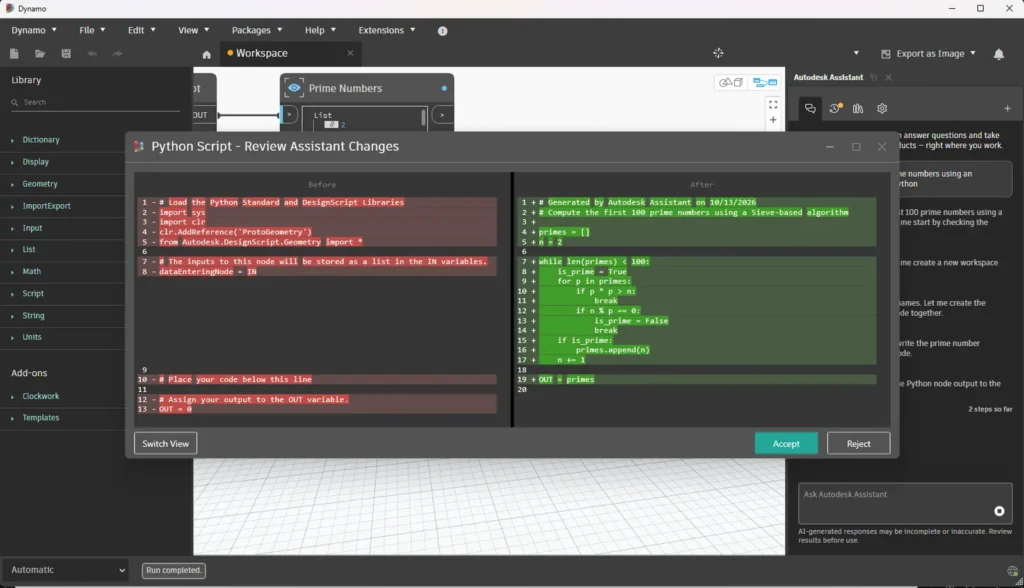 Dynamo 4.3 Lets Architects Review Every Python Edit Autodesk Assistant Makes Before Accepting It
A faster development team, by its own count
The most striking figures came from the developers themselves and have not been checked independently. Steve Baer, who leads the Rhino development team, said he had told management to expect a 20% gain in productivity once Claude Opus arrived; by his account the result was nearer to three times. In a joint talk, Baer and Andy Le Bihan, head of visualisation development, said the two of them merged an average of 3.3 pull requests per working day between October 2022 and June 2026, rising to 9.5 from August to mid October. Rhino 8 fixes in their own work went from about 15 a month to 28. Changes are still reviewed before they are merged, they stressed.
Plug-ins from someone who does not code
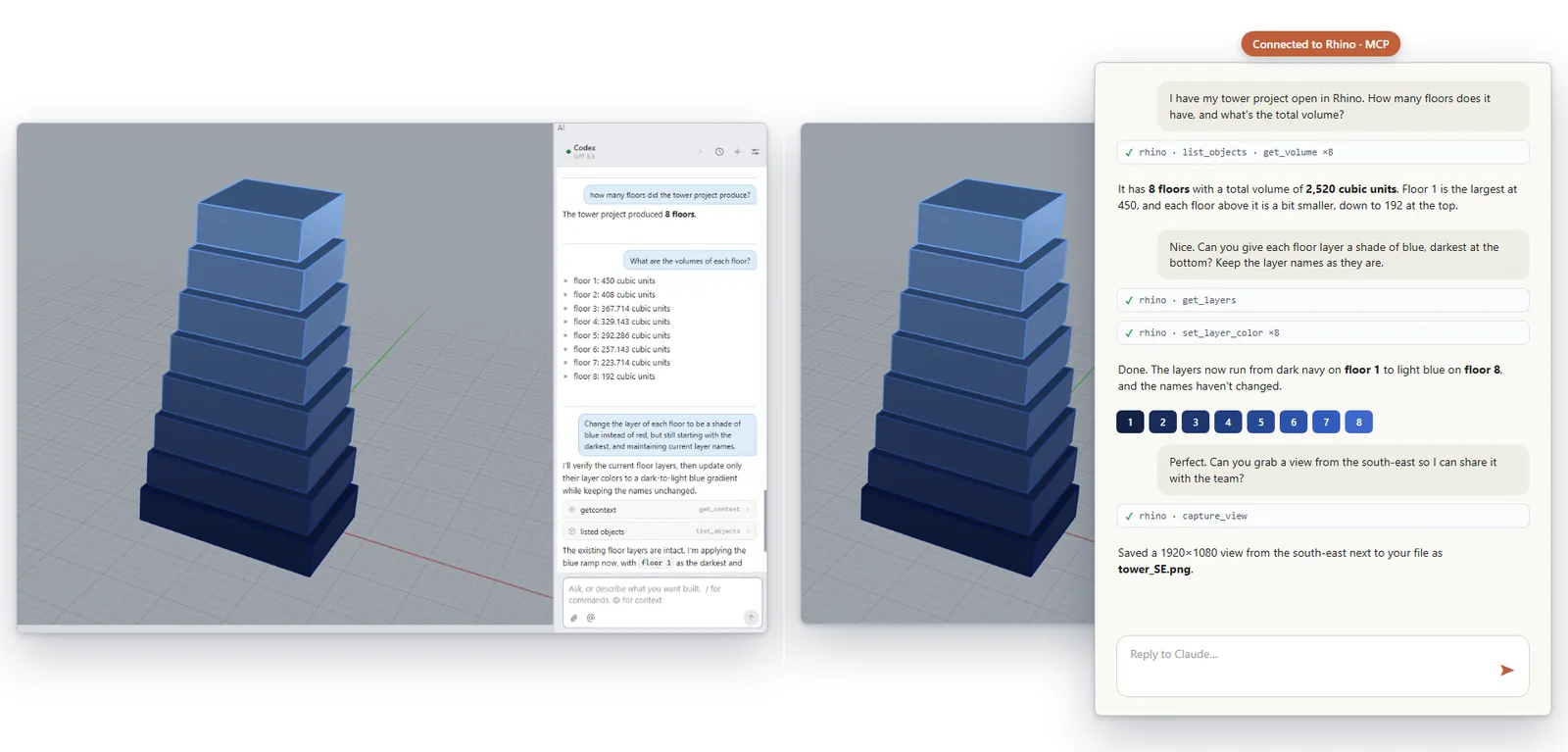
Brian James, a McNeel trainer and support specialist, opened his session with a slide that read “I don’t write or read code”. He has nonetheless released four free plug-ins under the MIT licence through Rhino’s Package Manager, one of which, Woolly Rhino, adds hair to an object as thin meshes. He built them with Claude Code linked through an MCP server to a running copy of Rhino, and used GitHub Desktop to roll back failed experiments. His contribution, he argued, is knowing how Rhino should behave, such as asking the AI to join the hairs into one mesh so the model stays fast.
How RhinoAI works in practice
RhinoAI was written by Callum Sykes, also using Claude Code, and is published on GitHub. It works in two ways. A panel inside Rhino can use agents already installed on the computer, such as Claude or Codex, and McNeel’s feature page says users choose which tools the assistant may reach, from read only to full control. Alternatively an outside app can drive Rhino, start and restart it, and run several sessions at once. It is not part of Rhino’s core: users install it themselves, and the model and its cost are their choice.
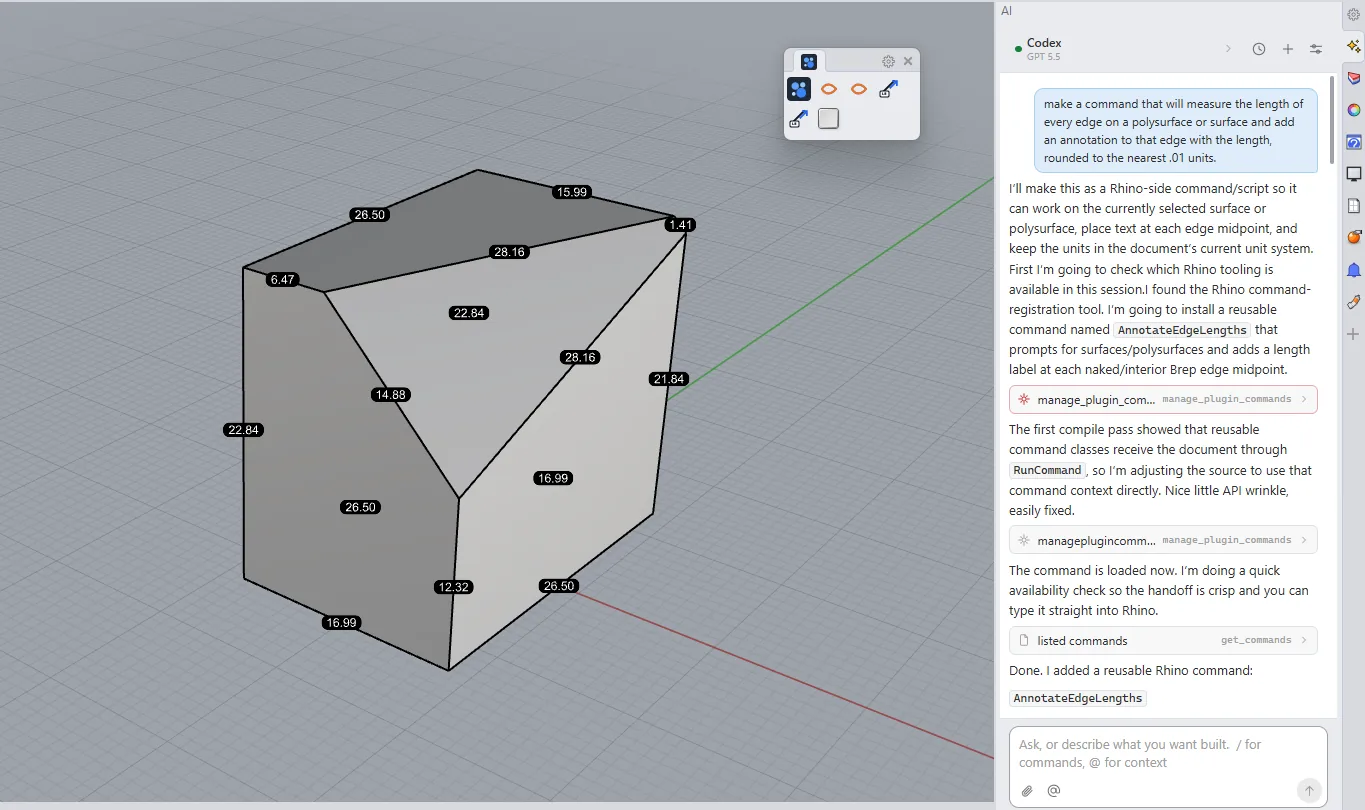
Scott Davidson and Gijs de Zwart presented the results as experiments, with Davidson summing up the caveat as “AI is probably right.” A citrus juicer drawn in three views was modelled within the 30 minute limit they set and turned into a parametric Grasshopper 2 definition. The architectural tests were patchier. Asked to model a stadium from a single AI-generated rendering, the agent failed; given extra views of the same stadium, including some styled as a physical model, it produced a usable model with sensibly named layers. A kitchen built from two photographs was poor until Davidson added a sketched floor plan.
What it means for architects
For practices the message is mixed. Agents can already handle tedious work such as tidying imported models or filling a furniture schedule, but they still need clear inputs and human review. Asked whether AI makes Rhino easier to copy, Bob McNeel replied that 80% of Rhino is not the software but the team, resellers, community and training. James offered blunter advice to anyone worried about their job: “If you’re scared you’re going to be replaced by AI, use AI to replace someone else.”


















Leave a comment