



Table of Contents Show
A greywater recycling system collects gently used water from showers, bathroom sinks, and washing machines, filters and treats it, then reuses it for toilet flushing and irrigation. In buildings, this reduces freshwater demand, lowers utility loads, and supports sustainable water management without touching drinking water supplies.
Most of the water that leaves a building has barely been dirtied. Water draining from a shower or a hand basin carries soap and skin oils, not sewage, so it can be cleaned and put back to work on site. Capturing that flow is the core idea behind greywater systems in buildings, and it is becoming a standard part of how architects plan water use in new residential and commercial projects.
What Is a Greywater System?
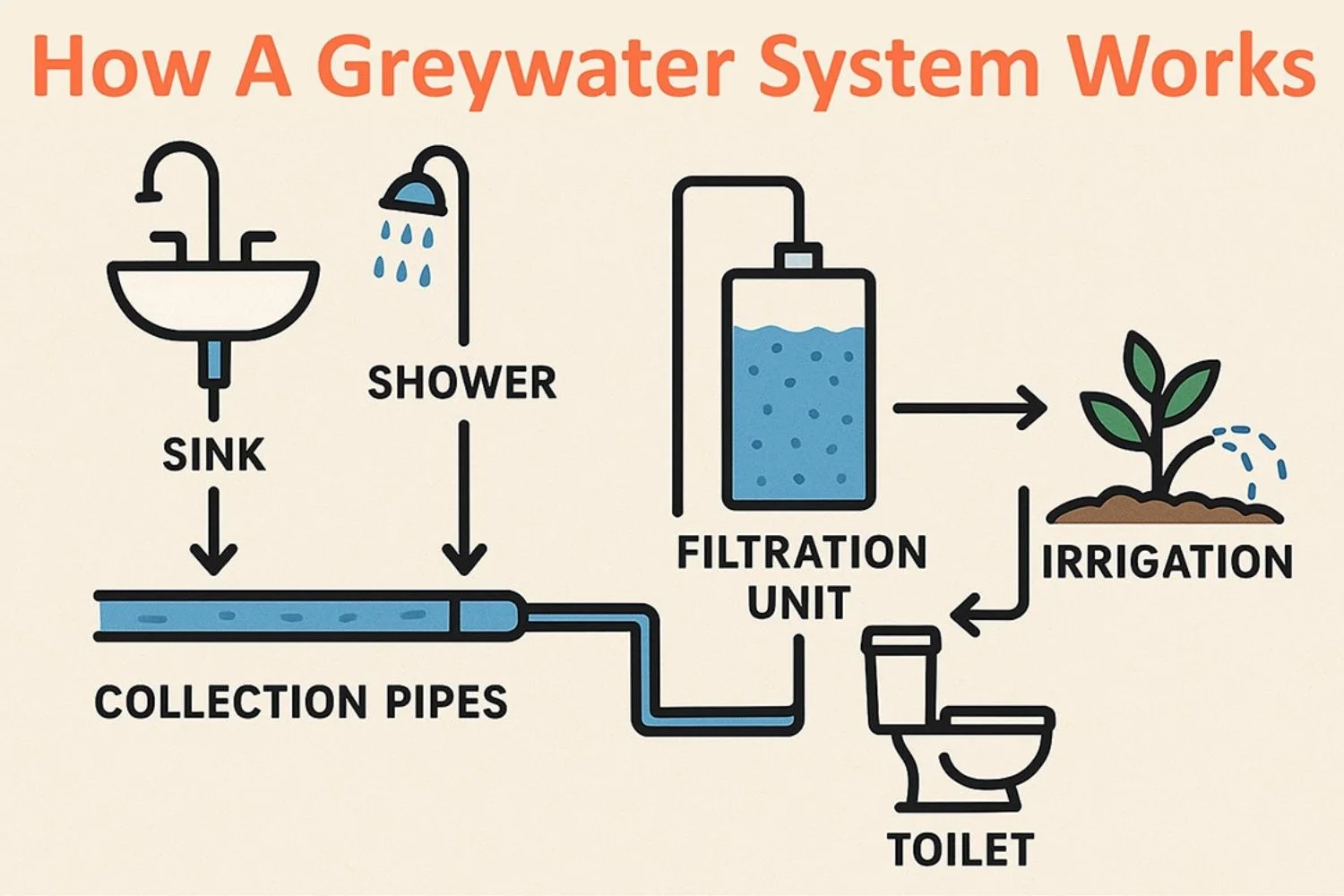
A greywater system is a setup that separates lightly used wastewater from a building’s drainage, treats it to a safe level, and redirects it for non-potable uses. Greywater comes from showers, bathtubs, bathroom sinks, and laundry. It does not include water from toilets or kitchen sinks, which carry food waste, grease, and pathogens and are classed as blackwater.
The distinction matters because greywater is far easier to treat than blackwater. It contains fewer organic solids and a lower pathogen load, so a building can clean it with simpler equipment and reuse it close to where it was generated. Kitchen sink water sits in a grey area for many codes and is often excluded from greywater reuse because of fats and food particles.
🔢 Quick Numbers
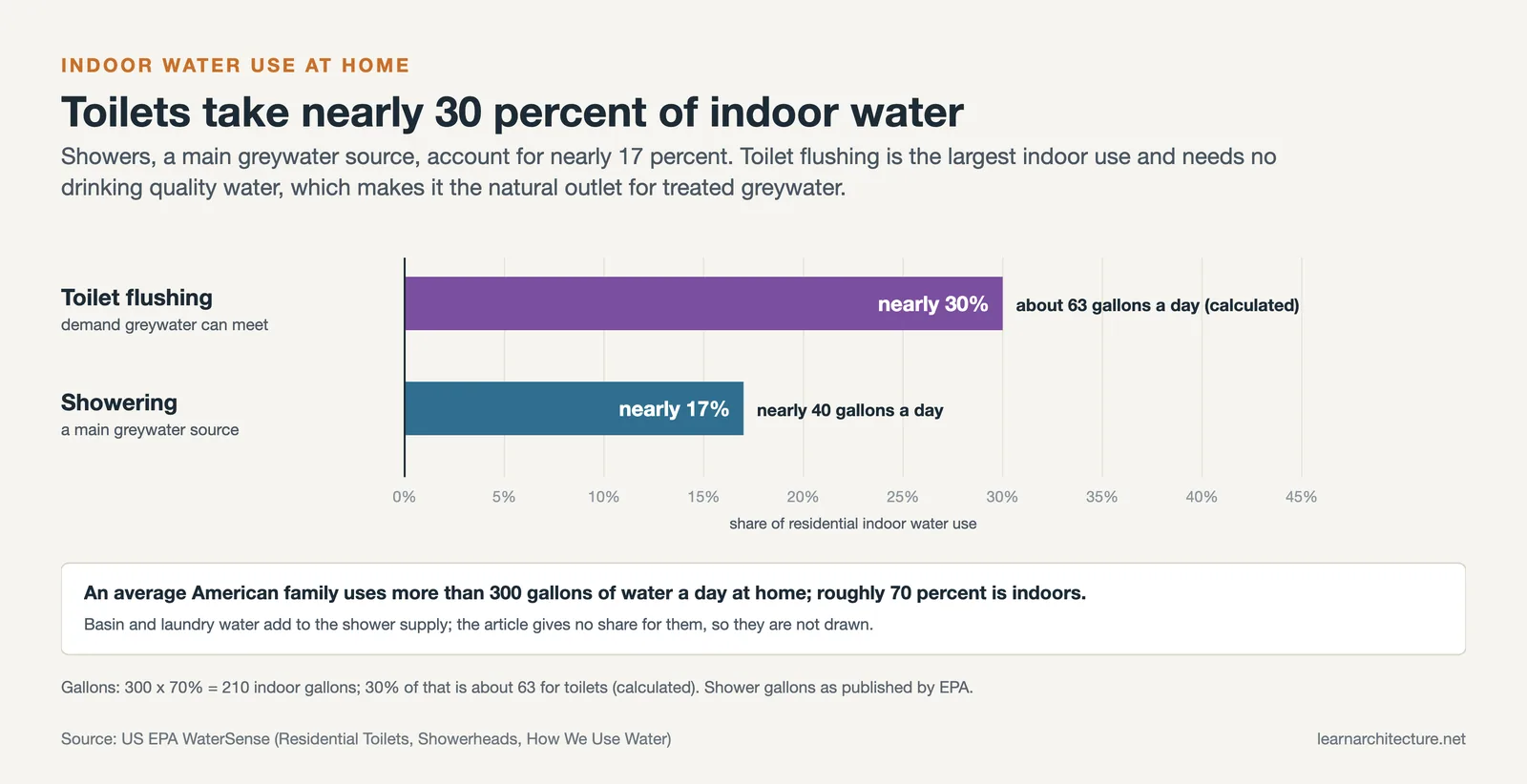
- The average American family uses more than 300 gallons of water at home each day (US EPA WaterSense)
- Toilet flushing accounts for nearly 30% of an average home’s indoor water use, a demand greywater can cover (US EPA WaterSense)
- Showering makes up nearly 17% of residential indoor water use, a primary greywater source (US EPA WaterSense)
- NSF/ANSI 350 sets its residential category at treatment systems handling up to 1,500 gallons per day (NSF/ANSI 350)
How a Greywater Recycling System Works
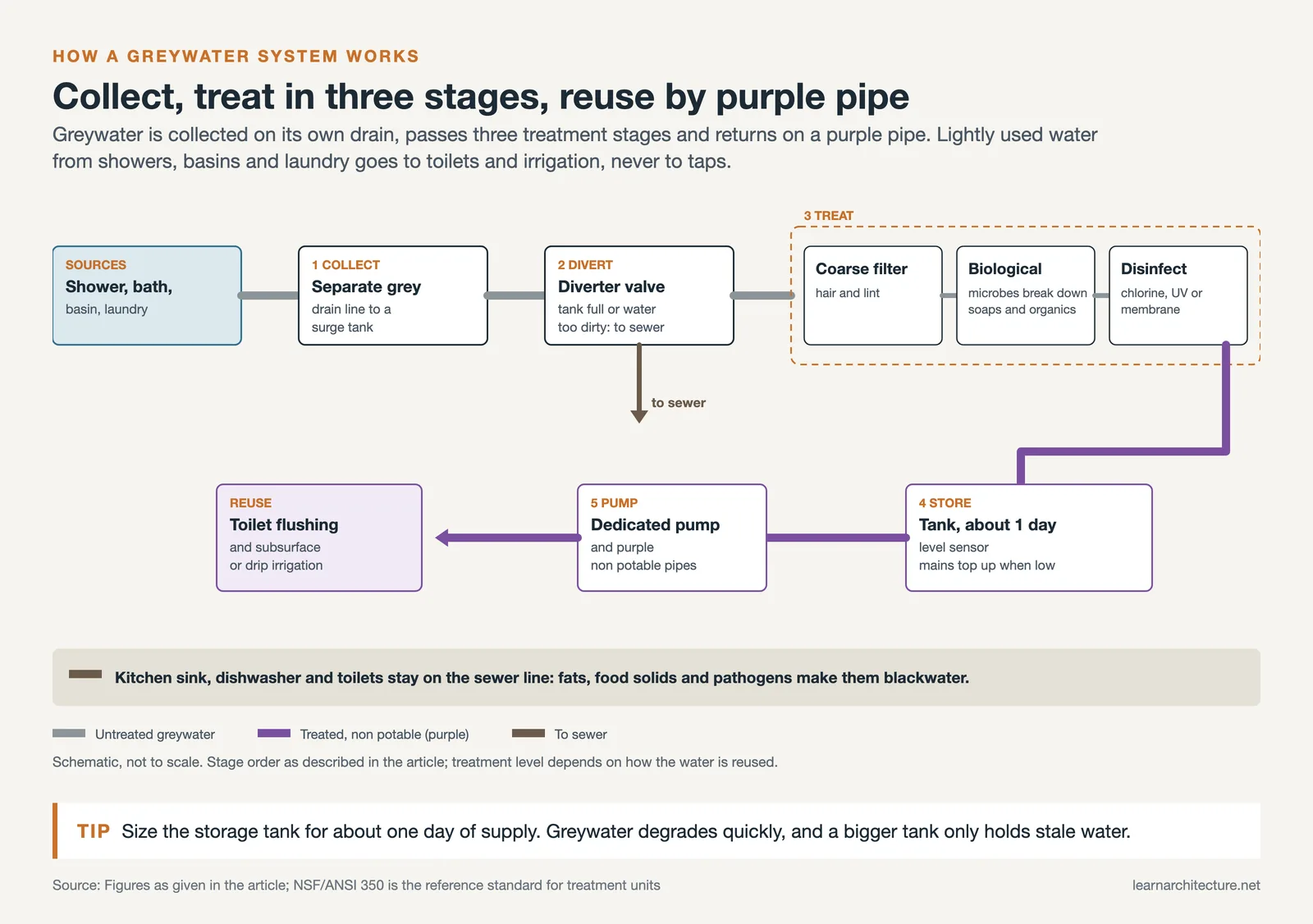
A greywater recycling system moves water through three linked stages: collection, treatment, and distribution. Each stage has its own plumbing and controls, and the level of treatment depends on how the reused water will be used. Irrigation under the surface needs less cleaning than water sent back indoors for flushing.
Collection and Diversion
Greywater fixtures are plumbed onto a separate drain line rather than the main sewer. This second pipe network carries water from showers, basins, and laundry to a collection point, usually a tank or surge vessel. A diverter valve lets the building send greywater to the recycling loop or, when the tank is full or the water is unusually dirty, straight to the sewer instead.
Treatment Stages
Raw greywater cannot sit in a tank for long before bacteria multiply and it turns foul, so treatment starts quickly. A typical sequence runs from coarse filtration that removes hair and lint, through biological treatment where microbes break down soaps and organic matter, to disinfection by chlorine, ultraviolet light, or membrane filtration. The result is clear, low-odor water safe for its intended reuse.
📐 Technical Note
NSF/ANSI 350 is the recognized North American standard for onsite water reuse treatment systems. It sets limits on turbidity and bacteria such as E. coli for treated greywater used in toilet flushing and irrigation, and it is referenced by the International Plumbing Code and the Uniform Plumbing Code. Specifying NSF/ANSI 350 certified equipment gives plan reviewers a clear performance benchmark.
Storage and Distribution
Treated water is held in a storage tank fitted with a level sensor and a backup connection to the mains. When demand exceeds supply, the system tops up from potable water so toilets and irrigation never run dry. A dedicated pump and a separate pipe network, often marked in purple to signal non-potable water, carry the reused supply to fixtures. Color coding and clear labeling prevent any cross connection with drinking water lines.
💡 Pro Tip
When sizing a greywater tank, match storage to a single day of supply rather than a week. Greywater degrades fast, so oversized tanks hold stale water that wastes pump energy on extra disinfection. A short residence time keeps the water fresh and the treatment load low.
Greywater System Architecture and Building Integration
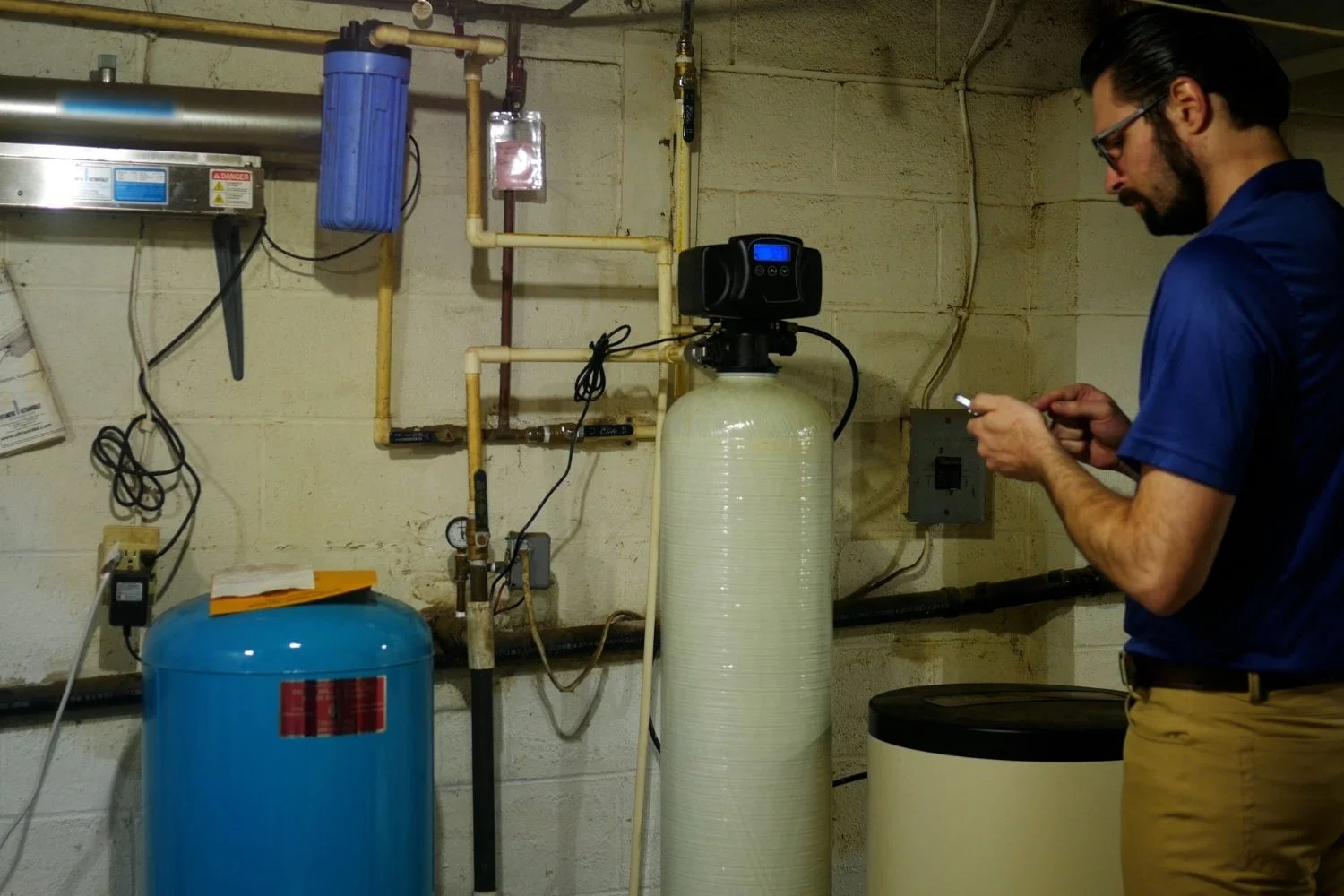
Greywater system architecture is mostly a question of vertical layout. Greywater has to be collected, treated, and then lifted or gravity fed back to the fixtures that reuse it, so the plant room location and pipe routing shape the whole design. In a house, a compact unit often sits in a basement or utility space. In a tower, the geometry is far more demanding.
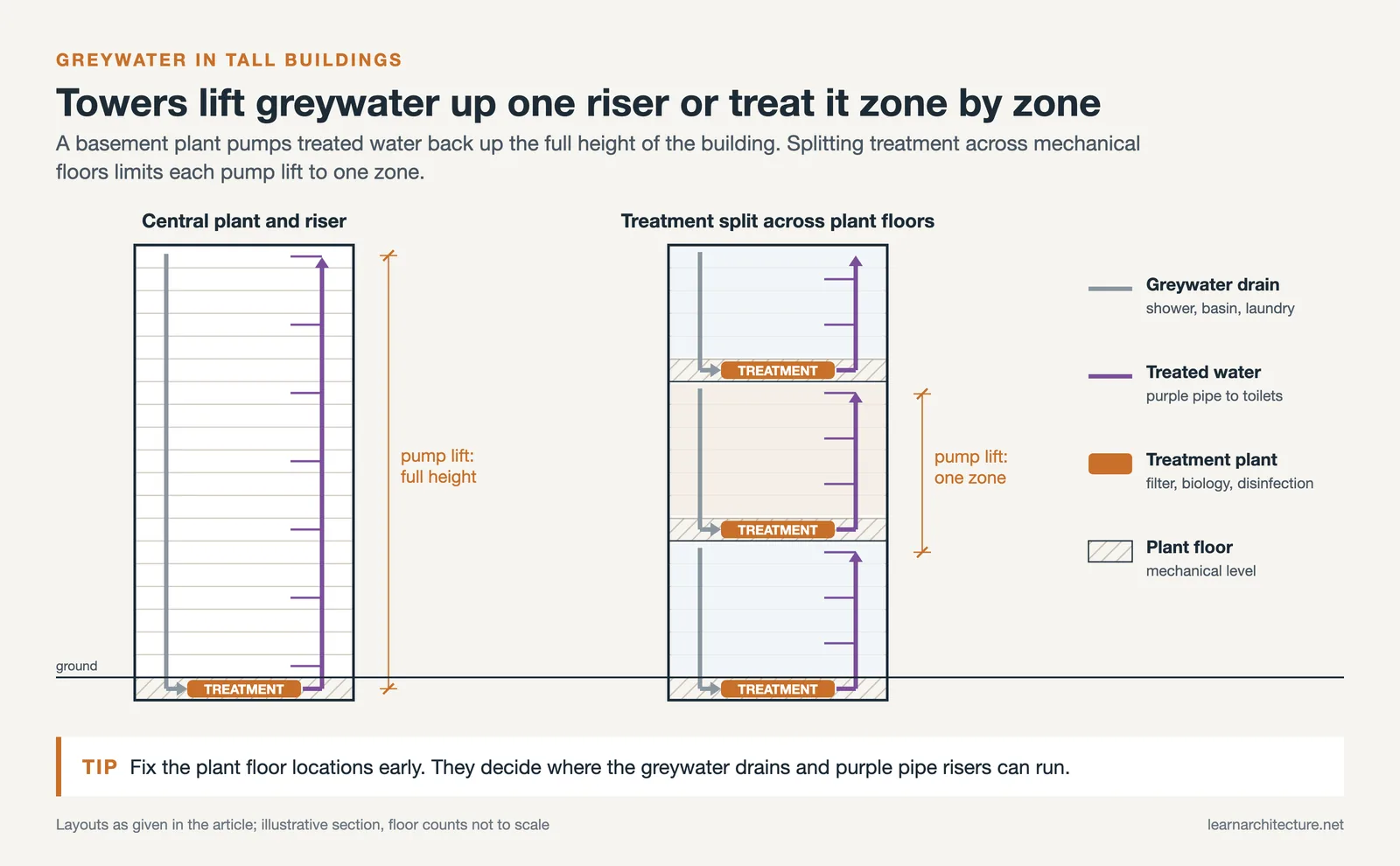
Tall buildings usually treat greywater in a central plant and pump it back up through a riser, or they split treatment across mechanical floors to limit pumping height. The Shanghai Tower processes greywater on site and pairs it with rainwater capture, and its operators report a 40% cut in total water use. London’s Crystal building runs three parallel water circuits, including a blackwater treatment system, and irrigates its landscape almost entirely from water produced inside the building.
Designing a Residential Greywater System
A residential greywater system can be as simple as a laundry-to-landscape line, where the washing machine pump pushes greywater straight to mulched garden beds with no tank and minimal treatment. These laundry-only setups are the easiest to permit in many regions because they avoid storage and indoor reuse. More involved home systems add filtration and a small treatment unit so the water can flush toilets as well.
Integration is easiest when greywater reuse is planned at the drawing stage rather than retrofitted. Routing two drain systems through finished walls and slabs is disruptive and costly, which is one reason new construction adopts greywater more readily than older stock. Pairing a greywater loop with green roofs and rainwater harvesting gives a building several overlapping water sources for irrigation.
⚠️ Common Mistake to Avoid
A frequent error is plumbing the kitchen sink into the greywater line to gain more volume. Kitchen water carries fats, food solids, and grease that clog filters and feed bacteria, and many codes classify it as blackwater for that reason. Keep kitchen and dishwasher drains on the sewer line and limit greywater collection to showers, basins, and laundry.
Benefits and Limits of Greywater Reuse in Buildings
Greywater reuse in buildings cuts potable water demand at two points. It reduces the freshwater drawn from the municipal supply, and it lowers the volume sent to the sewer, easing load on treatment plants. In dry regions and during drought restrictions, an on-site greywater supply keeps gardens alive and toilets working when outdoor watering bans take effect. Reuse also earns points under green rating systems such as USGBC LEED, which credits water efficiency and on-site reuse.
The limits are real and worth stating plainly. A greywater system adds upfront cost for tanks, pumps, controls, and a second pipe network, plus ongoing maintenance for filters and disinfection. Treated greywater is non-potable and must never reach drinking water taps. Pump operation consumes energy, so a poorly sized system can trade water savings for higher electricity use. These trade-offs explain why greywater reuse fits some projects better than others, a balance many sustainable architecture projects weigh against rainwater capture and fixture efficiency.
Material choices feed into the same picture. Durable, low-toxicity pipes and fittings keep a reuse loop reliable over decades, which connects greywater planning to the wider conversation about sustainable building materials and long-life infrastructure.
Codes, Standards, and Safety

Greywater reuse sits at the intersection of plumbing code, public health rules, and local water policy. In the United States, the Uniform Plumbing Code and the International Plumbing Code both contain greywater provisions, and states from California to Arizona have their own adopted rules. The US EPA water reuse program tracks state guidelines and supports on-site non-potable reuse, while EPA WaterSense sets the efficiency benchmarks that reduce how much greywater a building needs in the first place. Treatment certification typically follows NSF/ANSI 350 via the NSF water reuse program for systems that send water back indoors.
Safety design centers on keeping non-potable and potable water strictly apart. Air gaps, backflow preventers, signage, and the purple-pipe convention all exist to stop cross connection. Surface irrigation with untreated greywater is restricted in many places, with sub-surface drip lines required to avoid human contact. A reuse scheme that ignores these rules can fail inspection or, worse, create a health hazard, which is why early coordination with the local authority pays off.
Building codes and water reuse regulations vary by jurisdiction. Always confirm greywater requirements with your local authority, and have treatment specifications verified by a licensed professional for your specific project.
The Bigger Picture
Reusing greywater changes how a building relates to its water supply. Instead of treating every drop as single use and sending it down the drain, the building runs water through more than one job before it leaves. As cities face tighter supplies and stricter discharge limits, that shift from a one-way pipe to a small internal loop may matter as much as any single efficient fixture, and the buildings that plan for it now will adapt faster than those that wait. For more examples of how reuse fits into low-impact design, see these green architecture projects.













Leave a comment