


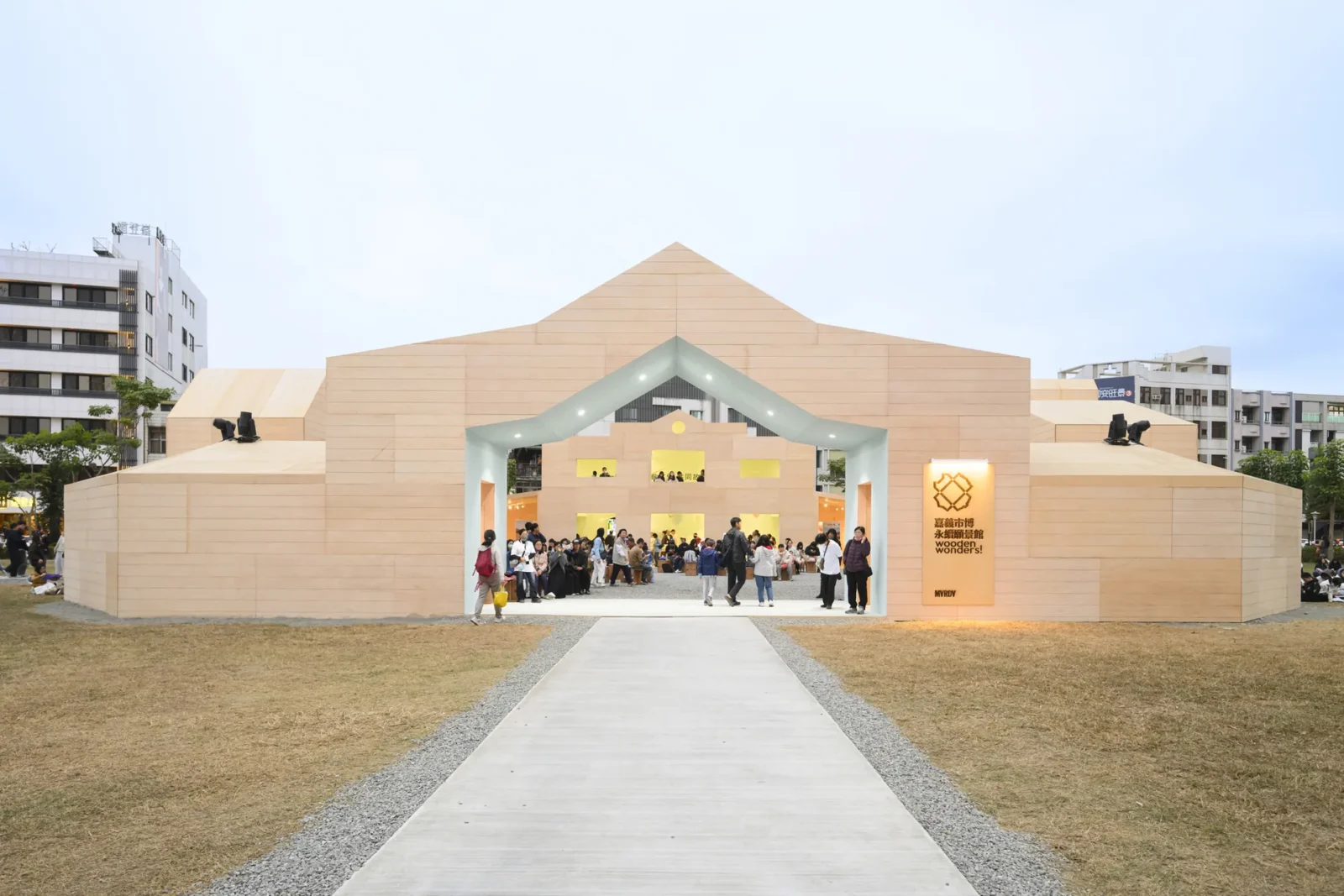


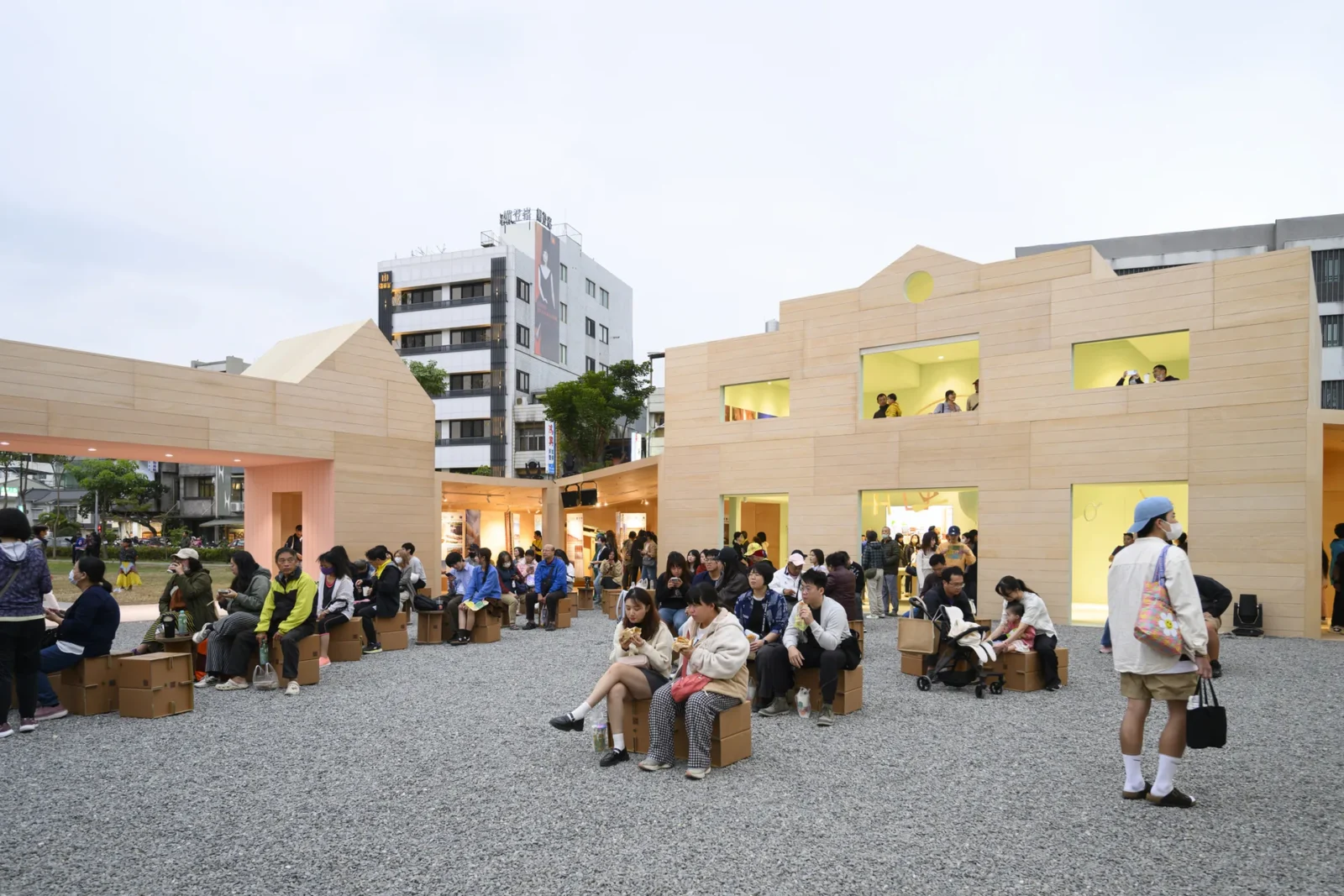




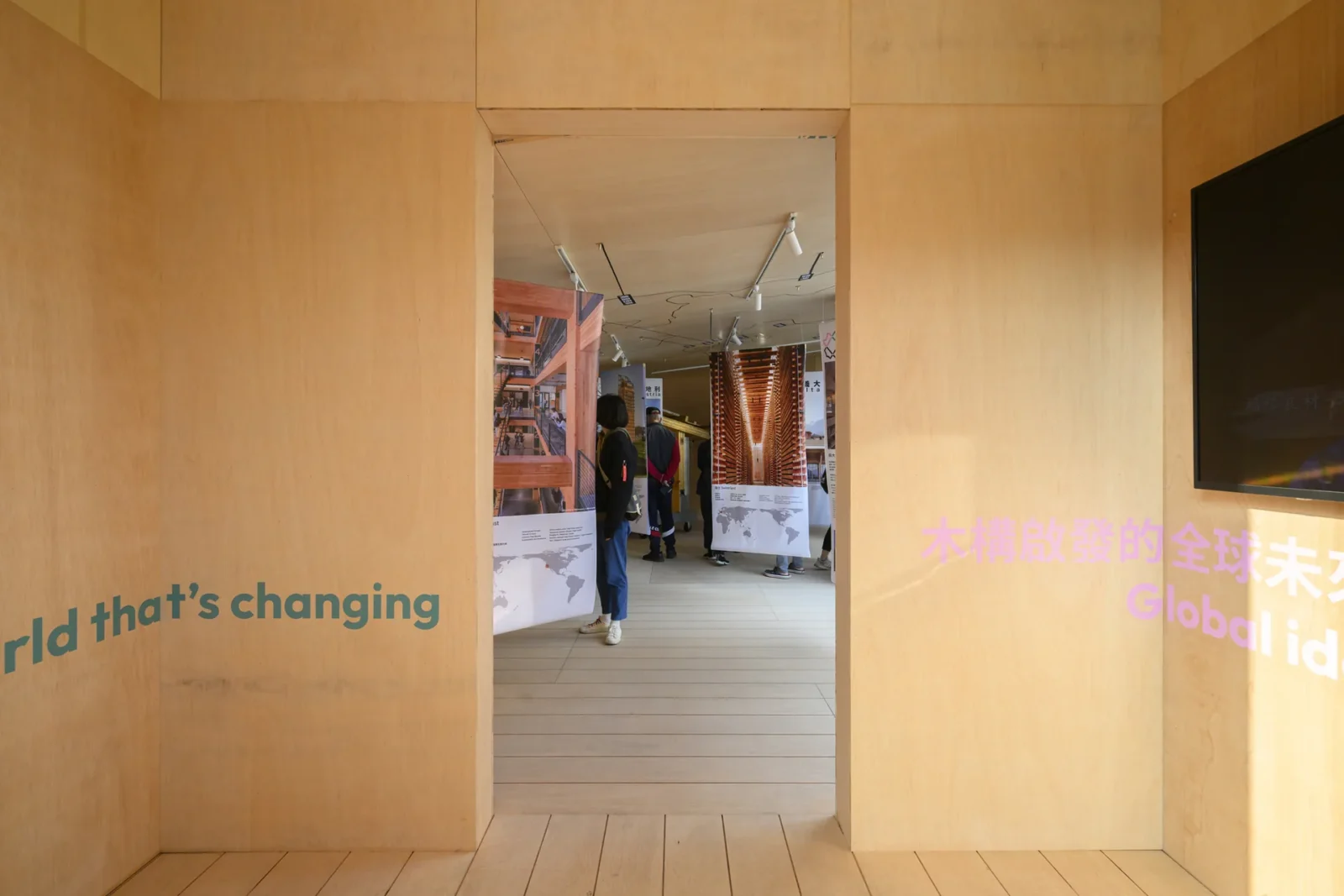




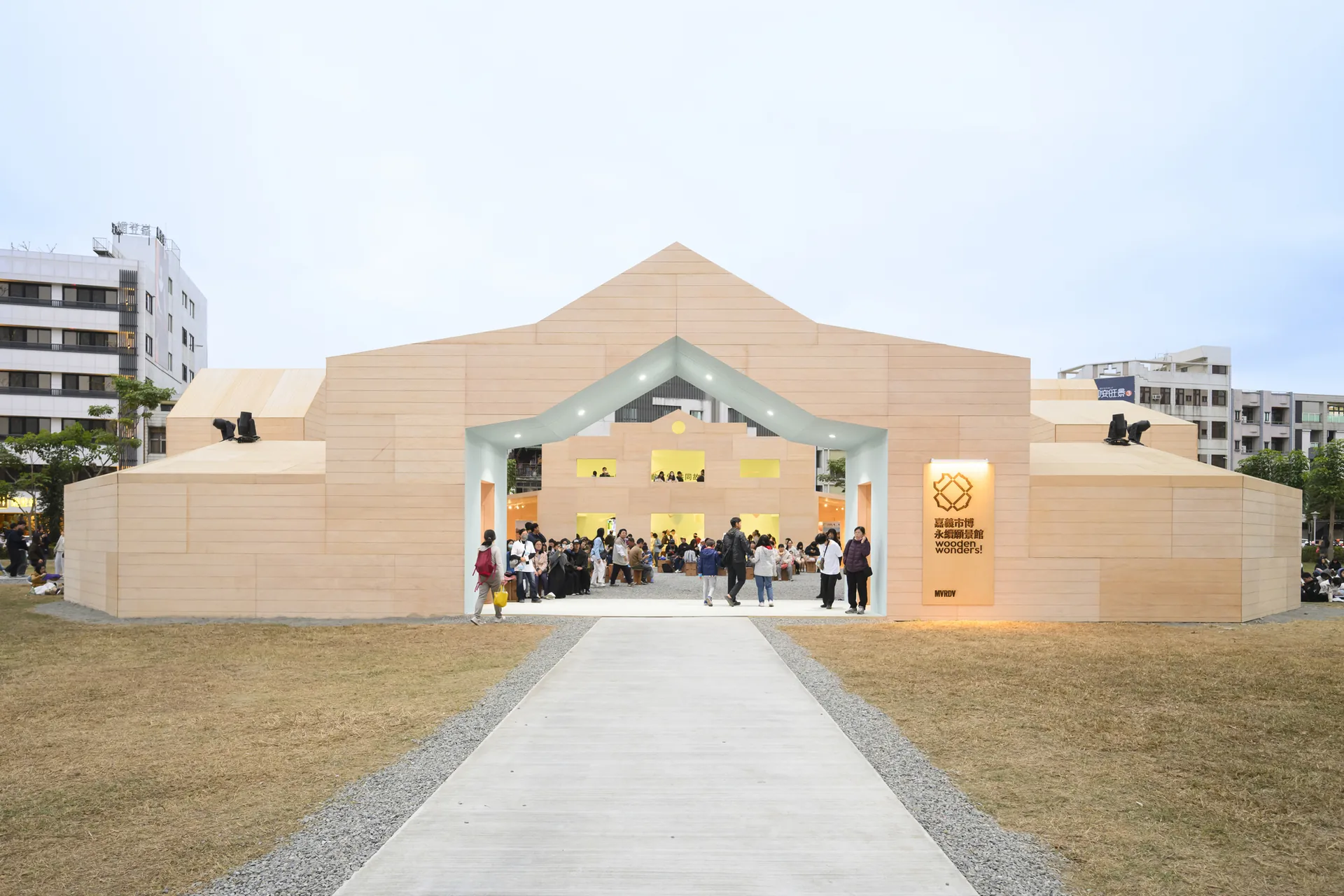
Wooden Wonders is the pavilion MVRDV built for Chiayi’s 321st anniversary, and it is an exhibition about wood that is also an argument made in wood. Standing opposite the city hall in Taiwan, the temporary structure encloses a square courtyard, and the shape of its perimeter comes out of research into how Chiayi actually built with timber. It stood through the anniversary celebrations from 12 to 28 December, giving residents somewhere to gather, learn what the city’s heritage consists of, and argue about what the practice calls Chiayi’s timber future.
The city has a claim to make here. Close to the thick forests of Taiwan’s mountainous interior, Chiayi grew on timber and made everything from it: toys, furniture, whole buildings. Those forests are protected now, and the skills that built the industry have gone out of common memory. What remains is a stock of more than six thousand timber buildings, which the municipality has only lately started to recognise, protect and restore.
An unfashionable material, argued for
In Taiwan many people still read timber as the less reputable option, and seismic regulation makes transforming existing buildings rare, so a pavilion arguing for wood, and for keeping old buildings, is taking a position rather than filling a commission.
MVRDV founding partner Jacob van Rijs frames it as a global story told locally: “Once a pragmatic and widely available construction material, timber became ‘old-fashioned’ when materials such as concrete and steel became cheaper and more efficient.” He adds that the calculation has changed, since “wood stores carbon, while concrete and steel release huge quantities of it into the atmosphere,” and decades of research into engineered timber have made the alternative viable again.
A silhouette taken from the city
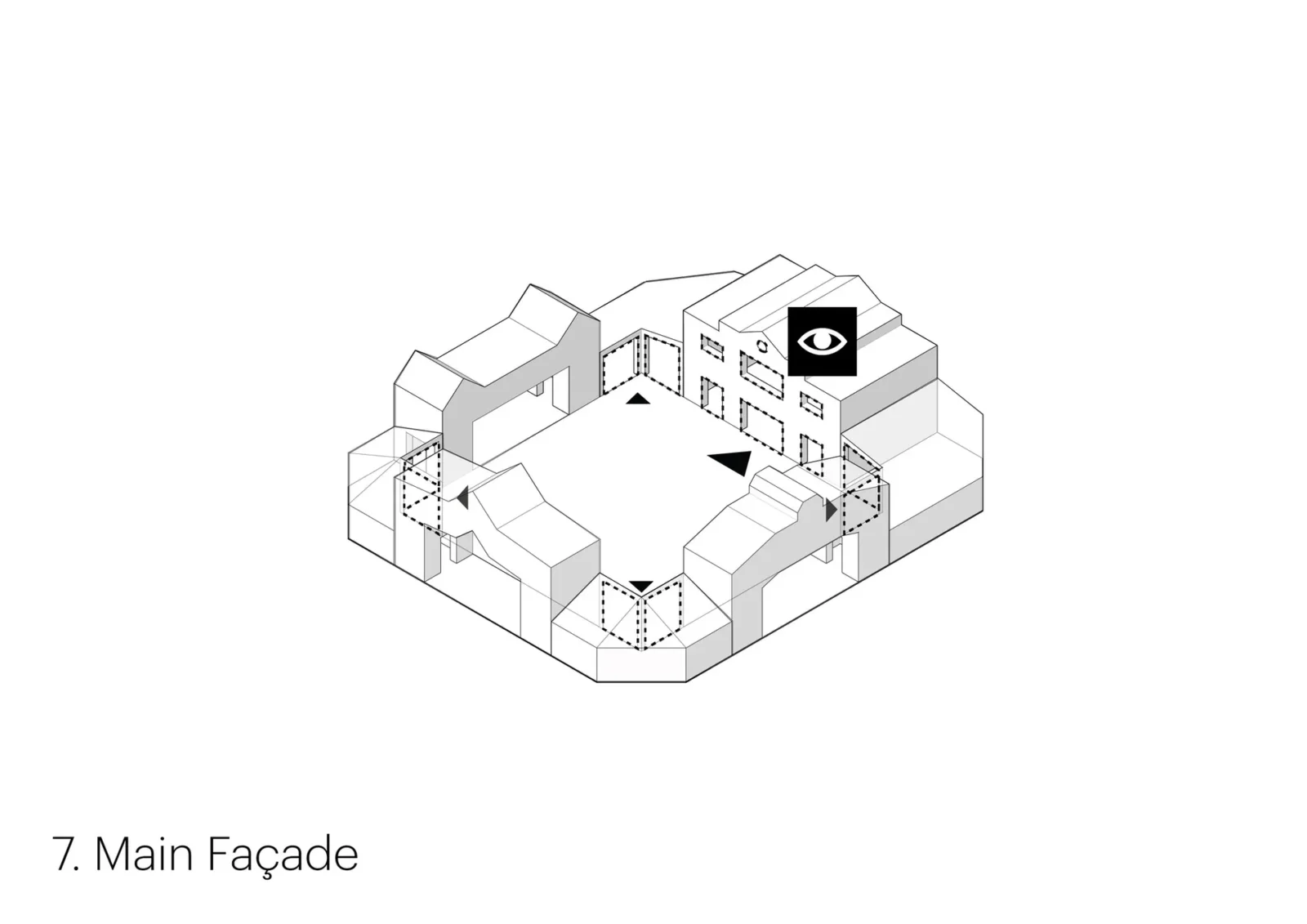
The design started as an architectural survey of the timber buildings Chiayi still has. What the team found was eclectic, spanning many periods and styles, but with recurring features that mark the city’s timber architecture out: the diagonal cut that emphasises a street corner, and rooflines made elaborate by ornamental crowns and decoration on the facade.
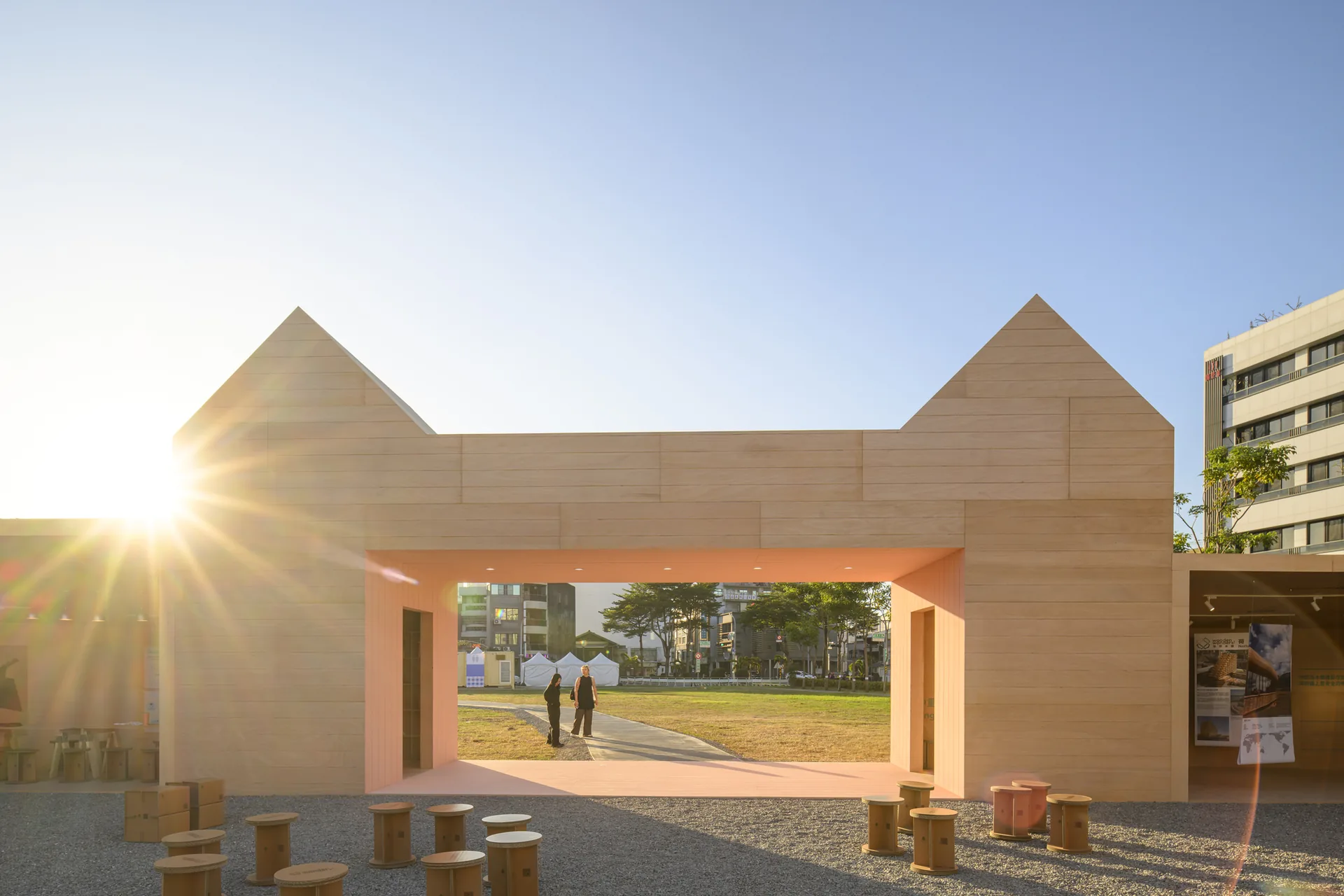
Both come back in the pavilion. Its four chamfered corners answer the cafés and restaurants that sit on Chiayi’s corners, and every side carries a roofline lifted from a particular wooden landmark, a museum and a police station among them. Three of those sides become gateways into the courtyard, and the pastel colours inside them, referencing the colours of the buildings they quote, pull visitors into what is effectively an urban living room.
Five rooms around a courtyard
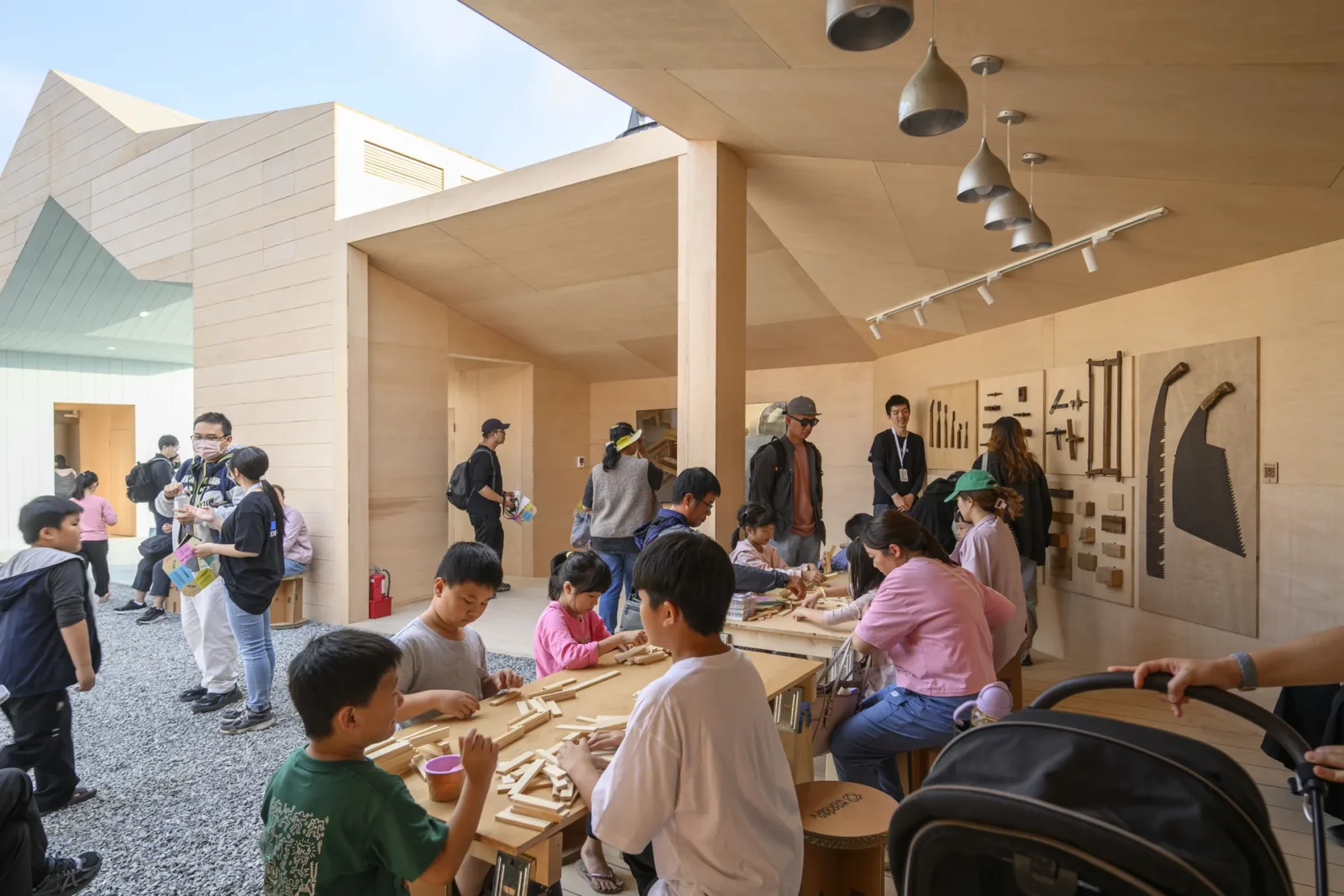
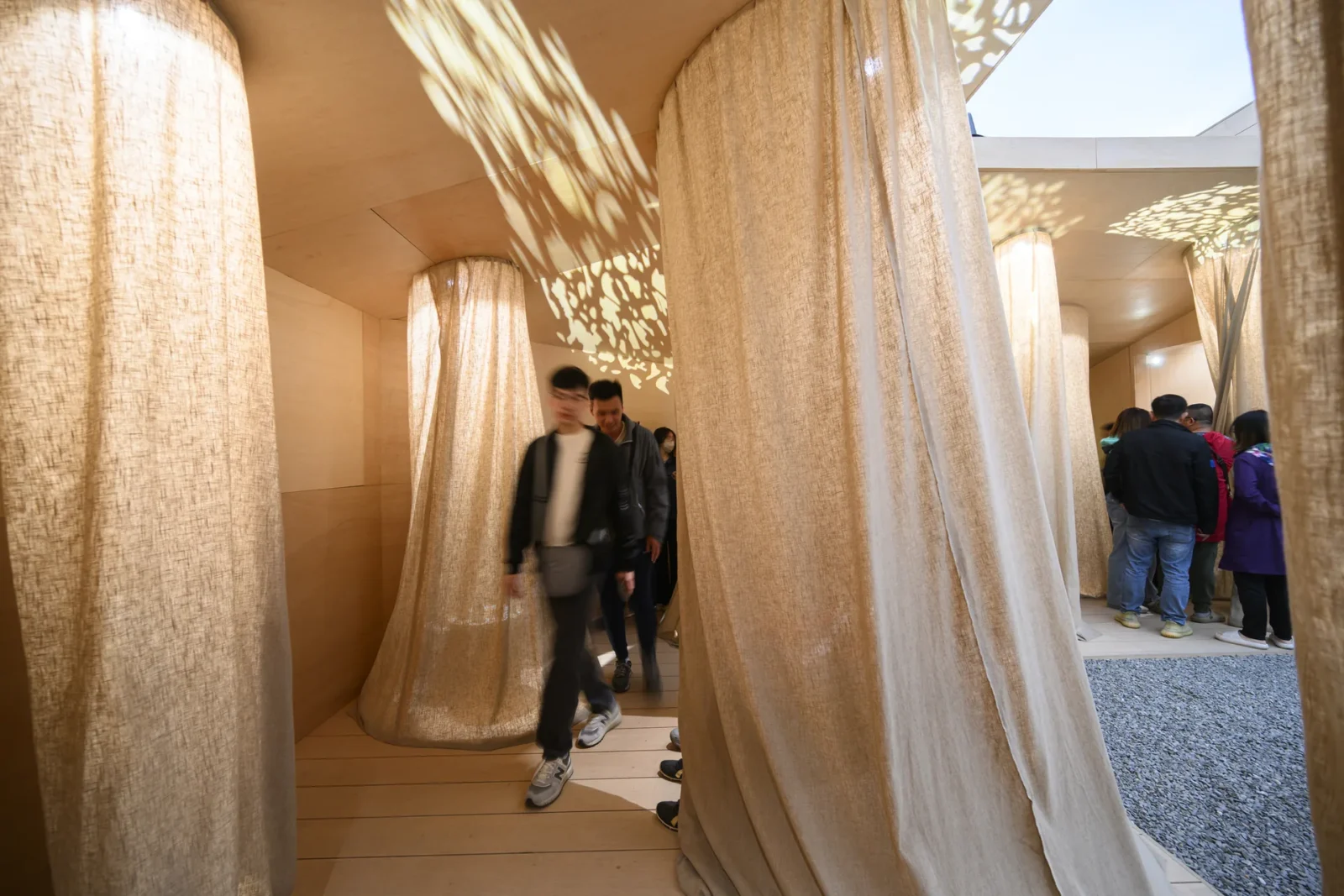
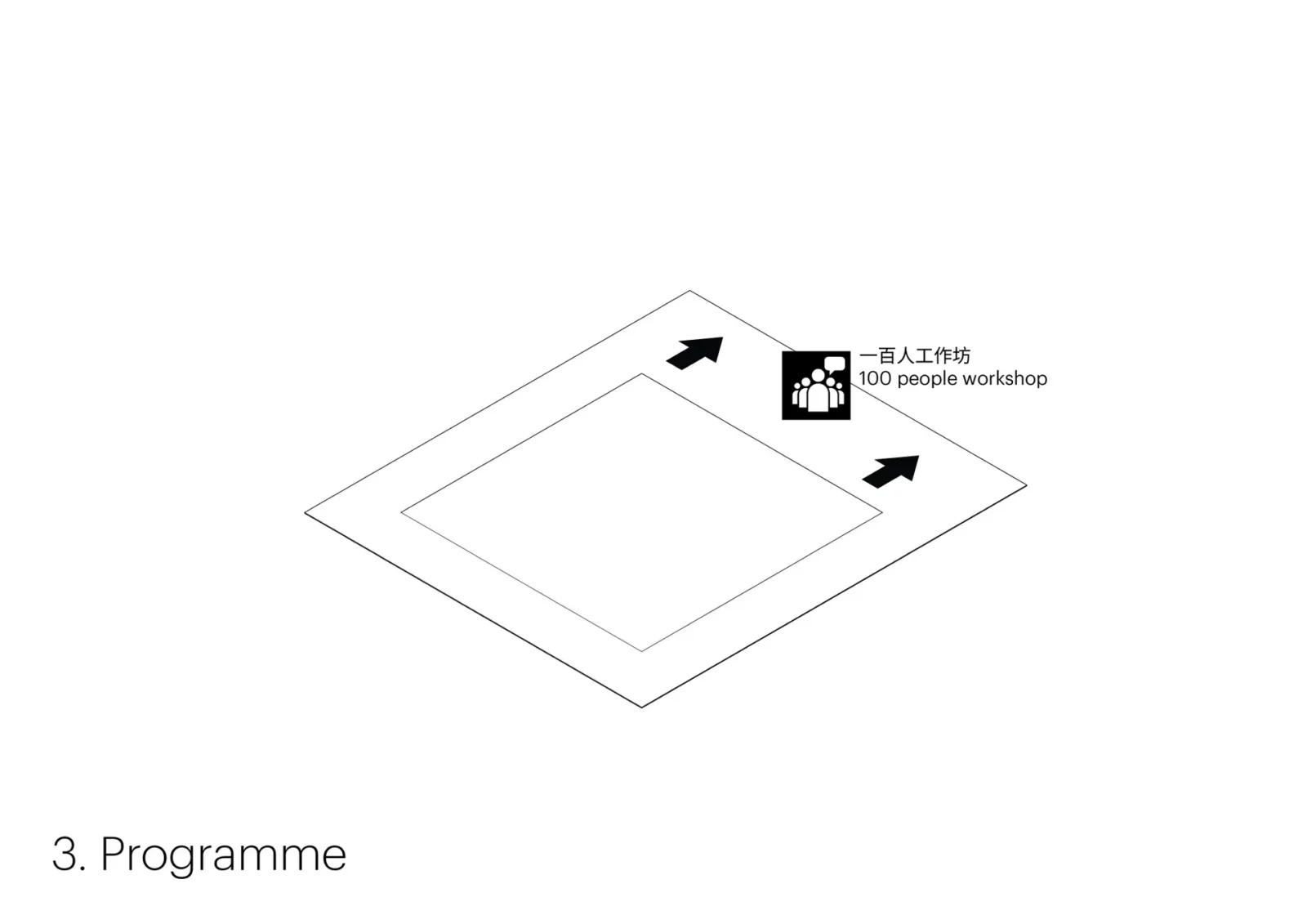
The exhibition runs in the perimeter around that courtyard, in five sections. The first belongs to the forest, and explains how the timber is grown and cut in a display that goes after every one of the five senses. The second is the workshop, and is about the craft Chiayi once had.
The last three look forward, to what Chiayi could be as the wood capital of Taiwan. Comparisons run from Norway to New Zealand, tracing how other regions built a tradition in wood and then bent it to modern conditions so it survived. In the two-storey main hall on the northern side, the exhibition puts Chiayi’s timber future to the visitor directly and invites suggestions for how the city should develop.
The courtyard, with a light show projected onto the facade each evening, and the main hall together made the pavilion the anniversary’s principal gathering space, hosting public forums and lectures through the run.








Leave a comment