



Table of Contents Show
Architecture tuition in Philippines varies dramatically between state-run and private universities, with public schools offering essentially free programs under Republic Act 10931 while quality private institutions charge between ₱70,000 and ₱100,000 per semester. Students who plan around accreditation, board exam pass rates, and total five-year costs can earn a Bachelor of Science in Architecture for as little as ₱30,000 in fees over the entire degree.
Why Architecture Tuition in Philippines Matters for Future Architects
The Bachelor of Science in Architecture is a five-year program in the Philippines, and the financial commitment is one of the biggest factors students weigh before deciding whether to become an architect. According to FEATI University, taking up BS Architecture in the Philippines normally costs a student between ₱500,000 and ₱750,000 in total over five years at a private institution. That figure does not include studio supplies, printing, model materials, fieldwork, or the licensure exam preparation that follows graduation.
Public state universities and colleges (SUCs) offer a very different financial picture. Republic Act 10931, the Universal Access to Quality Tertiary Education Act of 2017, mandates free tuition and most school fees for qualified Filipino students enrolled in SUCs. This single law has transformed access to architecture education, turning programs that once cost tens of thousands of pesos per term into nearly free pathways to a licensed career.
💡 Pro Tip
When comparing architecture tuition between schools, always ask for the full five-year cost including studio fees, drafting fees, and laboratory charges, not just the per-semester sticker price. A school listing ₱40,000 in basic tuition can easily push past ₱75,000 once miscellaneous, drafting, and studio assessment fees are added, which catches many first-year students off guard during enrollment.

How Much Does Architecture Tuition in Philippines Cost on Average?
The average cost depends entirely on whether you choose a state-funded school or a private one. State universities operate under the free higher education law, so qualified Filipino undergraduates pay only minimal documentation, ID, and laboratory deposits. Private architecture schools in Metro Manila typically charge between ₱70,000 and ₱110,000 per semester for first-year students, with later years often running higher because of expanded studio and drafting unit loads.
The cost gap creates two clear paths. Students with strong entrance exam scores and a willingness to navigate competitive admissions can pursue an essentially free architecture degree at a top SUC. Students who prefer smaller class sizes, modern facilities, or specific program tracks may pay private rates but still find substantial savings at certain mid-tier institutions compared to elite private universities.
Public vs Private Architecture Tuition: Quick Comparison
Before getting into individual schools, the table below summarizes the financial reality for Filipino students at the most common architecture program types. Figures reflect academic year 2025-2026 data published by each institution.
| School Type | Tuition per Semester | Estimated 5-Year Total | Best For |
|---|---|---|---|
| State University (SUC) under RA 10931 | Free tuition + minimal fees (₱500-₱3,000) | ₱20,000-₱40,000 | Filipino citizens passing competitive entrance exams |
| Mid-tier Private University | ₱40,000-₱60,000 | ₱400,000-₱600,000 | Students seeking private campus experience at lower cost |
| Top-tier Private University | ₱70,000-₱110,000 | ₱700,000-₱1,100,000 | Students prioritizing facilities and brand recognition |
| Regional Private University | ₱25,000-₱45,000 | ₱250,000-₱450,000 | Students outside Metro Manila looking for value |
On the figures below. Every amount on this page was taken from each institution’s own published material for academic year 2025-2026, and it is the last academic year for which all five schools had released comparable figures. Philippine universities publish new rates per academic year and rarely all at the same time, so treat these as the right order of magnitude rather than today’s invoice, and confirm the current number on the school’s own page before you budget. The section further down shows exactly where each school publishes it and what to ask for.
1. Polytechnic University of the Philippines (PUP) Architecture Tuition
PUP runs the country’s most affordable architecture program through its College of Architecture and Fine Arts (CAFA) at the Sta. Mesa main campus in Manila. Before the free tuition law, PUP charged ₱12 per unit, a rate set in 1979 that became famous as the cheapest college tuition in the country. Today, qualified Filipino undergraduates pay essentially nothing for tuition itself.
The Bachelor of Science in Architecture program is highly competitive, requiring applicants to pass the PUP College Entrance Test (PUPCET). Despite its public status, PUP consistently produces top performers in the Architect Licensure Examination, and its graduates work across both government planning offices and major private firms.
- Tuition for Filipino students: Free under RA 10931 for qualified undergraduates
- Tuition for international students: Approximately USD 2,500 per year
- Acceptance rate: Highly selective, ranging from 20% to 29%
- Location: Sta. Mesa, Manila (main campus)
PUP-CAFA emphasizes public-oriented design and sustainable development, which makes it a strong fit for students drawn to socially conscious architecture. Studio-based learning, critiques, and progressively complex design briefs prepare students for the Architect Licensure Examination governed by the Professional Regulation Commission (PRC) Board of Architecture.
2. Technological University of the Philippines (TUP) Architecture Program
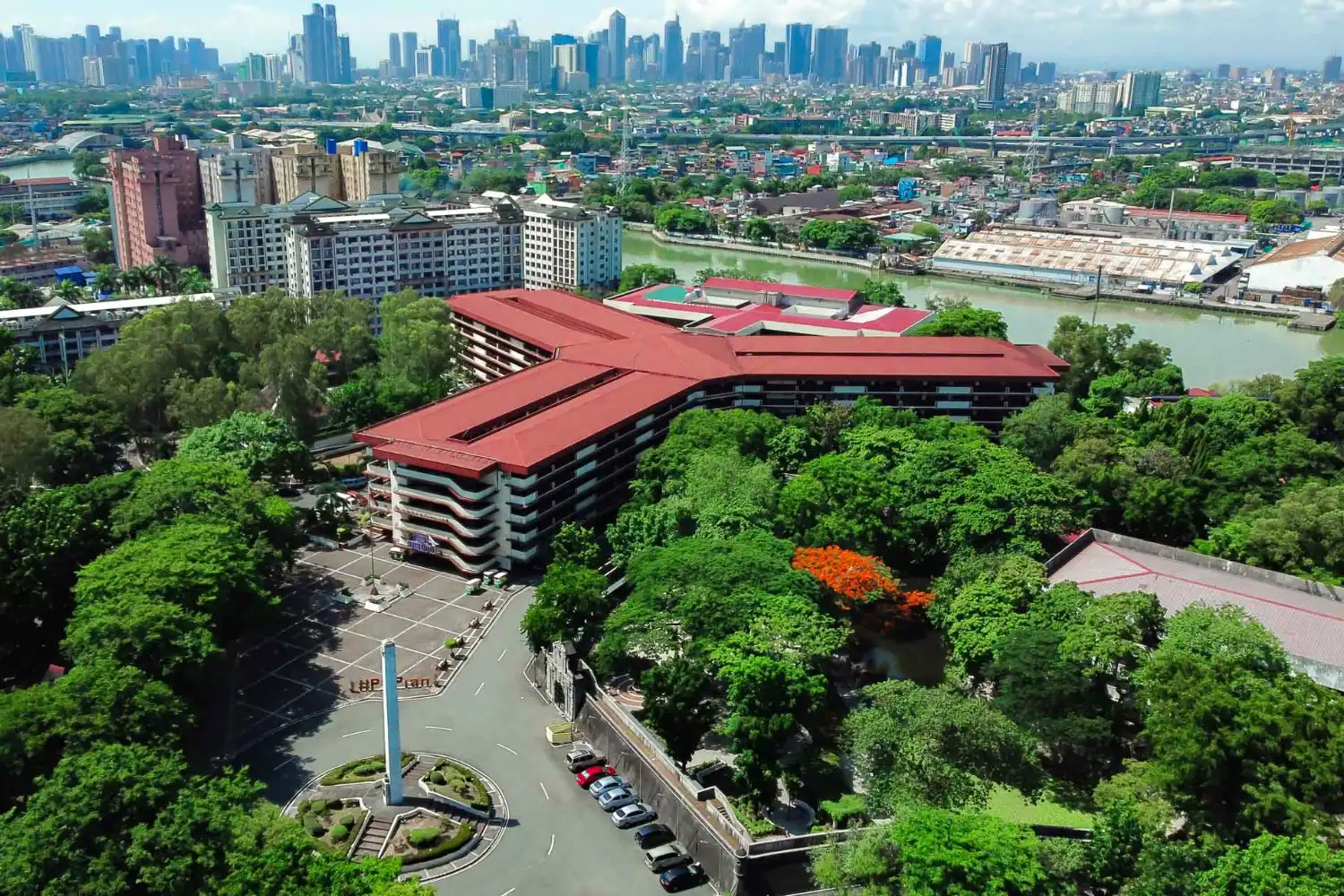
TUP runs another deeply affordable architecture pathway through its College of Architecture and Fine Arts (CAFA) on the Ermita, Manila campus. As a state university, TUP participates in the Free Tuition Law, allowing qualified Filipino students to study with minimal fees for the BS Architecture program.
What sets TUP apart is its technology-driven, hands-on training. The program emphasizes building materials, structural detailing, and construction methods alongside design. Graduates leave with practical skills that translate directly to construction supervision and industry-based architectural work, areas where TUP alumni are well represented in the Philippine market.
- Tuition for Filipino students: Free for qualified undergraduates under RA 10931
- Other fees: Minimal miscellaneous and laboratory charges, plus a ₱400 entrance test fee
- Entrance exam: TUP Scholastic and Technical Aptitude Test (TUPSTAT)
- Program: Bachelor of Science in Architecture (BSA), 5 years
Admission is competitive, especially for architecture and engineering programs, so applicants should plan to submit complete documents early in the cycle. Beyond the BS Architecture, TUP also offers a Bachelor in Graphics Technology with an Architecture major, which appeals to students drawn to drafting and visualization-heavy careers.
📌 Did You Know?
PUP traces its origins to the Manila Business School, founded on October 19, 1904. The College of Engineering was originally established in 1986 as the College of Engineering and Architecture, and the College of Architecture and Fine Arts was elevated as a separate college in 2001. With over 80,000 students across more than 20 campuses, PUP is the largest state university in the Philippines by student population (Wikipedia, 2025).
3. University of the Philippines Diliman: Premier Architecture Tuition in Philippines
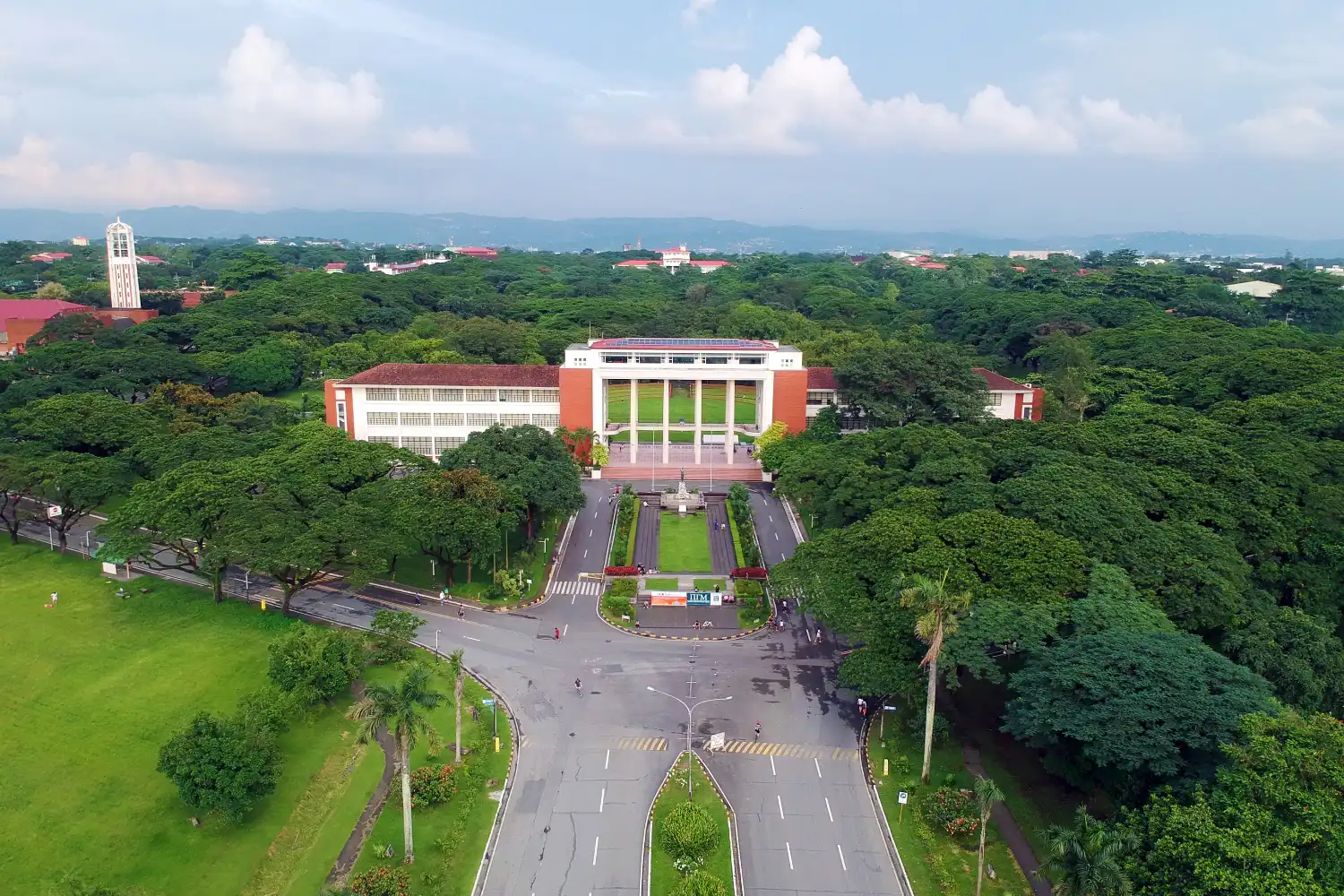
UP Diliman’s College of Architecture (UPCA) is widely regarded as the country’s premier architecture school. As part of the UP System, it falls under RA 10931, meaning qualified Filipino undergraduates pay no tuition or other school fees. This makes UP Diliman one of the most academically rigorous yet financially accessible architecture programs in Southeast Asia.
For students who do not qualify for free tuition, the regular rate is ₱1,500 per unit, which translates to roughly ₱31,500 per semester for a full 21-unit load before miscellaneous fees. The university also runs a Socialized Tuition System (STS) that adjusts costs based on family income, with discounts ranging from 33% off (₱1,000 per unit) up to 100% coverage including miscellaneous and laboratory fees.
What Makes UP Diliman Stand Out
- National university status: UP is the country’s national university with the strongest research focus in architecture
- Comprehensive curriculum: Programs cover urban design, heritage conservation, and sustainable architecture
- Graduate options: Master of Architecture and other specialized graduate programs available at the same campus
- Tuition cost (Filipino): Free for qualified students, otherwise ₱1,500 per unit
Admission to UP Diliman requires passing the UP College Admission Test (UPCAT), one of the most competitive entrance exams in the country. The combination of free tuition for qualified students and the school’s reputation makes UPCA admission highly sought after every cycle.
4. University of the East (UE) Architecture Tuition
For students who prefer a private university experience but want to keep costs manageable, the University of the East offers one of the more accessible price points in Manila’s University Belt. UE’s College of Architecture and Design has trained architects since the 1960s, and the school has long marketed itself as a private institution focused on accessible quality education.
UE’s tuition rates run between ₱800 and ₱1,800 per unit depending on the program, which translates to a notably lower per-semester bill than top-tier private competitors. The Manila campus along Recto Avenue puts students at the heart of Manila’s University Belt, with easy access to LRT Line 2 and the architectural heritage of nearby Intramuros.
- Status: Private non-sectarian university with CHED autonomous status
- Tuition range: Approximately ₱800 to ₱1,800 per unit
- Campus: Recto Avenue, Manila (main campus)
- Notable feature: One of the most affordable private universities in Metro Manila for architecture
UE attracts students who want the structure and facilities of a private university without the financial pressure of elite institutions. Architecture students benefit from being in the University Belt area, where multiple architecture schools, supply shops, and printing services are clustered within walking distance. For broader context on how to evaluate program quality beyond cost, our coverage of the best architecture schools walks through accreditation, curriculum, and location criteria that apply globally.
🎓 Expert Insight
“The act of planning, architectural and structural designing, specifying, supervising, and giving general administration and responsible direction to the erection, enlargement or alterations of buildings” — Republic Act No. 9266, The Architecture Act of 2004
This legal definition matters for students choosing a school because only graduates of CHED-recognized BS Architecture programs can sit for the Architect Licensure Examination administered by the PRC Board of Architecture. All five universities in this guide hold proper accreditation, but applicants should always verify a program’s CHED recognition before enrolling.
5. Far Eastern University (FEU) Institute of Architecture and Fine Arts
FEU’s Institute of Architecture and Fine Arts (IARFA) sits at a higher price point than the previous schools but earns its place on this list because it offers something rare: nationally recognized program quality combined with regular freeze announcements on tuition. FEU declared no increase in tuition fees for School Year 2025-2026, which keeps the program competitive against rising costs at peer institutions.
For academic year 2025-2026, FEU tuition for freshmen ranges from approximately ₱53,898 to ₱99,930 depending on the program. The Architecture program for second-year students in academic year 2024-2025 had a basic tuition of around ₱40,918 per semester (based on 20.5 units at ₱1,996 per unit), with additional drafting fees, miscellaneous fees, and learning journey fees pushing the total semester assessment to approximately ₱71,870 for local students.
FEU Architecture Tuition Breakdown
| Fee Component | Approximate Amount |
|---|---|
| Basic Tuition (per semester, 20.5 units) | ₱40,918 |
| Miscellaneous Fees | ₱14,326 |
| Drafting Fees and SAF (multiple courses) | ₱16,082 |
| Learning Journey Fee + ID Maintenance | ₱544 |
| Total per Semester (Local Students) | ~₱71,870 |
FEU’s Manila campus features the Art Deco architecture designed by National Artist Pablo Antonio, Sr., which the university describes as a living classroom for heritage and design appreciation. The Architecture program offers two specialized tracks (Building Construction and Urban Design), giving students a clearer professional focus as they progress through the five-year curriculum.
⚠️ Common Mistake to Avoid
Many applicants assume “free tuition” at state universities means zero cost across the board. Republic Act 10931 covers tuition and most miscellaneous fees, but students still need to budget for studio supplies, printing, drafting tools, model materials, books, transportation, and living expenses. For a five-year architecture program, these costs can total ₱100,000 to ₱200,000 even at a free-tuition school. Always factor these into your financial plan.
Other Philippine Schools Students Ask About
The five universities above are the ones that come up most often in the affordable bracket, but they are not the only schools people search for. These four appear constantly in enquiries and are worth checking directly, particularly if you are outside Metro Manila.
FEATI University
A private engineering and technology university in Santa Cruz, Manila, with a long-established architecture programme. FEATI publishes one of the clearest public statements of what a five-year private architecture degree costs in the Philippines: it puts the total at roughly ₱500,000 to ₱750,000 across the whole programme, and frames it against expected professional earnings. That figure is the source of the private-school benchmark used throughout this guide. See the official FEATI BS Architecture page.
Adamson University
A private Catholic university in Ermita, Manila. Adamson sits in the mid-range of Manila private tuition rather than the budget bracket, and is worth comparing against UE and FEU if you want a private campus in the same area. Rates are published through the university’s admissions office rather than a standing public table, so ask for the current assessment for BS Architecture directly.
University of Mindanao
The largest private university in Mindanao, based in Davao City. Regional private universities are consistently cheaper than their Metro Manila equivalents for the same accreditation, which is why they appear in the regional band of the comparison table above. If you are from the south, the saving on living costs usually outweighs the difference in tuition.
Architecture Schools in Cebu
Cebu has several accredited programmes, with the University of San Jose-Recoletos among the most visible. Cebu sits between Manila pricing and the wider regional average, and the city has an active construction sector, which matters for internships. Check the USJ-R architecture programme page for the current structure.
How to Choose the Right Affordable Architecture Program
Picking a program is not just about the lowest tuition. The cheapest school does not always produce the best career outcome, and the most expensive school does not guarantee one. Several factors deserve weight beyond the sticker price.
Start with CHED accreditation status. The Commission on Higher Education recognizes specific programs at specific schools, and only graduates of recognized programs can take the Architect Licensure Examination. All five schools in this guide hold proper accreditation, but if you consider a regional school not listed here, verify its CHED recognition through the official CHED Memorandum Orders before applying.
Next, check the school’s recent passing rate in the Architect Licensure Examination administered by the PRC. Some schools consistently produce top 10 placers, while others have lower pass rates that signal weaker preparation for the licensure track. The United Architects of the Philippines (UAP), the integrated and accredited professional organization for architects in the country, is also a useful resource for understanding the licensure process and post-graduation requirements.

Key Selection Criteria Beyond Tuition
- Board exam pass rate: Higher rates indicate stronger preparation for the licensure exam
- Studio facilities: Visit the campus to evaluate drafting rooms, model-making spaces, and computer labs
- Faculty profile: Look for licensed practicing architects who teach part-time or full-time
- Alumni network: Ask current students about internship placements and post-graduation employment
- Location and commute: Architecture students spend long hours on campus during studio weeks, so commute time matters
- Specialization tracks: Some schools offer focused tracks (urban design, heritage, sustainability) that align with specific career goals
The right program balances all of these factors against your budget. A free state university with strong faculty and good board exam results often produces better career outcomes than an expensive private school with weaker preparation, but the reverse can also be true depending on your specific goals and learning style.
How to Check the Current Tuition Yourself
Tuition in the Philippines is quoted in several different ways, and the confusion is where most budgeting mistakes start. Ask for the figures in this order and you will get a number you can actually compare between schools.
- Ask for the per-unit rate, not the per-semester total. Semester totals move with how many units you enrol in, so two students at the same school pay different amounts. The per-unit rate is the only figure that compares cleanly.
- Ask how many units the architecture year carries. Architecture runs heavier than most programmes because of studio and laboratory units. A 21-unit semester at ₱1,500 per unit is ₱31,500 before anything else is added.
- Ask what the miscellaneous and laboratory fees are. These are separate from tuition and, at free-tuition state universities, they are the only thing you actually pay. They are also the fees that free tuition does not always cover.
- Ask whether studio materials are included. They almost never are. Models, printing, boards and drafting equipment run to a meaningful sum across five years and belong in the budget from the start.
- Confirm the academic year the figure applies to. A rate quoted without an academic year is usually last year’s.
Where each school publishes it: state universities post assessment schedules through the registrar or admissions page, and TUP’s estimated tuition fees page is a good example of the format. Private universities are less consistent: FEATI states programme totals on the course page itself, UST maintains a standing tuition page, and several others release rates only through the admissions office on request. If a school does not publish a figure, email admissions and ask for the assessment for first-year BS Architecture for the current academic year — they will send it.
For the wider picture beyond the Philippines, our guides to the most affordable architecture schools in the USA and AA School tuition fees use the same method, and what it really costs to become an architect covers the years after graduation.
Scholarships and Financial Aid for Architecture Students
Even at affordable schools, scholarships can ease the cost of materials, equipment, and living expenses. The Philippines has several programs worth knowing about, and our deeper guide to architecture scholarships for students covers both national and international funding options in detail. The CHED Merit Scholarship Program (CMSP) covers tuition and allowances for outstanding students at participating institutions. The Tertiary Education Subsidy (TES) provides financial assistance for students from low-income families enrolled in SUCs or selected private schools.
Most private universities also offer their own merit-based and need-based scholarships. FEU, UE, and other private architecture programs typically waive partial or full tuition for top entrance exam scorers, varsity athletes, and academic achievers. These institutional scholarships are renewable each semester provided the student maintains the required grade point average.
International students have fewer free tuition options but can apply to scholarship programs through their home government, regional education ministries, or specific bilateral agreements with the Philippine government. Most schools require international applicants to budget between USD 2,500 and USD 3,500 per year for tuition alone, plus visa, insurance, and living expenses.
🏗️ Real-World Example
FEU Manila Campus (1939, expanded through the 1950s): The FEU Manila campus itself was designed by National Artist for Architecture Pablo S. Antonio, Sr., father of FEU’s founder’s family, and is one of the most complete examples of Art Deco campus architecture in the country. Architecture students at IARFA literally study heritage conservation in a UNESCO-recognized cultural property, which doubles as a living example of how academic facilities can shape design education.

Funding is worth treating as seriously as tuition. Our complete architecture scholarships guide covers the application cycle in detail, and how to pay for your degree sets out the funding routes that exist alongside scholarships.
What Comes After Graduation: The Path to Licensure
Tuition is only one part of the financial picture. After completing a five-year BS Architecture program, graduates must complete a two-year Diversified Architectural Experience (DEA) under a registered and licensed architect before sitting for the Architect Licensure Examination. Republic Act No. 9266, the Architecture Act of 2004, requires this practical experience consisting of 3,840 hours documented in a UAP logbook.
This two-year apprenticeship period typically pays modest entry-level wages, so financial planning should account for transitioning from full-time student to junior architect. Many graduates from PUP, TUP, and UP Diliman have an advantage here because they enter the workforce without significant student debt, giving them flexibility to take longer apprenticeships at design-focused firms rather than chasing higher salaries at construction companies.
Tuition figures and program details in this article are based on publicly available information from each university’s official communications for academic year 2025-2026 and may have changed since publication. Building codes, professional regulations, and licensure requirements vary, so prospective students should always verify current details directly with the school’s admissions office and the Professional Regulation Commission.
✅ Key Takeaways
- State universities like PUP, TUP, and UP Diliman offer essentially free architecture tuition for qualified Filipino students under Republic Act 10931.
- Mid-range private options like UE provide a balance of private campus experience and lower tuition (₱800-₱1,800 per unit).
- Premium private schools like FEU charge approximately ₱70,000 per semester but freeze rates periodically and offer specialized program tracks.
- A five-year architecture degree at a private school typically totals ₱500,000 to ₱750,000, while a state university path can be completed for under ₱40,000 in fees.
- Beyond tuition, students must budget for studio supplies, drafting tools, printing, and model materials, plus the two-year DEA apprenticeship after graduation.
- CHED accreditation, board exam pass rates, and faculty quality matter as much as tuition cost when choosing a program.
Frequently Asked Questions About Architecture Tuition in Philippines
How much is architecture tuition per semester in the Philippines?
At a state university covered by RA 10931 a qualified Filipino student pays no tuition at all, and the semester bill is limited to miscellaneous and laboratory fees. Outside that, the working range is roughly ₱30,000 to ₱45,000 per semester at the more affordable Manila private universities and ₱70,000 to ₱100,000 at the top-tier private schools. Regional private universities typically fall between ₱25,000 and ₱45,000. Because architecture carries a heavy unit load, always convert the per-unit rate against the actual number of units in the year rather than trusting a headline semester figure.
How much does it cost to study architecture in the Philippines?
The total cost ranges from under ₱40,000 over five years at state universities (covered by RA 10931’s free tuition law) to ₱500,000-₱750,000 at private universities. Top-tier private schools like UST or De La Salle-College of Saint Benilde can push past ₱1 million for the full BS Architecture program. The biggest variable is whether you qualify for free tuition at a state university or pay private rates.
Is architecture tuition really free at PUP and other state universities?
For qualified Filipino undergraduate students, yes. Republic Act 10931 (Universal Access to Quality Tertiary Education Act of 2017) covers tuition and most miscellaneous fees at state universities and colleges (SUCs). Students still pay minor charges like ID fees, laboratory deposits, and certain administrative costs, but the bulk of tuition is fully subsidized by the government. Students must meet admission and retention requirements to maintain free tuition status.
What is the cheapest private university for architecture in the Philippines?
Among Manila-based private universities, the University of the East (UE) is generally considered one of the most affordable for architecture, with tuition typically ranging from ₱800 to ₱1,800 per unit. Regional private universities outside Metro Manila can be even cheaper, often charging ₱25,000 to ₱45,000 per semester for the full architecture program.
How long is the BS Architecture program in the Philippines?
The Bachelor of Science in Architecture is a five-year program in the Philippines. After graduation, students must complete a two-year Diversified Architectural Experience (DEA) under a licensed architect before they can sit for the Architect Licensure Examination administered by the Professional Regulation Commission. The total path from college start to full licensure typically takes seven years.
Do international students pay the same architecture tuition as Filipinos?
No. International students do not qualify for free tuition under RA 10931 even at state universities, and they typically pay between USD 2,500 and USD 3,500 per year at most institutions. Some private universities also charge international students additional fees on top of the local tuition rate. International applicants should also budget for visa processing, health insurance, and document authentication costs separate from tuition.












Leave a comment