


Table of Contents Show
How much do interior designers charge depends on the fee model: most charge $100 to $200 per hour, a flat fee of roughly $1,500 to $5,000 per room, or 10 to 30 percent of the project cost. A growing number combine an hourly or flat design fee with a cost-plus markup on the furnishings they purchase for you.
Hiring a designer is one of the biggest decisions in any renovation, yet the question of how much do interior designers charge rarely has a single answer. Fees shift with the designer’s experience, your location, the size of the room, and whether the scope is decoration or full interior architecture. This guide breaks down each pricing model, shows typical ranges, and explains how to budget so you can compare quotes with confidence.
What are the main interior design fee structures?
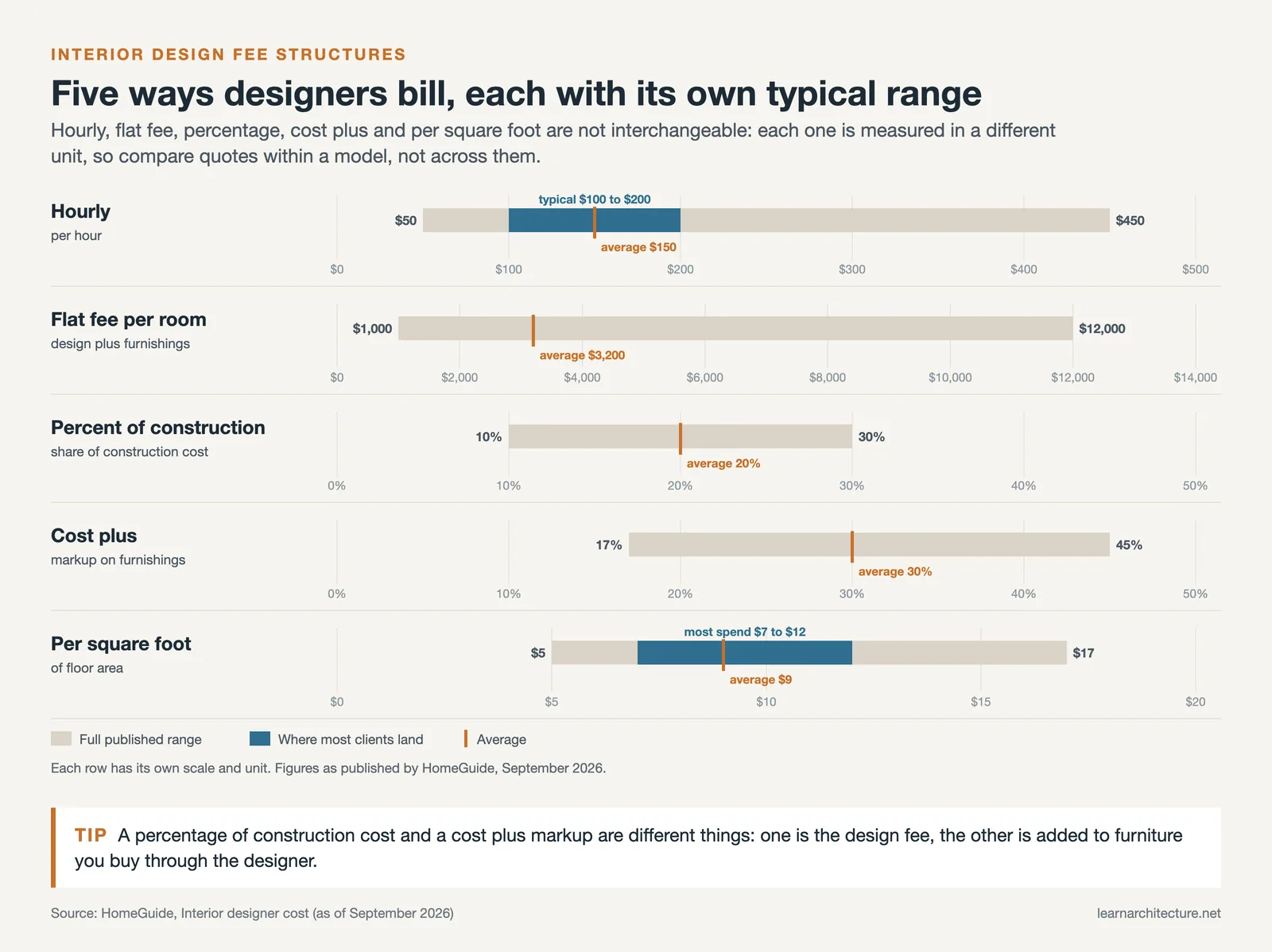
Interior designers use five core fee structures: hourly, flat fee, percentage of project cost, cost-plus, and per square foot. Many practices blend two of these into a hybrid arrangement. Understanding the logic behind each one is the fastest way to read a proposal and judge whether the interior designer cost is fair for the work involved.
The American Society of Interior Designers (ASID) describes the same set of models that most reputable firms still use today, so the vocabulary in your contract should map cleanly onto the structures below.
Hourly rate
With hourly billing, you pay for the actual time the designer spends on your project. Rates commonly run from $100 to $200 per hour, though junior designers may start near $50 and senior principals in major cities can exceed $450. Hourly works well for small, well-defined tasks such as a single consultation, a color scheme, or sourcing one statement piece.
Flat or fixed fee
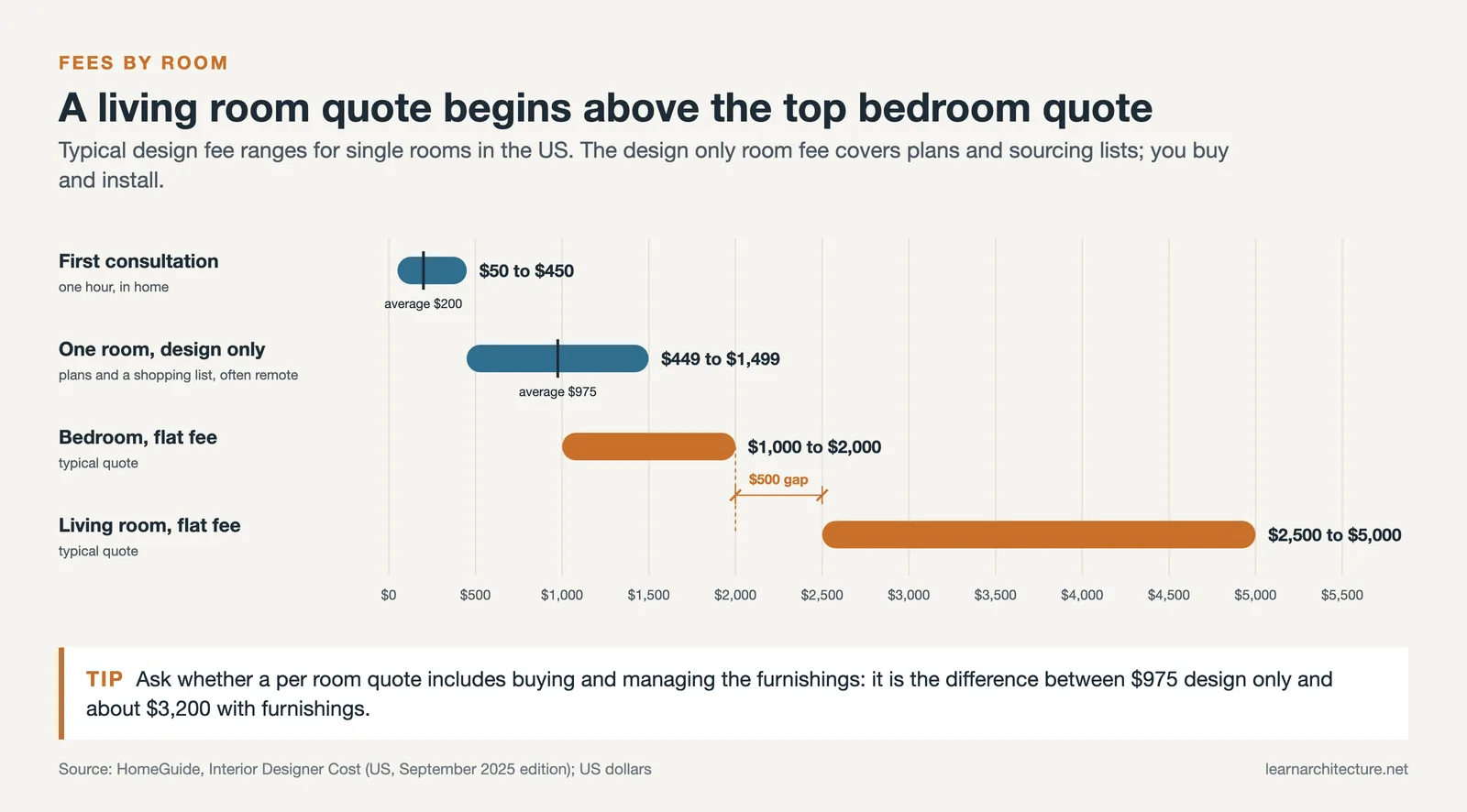
A flat fee sets one agreed sum for a defined scope, from concept through final installation. Home design flat fees range from about $1,000 to $12,000 per room, with most firms landing between $1,500 and $4,900 per room. A living room might be quoted at $2,500 to $5,000, while a bedroom often sits at $1,000 to $2,000. Flat fees give clients predictability, which is why they are popular for full-room makeovers.
🔢 Quick Numbers
- Median annual wage for interior designers was $63,490 in May 2024 (U.S. Bureau of Labor Statistics).
- Typical hourly rates run $100 to $200, with senior principals exceeding $450 (HomeGuide, 2026).
- Flat fees average about $3,200 per room including furnishings, or roughly $9 per square foot (HomeGuide, as of September 2026).
- Percentage-based fees run 10 to 30 percent of the total project cost (Angi, as of September 2026).
Percentage of project cost
Here the designer’s fee is calculated as a share of the total project budget, usually 10 to 30 percent (about 20 percent on average), with design fees alone often pegged at 15 to 20 percent of the construction cost. This model scales with ambition: a larger budget means a larger fee. It suits renovations where the designer coordinates contractors, custom work, and procurement across an entire home.
Cost-plus pricing
Under cost-plus, the designer buys furniture, fabrics, and fittings at a trade discount, then resells them to you at that cost plus a markup of roughly 17 to 45 percent (about 30 percent on average). You benefit from wholesale access while the markup compensates the designer’s sourcing time. Cost-plus is frequently paired with an hourly or flat design fee rather than used alone.
Per square foot
Per-square-foot pricing, common on larger or commercial jobs, multiplies a rate (often around $5 to $17 per square foot for residential work) by the floor area. It gives a quick estimate for big open spaces but can understate the effort in small, detail-heavy rooms like kitchens and bathrooms.
⚖️ Pros & Cons at a Glance
✔️ Hourly Pros: Pay only for time used, ideal for small scopes, easy to start and stop.
✖️ Hourly Cons: Final total is hard to predict, costs can climb on indecisive projects.

How much do interior designers charge by room and project size?
Interior designer fees rise with room complexity and overall project size. A simple bedroom refresh may run $1,000 to $2,000 in design fees, a living room $2,500 to $5,000, and a full-home project can reach five figures once procurement and coordination are included. Kitchens and bathrooms cost more per square foot because of plumbing, cabinetry, and technical detailing.
Scope is the real driver of interior design fees. Decorating an existing layout costs far less than reworking walls, lighting, and built-ins. If your project touches structure or circulation, you are moving toward interior architecture, where coordination with other trades adds hours and raises the total. Reviewing core interior architecture concepts before you brief a designer helps you describe scope accurately and avoid surprise add-ons.
💡 Pro Tip
When you request a quote, ask the designer to itemize the design fee separately from the furnishings budget. Experienced clients keep these two numbers apart so they can compare design talent on a like-for-like basis and adjust the shopping list without renegotiating the whole contract.
What affects interior designer cost the most?
Several factors push interior designer cost up or down. The designer’s experience and reputation set the baseline rate. Location matters too, since metropolitan markets command higher fees. Beyond that, the variables below shape the final number on your proposal.
- Experience and credentials: Award-winning or NCIDQ-certified designers charge premium rates.
- Project scope: Decoration is cheaper than full renovation or interior architecture.
- Room type: Kitchens and bathrooms cost more per square foot than bedrooms.
- Location: Major cities carry higher hourly and flat-fee rates.
- Customization: Bespoke joinery and custom furniture add design hours.
- Timeline: Rushed schedules can trigger expedited fees.
The style you choose also nudges the budget. Highly detailed or layered looks demand more sourcing and specification time than pared-back schemes. If you are still deciding on direction, comparing popular interior design styles first will help your designer scope the work and price it accurately from the start.
⚠️ Common Mistake to Avoid
Many clients confuse the design fee with the total project budget. The design fee pays for the designer’s expertise, but it does not include furniture, materials, or contractor labor. Always confirm what the quoted fee covers, because a low-looking flat fee can sit on top of a much larger furnishings and construction spend.

How do you budget for an interior design project?
To budget for an interior design project, separate the design fee from the furnishings and construction costs, then add a contingency of 10 to 20 percent. Decide which fee model fits your scope, request an itemized proposal, and confirm whether a retainer applies before work begins. This keeps the interior design budget transparent from day one.
ASID notes that designers often require a retainer, an upfront amount applied against the final balance, so factor that into your cash flow. A clear written agreement should spell out the fee structure, what is included, how purchases are billed, and how revisions are handled. Strong space planning early on protects the budget, and learning how to draw a floor plan gives you a head start when discussing layout options with your designer.
🏗️ Real-World Example
Online design services: Platforms such as Decorilla and Havenly offer per-room packages from roughly $300 to $1,600, a fraction of full-service local fees. They suit clients who can shop and install themselves, trading hands-on project management for a lower flat rate and digital deliverables.
Hourly vs flat fee: which model should you choose?
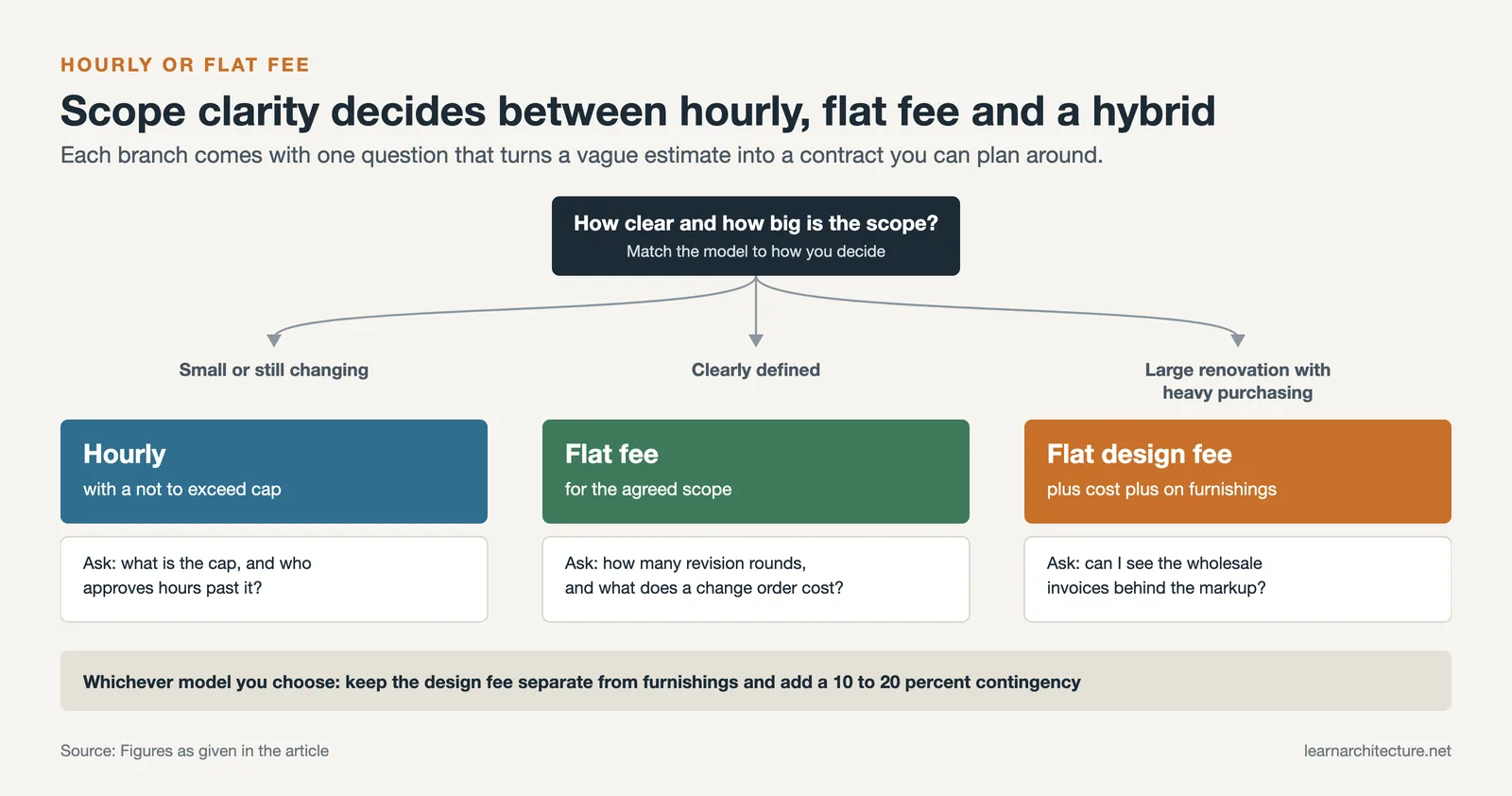
The hourly vs flat fee choice comes down to scope clarity. Choose hourly when the job is small, exploratory, or likely to change, since you only pay for time used. Choose a flat fee when the scope is well defined and you want a predictable total. For large renovations with heavy procurement, a hybrid of flat design fee plus cost-plus on furnishings often delivers the best balance.
Whatever model you pick, the goal is alignment between the pricing structure and the way you actually want to work. Indecisive clients can rack up hours quickly, while clients who change a fixed scope mid-project may face revision charges on a flat fee. Match the model to your own decision-making style, not just the headline rate.
It also helps to ask how each fee model handles overruns. With hourly billing, request a not-to-exceed cap so the total cannot drift past a number you approve. With a flat fee, clarify how many revision rounds are included and what a change order costs. With cost-plus, ask to see the wholesale invoices so the markup is transparent. These small questions turn a vague estimate into a contract you can actually plan around.
Frequently Asked Questions
Do interior designers charge for a first consultation?
Many designers offer a short introductory call for free, then charge for the first in-depth consultation, often a flat fee of $100 to $500 or their standard hourly rate. This session typically covers your goals, budget, and a preliminary direction. Always confirm in advance whether the meeting is complimentary or billable.
Is hiring an interior designer worth the cost?
For most renovations, a designer pays off by preventing expensive mistakes, securing trade discounts on furnishings, and delivering a cohesive result. The value rises with project complexity. For a single small refresh, an hourly consultation may be enough, while full-home projects benefit most from end-to-end management.
How much do interior designers charge per square foot?
For residential work, per-square-foot fees commonly fall between $5 and $17, averaging around $9. Larger commercial projects often use this model because it scales cleanly with floor area, though it can understate the effort in small, detail-intensive rooms such as kitchens.
What is a retainer in interior design?
A retainer is an upfront payment the client makes before work begins, applied against the final balance at the end of the project. It secures the designer’s commitment and covers early costs. The amount varies by firm and is usually defined clearly in the contract.
Putting it all together
Once you understand the five fee models and what drives each one, comparing designer quotes becomes far less intimidating. Map your project scope to the right structure, separate design fees from furnishings, and ask for an itemized proposal so every number is visible. With that groundwork, you can hire a designer whose pricing genuinely fits your space, your goals, and your budget.
Sources: U.S. Bureau of Labor Statistics, Occupational Outlook Handbook; American Society of Interior Designers (ASID); HomeGuide; Angi.







Leave a comment