


Table of Contents Show
Lighting design is the practice of planning how artificial and natural light fill a space so a room is functional, comfortable, and visually balanced. Good lighting design combines three layers, ambient, task, and accent, and pairs each fixture with the right brightness and color temperature for the activity and mood you want.
Most rooms feel wrong not because of the furniture or paint, but because of a single overhead bulb doing all the work. Strong lighting design solves this by treating light as a material you arrange in layers, the same way you arrange seating or storage. This guide covers lighting design basics, the three lighting layers, color temperature, fixture choices, and a room-by-room approach you can apply at home or on a real project.
What Is Lighting Design and Why Does It Matter?
Lighting design is the deliberate selection and placement of light sources to serve both practical tasks and the emotional feel of a space. It matters because light shapes how we see color, depth, and texture, and it directly affects comfort, safety, and how long we want to stay in a room. A well-lit kitchen makes cooking safer; a well-lit living room invites people to linger.
In interior lighting and architectural lighting alike, the goal is rarely maximum brightness. It is control. The same room should be able to host a bright weekday breakfast and a low, warm dinner, and that flexibility comes from how you plan layers, switching, and dimming rather than from one powerful fixture.
📌 Did You Know?
The Color Rendering Index (CRI), the scale that tells you how faithfully a light reveals true colors, was developed by the International Commission on Illumination (CIE). It runs from 0 to 100, and sources rated 90 or above are considered excellent for spaces where accurate color matters, such as kitchens, wardrobes, and art display.
If you are planning a whole room rather than just its lighting, it helps to see how light fits alongside the other decisions. Our overview of interior architecture concepts shows how lighting works together with spatial planning and materials to shape a finished space.
The Three Layers of Layered Lighting
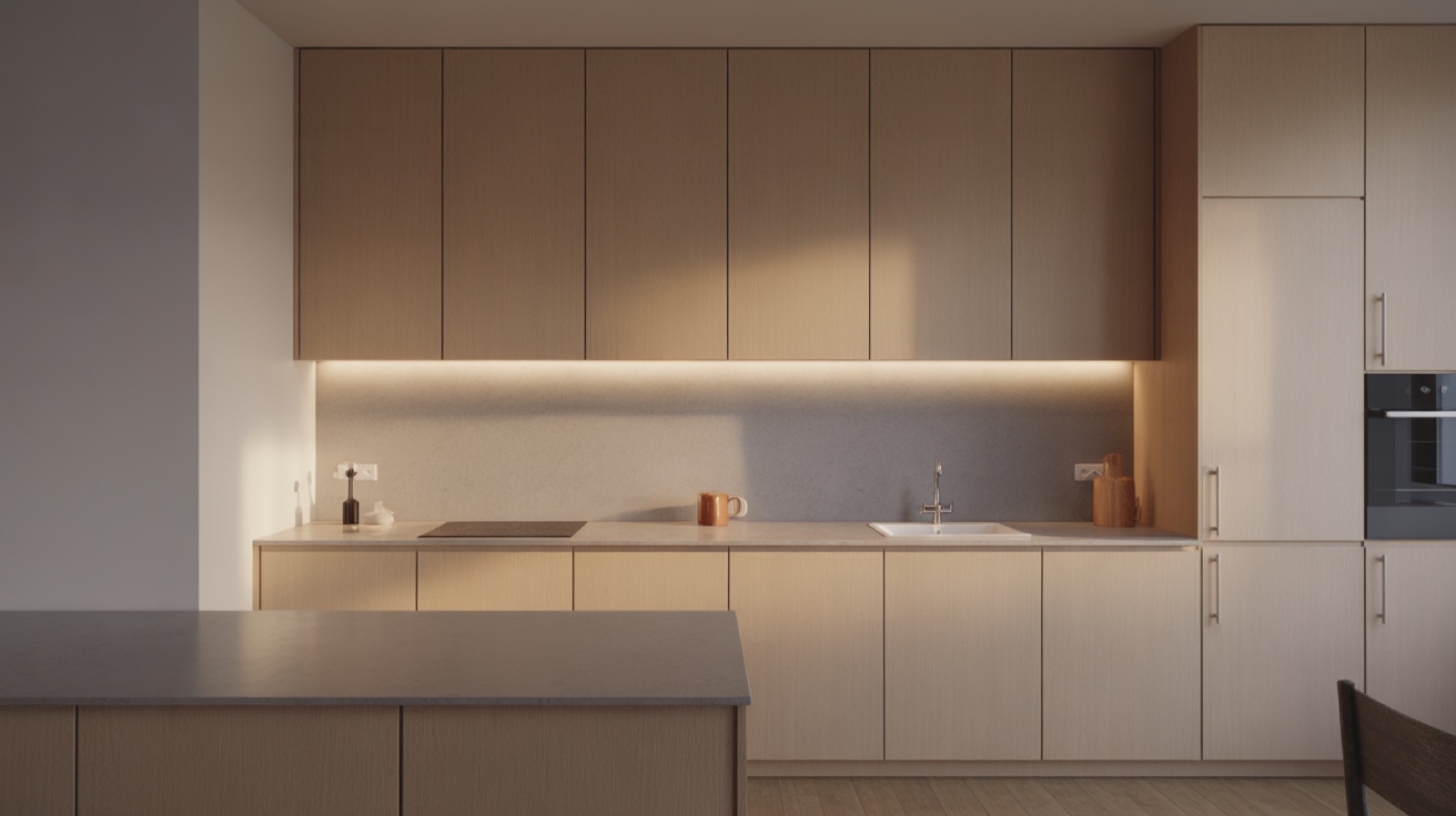
Layered lighting is the backbone of professional lighting design. Instead of relying on one source, you combine ambient, task, and accent lighting so each layer handles a different job. Used together, these three layers give you the ambient task accent structure that lets a single room shift from practical to atmospheric with the turn of a dimmer.
Ambient Lighting: The Foundation
Ambient lighting is the general, overall illumination that lets people move through a space safely and comfortably. It comes from ceiling fixtures, recessed downlights, large pendants, or light bounced off walls and ceilings. The aim is soft, even coverage without harsh shadows or glare. Ambient light sets the baseline mood, so it is usually the first layer you plan and the one most worth putting on a dimmer.
Task Lighting: Light Where You Work
Task lighting delivers focused, brighter light exactly where a specific activity happens: reading nooks, kitchen counters, desks, bathroom mirrors, and stovetops. Because tasks demand visual precision, this layer usually runs at higher light levels and often a slightly cooler or more neutral color temperature than the surrounding ambient light. Under-cabinet strips, desk lamps, and directional spots are classic task fixtures.
💡 Pro Tip
When placing task lighting, position the source so it falls between your eyes and the work surface, not behind you. A common error on kitchen islands is mounting downlights directly overhead, which throws your own shadow onto the counter. Pulling fixtures slightly forward, toward the edge you stand at, removes that shadow entirely.
Accent Lighting: Depth and Drama
Accent lighting highlights specific features: artwork, a textured wall, a bookshelf, a plant, or an architectural detail. It adds depth and a sense of intention by creating contrast between bright focal points and quieter surroundings. Track lights, adjustable spots, wall grazers, and concealed strip lighting are the usual tools. Accent lighting is what separates a flat, evenly lit room from one that feels designed.
Because accent lighting often draws attention to furniture and decor, it works best when planned alongside those pieces. Our guide to furniture and decor in interior aesthetics explains how focal points and proportion guide where attention should land, which is exactly what accent light reinforces.
Understanding Color Temperature
Color temperature describes whether light looks warm and yellow or cool and blue, measured in Kelvin (K). Lower numbers produce a warmer, cozier glow; higher numbers produce a crisper, whiter light. Choosing the right Kelvin value for each room is one of the most impactful decisions in interior lighting, because it shapes mood as much as brightness does.
- 2700K to 3000K (warm white): Best for living rooms, dining areas, and bedrooms, where a relaxed, inviting feel matters most.
- 3500K to 4100K (neutral white): Good for kitchens, bathrooms, and work areas that benefit from clearer, brighter light for detailed tasks.
- 5000K and above (cool white to daylight): Useful for garages, workshops, and utility spaces, but usually too clinical for living areas.
⚠️ Common Mistake to Avoid
Mixing color temperatures within the same field of view is one of the most frequent lighting design mistakes. When warm and cool bulbs sit side by side, the eye struggles to reconcile them and the room reads as inconsistent. Keep all visible sources in a room within a single temperature range, typically 2700K to 3000K for living spaces, unless you have a clear design reason to vary them.

How Bright Should Each Room Be?
Room brightness is measured in lumens, the total light a source emits, and the right amount depends on the activity. Living rooms feel comfortable at lower, layered levels, while kitchens need significantly more light because of the detailed, precision tasks performed there. A simple rule is to give task areas roughly twice the light level of the surrounding ambient space.
📐 Technical Note
The Illuminating Engineering Society (IES) recommends roughly 50 lux for general living room ambient lighting, around 150 lux for casual reading, and about 150 lux for kitchen working areas, with countertop task zones lit considerably brighter. Lux measures light landing on a surface, while lumens measure light leaving a bulb, so always plan around the surface you actually need to see.
The most practical upgrade for any scheme is independent control. When ambient, task, and accent layers are each on their own dimmable circuit, one room can support an entire range of moods without changing a single bulb. Aim for at least three controllable zones in any main living space.
Working With Natural Light
No lighting design is complete without accounting for daylight, the most variable and most valued light source in any room. Natural light changes color and intensity from morning to evening and from season to season, so a successful scheme treats artificial light as a partner that fills the gaps rather than a fixed replacement. South-facing rooms receive bright, steady light for much of the day and may need only modest task and accent layers, while north-facing or interior rooms lean more heavily on a well-planned artificial scheme.
Position task areas near windows where possible, and choose artificial sources with a color temperature that flatters the daylight a room receives. Warm-white fixtures can clash with cool midday daylight, so neutral tones often blend more gracefully in spaces with large windows. Window treatments matter too: sheer layers diffuse harsh direct sun, while blackout options give you full control when daylight works against the mood you want.
Dimmers, Controls, and Flexibility
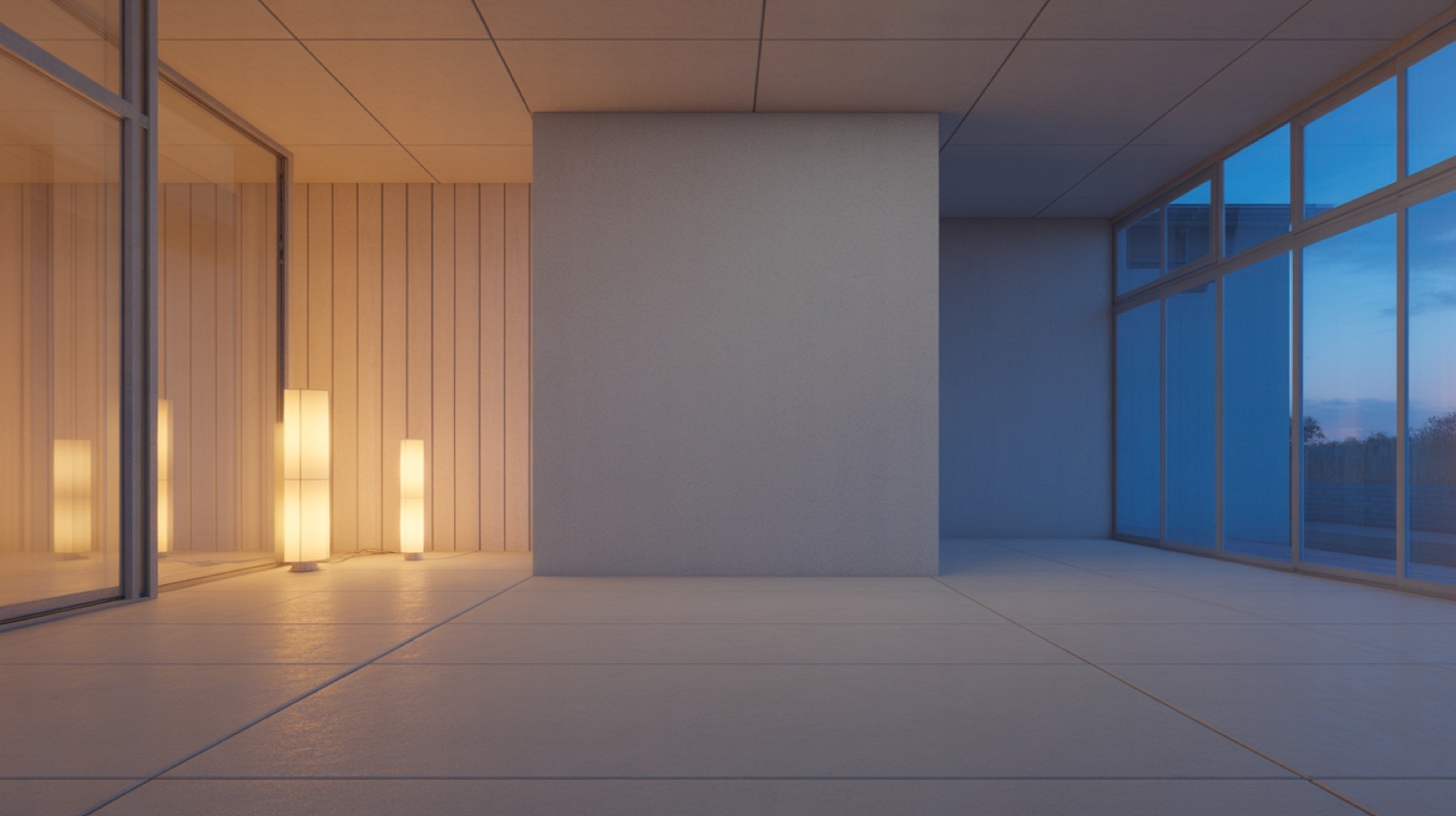
Controls are where a lighting plan becomes genuinely usable. Dimmers let a single fixture serve many moods, and separating each layer onto its own switch means you can run bright task light for cooking, then drop to warm ambient and accent light for the evening, all in the same kitchen. Modern systems extend this further with presets, smart switching, and tunable-white fixtures that shift color temperature on demand.
You do not need an elaborate smart system to benefit. Even a few well-placed dimmers transform how a space feels and adapts. The principle is the same at every budget: plan for control from the start, because retrofitting switching and circuits later is far more disruptive than designing it in.
Room-by-Room Architectural Lighting Tips
Architectural lighting applies the same layered principles, but the balance shifts from room to room based on how each space is used.
- Living room: Lead with warm ambient light, add task lamps beside seating for reading, and use accent light on art or a feature wall. Put everything on dimmers.
- Kitchen: Prioritize bright, neutral task lighting under cabinets and over the island, supported by even ambient ceiling light. High CRI helps with judging food and finishes.
- Bedroom: Keep ambient light soft and warm, add focused bedside task lighting for reading, and avoid cool temperatures that can disrupt winding down.
- Bathroom: Light the mirror from both sides at face height for even, shadow-free grooming, rather than relying only on a downlight above.
- Home office: Use neutral task lighting on the desk and ambient fill to reduce screen contrast and eye strain.
For a deeper look at how light supports specific living spaces, our living room interior design ideas show how lighting works with color schemes and furniture to set the tone of a room.
Frequently Asked Questions
What are the three types of lighting in lighting design?
The three types are ambient, task, and accent lighting. Ambient lighting provides general, overall illumination; task lighting delivers focused brightness for specific activities; and accent lighting highlights features such as art or architecture. Layering all three is the foundation of good lighting design.
What color temperature is best for a home?
Warm white between 2700K and 3000K suits most living spaces, including living rooms and bedrooms, while neutral white around 3500K to 4100K works well in kitchens and bathrooms where tasks need clearer light. Keeping temperatures consistent within each room avoids a jarring, mismatched look.
What is the most common lighting design mistake?
Relying on a single overhead fixture is the most common mistake. One central source creates flat, shadow-heavy light with no flexibility. Adding task and accent layers, plus dimmers, fixes the problem and gives the room a range of usable moods.
How many lumens do I need per room?
It depends on the activity rather than the room size alone. Living rooms work well at lower, layered levels, while kitchens need much higher output for safe, detailed work. Plan around the surfaces you need to see and give task zones roughly double the light of the surrounding ambient layer.
Putting Your Lighting Plan Together
Start every room by asking three questions: how do people move through it, what tasks happen here, and what is worth highlighting? Answer those and the ambient, task, and accent layers almost place themselves. Add consistent color temperature, sensible brightness, and dimmable control, and you will have a scheme that feels considered rather than accidental. To keep building your understanding of how these choices connect, explore our broader interior design concepts and apply the same layered thinking to color, furniture, and space.
Authoritative references used in this guide: the ENERGY STAR light fixtures program on color temperature ranges, the CIE Color Rendering Index for accurate color, and RMCAD on lighting temperature and interior mood for the Kelvin scale and its effect on perception.











Leave a comment