


Table of Contents Show
R-value vs U-value comes down to direction. R-value measures how well a material resists heat flow, so a higher number is better. U-value measures how quickly heat passes through a whole assembly, so a lower number is better. R-value rates insulation materials, while U-value rates finished walls, roofs, and windows.
The R-value vs U-value distinction changes how you read a spec sheet. Architects and builders rely on both figures to predict how much heat a building loses or gains, and these two thermal insulation values are not interchangeable. Mixing them up leads to under-insulated walls, failed energy code checks, and higher bills. Many passive design strategies feed straight into these numbers.
What Is R-value?
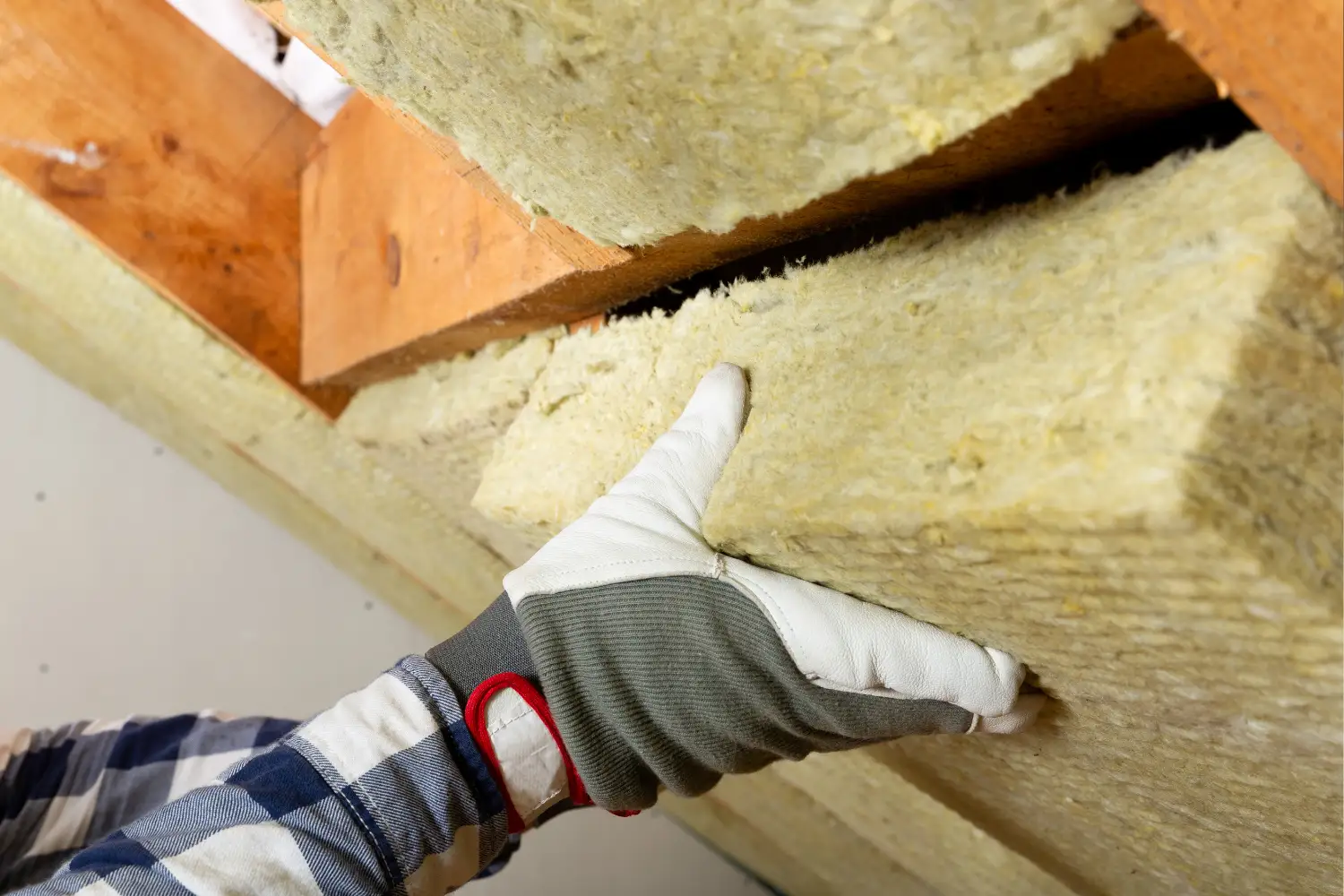
R-value is a measure of thermal resistance, meaning how strongly a material resists the conductive flow of heat. The higher the R-value, the better the material insulates. That is the insulation r-value meaning you see printed on a batt of fiberglass or a sheet of rigid foam.
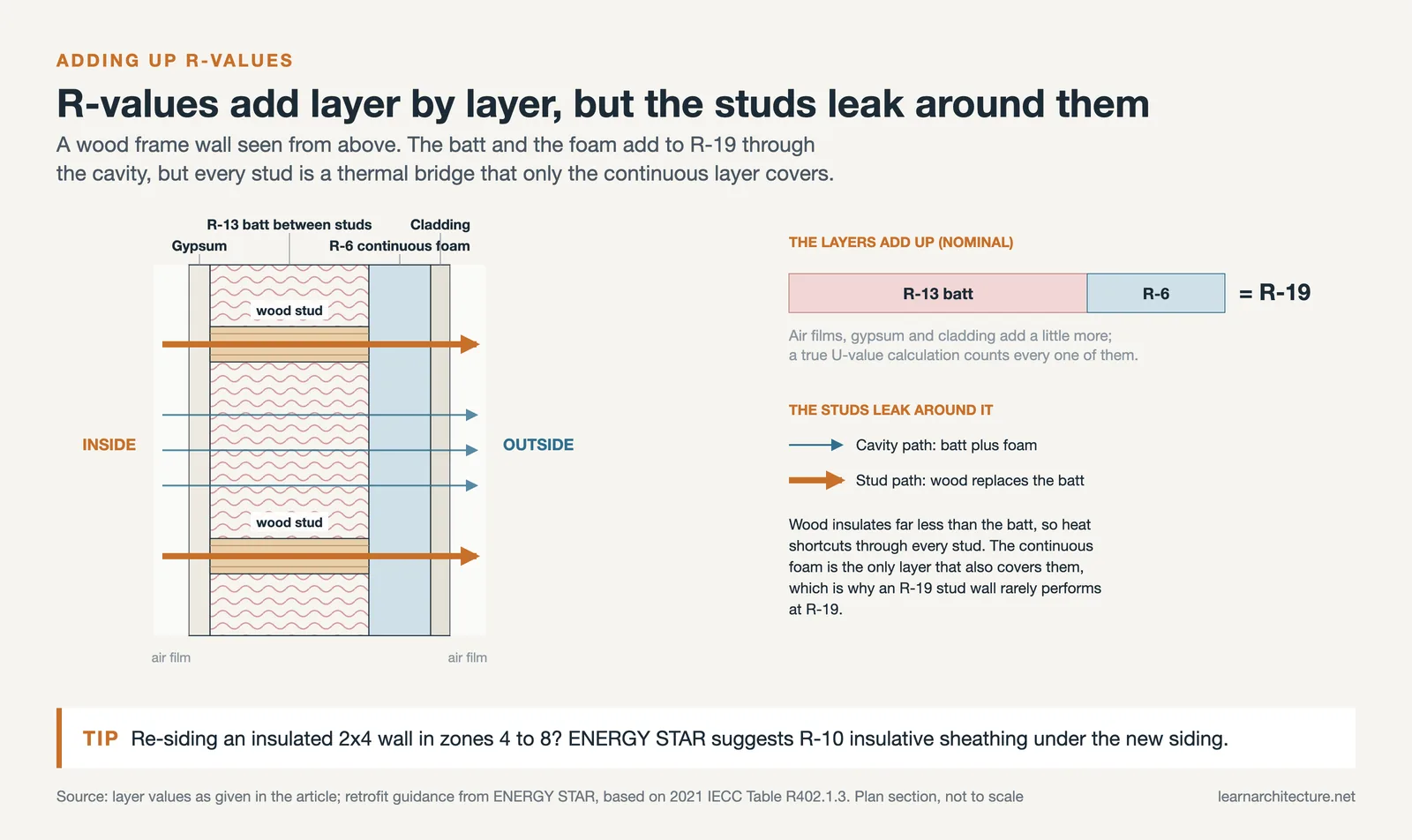
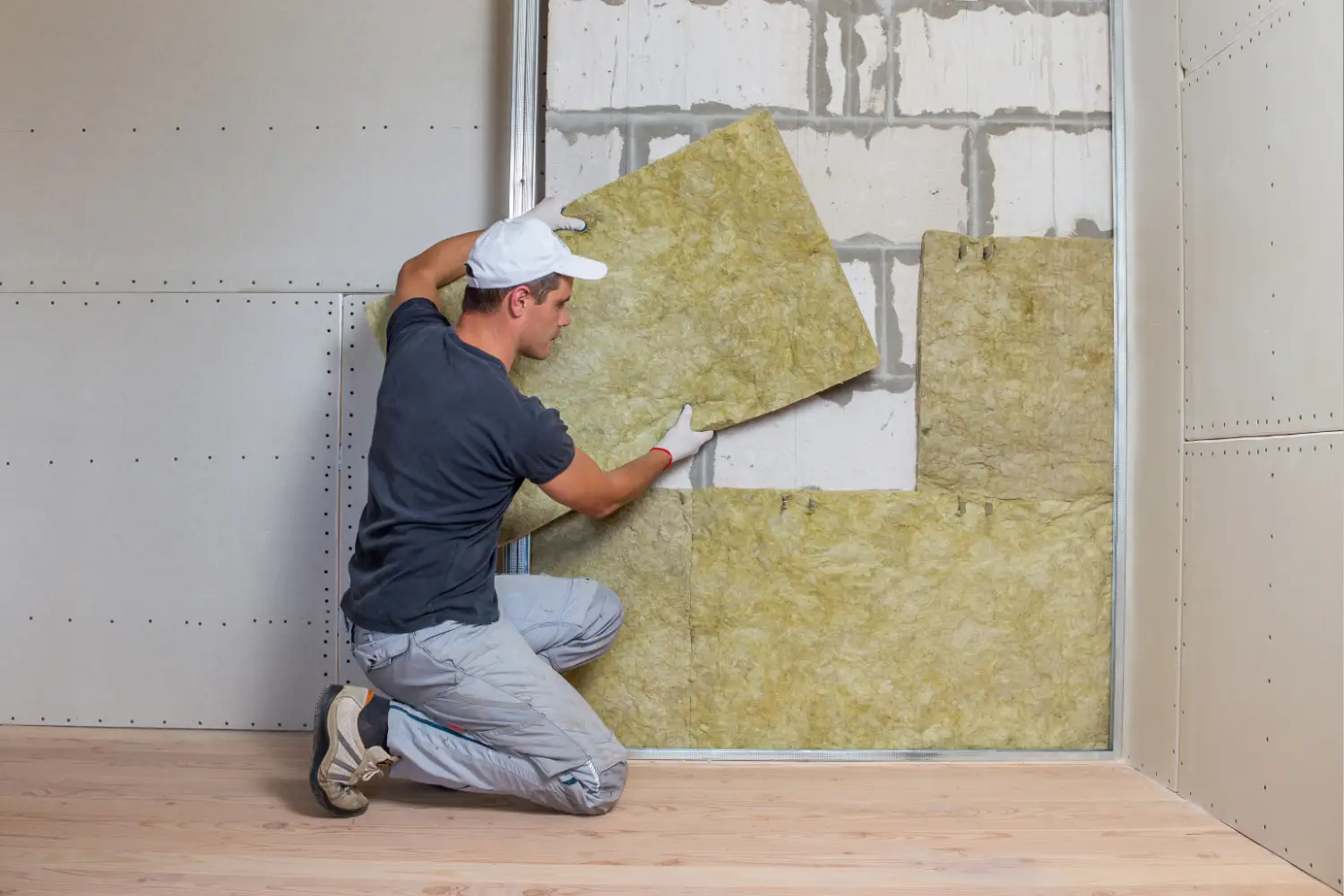
One useful feature is that R-values add together. Stack an R-13 batt against R-6 of continuous foam and the layers combine to R-19. R-value is expressed as ft²·°F·h/BTU in the United States, or as m²·K/W in metric, sometimes written as RSI. The U.S. Department of Energy publishes recommended levels by climate zone, and its guidance on insulation shows how those targets rise in colder regions. Your choice of insulation material sets the baseline R-value per inch you have to work with.
What Is U-value?
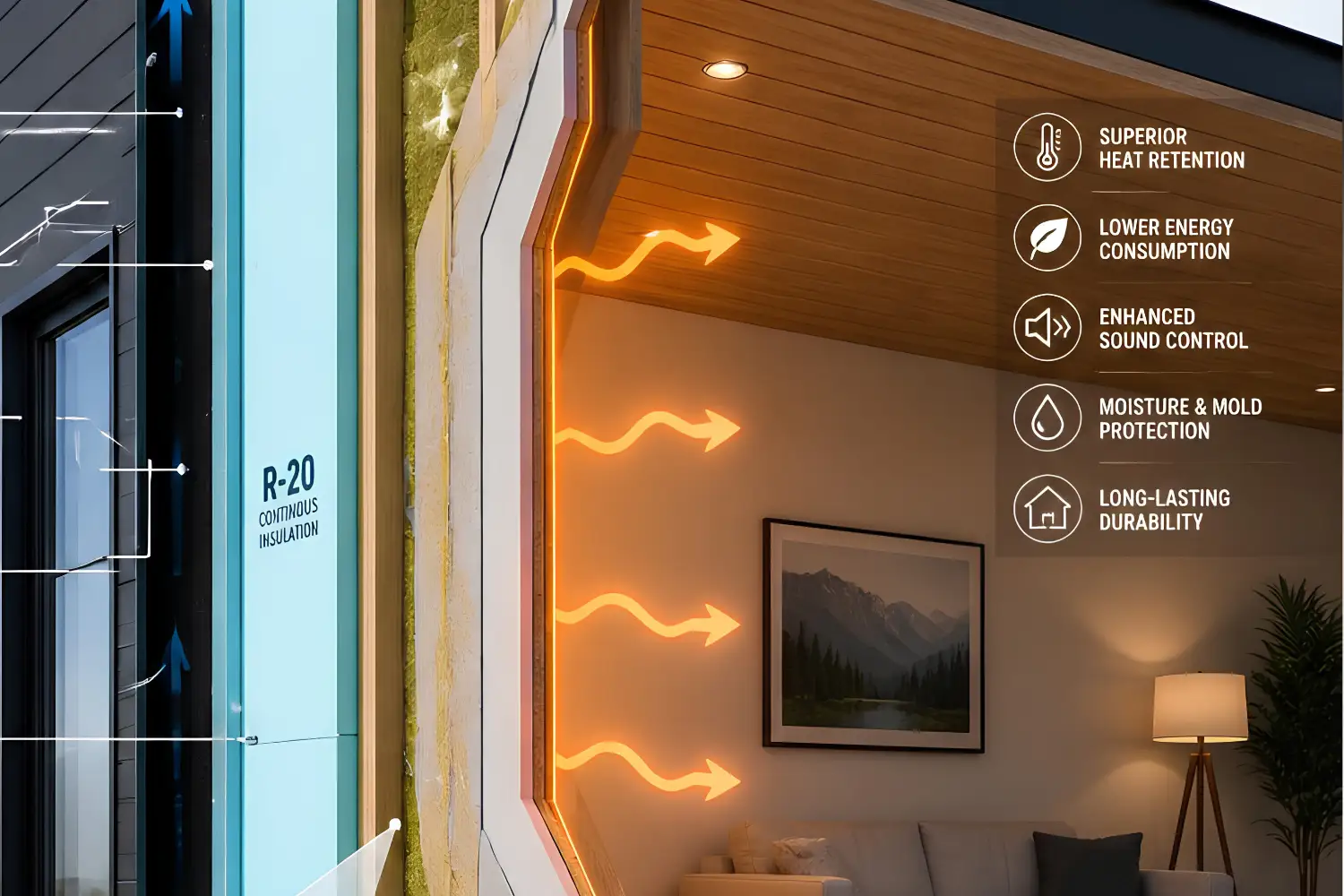
U-value, also called U-factor, measures thermal transmittance, the rate at which heat passes through a complete building element. Lower is better here, the opposite of R-value. This is the metric people mean when they ask what is u-value in architecture, because it describes an entire wall, roof, floor, or window rather than one material.
U-value covers every layer at once, including the air films on each face and any thermal bridging through framing. It appears as W/(m²K) in most of the world and as BTU/(h·ft²·°F) in the United States. Windows are almost always rated this way. In North America the National Fenestration Rating Council reports a certified whole-window U-factor on every label.
💡 Pro Tip
When comparing windows, read the whole-window U-factor on the NFRC label, not the center-of-glass figure a salesperson might quote. Frame and edge losses push the real number higher, so a triple-pane unit advertised on its glass alone can underperform once the frame is counted.
R-value vs U-value: The Core Difference
The simplest way to hold these apart is this: R-value describes a part, U-value describes the whole. R-value climbs as insulation improves, U-value drops. One is native to material labels, the other to assembly and window ratings and to most European codes.
R-value and U-value Side by Side
The table below lays out the practical differences.
| Aspect | R-value | U-value |
|---|---|---|
| What it measures | Thermal resistance (resistance to heat flow) | Thermal transmittance (rate of heat transfer) |
| Better performance | Higher number | Lower number |
| Applies to | A single material or layer | A full assembly: wall, roof, or window |
| Common units | ft²·°F·h/BTU (US); m²·K/W or RSI (metric) | BTU/(h·ft²·°F) (US); W/(m²K) (metric) |
| Where it is used most | Insulation labels, mainly North America | Assembly and window ratings, common in Europe |
| How layers combine | Layers add up (R1 + R2 + R3) | Reciprocal of total assembly R (U ≈ 1/R) |
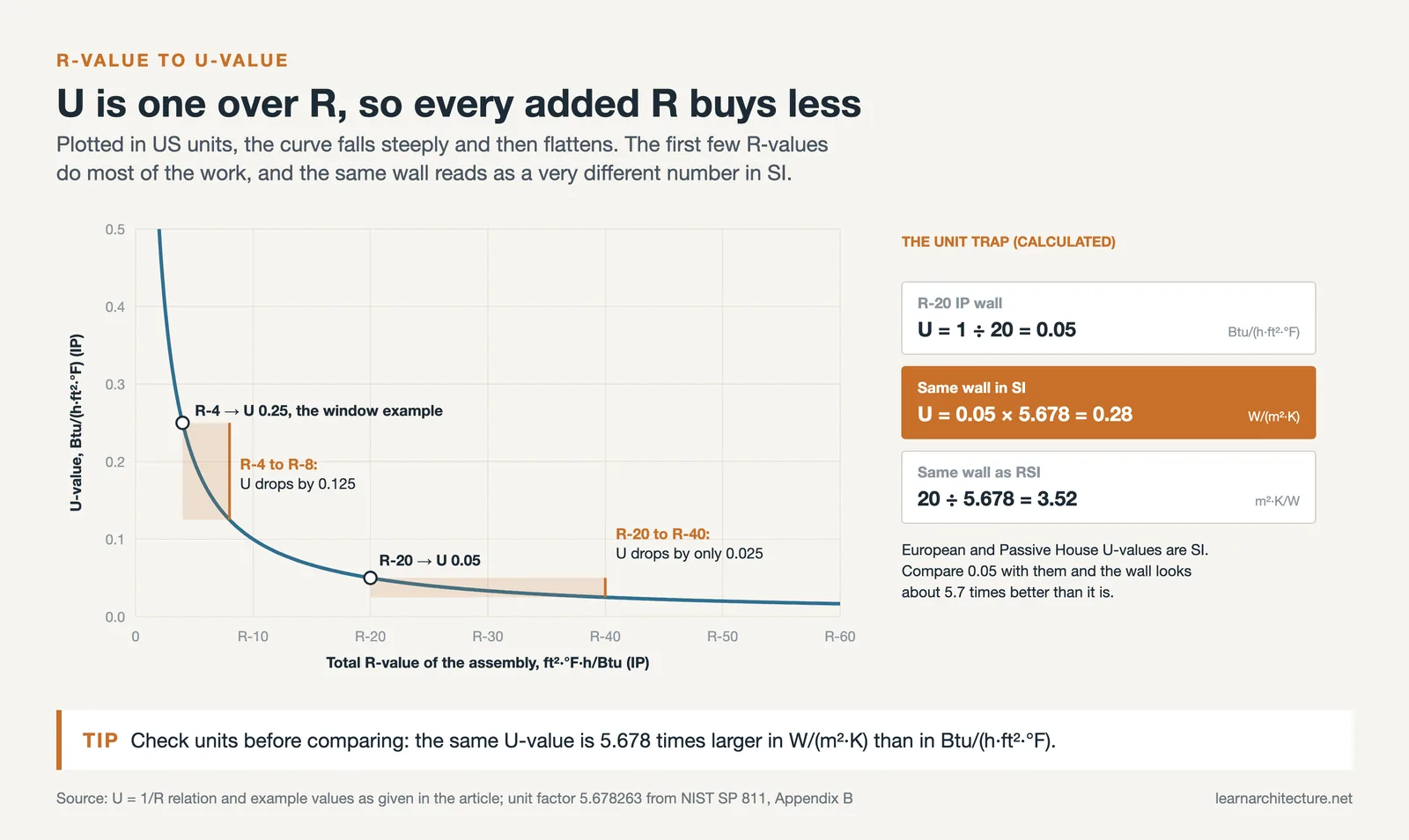
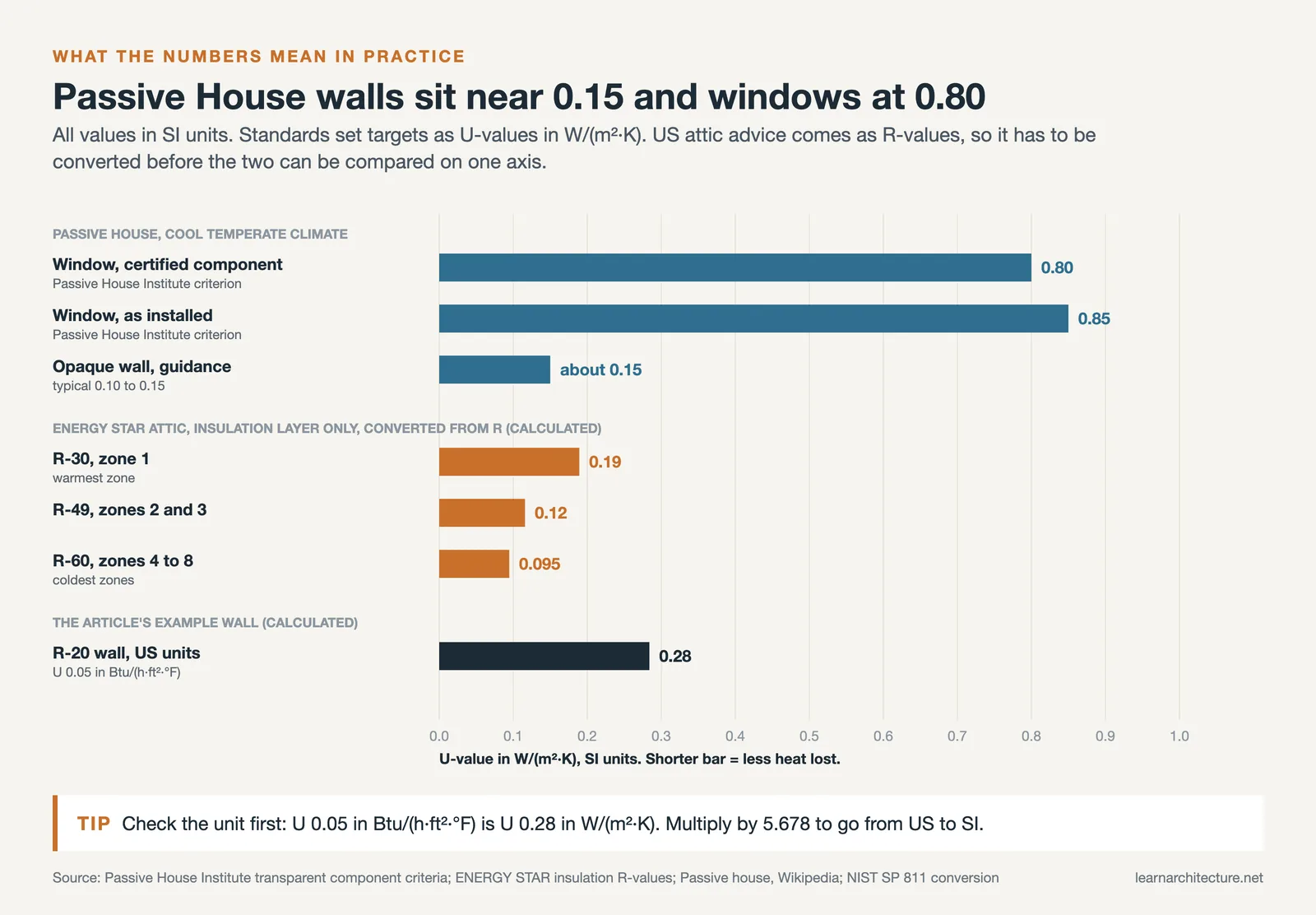
That last row holds the connection between them. For a finished assembly, U-value is the reciprocal of the total R-value, so a wall adding up to R-20 in US units has a U-value near 0.05 BTU/(h·ft²·°F), which is about 0.28 W/(m²K) in SI units. The catch is that the total R must include the inside and outside air films and every layer, not the insulation on its own. This is why the r-value vs u-value building comparison trips people up: a stud wall with R-19 batts rarely performs at R-19, because heat shortcuts through the wood framing. A well-detailed building envelope closes those gaps.
Which Value Should You Focus On?
Use R-value while you are selecting insulation and stacking up materials. Switch to U-value when you need whole-assembly performance or you are checking a design against an energy code. Windows and doors are almost always specified by U-factor, and much of Europe rates entire walls the same way. Cutting heat loss through weak elements is also the first defense against overheating and heat transfer through the shell.
⚖️ Pros & Cons at a Glance
✔️ R-value strengths: printed on the packaging, easy to compare between materials, simple to add across layers, widely recognized in North America
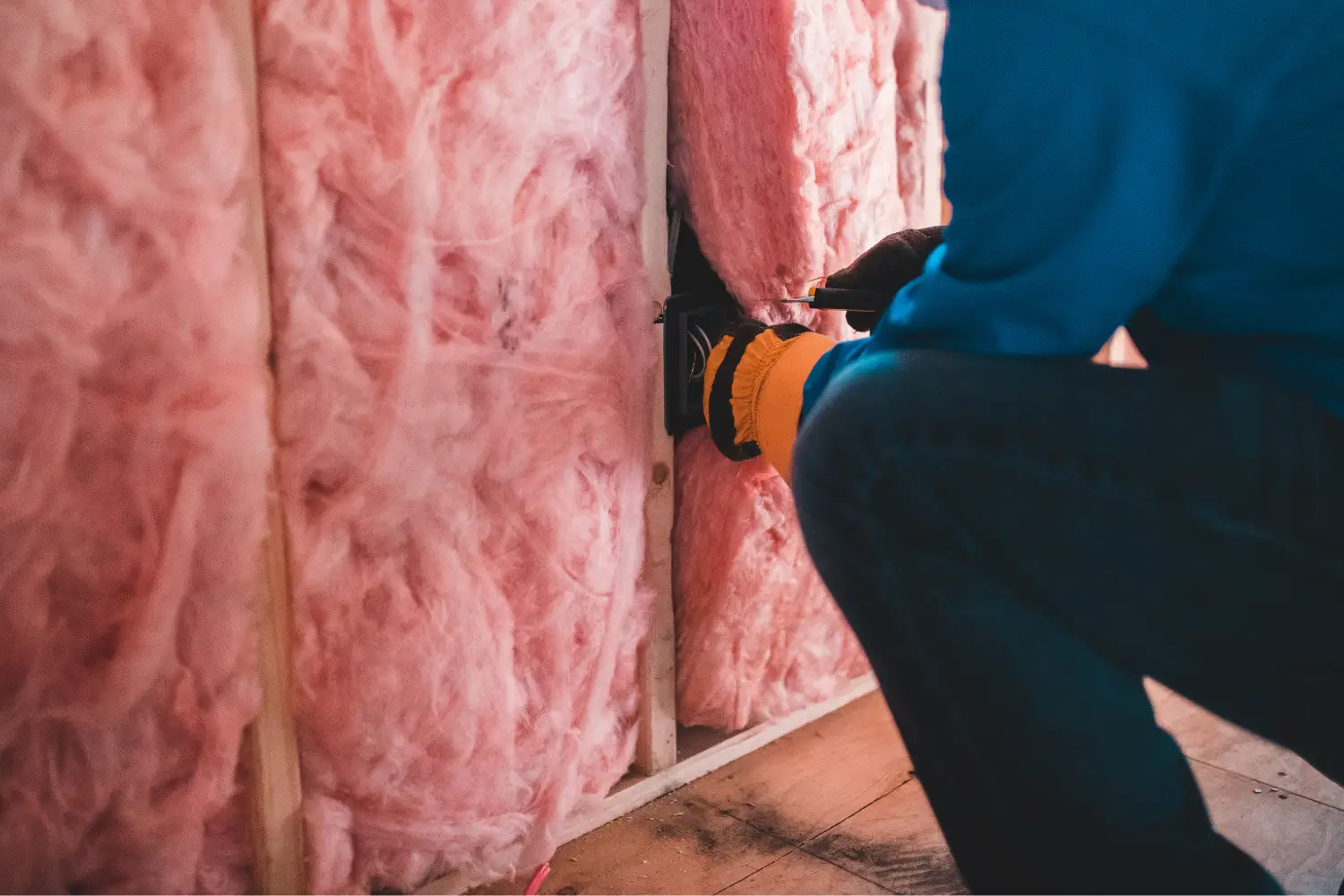
✖️ R-value limits: rates materials rather than finished assemblies, ignores air films and framing bridges, rated value often beats real installed performance, little use for windows
What These Values Mean for Real Buildings
Getting these figures right is where building insulation performance turns into money saved and comfort gained. The numbers below put the stakes in context.
🔢 Quick Numbers
- Air sealing and adding insulation saves homeowners an average of 15% on heating and cooling costs, roughly 11% of total energy costs (EPA ENERGY STAR)
- In cool-temperate climates, Passive House guidance targets opaque wall U-values of about 0.15 W/(m²K), and certified Passive House windows must reach 0.80 W/(m²K) or better, both in SI units (Passive House Institute)
- The U.S. Department of Energy recommends attic insulation from about R-30 in warm zones up to R-49 to R-60 in cold zones (U.S. Department of Energy)
Tight standards like those from the Passive House Institute lean on U-value because it captures how the finished shell behaves, not just the parts. The savings figure from ENERGY STAR shows why the distinction is worth the effort. High-performance roofs, described in this look at sustainable roof design, and glazed landmarks such as The Crystal in London both depend on assemblies engineered to a target U-value rather than a single material rating.
Technical specifications and thermal calculations should be verified by a licensed professional for your specific project and local building codes.
Frequently Asked Questions
Is a lower U-value better than a higher R-value?
They point the same way, just measured from opposite ends. A lower U-value and a higher R-value both mean less heat moves through the element. You cannot compare the two numbers directly, because R-value usually describes a material and U-value describes a finished assembly.
How do you convert R-value to U-value?
For a full assembly, U-value is the reciprocal of the total R-value, so U equals 1 divided by R. A wall with a total R-value of 20 in US units has a U-value of 0.05 BTU/(h·ft²·°F), about 0.28 W/(m²K) in SI units. This only holds when the R-value already includes every layer plus the interior and exterior air films, not the insulation alone.
What is a good R-value for exterior walls?
It depends on your climate zone. The U.S. Department of Energy notes that cavity insulation reaches up to about R-15 in a 2×4 wall and R-21 in a 2×6 wall, and ENERGY STAR suggests adding R-5 to R-10 insulative sheathing in climate zones 4 to 8 when re-siding. Your local energy code sets the minimum you must meet.
Why do windows use U-value instead of R-value?
A window combines glass, gas fill, spacers, and a frame, so no single material R-value can describe it. U-factor captures how the whole unit performs, which is why the NFRC label reports it. You can still translate the two: a U-factor of 0.25 BTU/(h·ft²·°F) works out to about R-4 in US units.
The Bigger Picture
Bottom Line: Reach for R-value when you are choosing insulation and comparing materials layer by layer. Switch to U-value when you need to know how a whole wall, roof, or window will perform, or when you are checking a design against energy codes. One rates the part and the other rates the whole, and strong buildings depend on reading both correctly.











Leave a comment