


Table of Contents Show
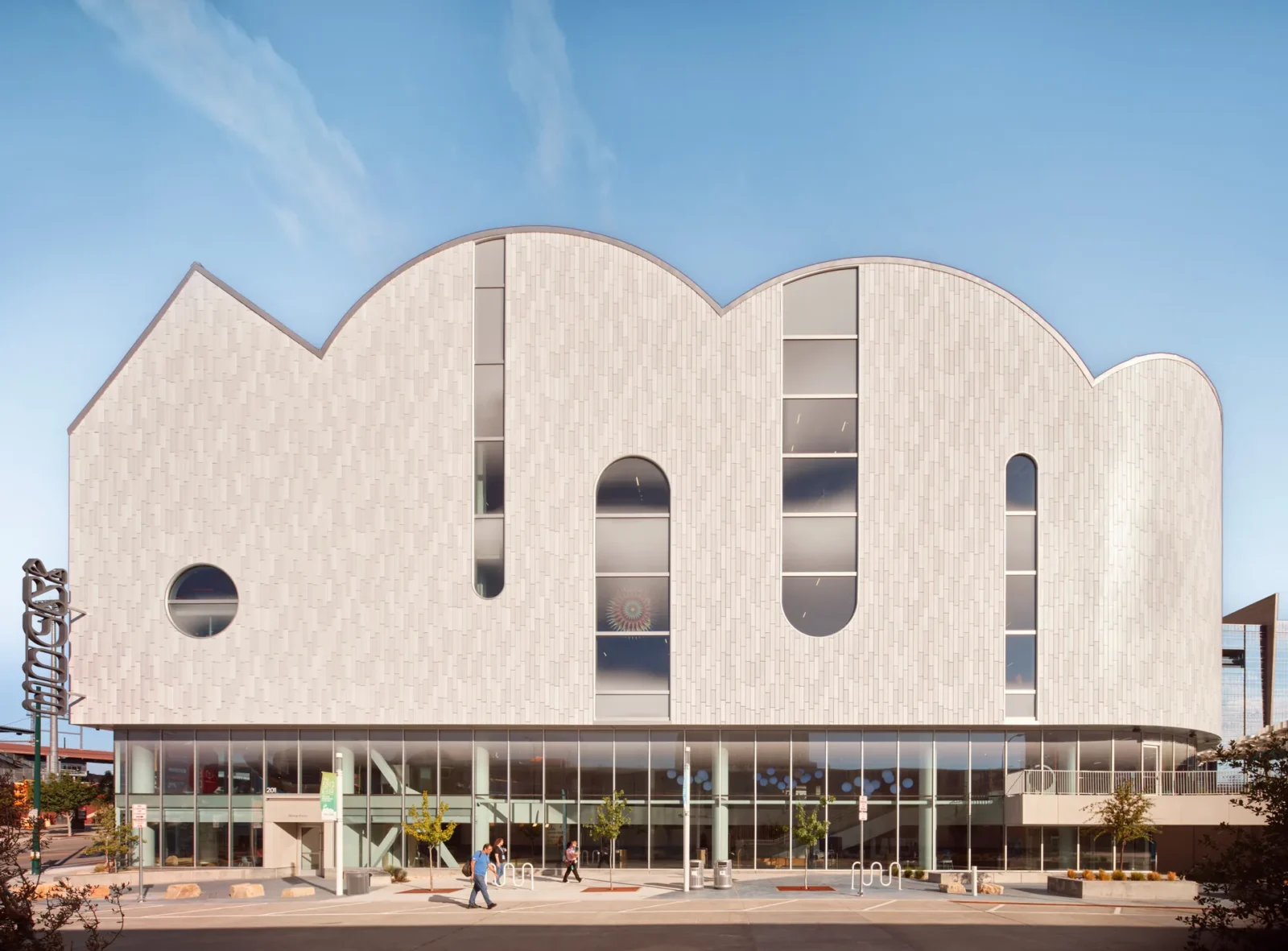
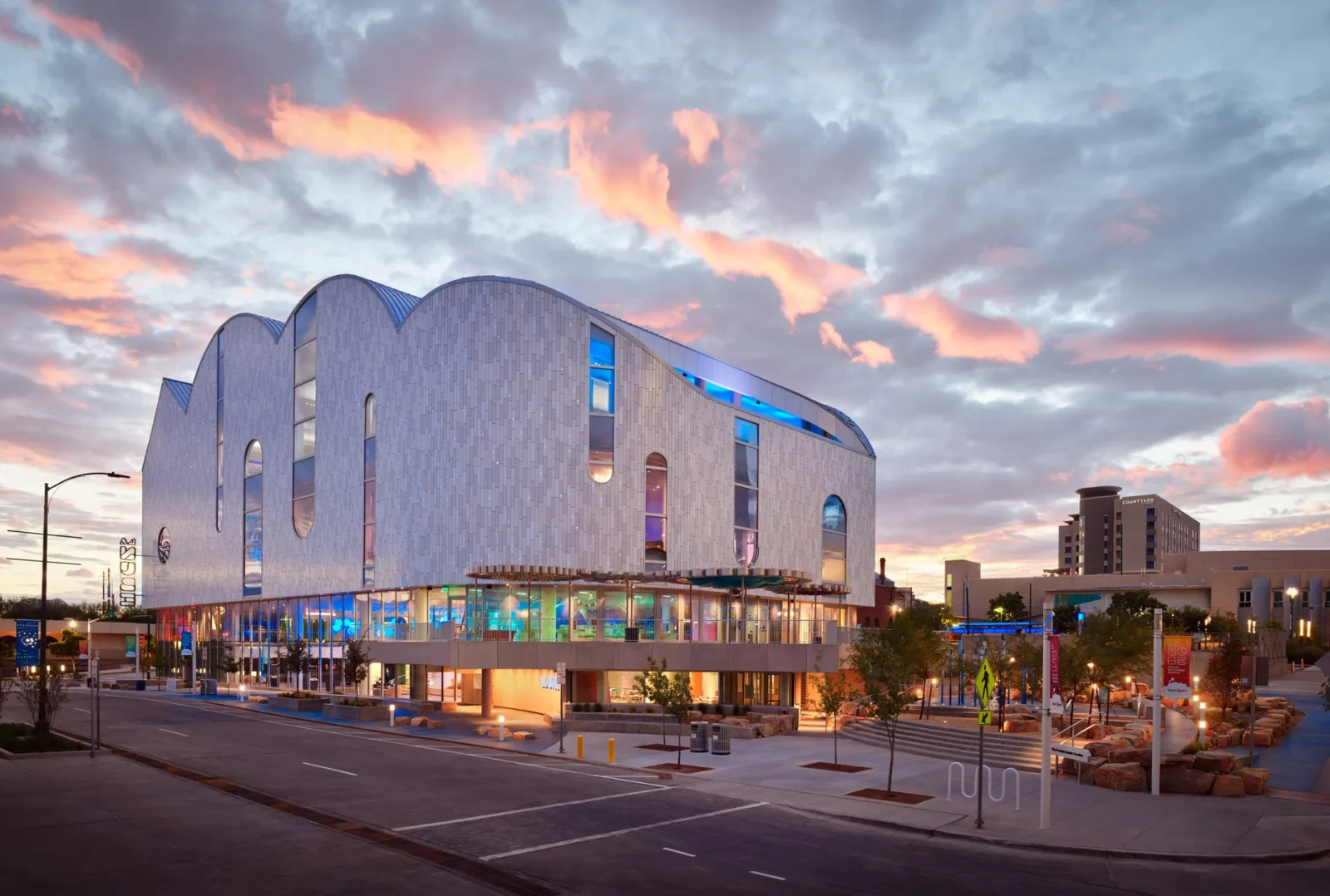
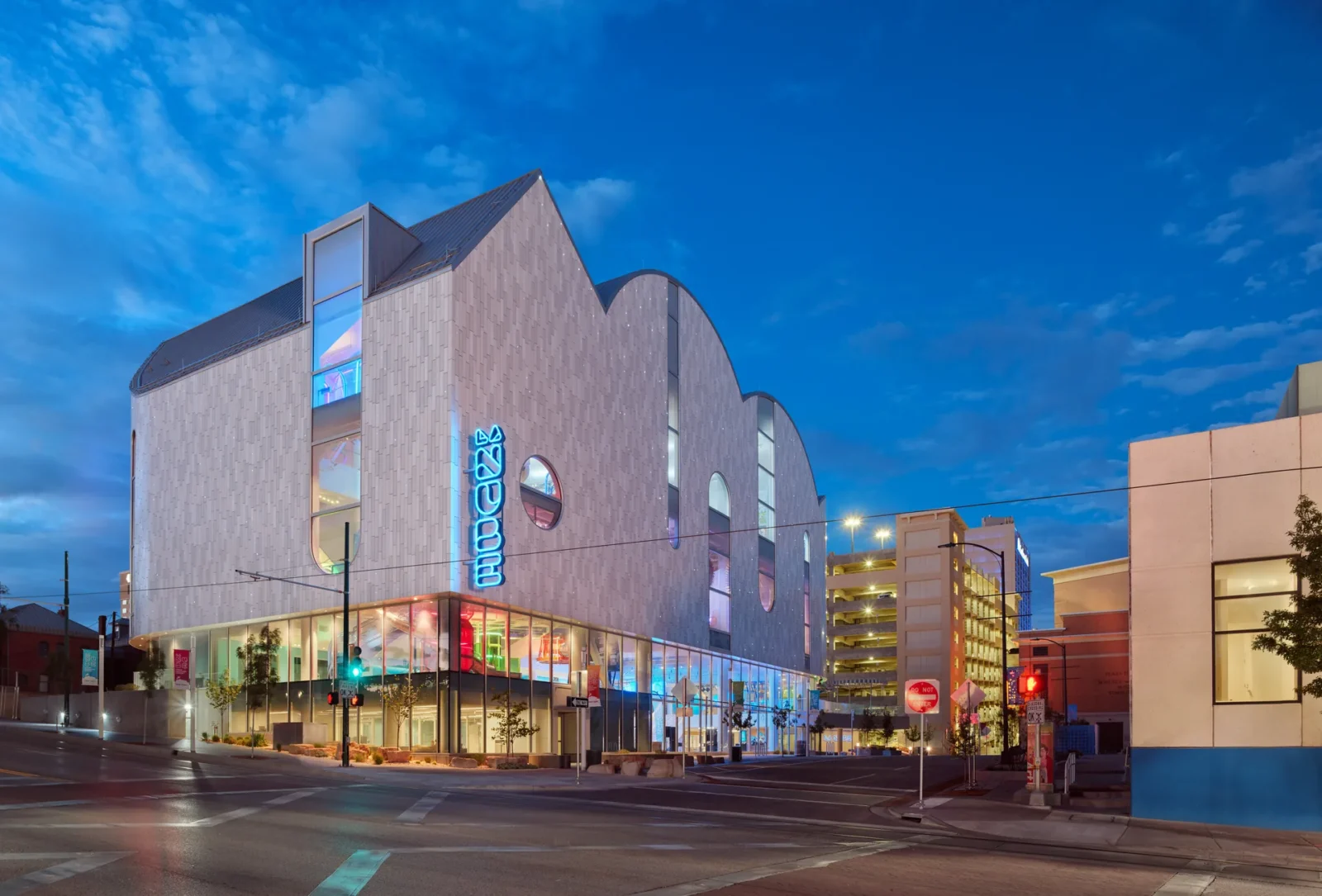
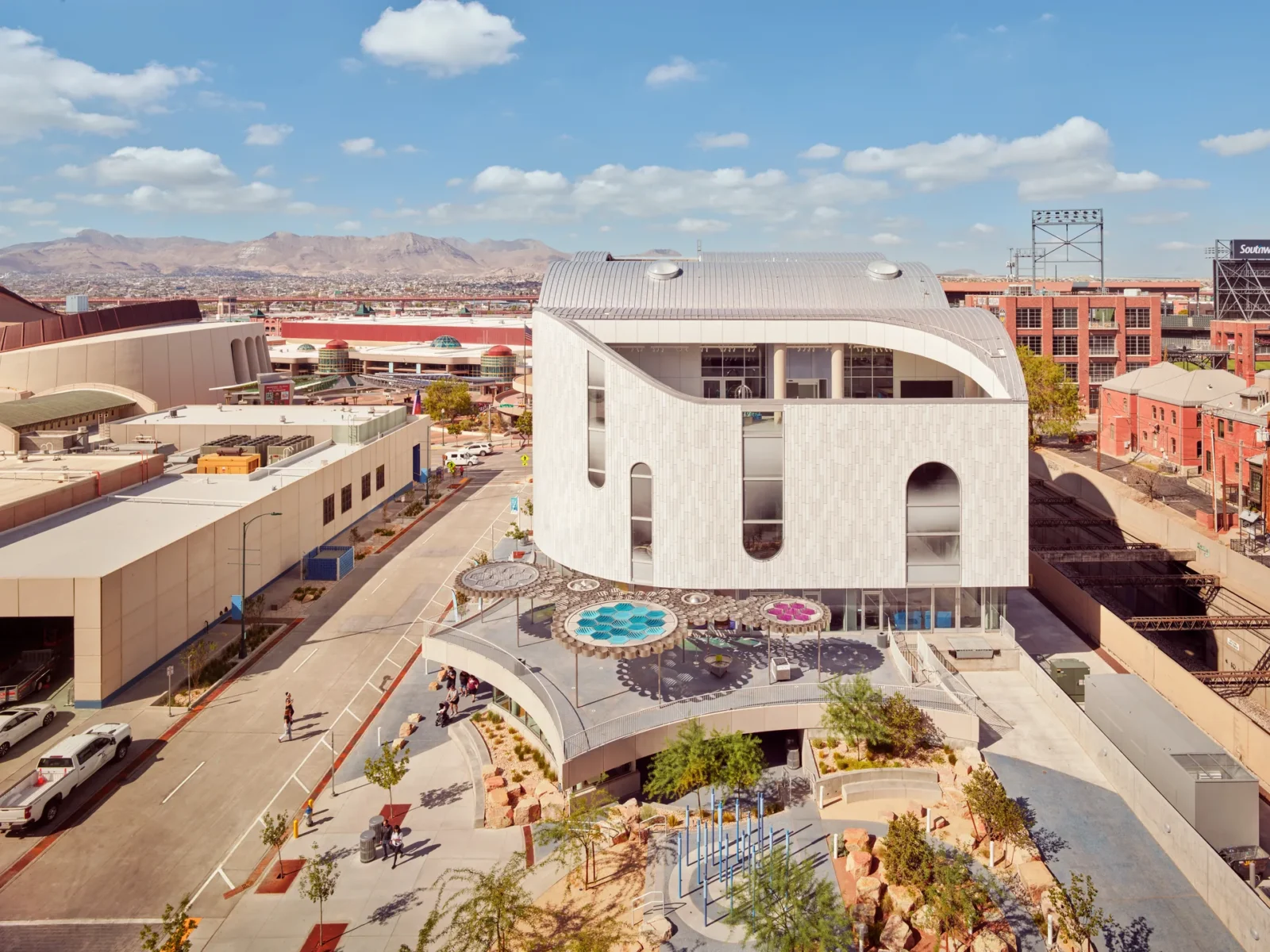
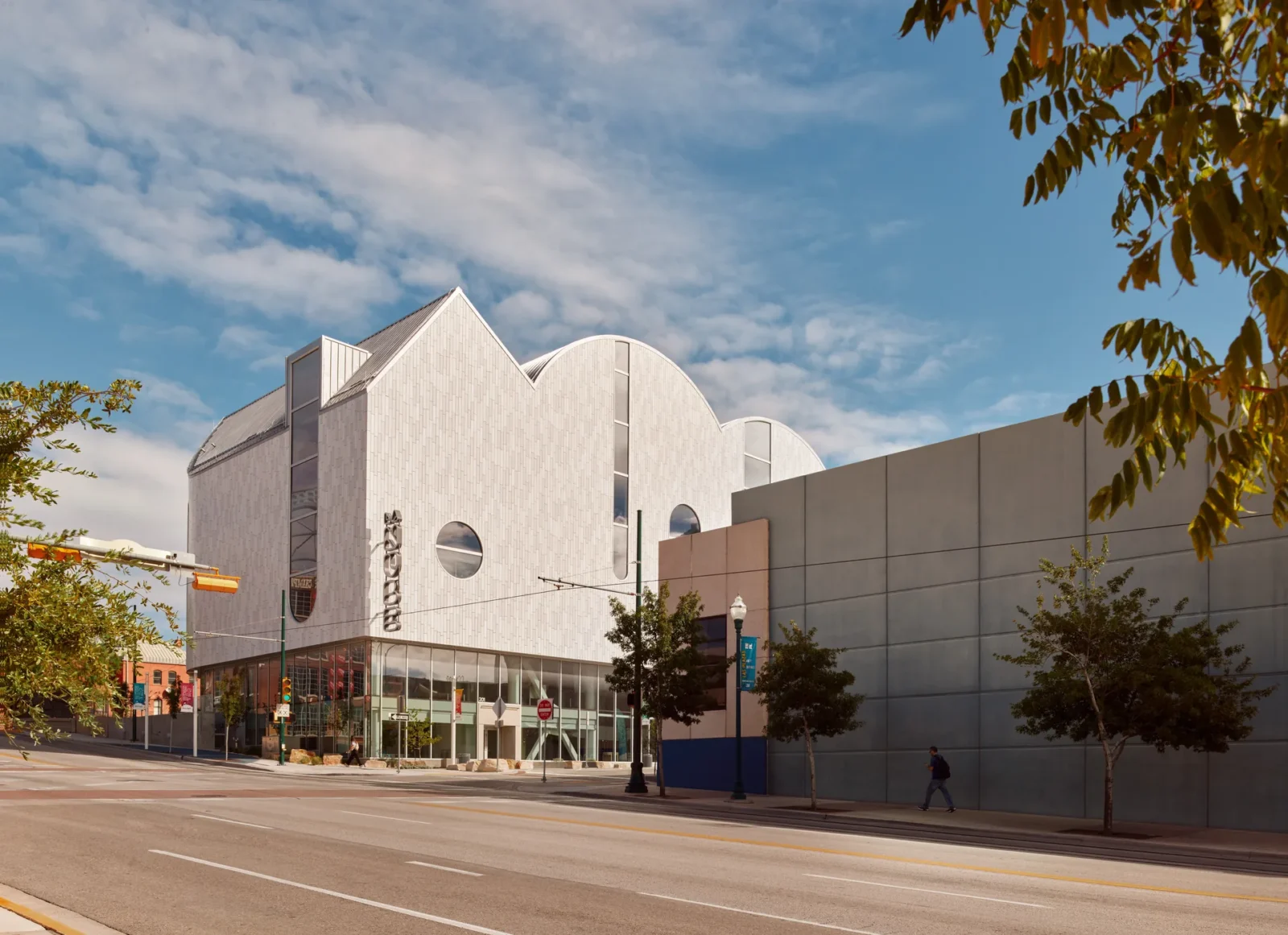
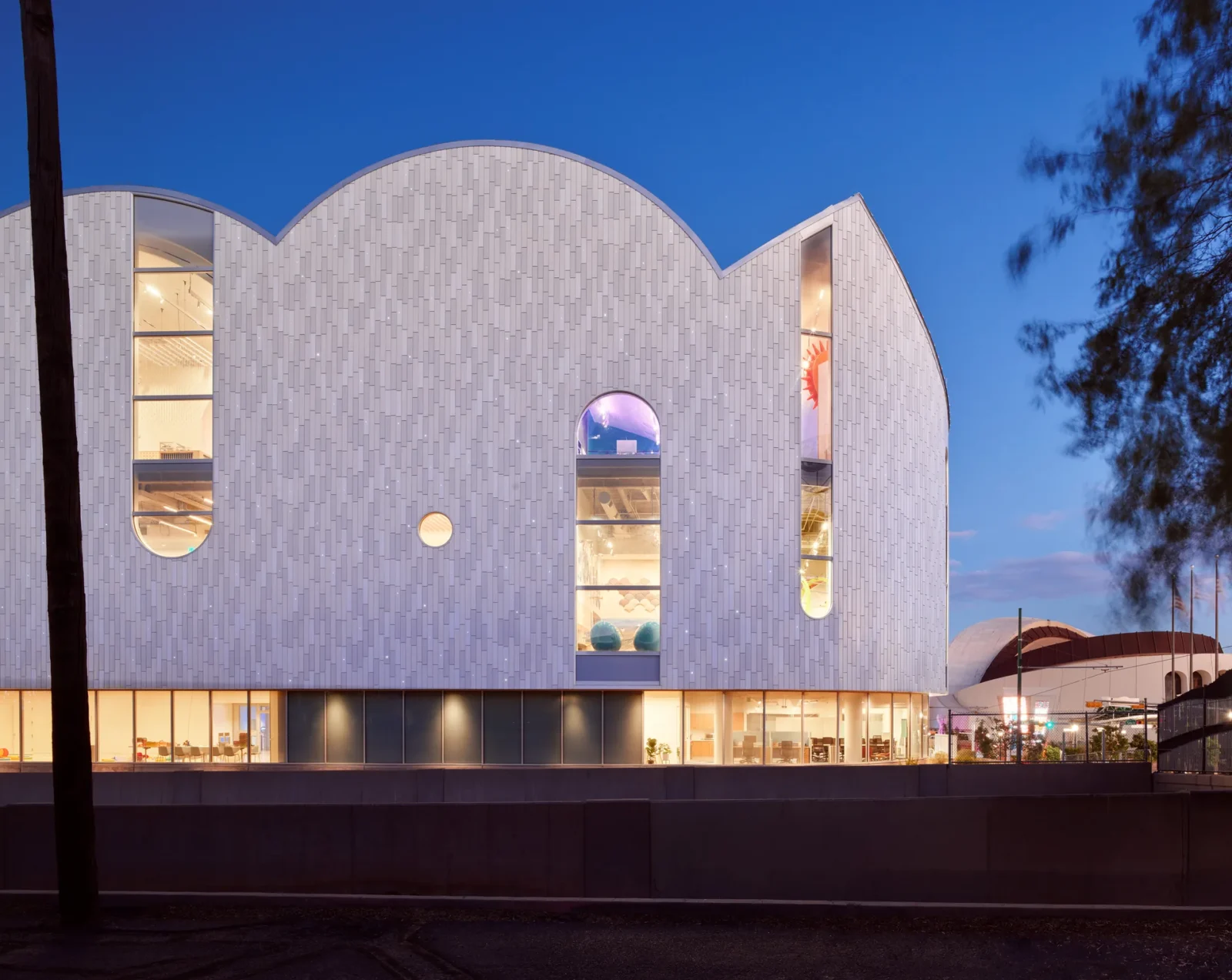
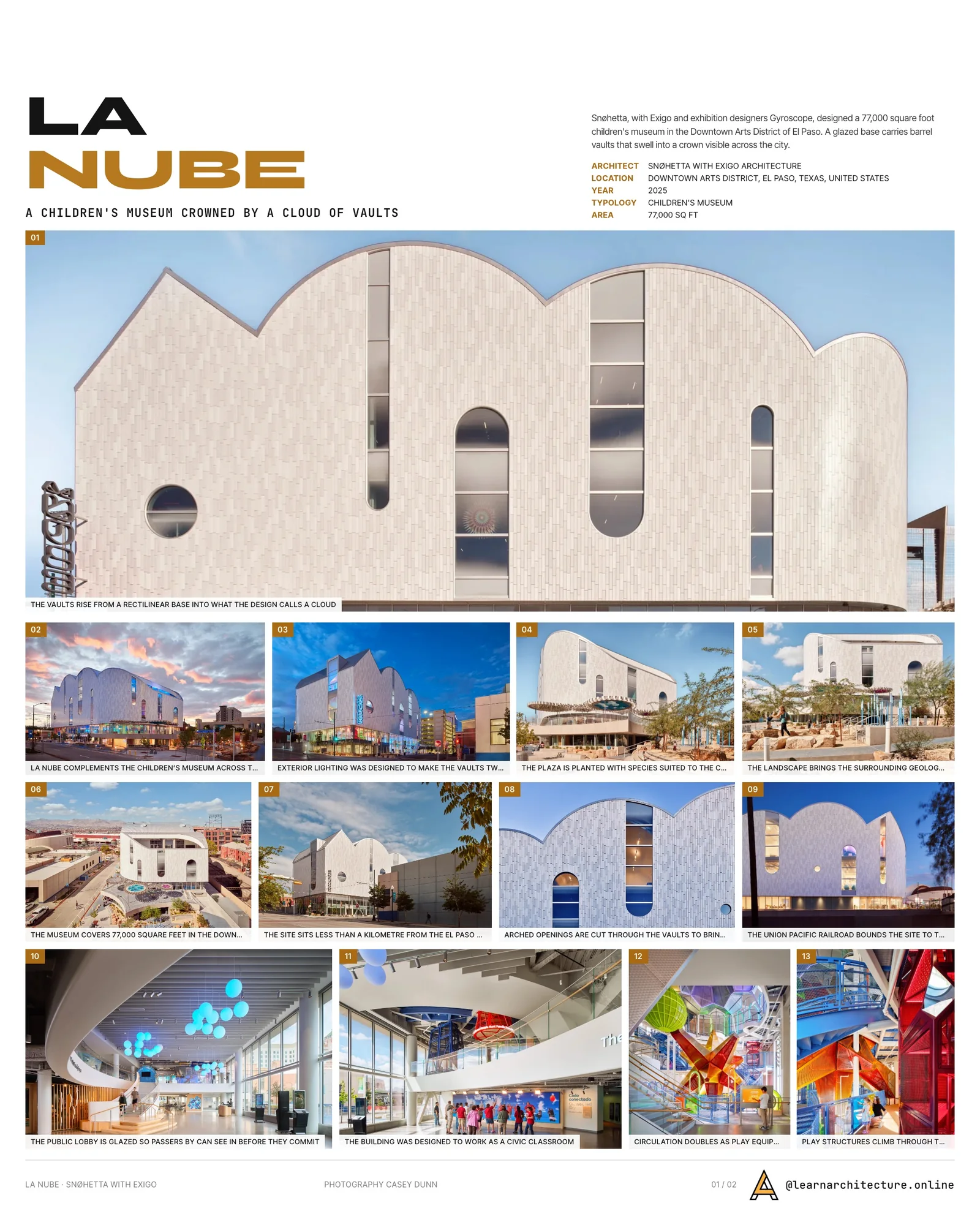
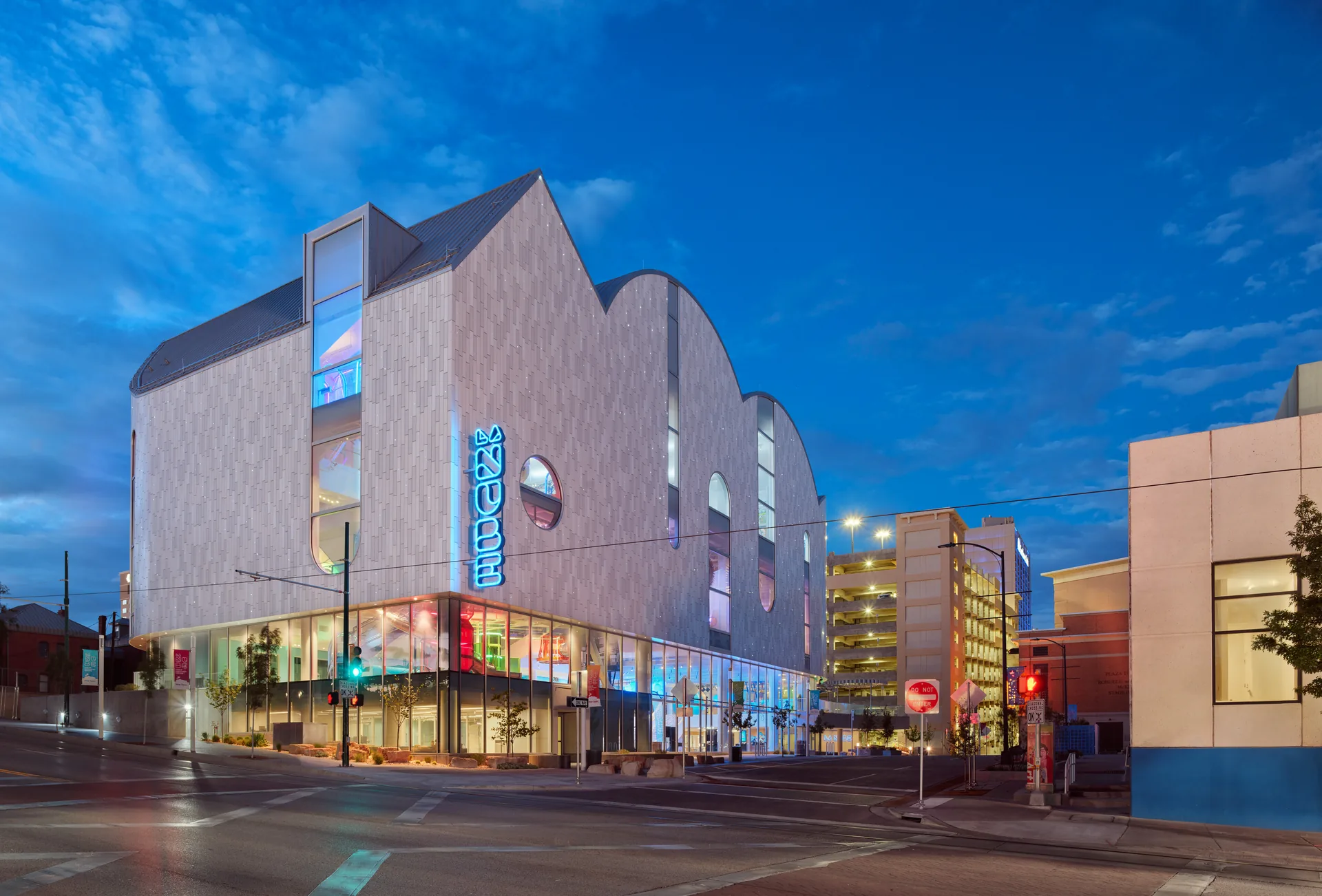
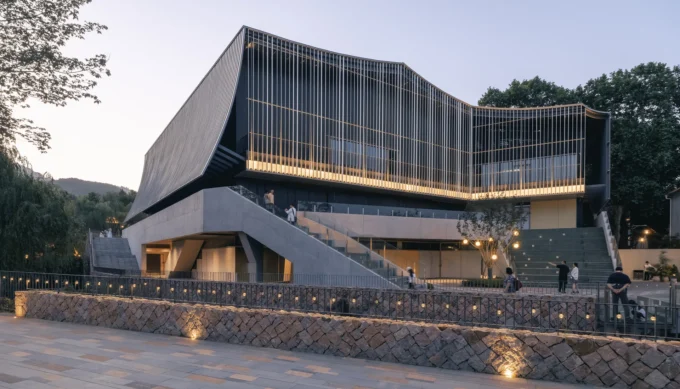
La Nube is a children’s museum of 77,000 square feet in the Downtown Arts District of El Paso, Texas, designed by Snøhetta with the local practice Exigo and the exhibition designers Gyroscope. Its name means the cloud, and the building earns it: a rectilinear glazed base carrying a run of barrel vaults that swell upward into a crown visible from across the city.
La Nube is a border building
The site matters here more than usual. It sits close to San Jacinto plaza, under a kilometre from the El Paso del Norte crossing, and is bounded to the north by the Union Pacific Railroad, one of the country’s main transcontinental lines. The museum was conceived as a complement to the children’s museum across the border in Ciudad Juárez, which makes it one half of a pair in a single metropolitan area split by a national line.
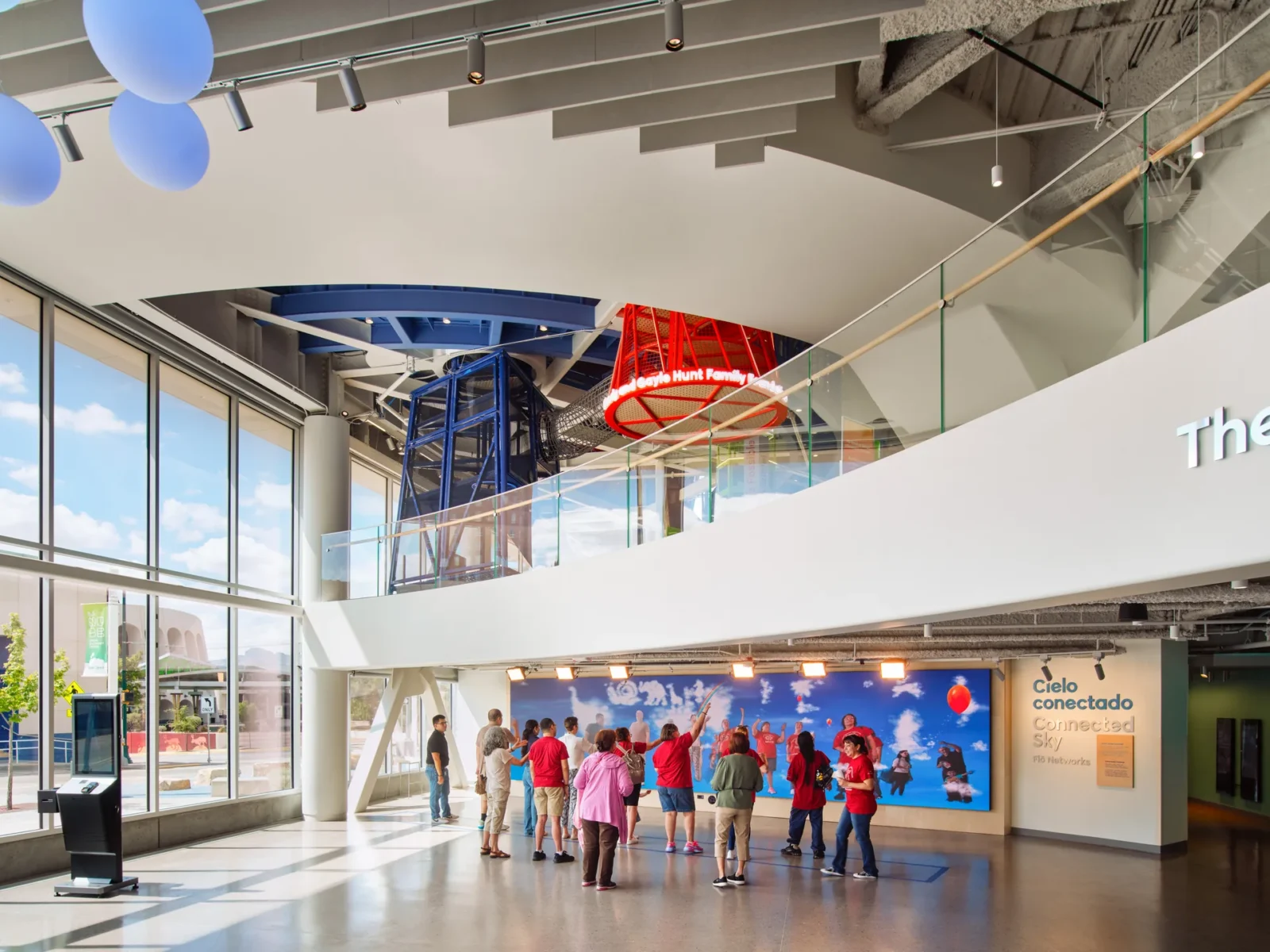
That framing shapes what the building is for. It is meant to work as a civic classroom for families on both sides, teaching sustainability and regional identity under a banner the museum calls Blue Sky Learning, with a programme built around science, technology, engineering, art and maths.
Glass at the bottom, cloud on top
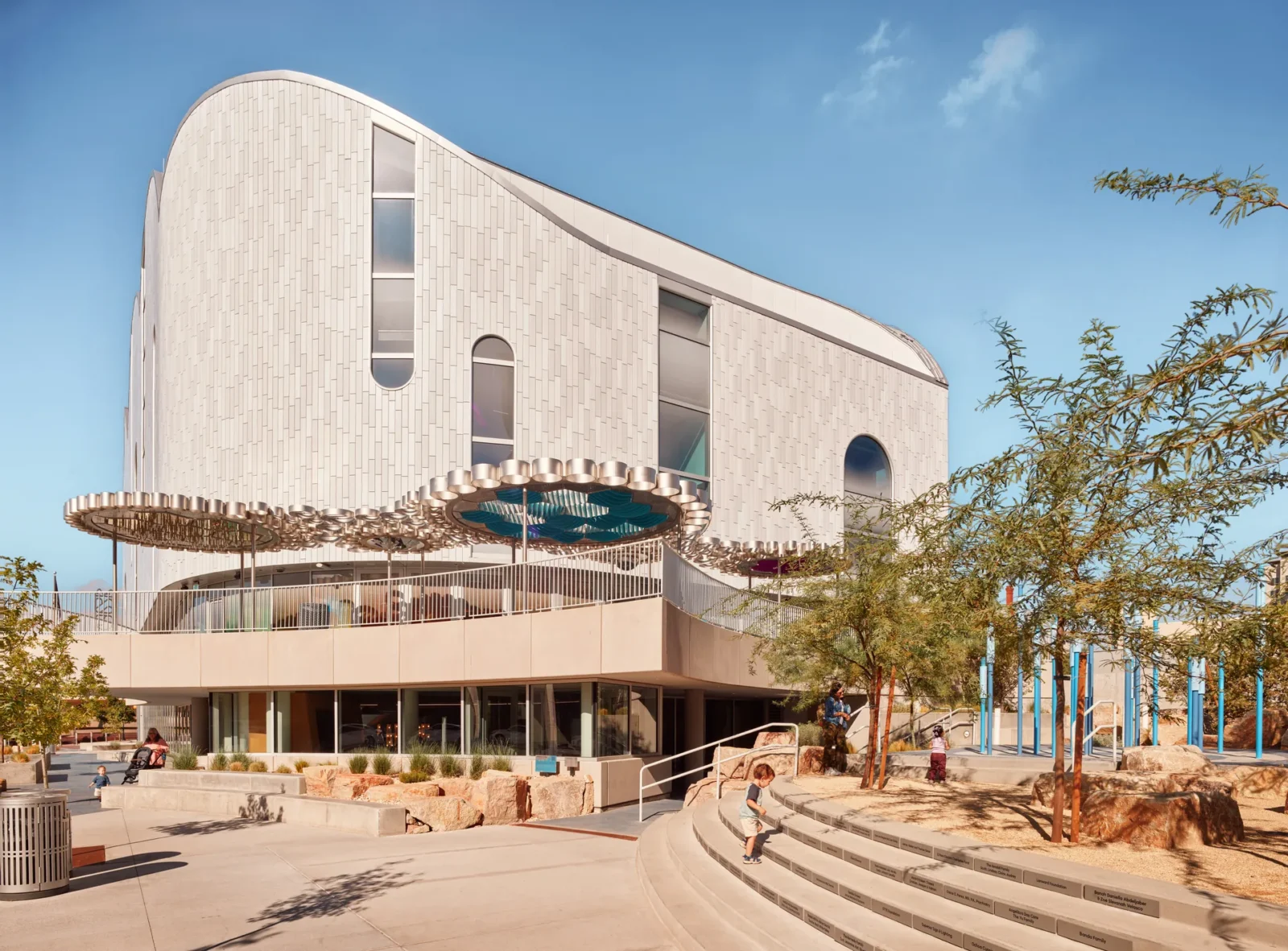
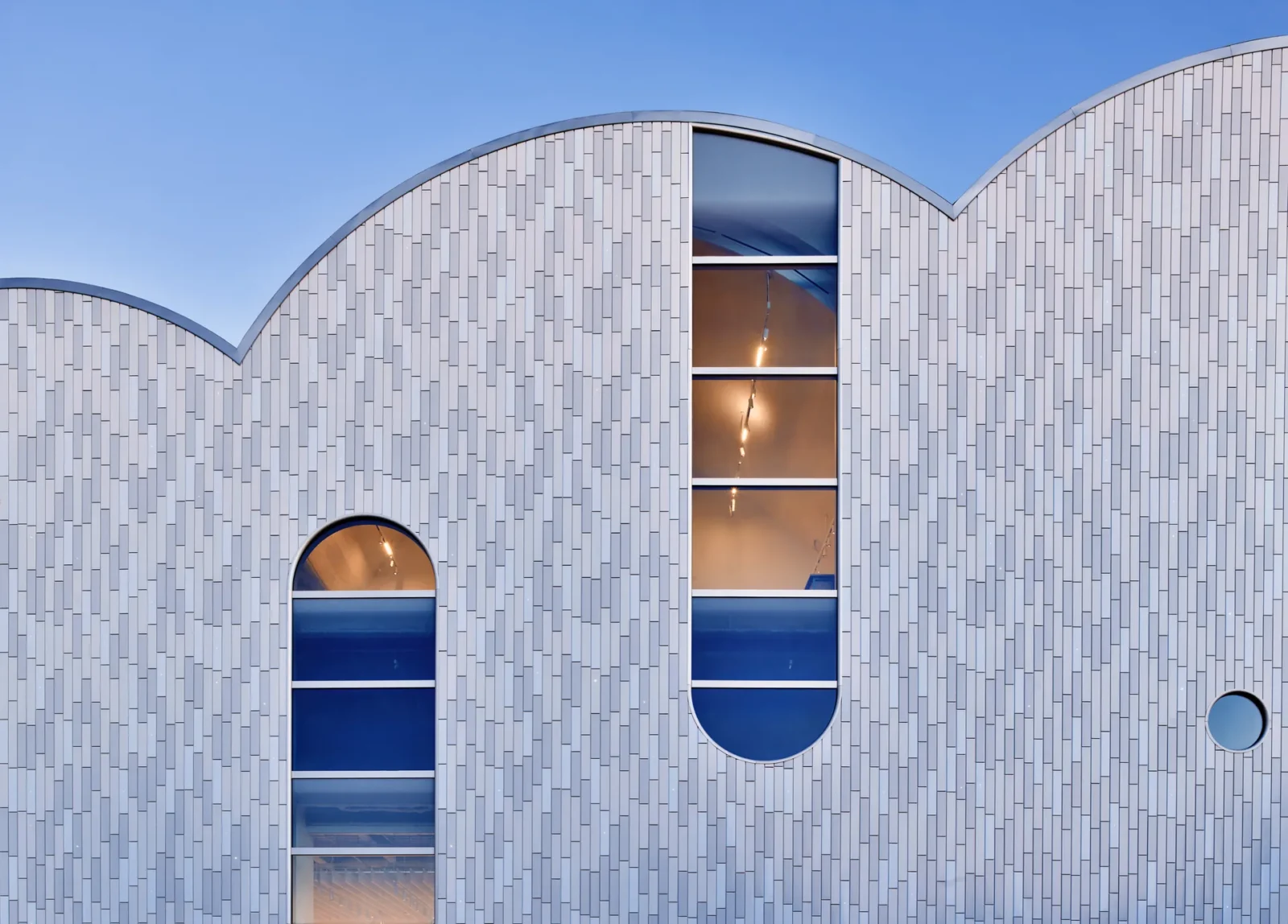
The composition is unusually legible. Wrap the base in glass so that anyone walking past can see the lobby and be drawn in, then sit something strange on top of it. The vaults are the strange part: a rippling succession of arched forms that read as a single billowing mass from a distance and resolve into individual bays up close, punctured by tall arched windows that bring daylight deep into the plan.
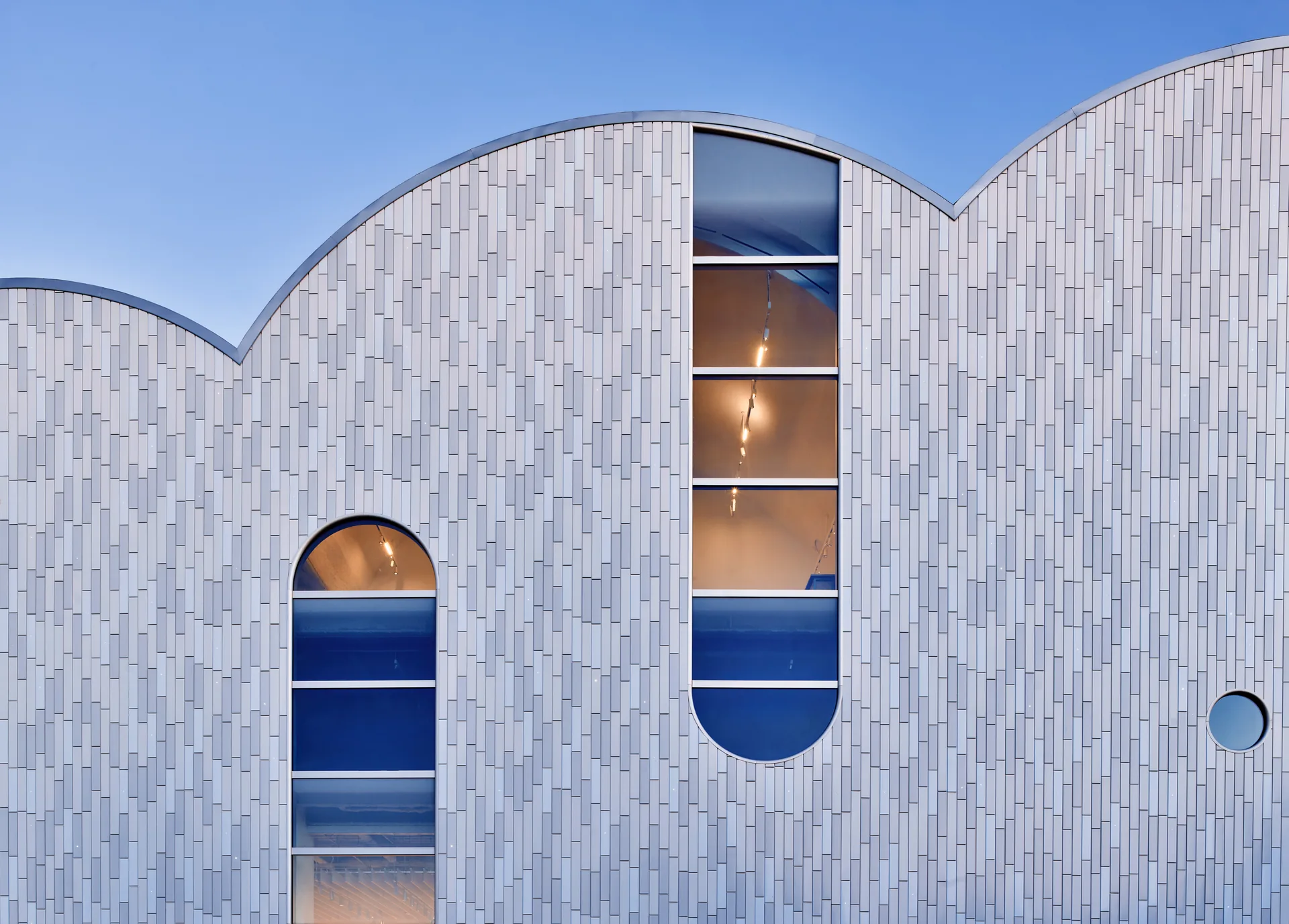
In a downtown of flat parapets and rectangles, a silhouette that curves is doing recognisable work. Children can draw it, which for a building aimed at children is not a small measure of success.
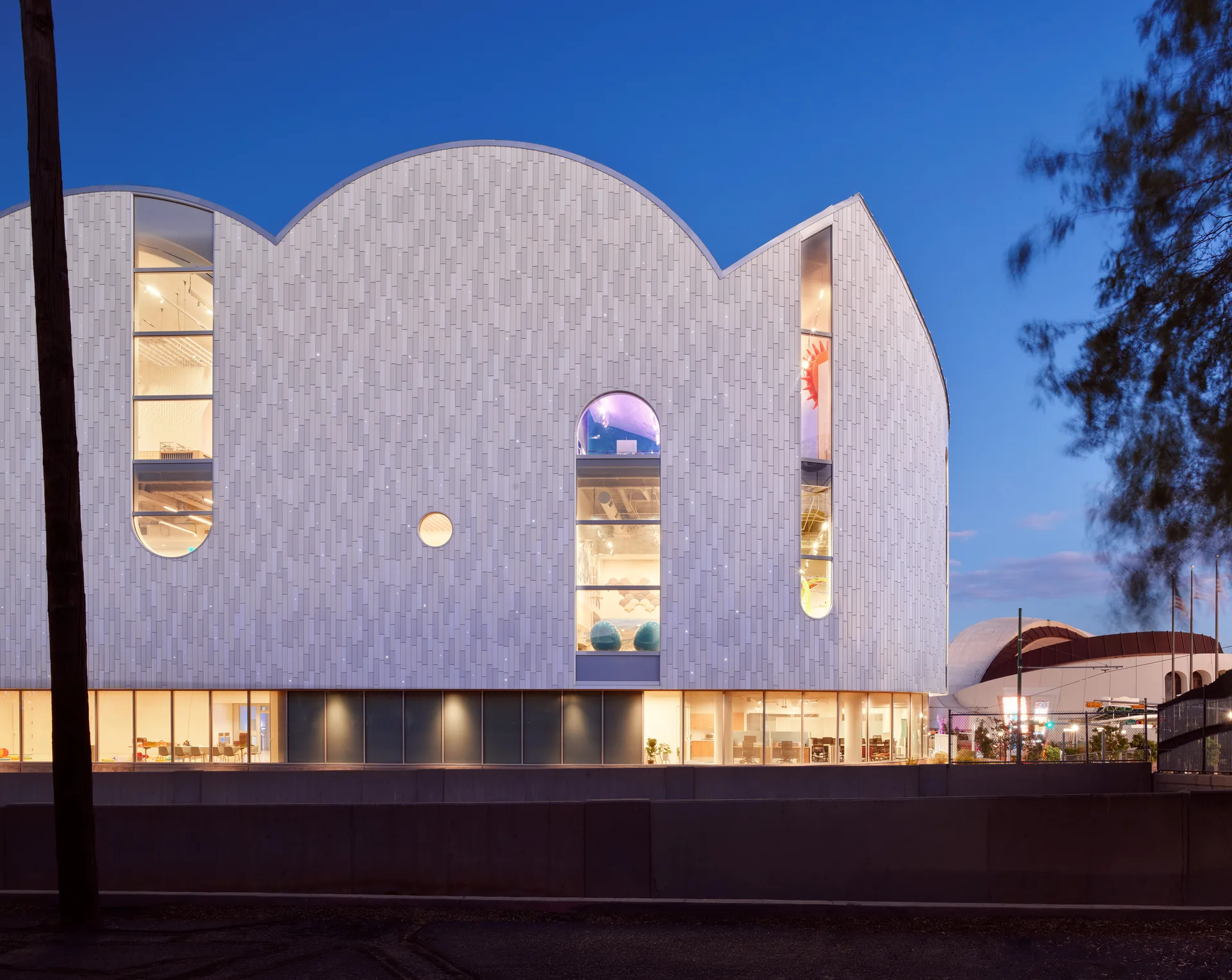
Exterior lighting makes the vaults twinkle after dark, so the building changes register in the evening rather than switching off. Envelope decisions that carry this much of a building’s identity are the subject of our guide to choosing materials for interiors and facades.
Circulation you climb
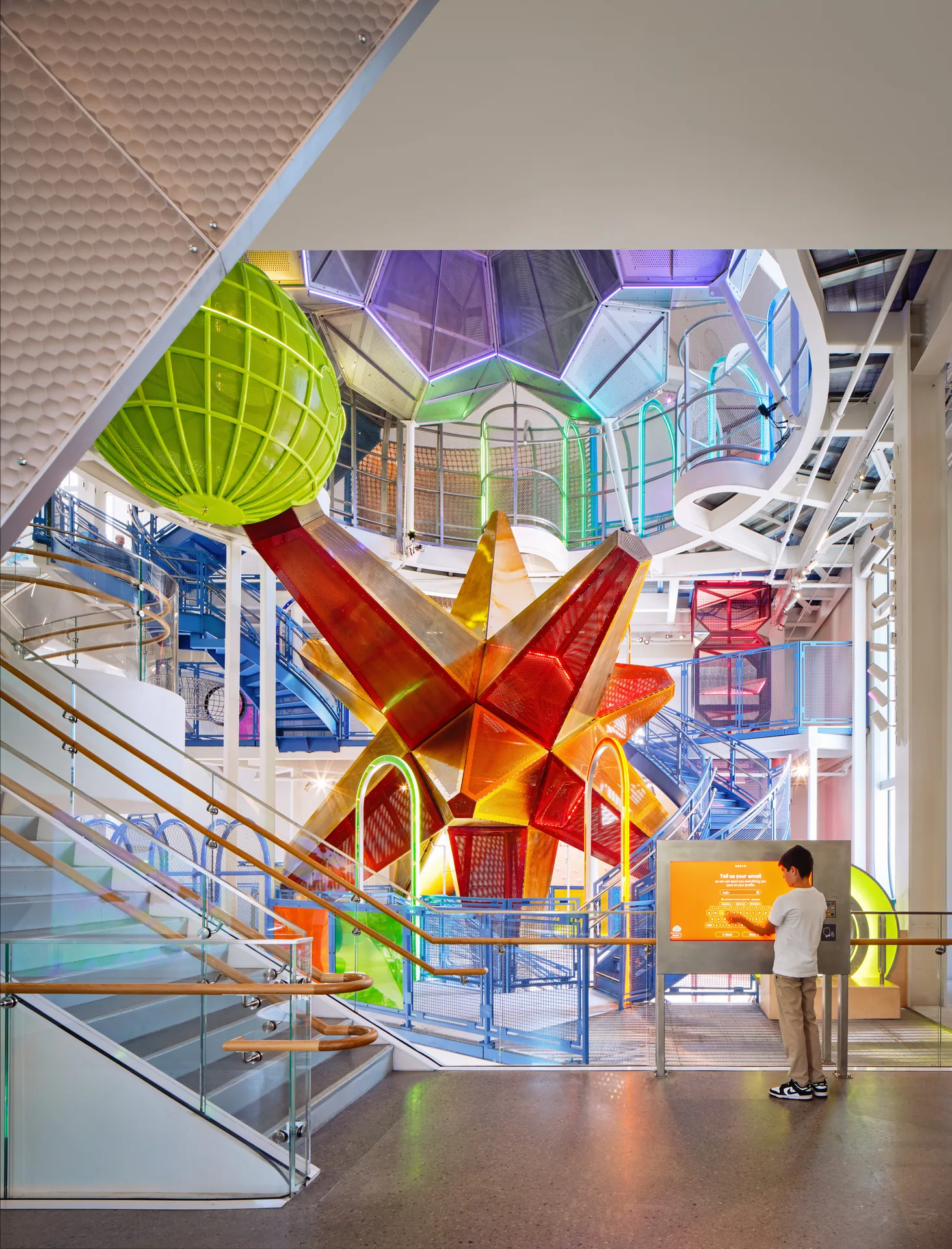
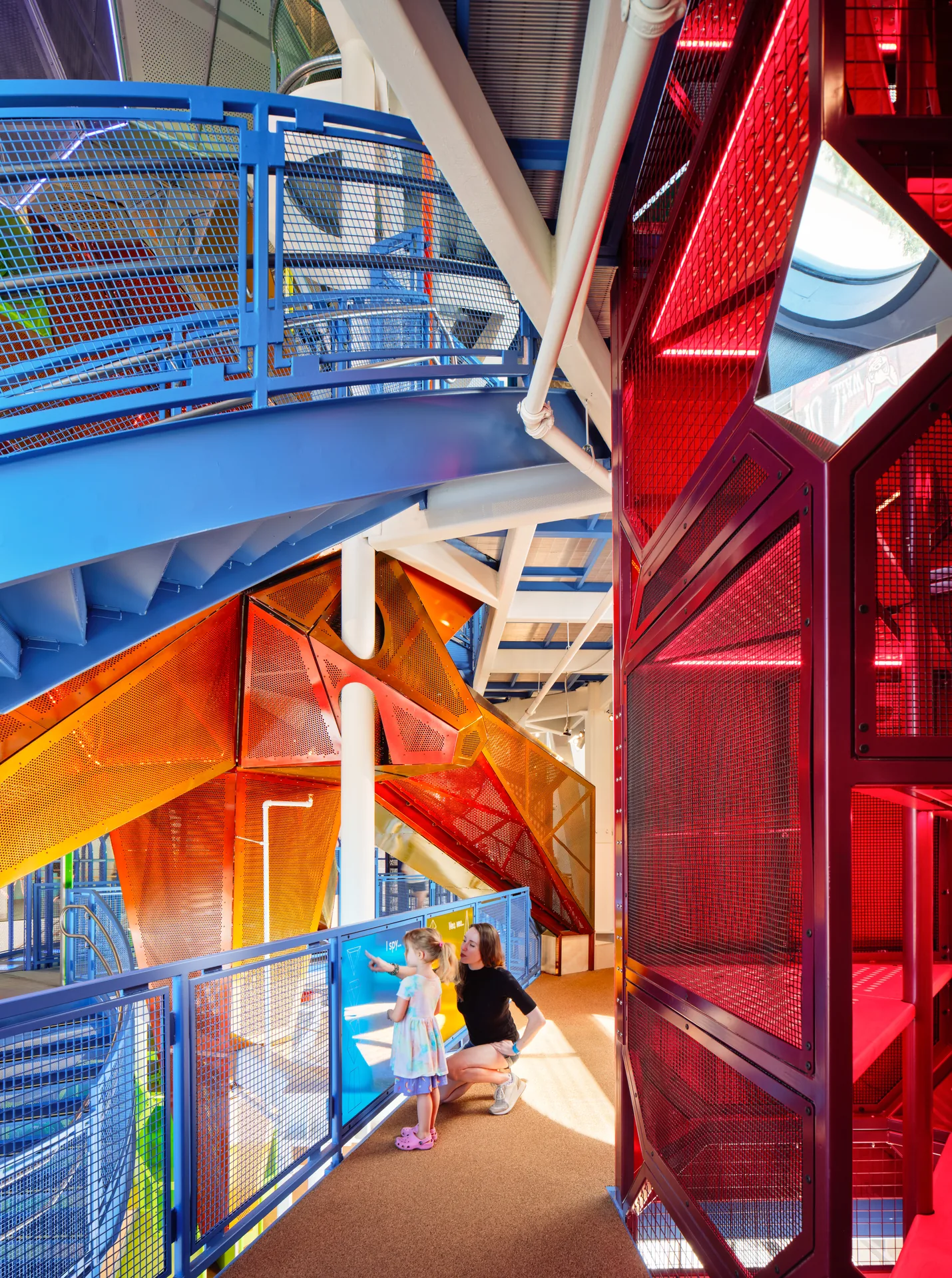
Inside, the most interesting decision is that the play structures are not placed in a room, they are threaded through the atrium as part of how you move. Steel and mesh volumes in red, orange and green climb the full height, with stairs and pods and slides taking over the job of getting between levels.
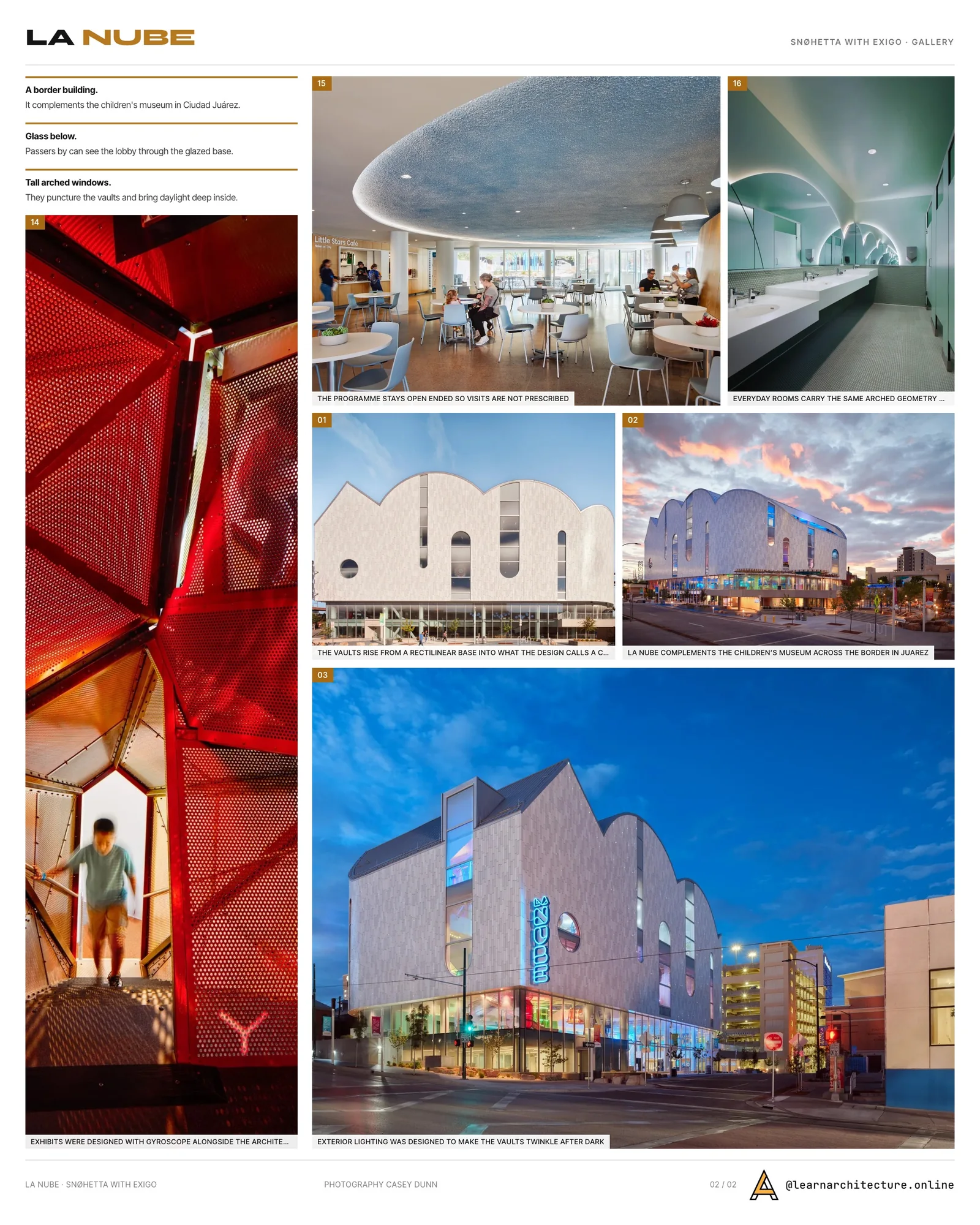
Children are not sent to a designated play area and then marched back out; the route itself is the equipment. That is a harder thing to detail and to certify, and it changes a visit from a sequence of exhibits into something closer to exploration.
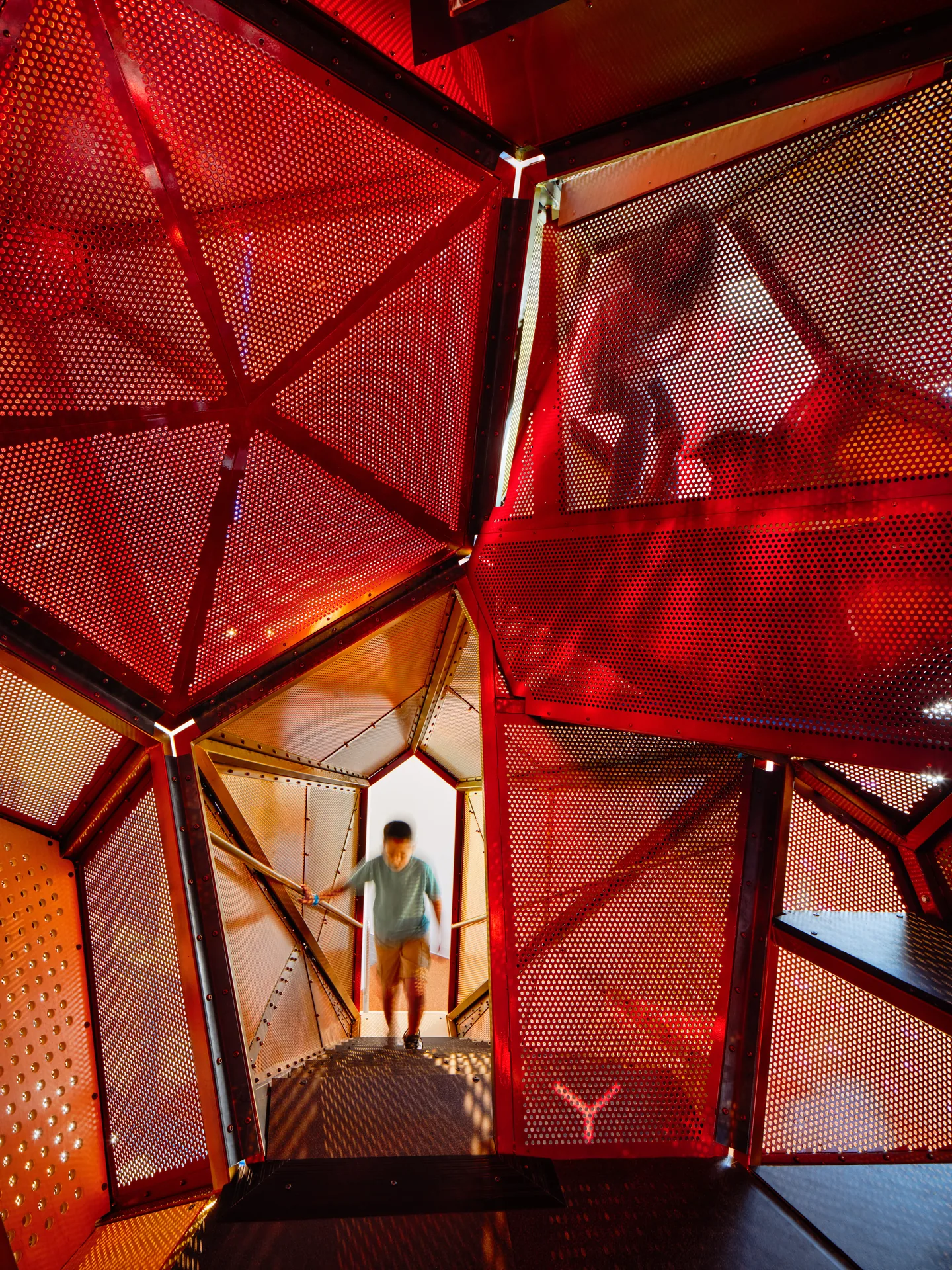
“Snøhetta’s design considers how the museum itself can become a learning tool,” the practice notes, and the atrium is where that claim actually lands. The structure is visible, the climbing route explains the section of the building, and a child who has been up through it understands the plan better than any diagram would manage.
Details that hold the idea
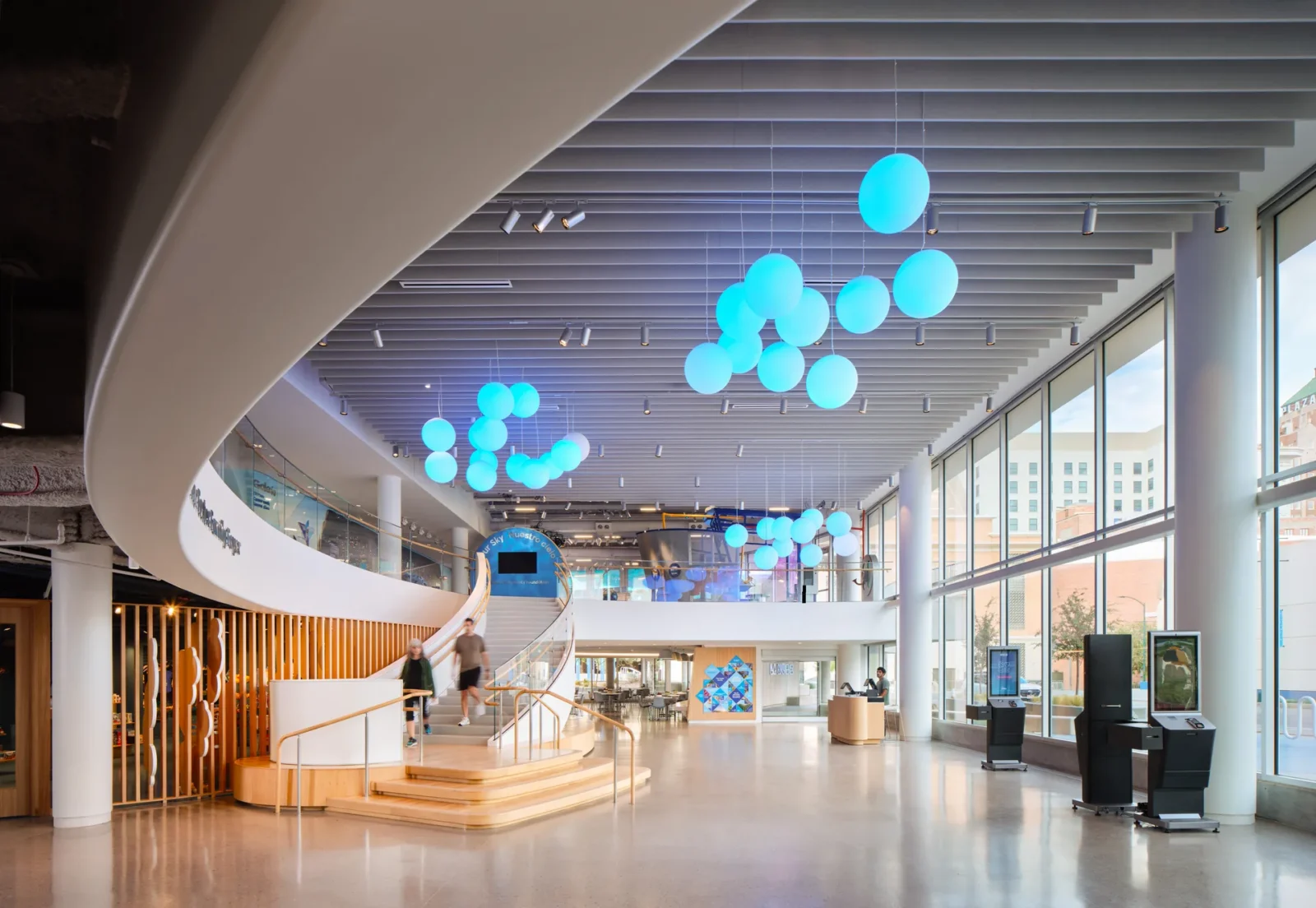
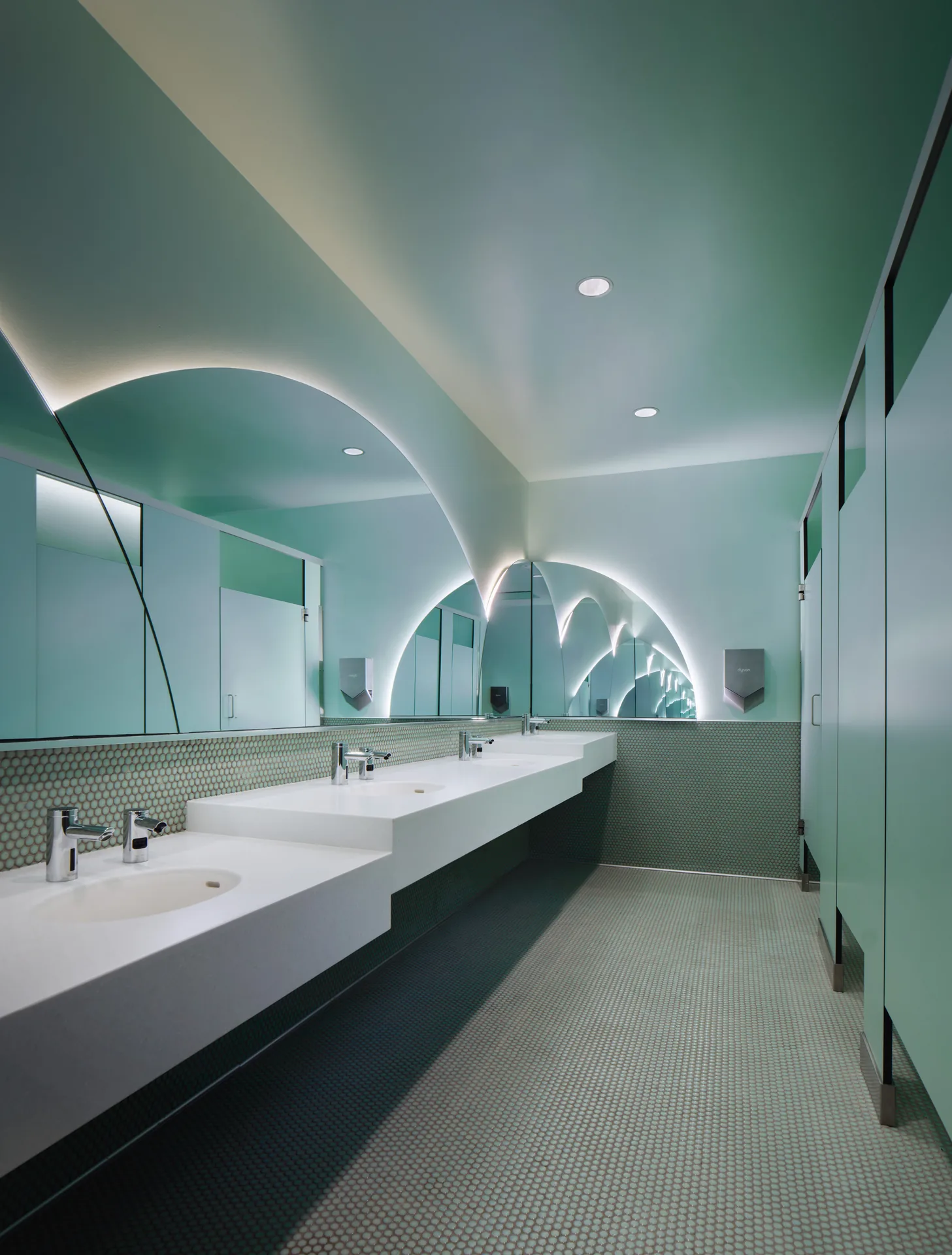
The arched geometry does not stop at the facade. It reappears in the lobby soffits, in the mirrors above the washroom basins, in the openings between spaces, so the building reads as one thought carried all the way down to the ordinary rooms.
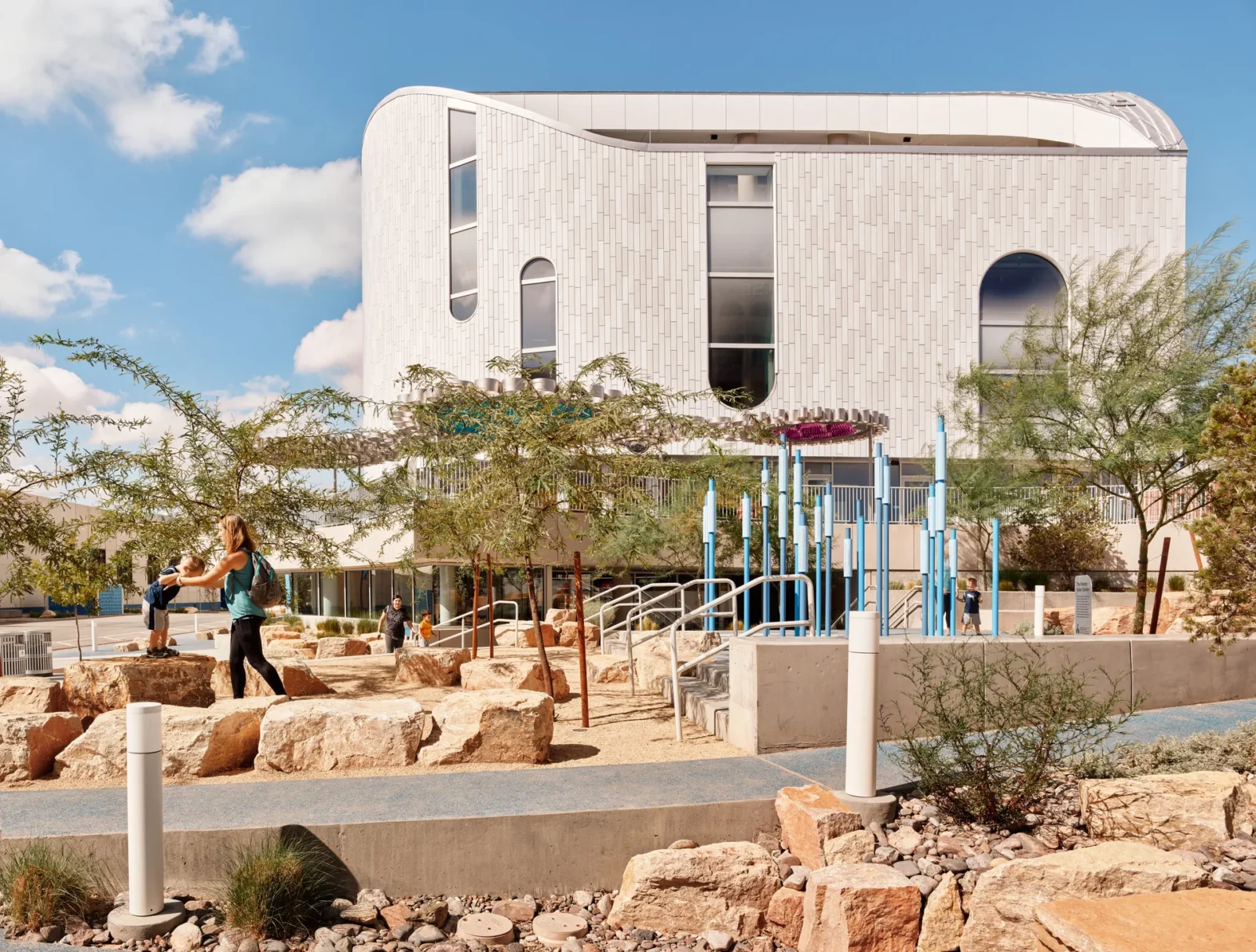
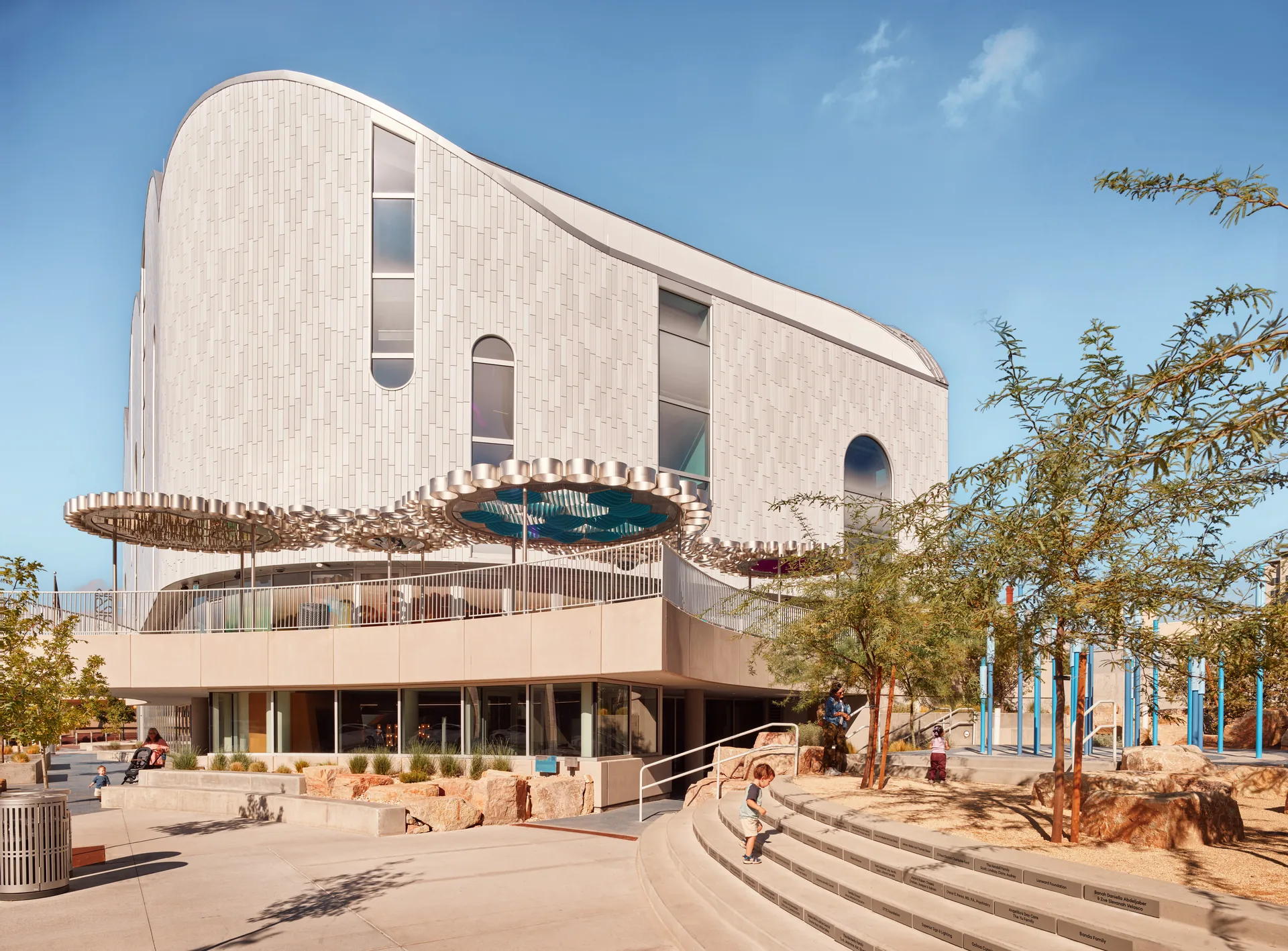
Outside, the plaza is planted with desert species and set with rock, bringing the geology of the Chihuahuan desert up to the entrance rather than surrounding the building with lawn it would have to irrigate.
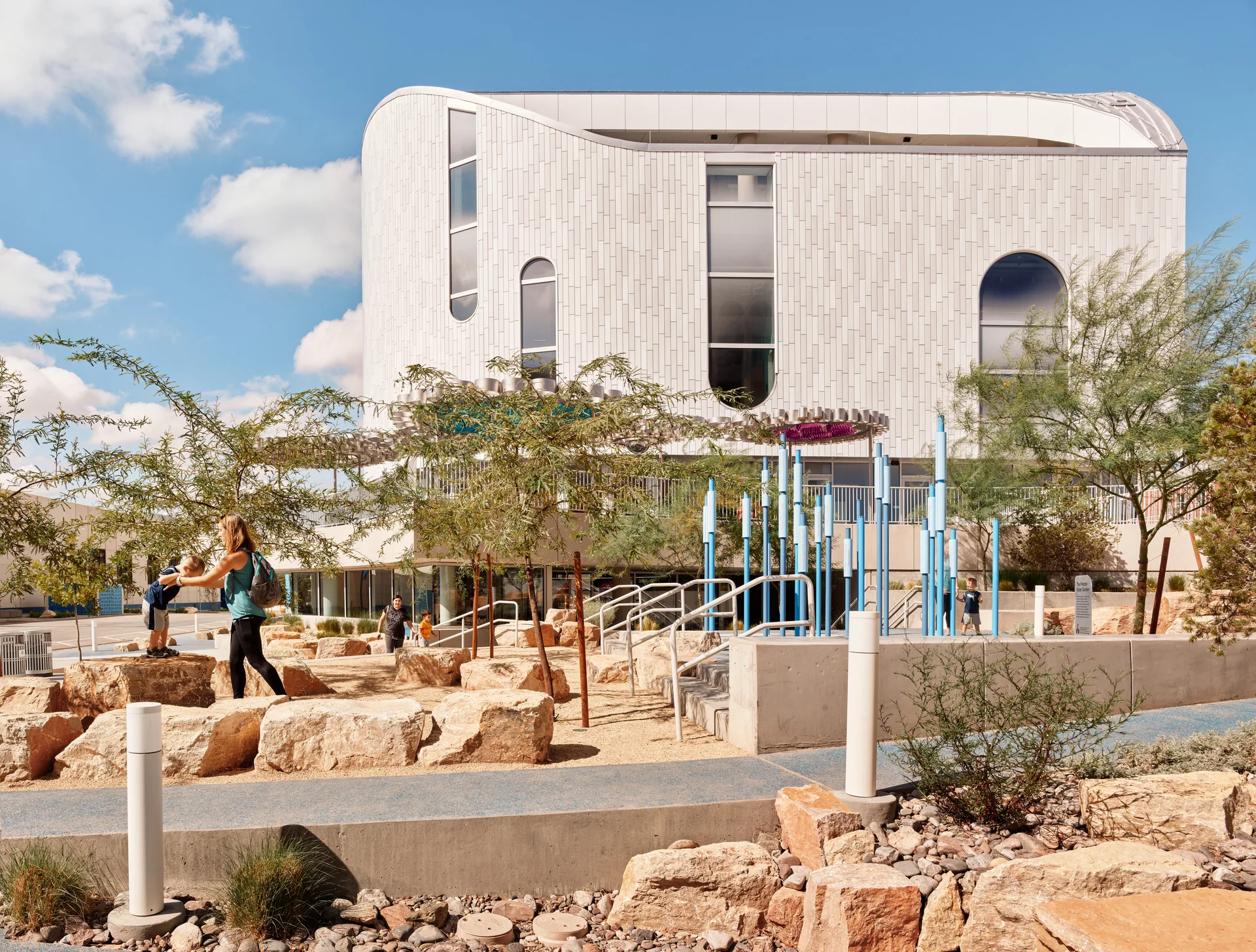
“With spaces and exhibits that inspire the imagination of children and adults alike, La Nube celebrates the unique culture and geography of El Paso while providing barrier free access to educational opportunities,” the design team says. For a wider look at buildings that treat their landscape as part of the argument, see our piece on working with what a site already holds.








Leave a comment